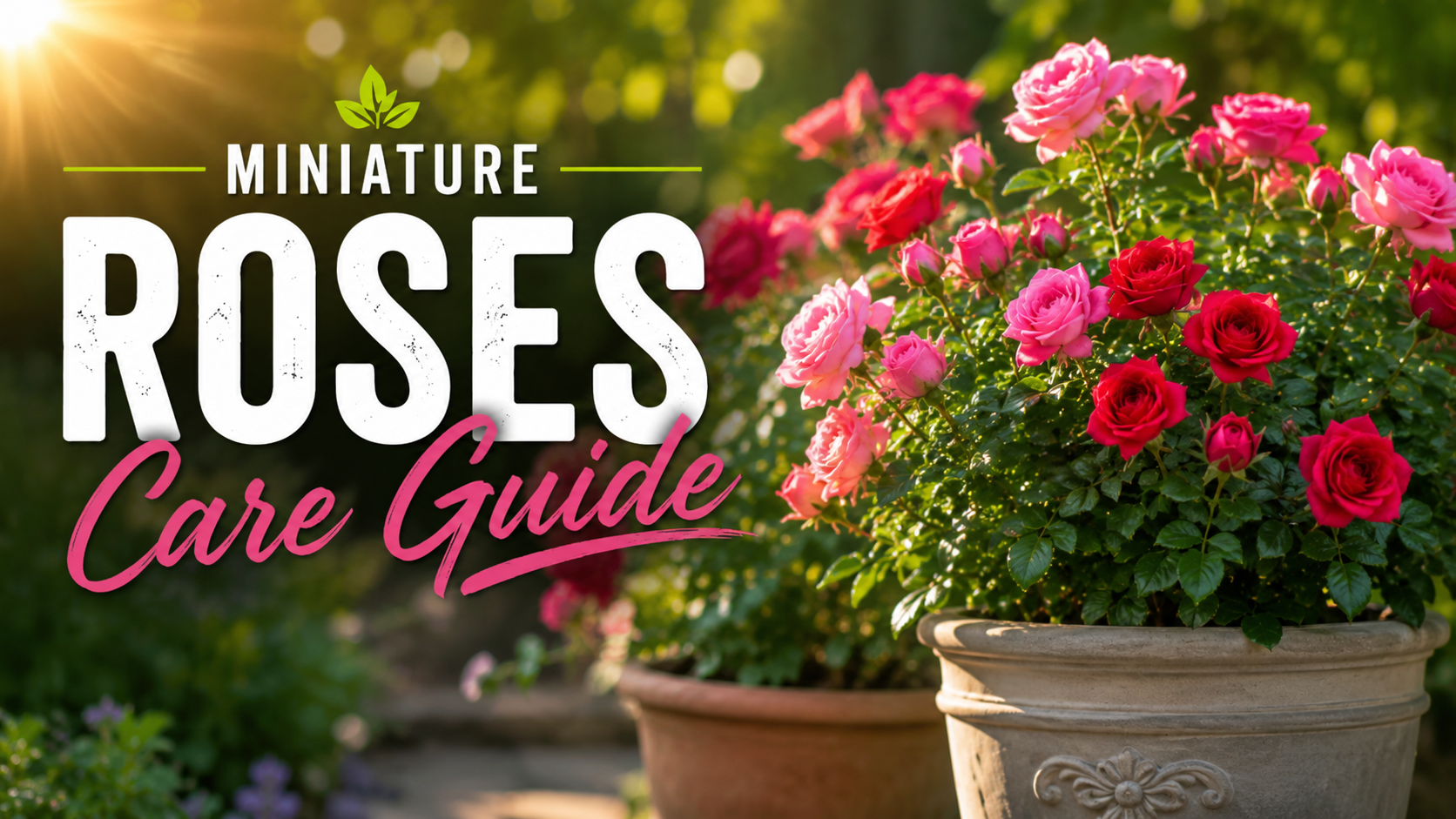

Everything you need to keep miniature roses healthy, blooming, and pest-free — whether you grow them indoors on a windowsill or outdoors in containers.
Miniature roses are one of the most rewarding plants you can grow — compact enough for a sunny windowsill yet tough enough to thrive outdoors in pots and borders. I’ve been growing them for over a decade, and I still find it remarkable how much bloom you can coax from a plant that barely reaches 30 cm tall.
But they’re not always easy. Yellow leaves, reluctant blooms, spider mites, and the eternal ‘should I keep this indoors or out?’ confusion trip up beginners constantly. This guide covers the practical care essentials and troubleshooting steps I’ve learned through years of trial, error, and far too many dead plants.
Light Requirements
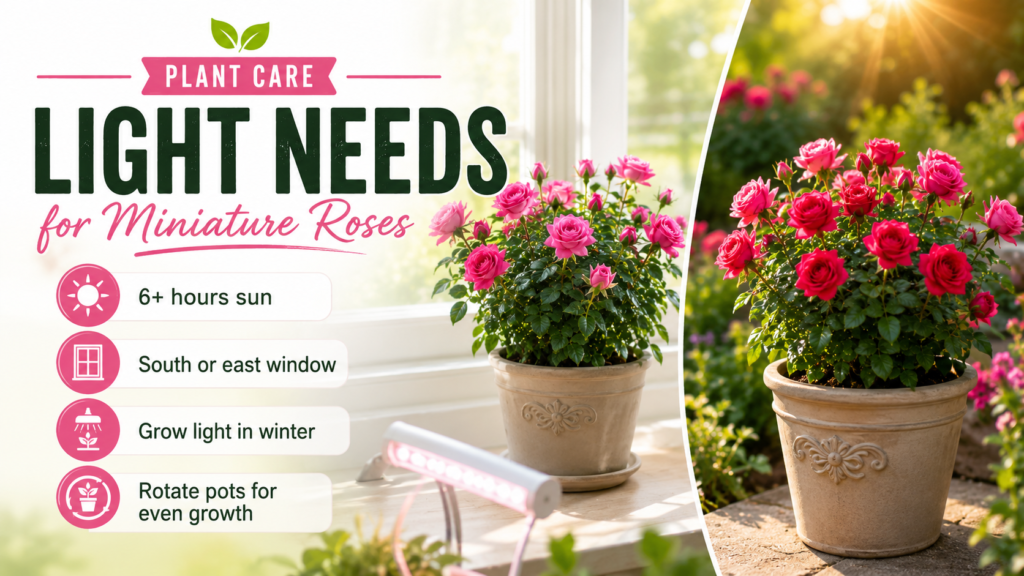
Miniature roses need a minimum of 6 hours of direct sunlight daily — more is better. Outdoors, a south- or west-facing spot is ideal. Indoors, place them on your brightest windowsill; east- or south-facing windows work best in most homes.
Insufficient light is the number-one reason indoor miniature roses stop blooming. If your plant is producing leggy, pale growth with few buds, it’s almost certainly light-starved. Consider a grow light if natural light falls below 6 hours, especially during winter.
💡 Owen’s tip: Rotate indoor pots a quarter-turn every few days so all sides receive even light. This prevents lopsided growth and encourages buds on every branch.
Watering: The Most Common Mistake
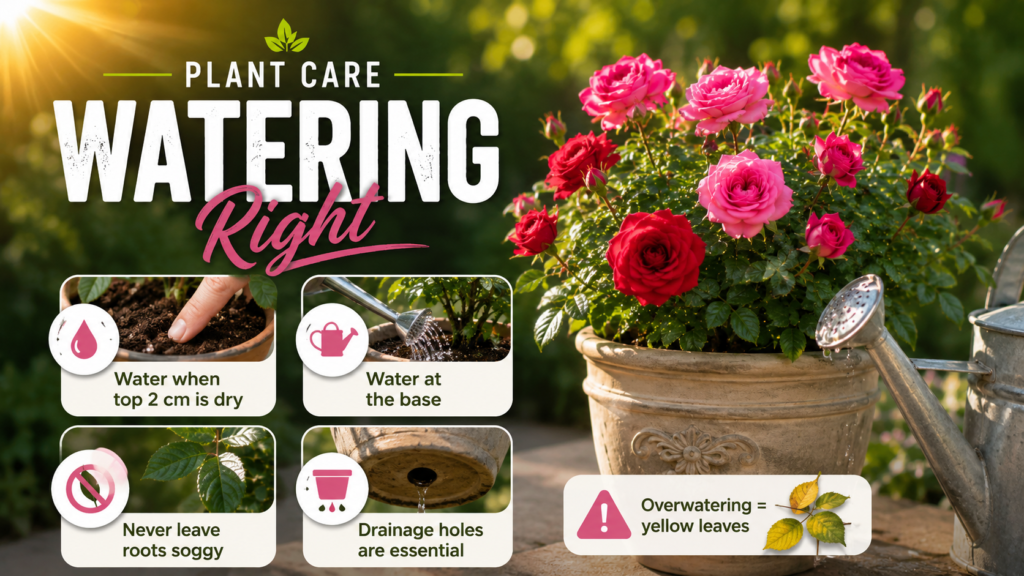
Water when the top 2 cm of soil feels dry — push your finger in to check. Miniature roses dislike both bone-dry soil and soggy roots. In summer they may need watering daily; in winter, once or twice a week is usually enough.
Always water at the base, not over the foliage. Wet leaves invite fungal diseases like black spot and powdery mildew. Use a pot with drainage holes and never let the plant sit in a saucer of standing water for more than 30 minutes.
⚠️ Overwatering causes root rot — the leaves yellow from the bottom up, and the stem base turns mushy. If you spot these signs, reduce watering immediately and check drainage.
Pruning & Deadheading
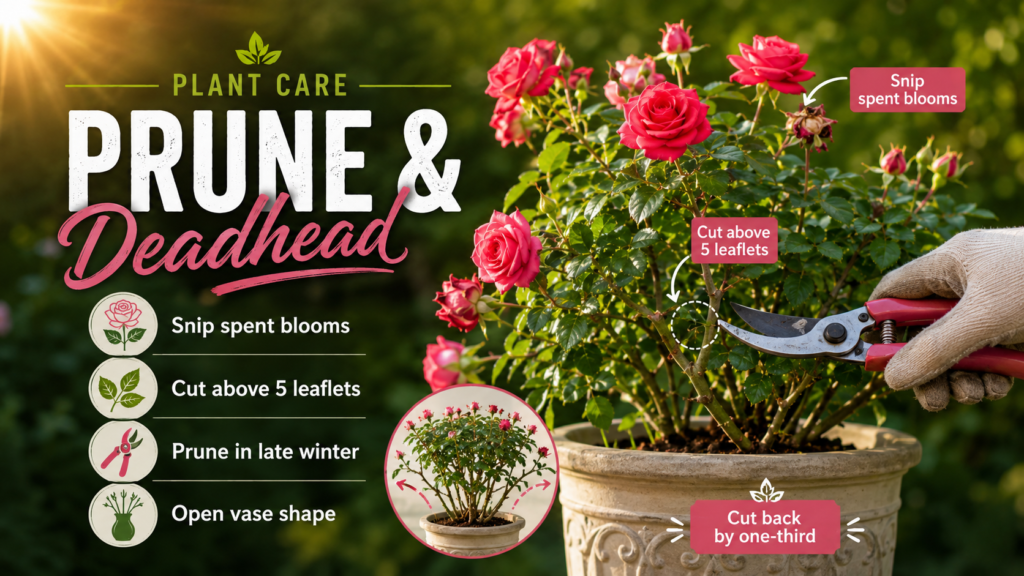
Regular deadheading — snipping spent blooms just above the first set of five leaflets — encourages repeat flowering throughout the season. Without it, the plant puts energy into forming hips (seed pods) instead of new buds.
In late winter or early spring, do a harder prune: remove dead, crossing, or weak stems, and cut remaining canes back by about one-third. Shape the plant into an open vase form to improve air circulation — this reduces disease pressure significantly.
Feeding & Repotting
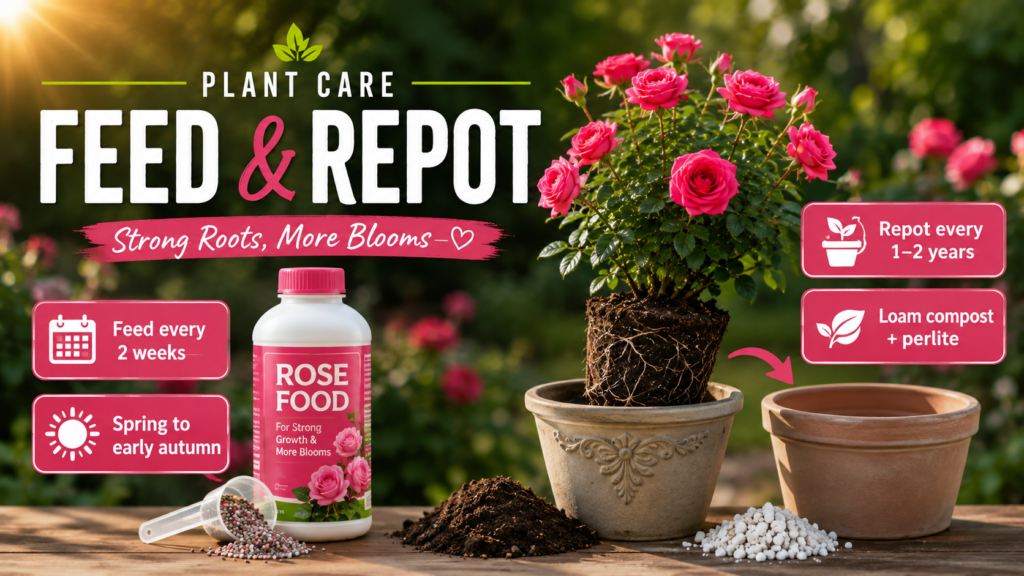
Feed every two weeks during the growing season (spring through early autumn) with a balanced liquid fertiliser diluted to half strength, or use a slow-release granular rose feed applied once in spring. Roses are hungry plants — consistent feeding keeps blooms coming.
Repot every 1–2 years in spring, moving up one pot size. Use a well-draining compost mix — two parts loam-based compost to one part perlite works well. Refresh the top few centimetres of soil annually even if you don’t repot.
Common Problems & Solutions
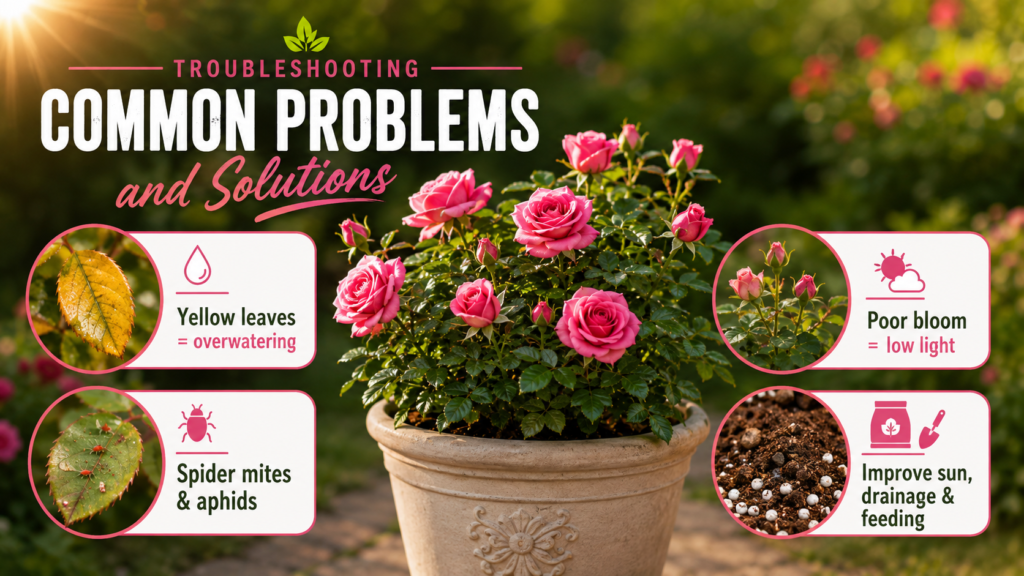
Most miniature rose problems come down to light, water, or pests. Here are the issues I see most often and how to fix them.
Yellow Leaves
Lower leaves yellowing and dropping usually signals overwatering or poor drainage. Upper leaves turning yellow with green veins points to iron chlorosis — treat with chelated iron. Sudden overall yellowing after bringing a plant indoors is transplant shock; give it time and stable conditions.
Spider Mites & Aphids
Spider mites thrive in dry indoor air — you’ll notice fine webbing and stippled leaves. Increase humidity, mist the undersides of leaves, and treat with insecticidal soap. Aphids cluster on new growth; a strong jet of water knocks most off, or use neem oil for heavy infestations.
Poor or No Blooming
If your plant is healthy but won’t flower, check three things: is it getting 6+ hours of sun? Are you deadheading regularly? Are you feeding it? Addressing any one of these usually triggers a new flush of buds within 4–6 weeks.
Indoor vs Outdoor: Which Is Better?
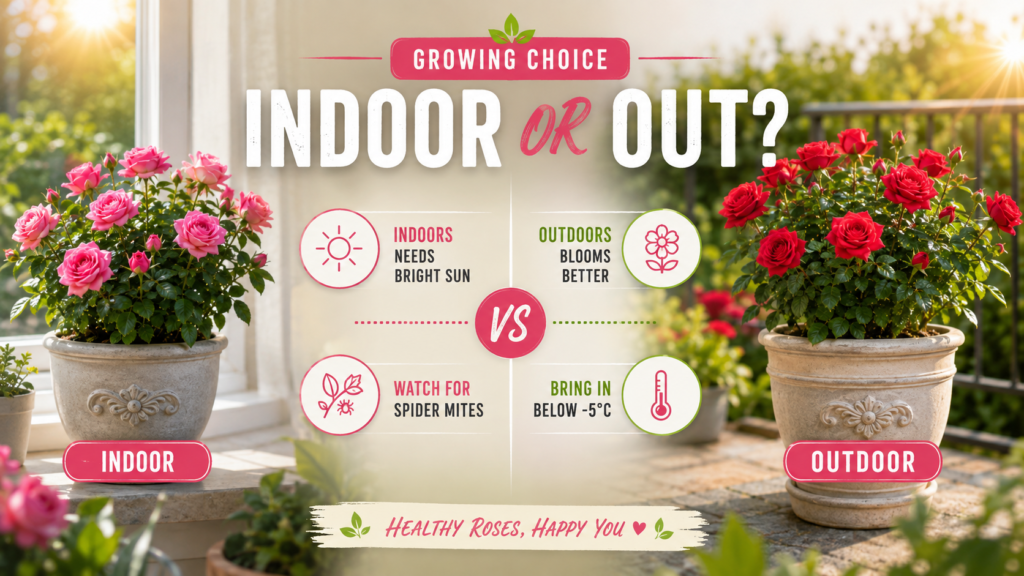
Miniature roses are outdoor plants by nature — they thrive with natural sun, rain, and air circulation. Growing them indoors is absolutely possible, but it requires more effort: supplemental light, careful humidity management, and vigilance against spider mites
My recommendation: if you have any outdoor space at all — a balcony, patio, or doorstep — grow them outside during the warm months and bring them in only for winter protection in cold climates (below -5 °C). They’ll reward you with far more blooms and fewer pest issues.
Frequently Asked Questions
How often should I water miniature roses?
Check the top 2 cm of soil daily in summer — water when it feels dry. In winter, reduce to once or twice a week. Always ensure excess water drains freely and never leave the pot sitting in standing water.
Can miniature roses survive indoors year-round?
Yes, but they need at least 6 hours of direct light (a grow light helps), good humidity, and regular feeding. They’ll bloom less prolifically than outdoor plants but can still perform well with attentive care.
Why are the leaves on my miniature rose turning yellow?
The most common cause is overwatering — check that the pot drains properly and reduce watering frequency. Other causes include nutrient deficiency (feed with a balanced fertiliser), sudden temperature changes, or insufficient light.
When should I prune miniature roses?
Deadhead spent blooms throughout the growing season. Do a structural prune in late winter or early spring before new growth starts — remove dead wood and shape the plant to an open form for good air circulation.