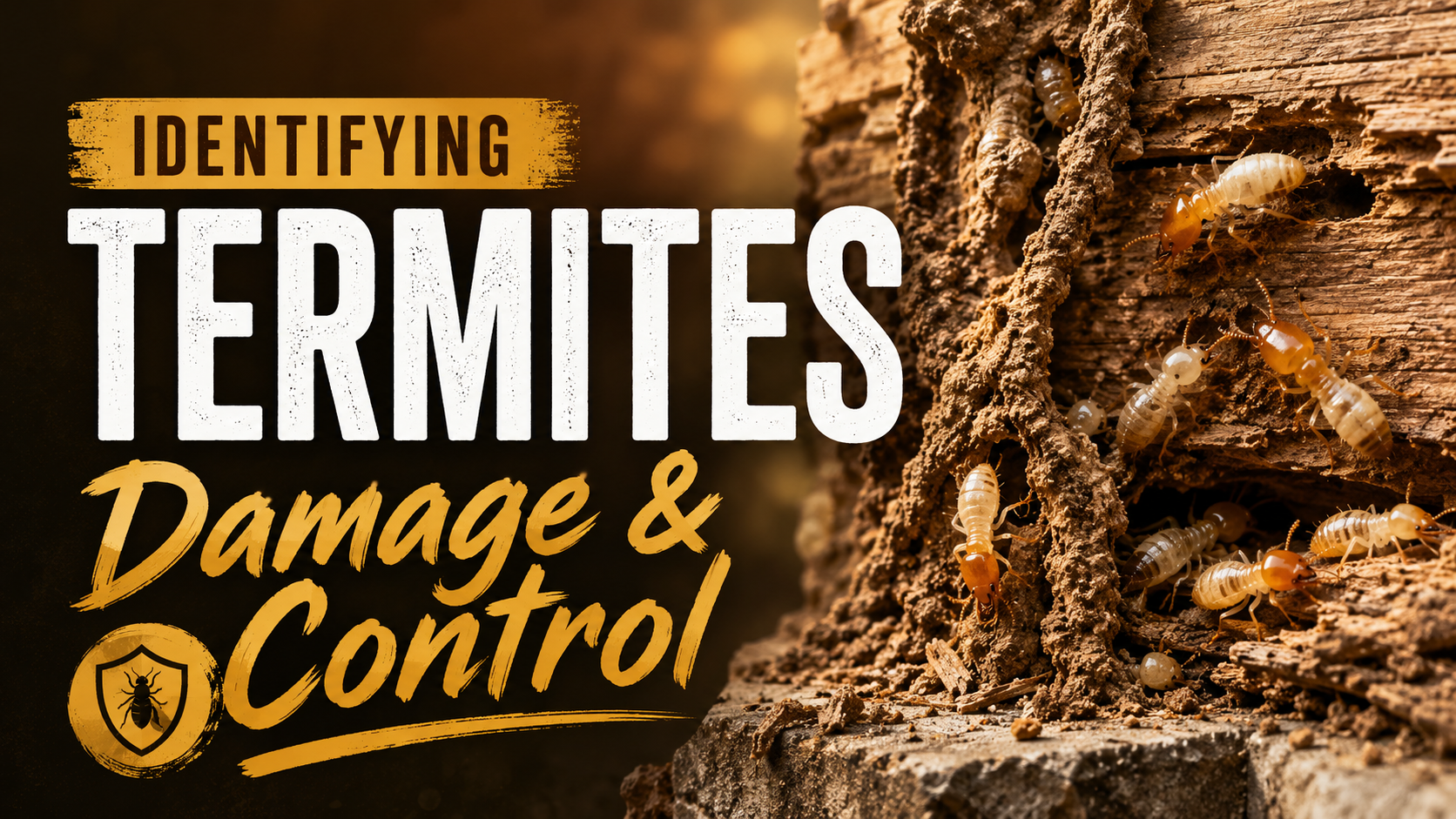

How to identify termites, confirm damage or risk, and choose an effective control method — without unnecessary treatment.
Key Takeaways
- Termites are social insects that silently consume wood from the inside out — damage is often hidden until it’s severe.
- Mud tubes, discarded wings, and hollow-sounding wood are the three most reliable early warning signs.
- Subterranean termites cause the most damage globally; drywood termites are common in warmer climates.
- Prevention through moisture control and physical barriers is far cheaper than remediation after an established infestation.
1. Identification Signs
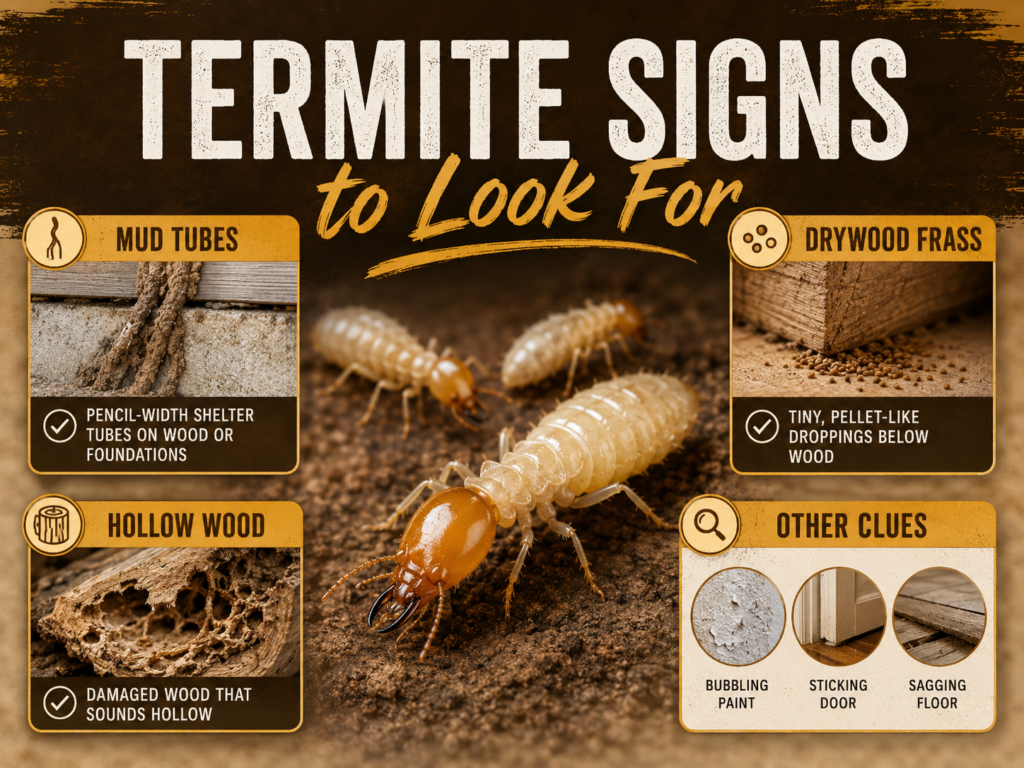
Termites are small (3–10 mm), soft-bodied insects that live in large colonies. Workers — the caste that causes damage — are pale, creamy-white and wingless. They avoid light and are rarely seen in the open unless you break into an active gallery or mud tube.
The most tell-tale sign of subterranean termites is mud tubes: pencil-width tunnels of soil and saliva running up foundations, stumps, or walls. These shelter tubes connect the underground colony to their food source. Drywood termites leave tiny, six-sided faecal pellets (frass) that accumulate below infested wood.
Tap suspect timber with a screwdriver handle. Infested wood sounds hollow and may feel papery. You might also notice paint bubbling, sagging floors, or doors that suddenly stick — all signs that internal structure has been consumed.
2. Lifecycle & Habitat
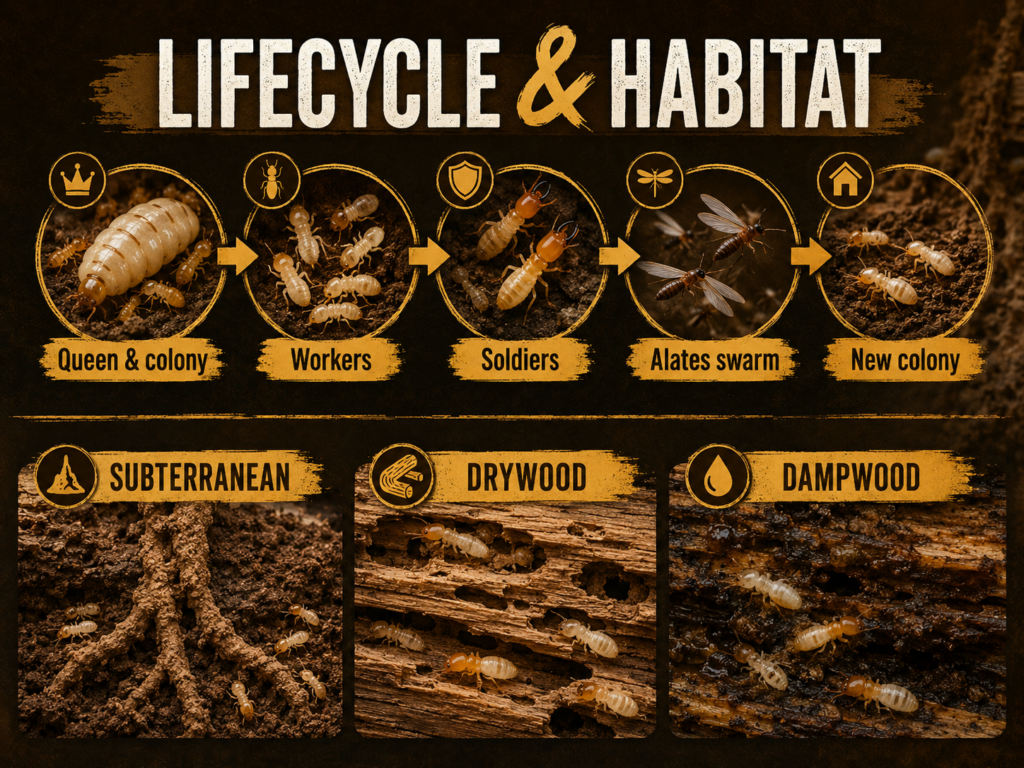
Termite colonies are headed by a queen and king. Workers forage for cellulose (wood, paper, cardboard), soldiers defend the colony, and reproductive alates swarm once or twice a year to start new colonies. Swarming usually occurs after rain in warm months — finding discarded wings near windows is a classic early indicator.
Subterranean species nest in soil and require ground contact or a moisture source. Drywood termites nest entirely within the wood they consume and need no soil contact. Dampwood termites favour decaying, high-moisture timber such as logs and old stumps. A mature colony can contain hundreds of thousands to millions of individuals.
3. Damage & Risk Assessment
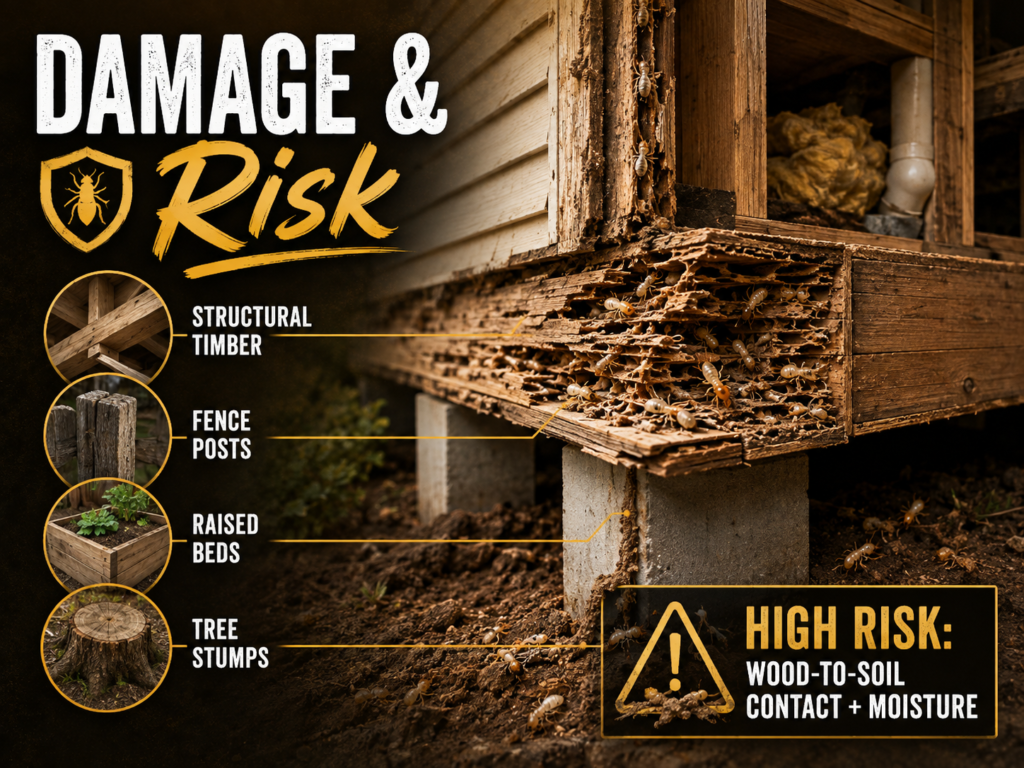
Termites cause billions of dollars in structural damage worldwide each year — more than fires, storms, and earthquakes combined in some regions. They eat wood from the inside, leaving a thin veneer intact, so damage can progress for years before it becomes visible. Structural timbers, floor joists, door frames, and roof trusses are all targets.
In gardens, termites attack fence posts, raised garden bed timbers, tree stumps, and landscaping sleepers. While they play a beneficial role in breaking down dead wood in natural ecosystems, any activity close to a structure warrants investigation. Risk is highest when soil-to-wood contact exists or when moisture accumulates near the foundation.
4. Common Lookalikes
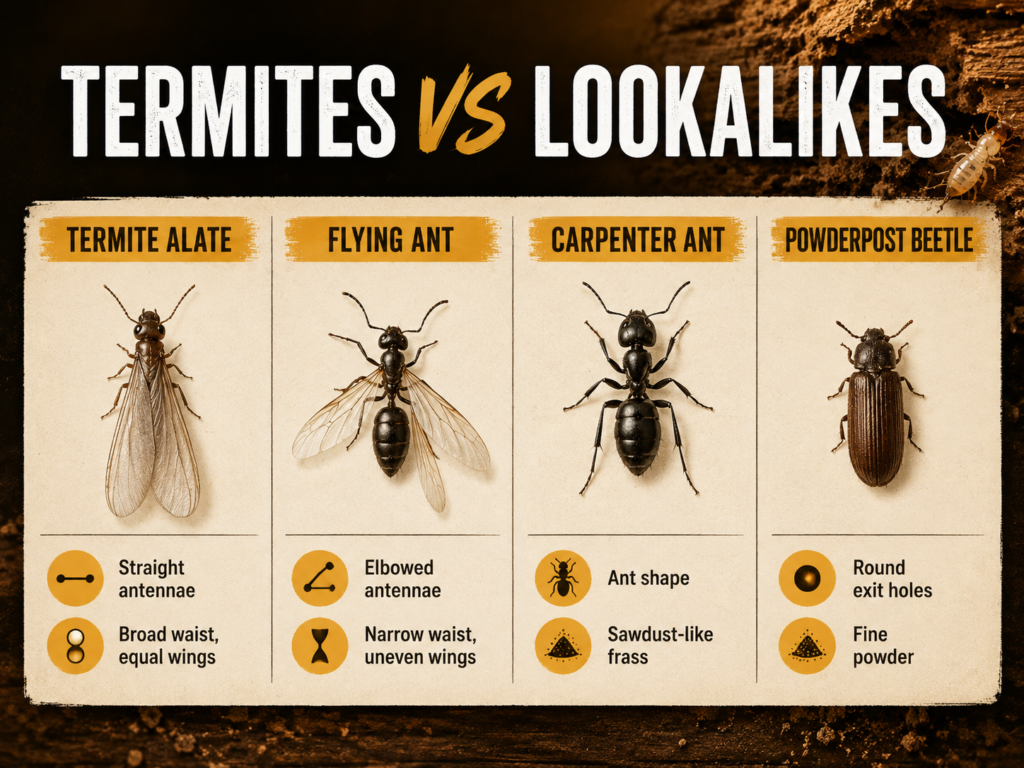
Flying ants are the most common confusion. Key differences: termite alates have straight, beaded antennae, a broad waist, and two pairs of wings that are equal in length. Ants have elbowed antennae, a pinched waist, and forewings longer than hindwings. Termite wings break off easily; ant wings don’t.
Carpenter ants also damage wood but don’t eat it — they excavate smooth galleries for nesting and leave sawdust-like frass. Powderpost beetles leave round exit holes and fine, flour-like powder. If you’re unsure, collect a specimen in a sealed bag for identification by your local extension service or pest professional.
5. Control Methods (Least-Disruptive First)
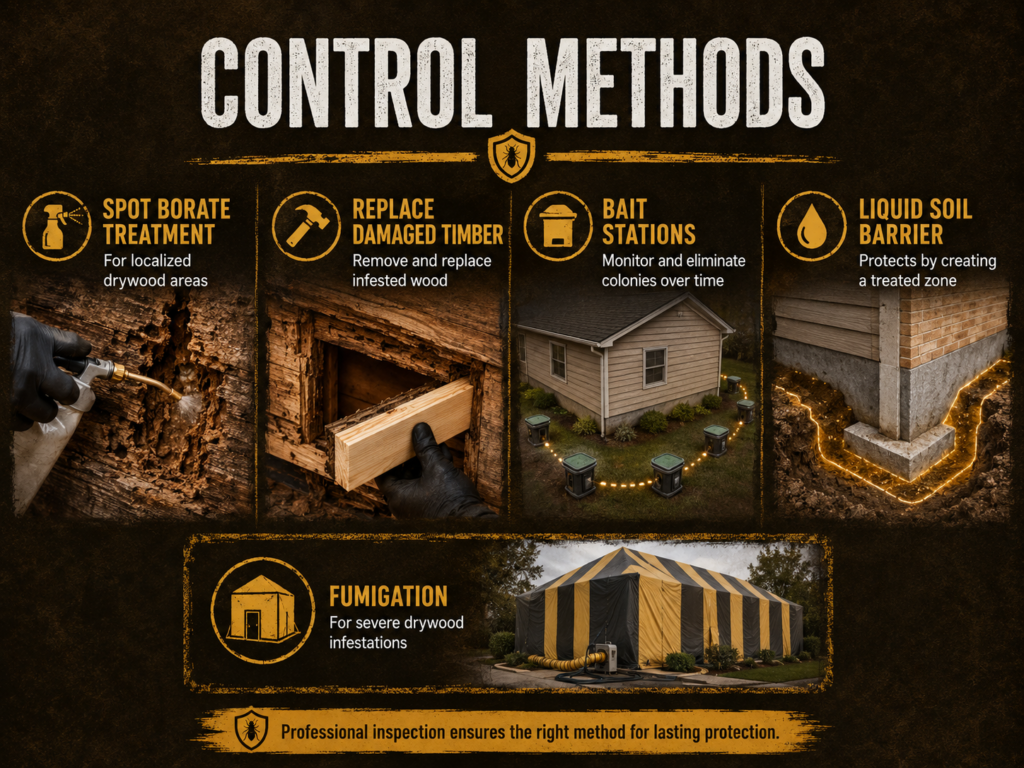
For minor, localised drywood infestations (a single piece of furniture or a small section of trim), spot treatments with injectable borate-based products can be effective. Remove and replace severely damaged timber. This approach is only suitable when you can confirm the infestation is limited.
For subterranean termites, baiting systems offer a low-toxicity option. Bait stations are installed around the perimeter; workers feed on the bait and share it with the colony, gradually eliminating it. This takes weeks to months but avoids broad chemical application to soil.
Liquid soil treatments (termiticides applied as a continuous barrier around and beneath the structure) remain the most common professional method. Modern non-repellent products allow termites to pass through the treated zone unknowingly, carrying the active ingredient back to the colony. Whole-structure fumigation is reserved for severe, widespread drywood infestations.
6. Prevention
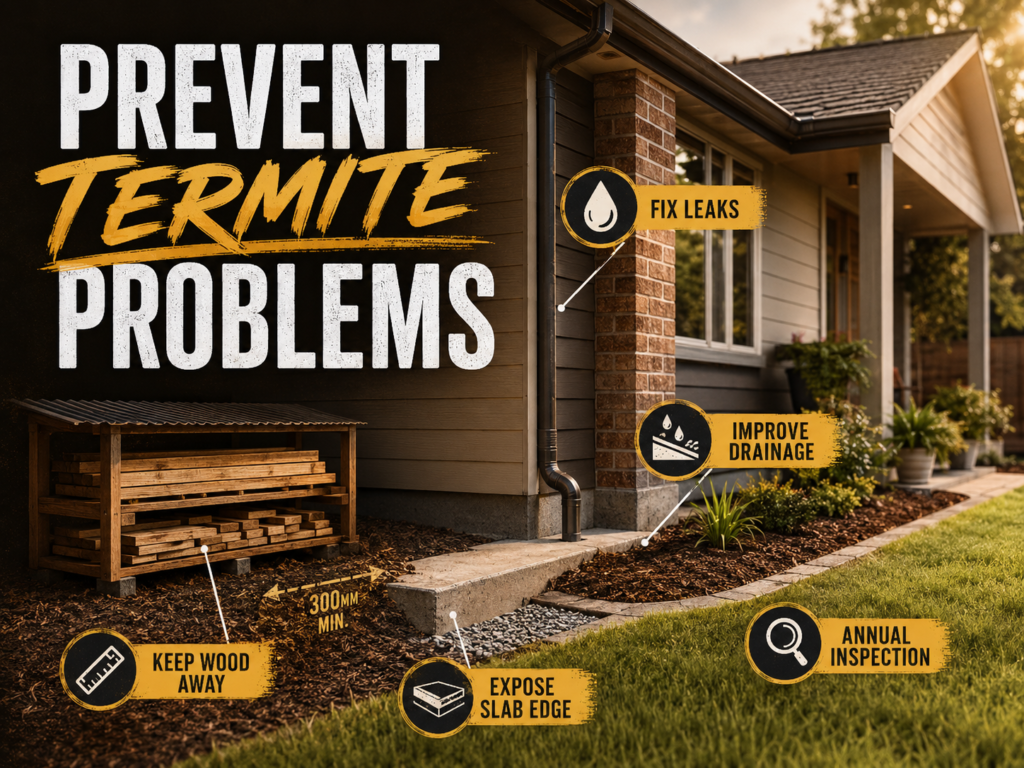
Eliminate wood-to-soil contact around your property. Ensure slab edges are exposed and visible for inspection. Keep mulch, garden beds, and stored timber at least 300 mm (12 inches) away from the foundation. Fix leaking taps, air-conditioning drip lines, and poor drainage that keeps soil near the house moist.
Maintain adequate ventilation beneath suspended floors. Install physical barriers (stainless-steel mesh or graded granite particles) during construction where possible. Schedule an annual professional inspection — termites can bridge chemical barriers over time, and early detection saves thousands in repair costs.
7. When to Call a Professional

If you find mud tubes on your foundation, active termites in structural timber, or widespread hollow-sounding wood, call a licensed pest management professional immediately. DIY treatments are not reliable for established subterranean colonies because you cannot access the nest or ensure a complete chemical barrier without specialised equipment.
A professional inspection includes probing timbers, using moisture meters, and sometimes thermal imaging or radar to detect hidden activity. They can recommend the right treatment method for your termite species, construction type, and local conditions. Annual inspections are strongly recommended for any home in a termite-prone area.
Frequently Asked Questions
Can I treat termites myself?
Minor drywood infestations in removable items (furniture, a single board) can sometimes be treated with borate products or by replacing the timber. However, subterranean termites require professional-grade soil treatments or baiting systems. DIY perimeter sprays sold at hardware stores do not penetrate deeply enough to create a reliable barrier and may give a false sense of security.
How quickly can termites damage a house?
A mature subterranean colony can consume roughly 3–5 kg of wood per year. That sounds modest, but because they target structural load-bearing timbers and eat from the inside, serious structural compromise can develop within 1–3 years of initial contact. Early detection is critical.
Do termites come back after treatment?
Yes, reinfestation is possible — especially if the conditions that attracted them (moisture, wood-to-soil contact) aren’t corrected. Chemical barriers degrade over 5–8 years. Baiting systems require ongoing monitoring. An annual inspection is the best insurance against a return.