
A complete, experience-based guide to planting sunflower seeds and growing tall, healthy plants with dependable blooms — from seed selection to harvest.
Sunflowers are one of the most satisfying plants you can grow from seed. Within 8–12 weeks you go from a small striped seed to a towering plant with a bloom the size of a dinner plate. I’ve been planting them every spring for over a decade, and they still make me smile when that first bud cracks open.
But getting reliable results means understanding what sunflowers actually need — the right timing, soil conditions, spacing, and ongoing care. This guide covers everything I’ve learned through years of experimenting in my own backyard, including the mistakes I’ve made so you can avoid them.
Planting & Site Requirements
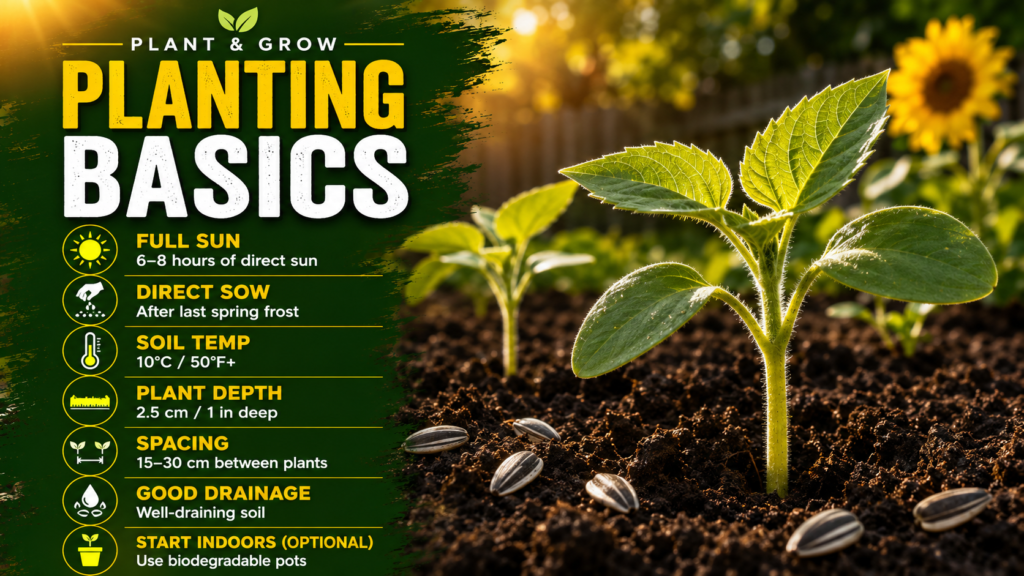
Sunflowers need full sun — at least 6–8 hours of direct sunlight daily. Choose the sunniest spot in your garden, ideally sheltered from strong winds since tall varieties can snap in a storm. They’re not fussy about soil type but need good drainage; heavy clay that stays waterlogged will rot the seeds before they germinate.
Sow seeds directly outdoors after the last frost when soil temperature reaches at least 10 °C (50 °F). Plant seeds 2.5 cm (1 inch) deep and 15–30 cm apart depending on variety — larger types need more space. I plant in groups of 3 and thin to the strongest seedling once they’re 10 cm tall.
For a head start in cooler climates, sow seeds indoors in biodegradable pots 2–3 weeks before the last frost. Transplant carefully — sunflowers resent root disturbance. Plant the entire pot into the ground to minimise transplant shock.
💡 Sarah’s tip: Stagger plantings every 2 weeks from mid-spring to early summer for continuous blooms right through autumn. This also means you’re never overwhelmed by a single harvest.
Watering: Deep and Infrequent
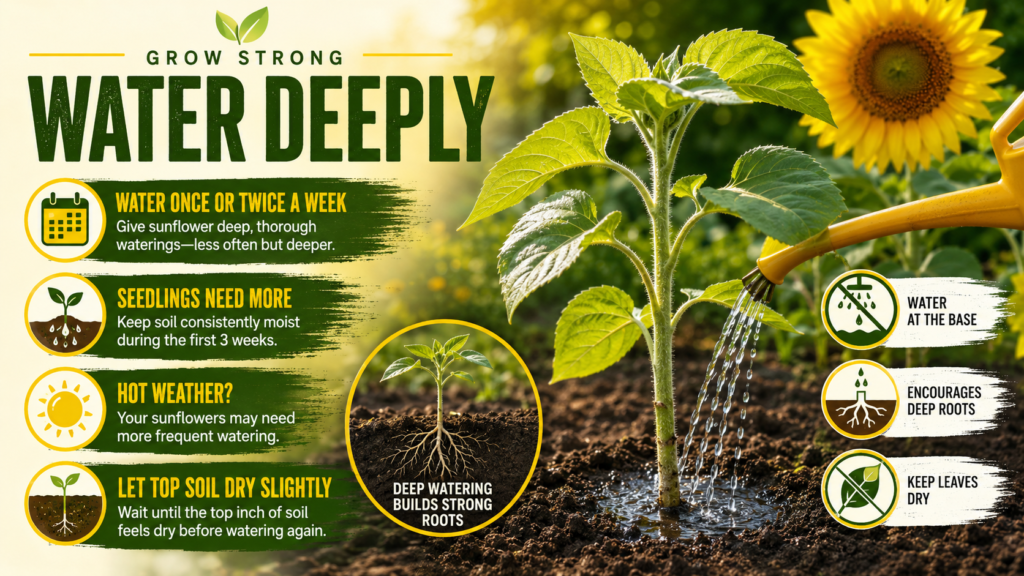
Sunflowers develop deep taproots and are remarkably drought-tolerant once established. Water deeply once or twice a week rather than a little every day — this encourages roots to grow downward. Seedlings need more consistent moisture for the first 3 weeks until established.
Water at the base of the plant, not overhead. Wet foliage promotes fungal diseases like downy mildew. A soaker hose or drip irrigation works perfectly. In very hot weather (above 35 °C), increase watering frequency but always let the top few centimetres of soil dry between sessions.
⚠️ Overwatering young seedlings causes damping off — stems rot at soil level and topple over. Let the soil surface dry slightly between waterings, especially in cool or cloudy weather.
Feeding & Soil Preparation
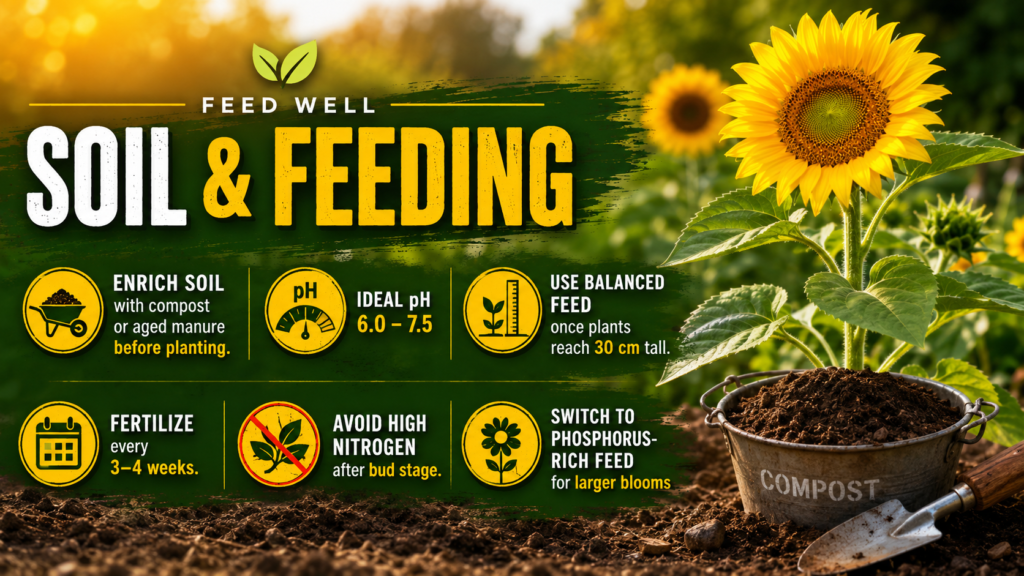
Sunflowers are heavy feeders. Before planting, work well-rotted compost or aged manure into the top 20 cm of soil. This provides slow-release nutrients and improves drainage in clay soils. A soil pH of 6.0–7.5 is ideal — most garden soils fall in this range without amendment.
Once plants reach 30 cm tall, apply a balanced granular fertiliser (10-10-10) around the base every 3–4 weeks. Avoid high-nitrogen feeds after the bud stage — excess nitrogen produces lots of foliage at the expense of blooms. Switch to a phosphorus-rich feed when buds form to encourage larger flowers.
Support, Staking & Pruning
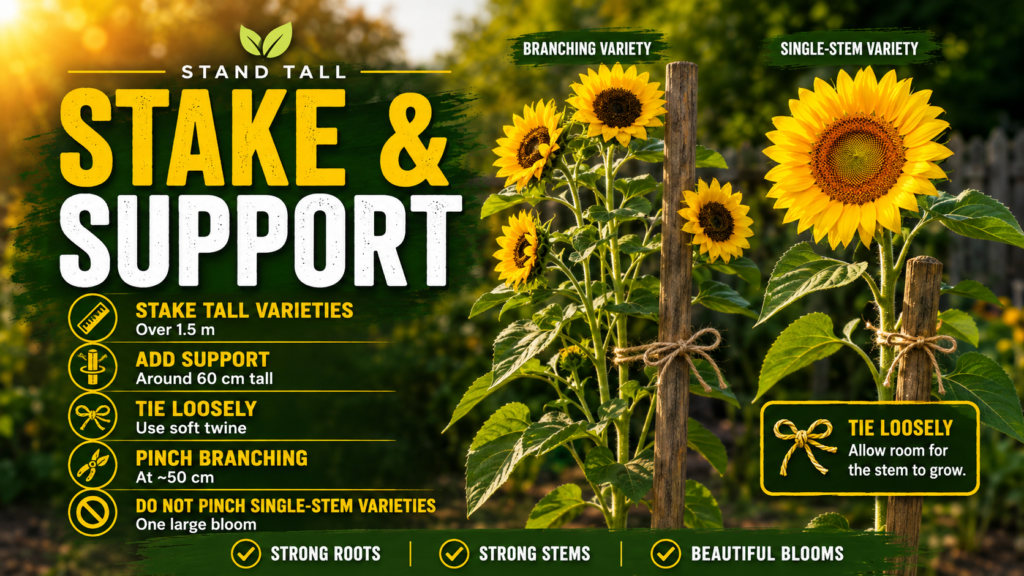
Tall varieties (1.5 m+) benefit from staking, especially in windy areas. Drive a sturdy bamboo cane or wooden stake into the ground when the plant is about 60 cm tall — doing it later risks damaging the root system. Tie loosely with soft twine in a figure-eight pattern.
Sunflowers don’t require pruning in the traditional sense. For branching varieties, pinching the growing tip when the plant reaches 50 cm encourages bushier growth with multiple smaller blooms. Single-stem varieties should be left alone — they put all energy into one impressive flower head.
Seasonal Maintenance
Spring: Prepare soil, sow seeds after last frost. Summer: Water deeply, feed regularly, stake tall plants, and watch for pests. Late summer: Blooms appear — enjoy them as cut flowers or leave for pollinators. Autumn: Let seed heads mature on the plant if you want to harvest seeds or feed birds.
After the season ends, cut spent stalks at ground level and compost them (chop into smaller pieces first — thick stems decompose slowly). Sunflowers are annuals, so plan fresh plantings each spring. Rotate planting locations yearly to reduce soil-borne disease buildup.
Common Problems & Solutions
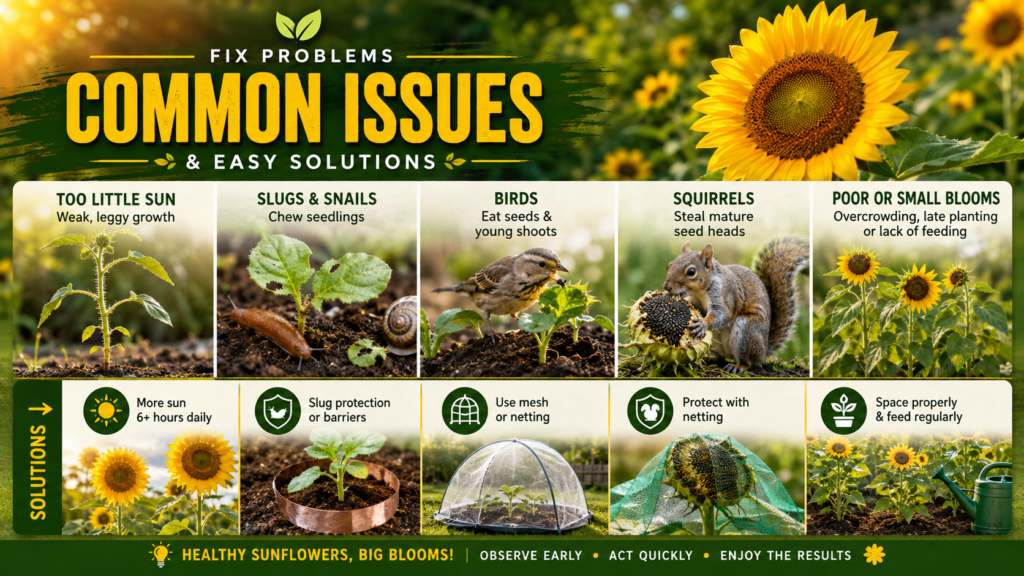
Sunflowers are generally tough, but a few issues crop up regularly. Here’s what I’ve encountered most and how I deal with it.
Weak, Leggy Growth
Thin, spindly stems almost always mean insufficient light. Sunflowers stretch toward the sun — if they’re shaded for even part of the day, they’ll grow tall and weak. Move container plants to a sunnier spot, or thin overcrowded plantings so each plant gets unobstructed light.
Slugs, Snails & Birds
Slugs and snails love young seedlings — use copper tape around pots or organic slug pellets. Birds (especially pigeons) will eat freshly planted seeds and young shoots. Cover seedlings with mesh or cloches until they’re 15 cm tall. Squirrels target mature seed heads — netting helps if you want to harvest seeds yourself.
Poor or Small Blooms
Underwhelming flowers usually result from overcrowding, insufficient feeding, or planting too late in the season. Give each plant adequate space, feed regularly once buds form, and ensure you’re planting early enough for the variety’s days-to-maturity. Some dwarf varieties naturally produce smaller blooms — check what you’re growing.
Frequently Asked Questions
When is the best time to plant sunflower seeds?
Plant after the last frost when soil temperature reaches 10 °C (50 °F). In most temperate climates this is mid-to-late spring. You can start seeds indoors 2–3 weeks earlier for a head start.
How deep should I plant sunflower seeds?
Plant seeds 2.5 cm (1 inch) deep in moist, well-drained soil. Press the soil gently over the seed — don’t compact it. Seeds typically germinate in 7–14 days.
Do sunflowers need a lot of water?
Established sunflowers are drought-tolerant. Water deeply once or twice a week rather than lightly every day. Seedlings need more consistent moisture for the first few weeks.
Why is my sunflower drooping?
Young sunflowers naturally track the sun (heliotropism) and may lean. True drooping in mature plants usually indicates underwatering, wind damage, or a heavy bloom on a weak stem — stake tall varieties for support.