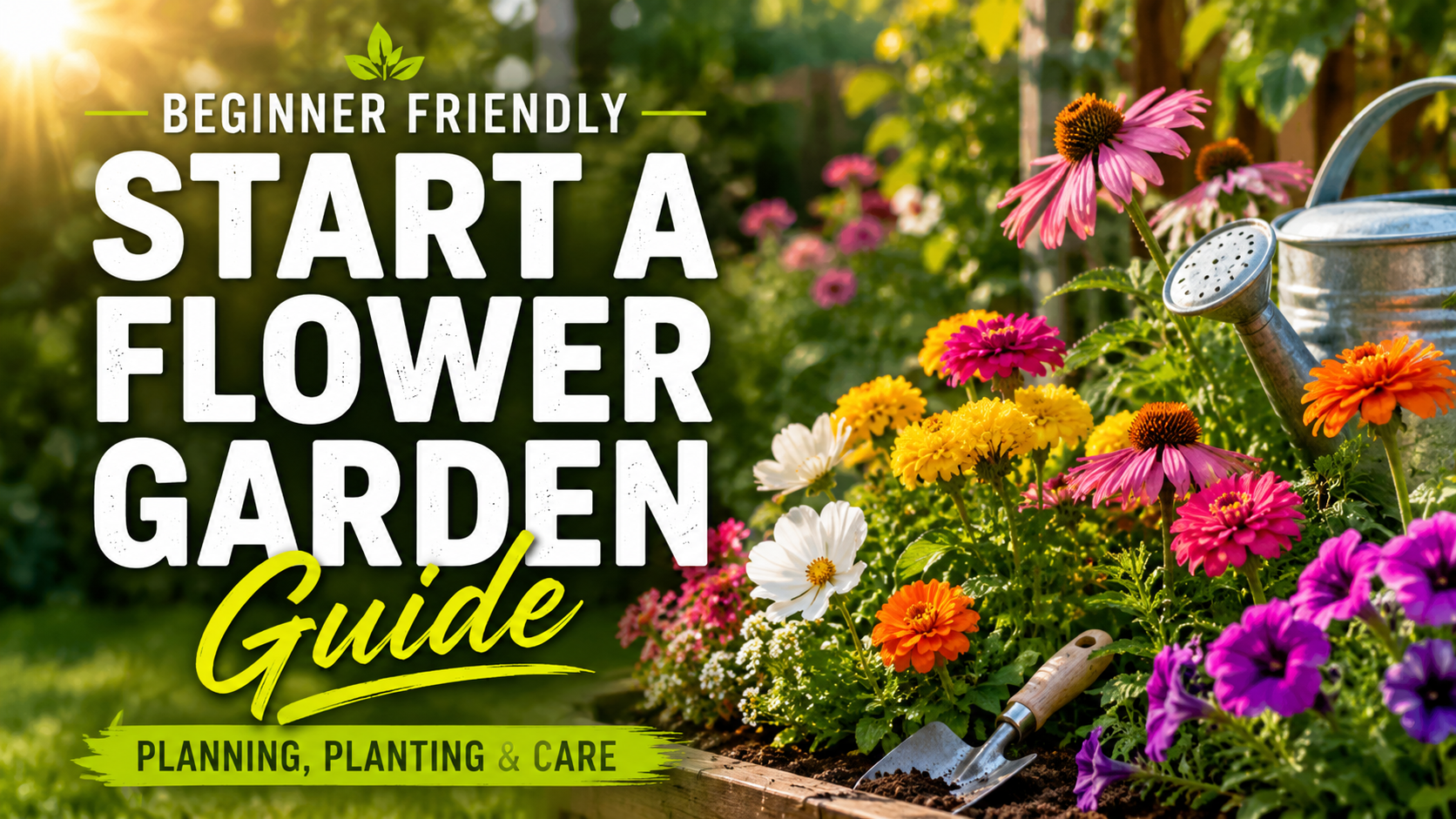
A beginner-friendly guide to choosing a site, preparing soil, picking easy flowers, and keeping your garden blooming all season.
Starting a flower garden doesn’t require a green thumb or years of experience. It does require a bit of planning — choosing the right spot, understanding your soil, and picking flowers that actually thrive in your conditions. I’ve helped dozens of neighbors start their first beds, and the steps below are exactly what I walk them through every time.
1. Choosing the Right Site
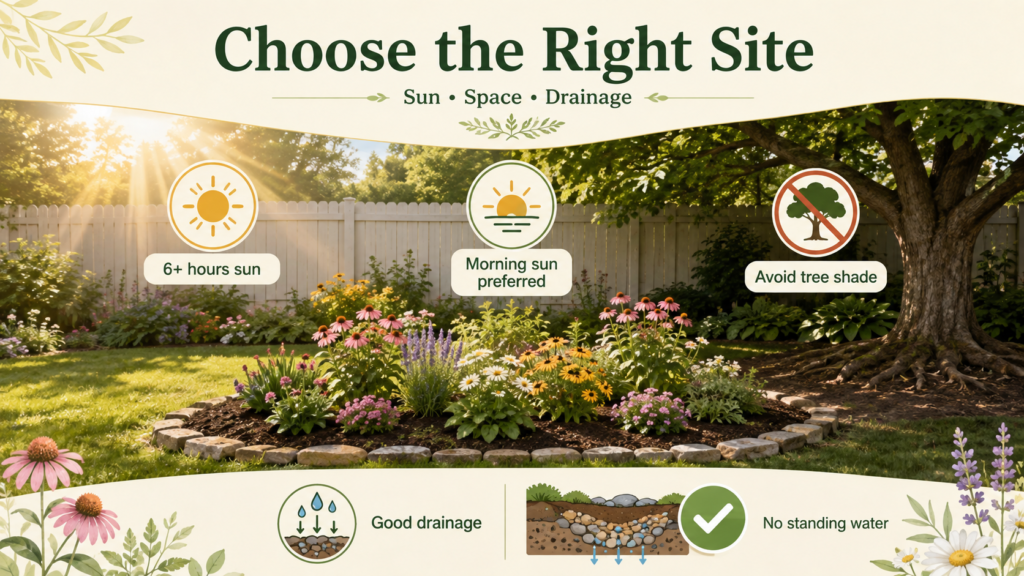
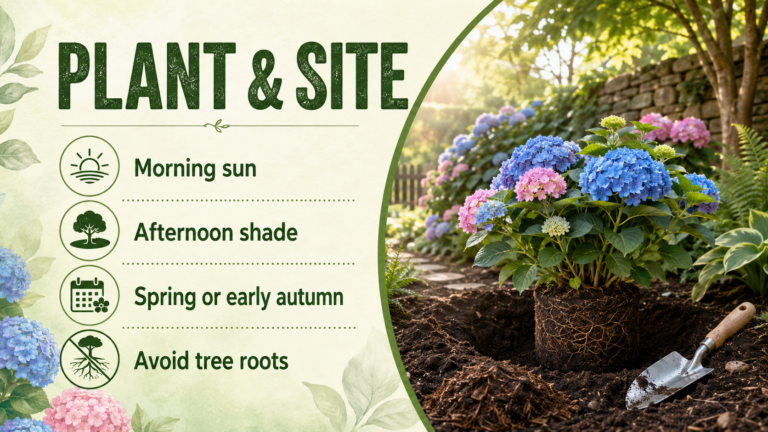
Most flowering plants need at least 6 hours of direct sunlight per day. Spend a day observing your yard — note which areas get morning sun versus afternoon shade. South-facing spots (in the Northern Hemisphere) are usually the sunniest. Avoid areas under large trees where root competition and shade will starve your flowers.
Pro tip: Watch for drainage too. If water puddles after rain and takes hours to drain, you’ll need raised beds or a different location. Flowers hate wet feet.
2. Preparing Your Soil
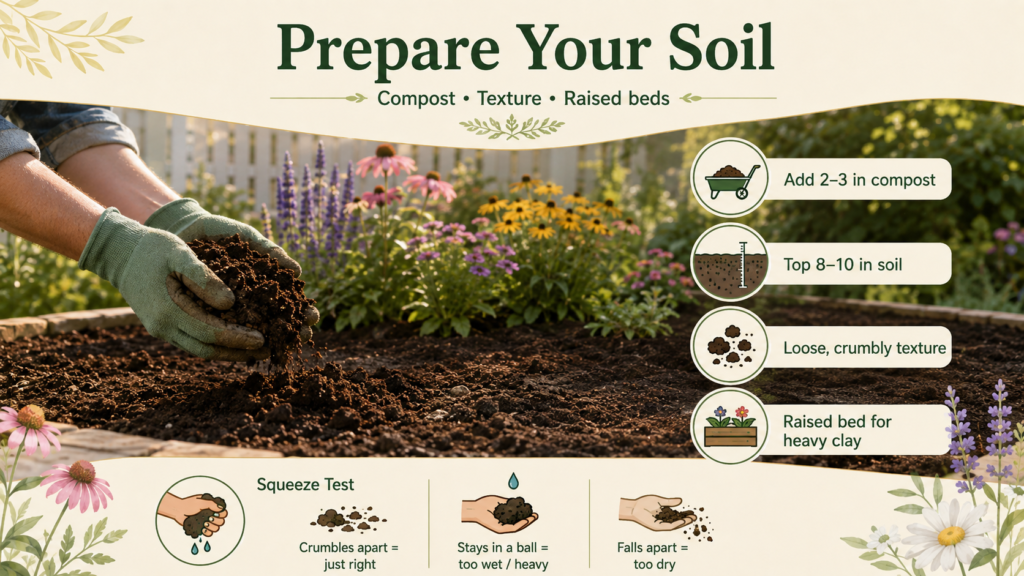
Good soil is the foundation of a thriving flower garden. Most garden soil benefits from 2–3 inches of compost mixed into the top 8–10 inches. This improves drainage in clay soils and water retention in sandy soils. A simple squeeze test tells you a lot: grab a handful of moist soil and squeeze — it should hold together loosely, then crumble when poked.
If your soil is extremely compacted clay, consider a raised bed filled with a mix of topsoil, compost, and perlite. It saves years of amendment work and gives you instant results. A 4×8 foot bed is a perfect starter size.
3. Easy Flowers for Beginners
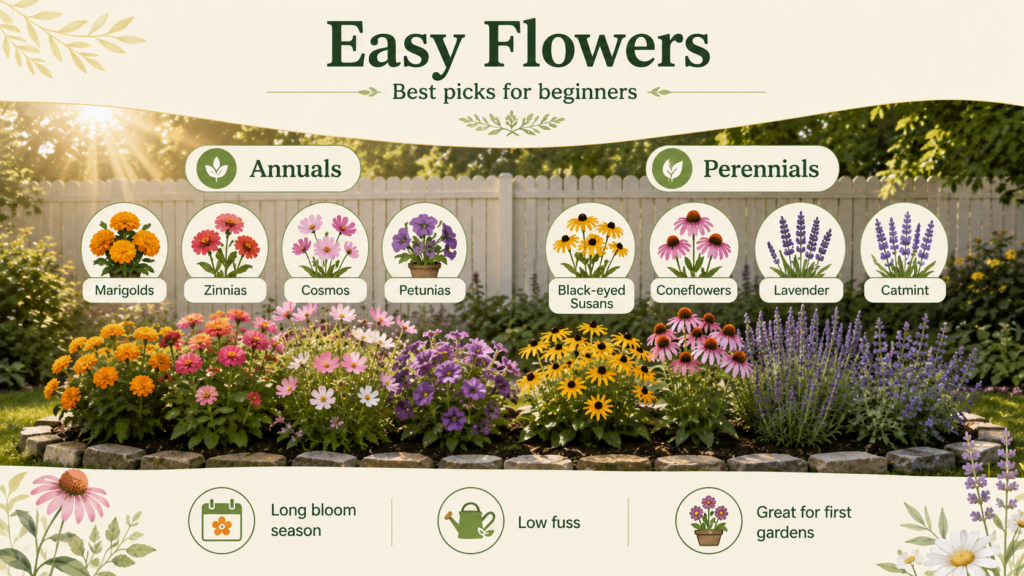
Start with proven performers rather than fussy varieties. You want flowers that tolerate imperfect watering, resist common pests, and bloom for a long season. Here are my top recommendations for first-time gardeners:
Annuals: Marigolds, zinnias, cosmos, nasturtiums, and petunias. These bloom continuously from planting until frost. Perennials: Black-eyed Susans, coneflowers (Echinacea), daylilies, lavender, and catmint. They return every year and get bigger over time. Mix both for instant color (annuals) and long-term structure (perennials).
4. Planning Your Layout
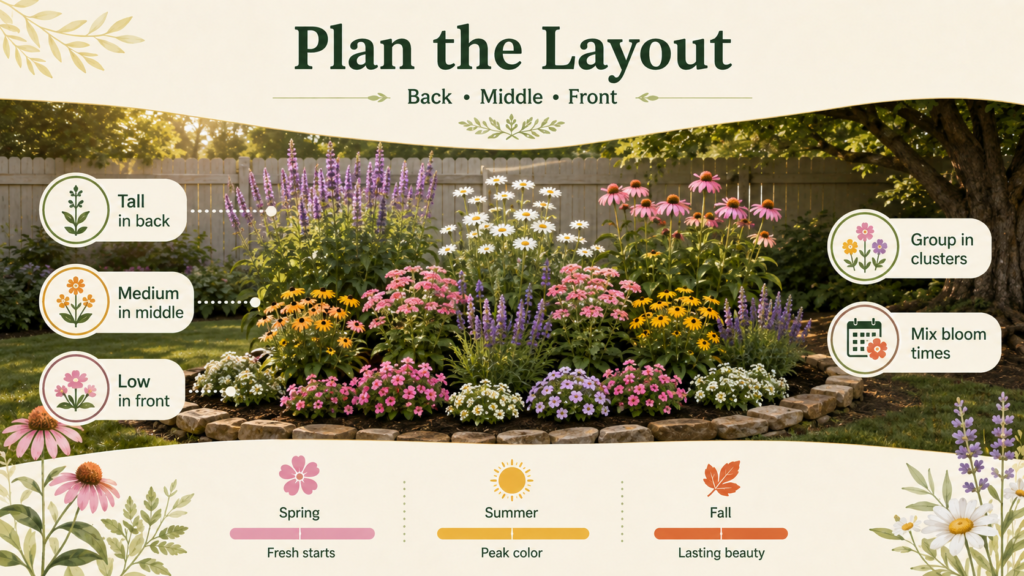
Place tall plants (like cosmos or coneflowers) at the back of the bed, medium plants in the middle, and low-growing ones at the front. Group flowers in clusters of 3–5 of the same variety rather than planting single scattered specimens — grouping creates visual impact and makes maintenance easier.
Think about bloom times: combine spring bulbs, summer annuals, and fall perennials so something is always flowering. Even a small bed can have three seasons of color with planning.
5. Planting & Timing
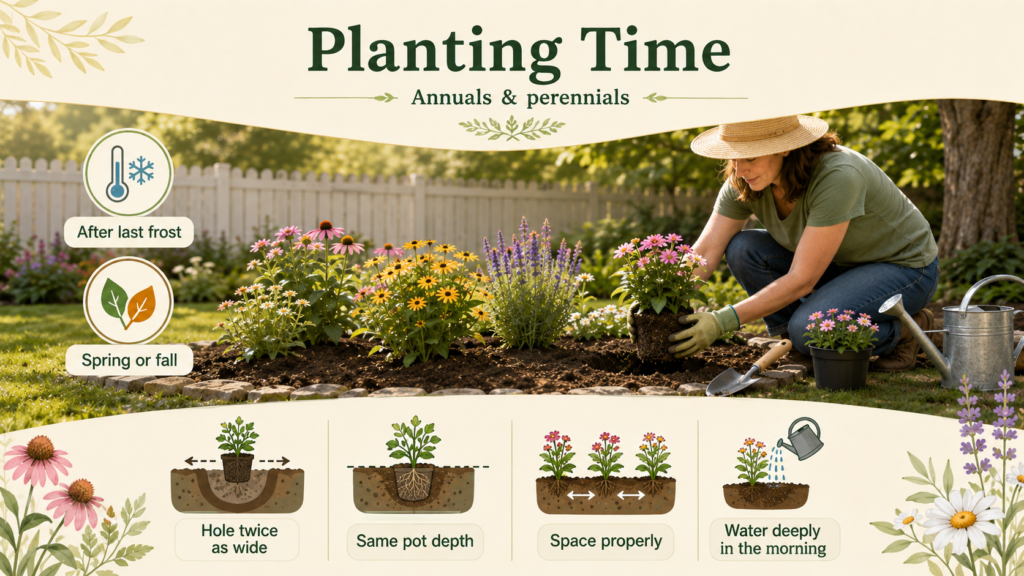
Plant annuals after your last frost date — check your local extension office for exact timing. Dig a hole twice the width of the root ball, set the plant at the same depth it was in the pot, backfill, and water deeply. Space plants according to their mature width, not their nursery size.
Perennials can be planted in spring or fall. Fall planting gives roots time to establish before summer heat. Water transplants daily for the first week, then taper to every 2–3 days. Morning watering is best — it lets foliage dry before evening, reducing disease.
6. Watering & Ongoing Maintenance
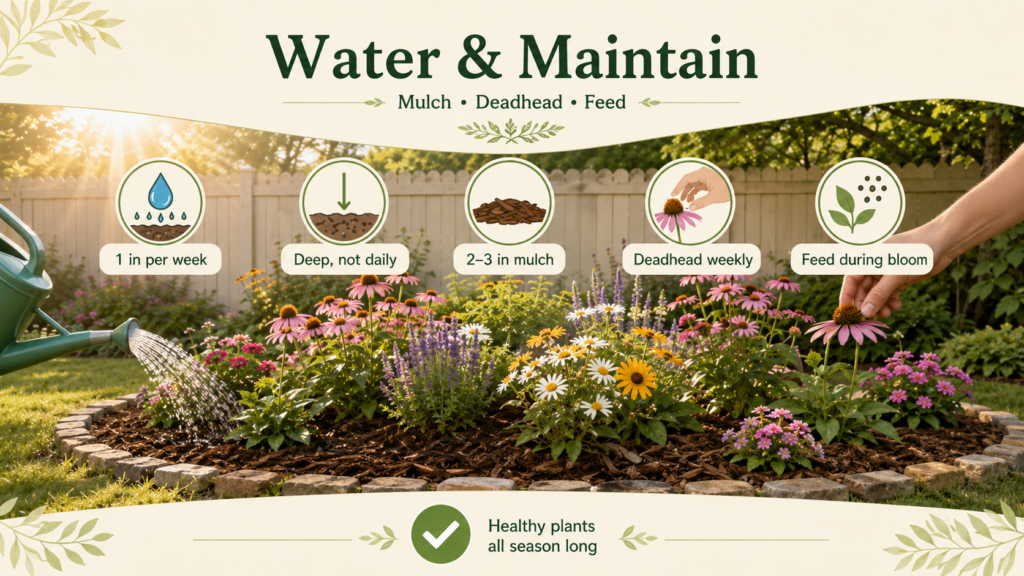
Once established, most flower gardens need about 1 inch of water per week — either from rain or irrigation. Water deeply and less often rather than shallow daily sprinkles. Mulch with 2–3 inches of shredded bark or straw to retain moisture, suppress weeds, and regulate soil temperature.
Deadhead spent blooms weekly to encourage more flowers. Feed annuals with a balanced liquid fertilizer every 2–3 weeks during peak bloom. Perennials need less — a single spring application of compost or slow-release granules is usually enough.
Key Takeaways
Pick a sunny, well-drained spot. Amend your soil with compost. Start with forgiving flowers like marigolds and coneflowers. Group plants in clusters for impact. Water deeply but infrequently, and mulch to save yourself work. A small, well-planned bed will reward you far more than a large neglected one.
Frequently Asked Questions
How much space do I need for a beginner flower garden?
A 4×8 foot bed is ideal for beginners — large enough for variety, small enough to maintain easily. You can always expand later once you’re comfortable with the routine.
Can I start a flower garden in partial shade?
Yes, but your flower choices change. Impatiens, begonias, astilbe, and hostas (for foliage) thrive in 3–4 hours of sun. You’ll have fewer options than full sun, but a shade garden can still be beautiful.
When is the best time of year to start a flower garden?
Spring (after last frost) is the classic time for annuals. Fall is excellent for perennials and spring bulbs. You can plan and prepare soil any time — even winter is perfect for sketching your layout and ordering seeds.