
A practical guide to confirming stink bugs in your garden and choosing the least-disruptive fix.
Key Takeaways
- Brown marmorated stink bugs are shield-shaped, ~17 mm, with banded antennae and mottled brown coloring.
- They feed on 100+ host plants — look for dimpled, cat-facing damage on fruit.
- Mechanical removal and exclusion are the safest first steps; insecticides are a last resort.
- Seal entry points in autumn to prevent indoor overwintering invasions.
1. How to Identify Stink Bugs
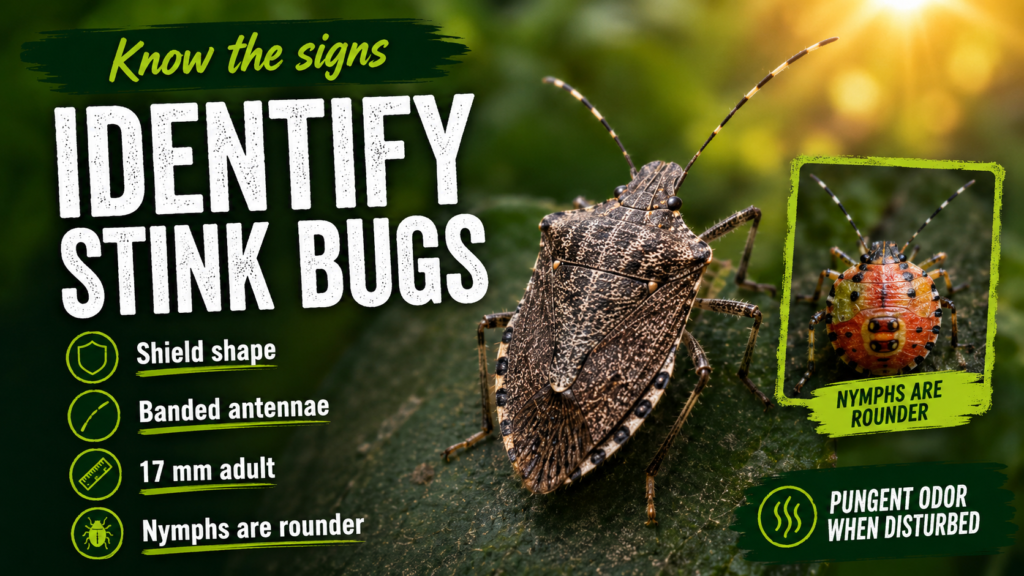
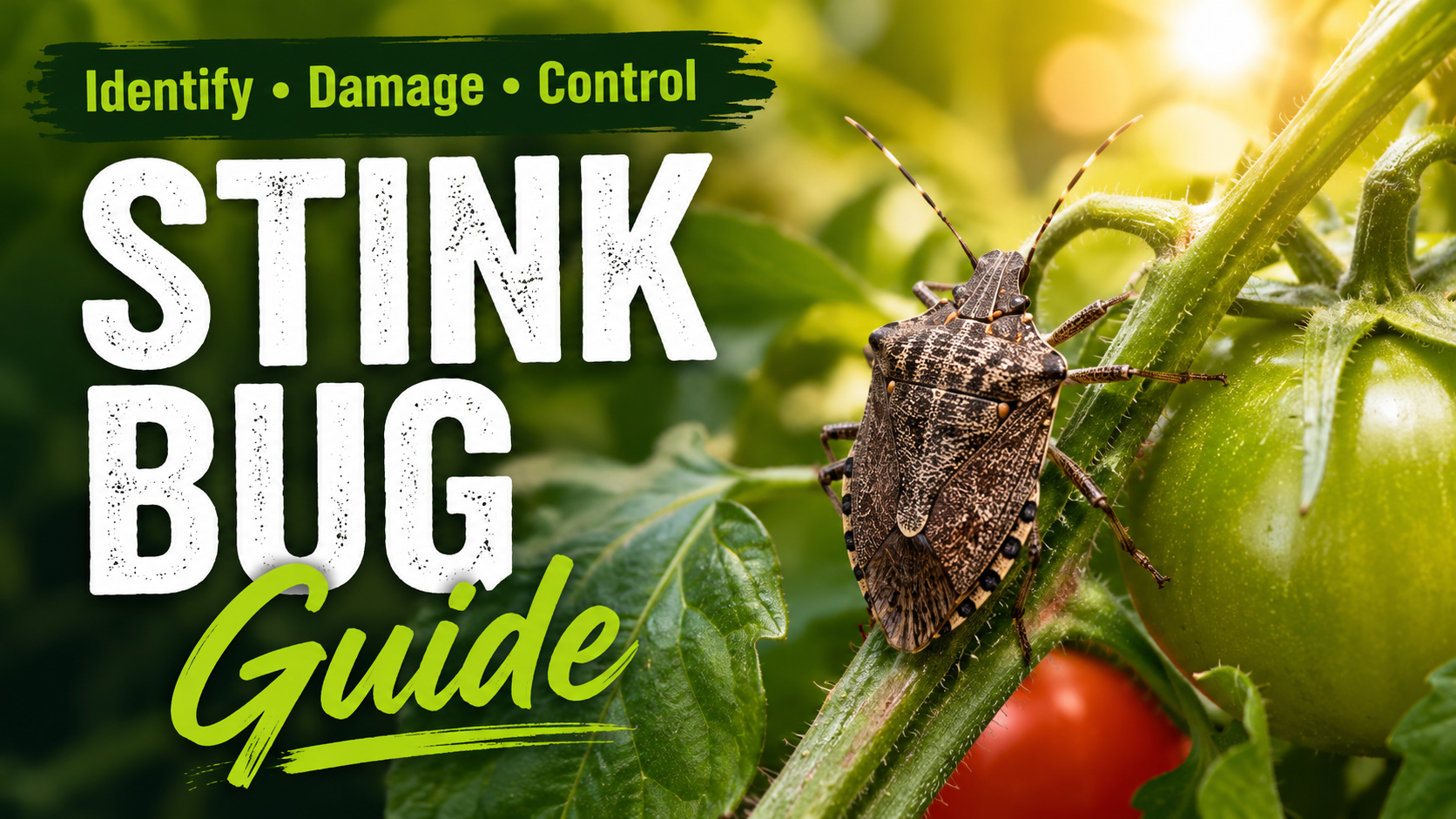
The brown marmorated stink bug (Halyomorpha halys) is the most common garden species in North America. Adults are roughly 17 mm long with a distinctive shield shape, mottled greyish-brown colouring, and alternating light-dark bands on their antennae and the exposed edges of the abdomen.
Turn the bug over: a pale, unmarked underside and rounded shoulder ‘humps’ confirm you have a stink bug rather than a beetle. They also release a pungent, cilantro-like odour when disturbed — a reliable field ID trick.
Nymphs are smaller, rounder, and can appear bright green or orange with black markings before reaching their adult colouring in the final instar.
2. Damage & Host Plants

Stink bugs feed by inserting their piercing-sucking mouthparts into fruit, seed pods, and stems. The telltale sign is ‘cat-facing’ — dimpled, corky patches on tomatoes, peppers, apples, and peaches where tissue collapses under the feeding site.
Common host plants include tomatoes, peppers, beans, corn, raspberries, apples, peaches, and ornamental trees like catalpa and princess tree. In my garden, tomatoes and peppers show damage first every year.
Light feeding on a few fruit is cosmetic — the produce is still edible once you cut away the affected area. Heavy infestations, however, can reduce yields significantly and introduce secondary fungal infections through the wound sites.
3. Lifecycle & Habitat
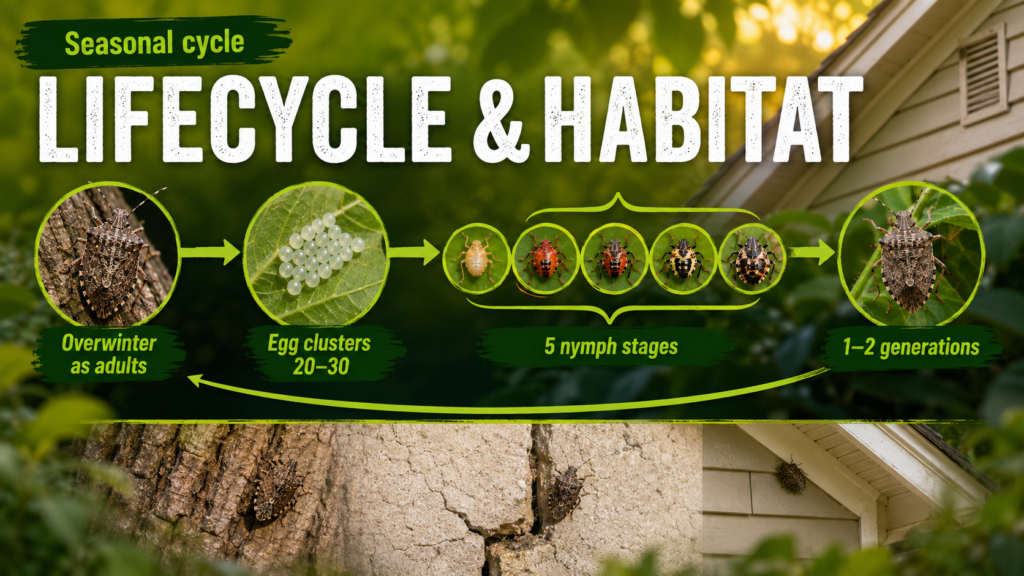
Adults overwinter in sheltered spots — attics, wall voids, under bark — and emerge in spring when temperatures consistently hit 15 °C (59 °F). Females lay barrel-shaped eggs in clusters of 20–30 on leaf undersides from late May onward. One generation per year is typical in northern regions; two in warmer climates.
Nymphs pass through five instars over 5–6 weeks before reaching adulthood. By late summer, new adults begin seeking winter shelter, which is when homeowners notice them congregating on sun-warmed south-facing walls.
4. Common Lookalikes
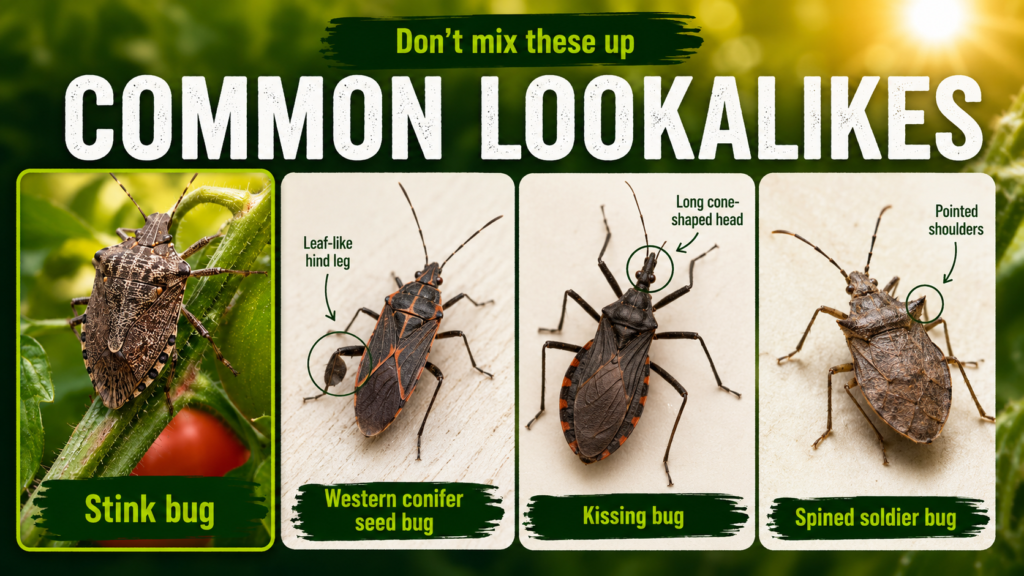
The western conifer seed bug is frequently mistaken for a stink bug; it is narrower with a flattened, leaf-shaped hind leg. Kissing bugs (Triatominae) are also shield-shaped but have a distinctly elongated, cone-shaped head and are primarily nocturnal.
Beneficial predatory stink bugs — like the spined soldier bug — prey on caterpillars and beetle larvae. They have pointed ‘shoulders’ and a thinner body. Avoid squashing them; they’re garden allies.
5. Control Methods (Least-Disruptive First)
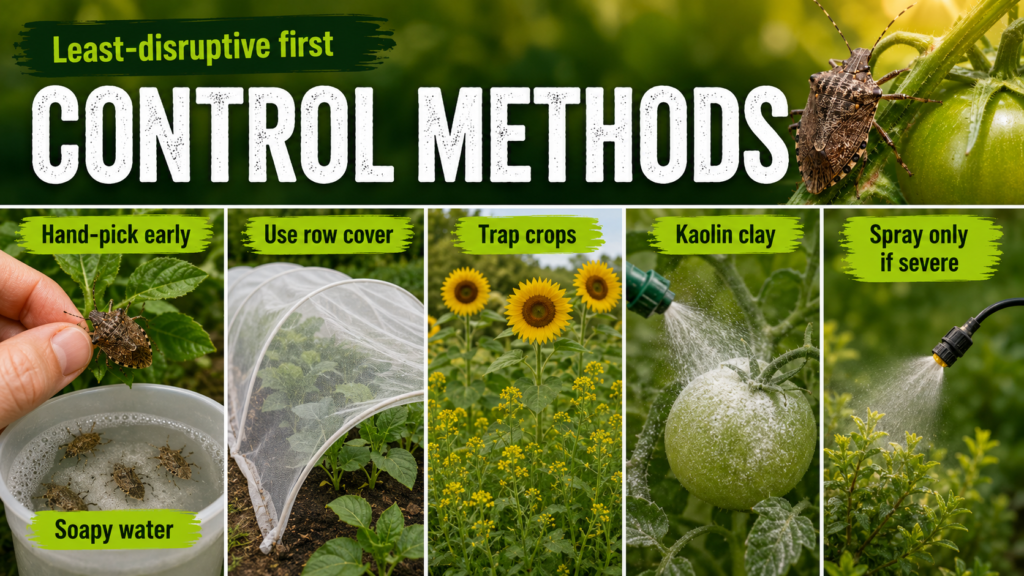
Start with mechanical removal: knock bugs into a bucket of soapy water in the cool morning when they’re sluggish. For small gardens, this alone keeps populations manageable. Row cover or insect netting over vulnerable crops is highly effective exclusion.
Trap crops like sunflowers or mustard can lure stink bugs away from your main harvest. Plant them on the garden perimeter and monitor weekly. Kaolin clay spray creates a physical barrier on fruit that deters feeding without harming beneficials.
If populations are severe, targeted sprays of pyrethrin (organic) or bifenthrin (conventional) can be applied to affected plants only — never blanket-spray. Always follow label rates and reapplication intervals. In my experience, reaching for chemicals is rarely needed if exclusion and handpicking start early.
6. Prevention Tips
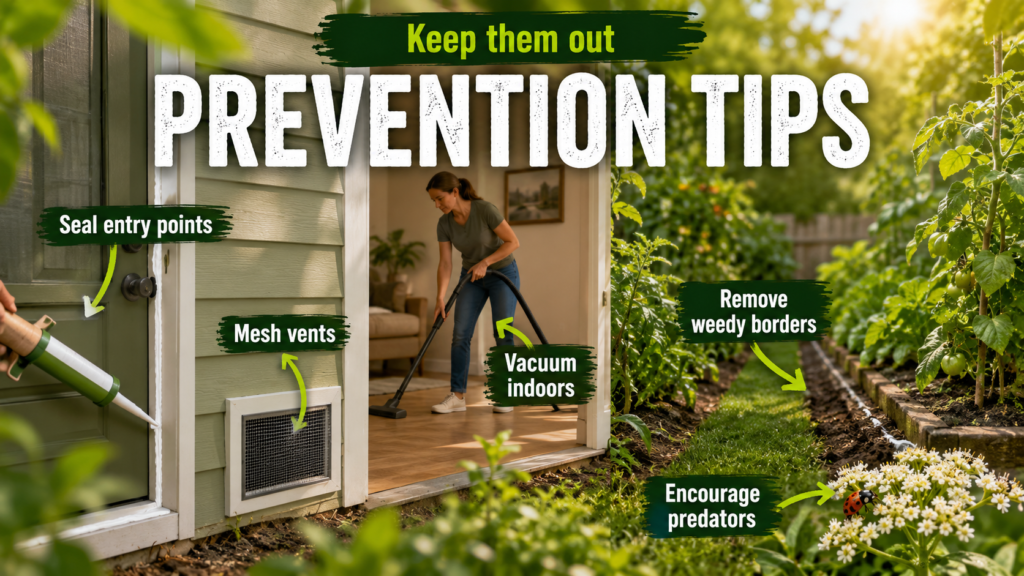
Seal cracks around windows, doors, soffits, and utility penetrations in autumn before adults seek shelter. Install fine mesh (≤ 1.6 mm) over attic vents. Indoors, vacuum up any that slip through — do not crush them unless you enjoy the smell.
In the garden, remove weedy borders and tall grass adjacent to crops where nymphs develop undisturbed. Encourage natural predators — parasitoid wasps (Trissolcus japonicus), birds, and spiders all help keep numbers in check.
7. When to Call a Professional
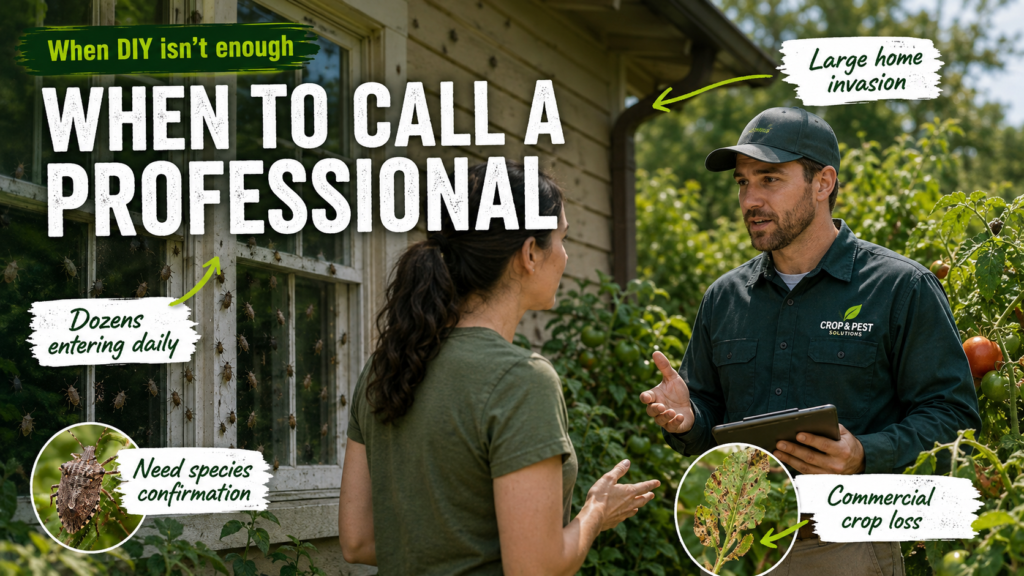
If stink bugs are entering your home in large numbers (dozens daily) despite sealing efforts, a pest control operator can apply residual treatments around the exterior perimeter. This is most effective in late summer before aggregation peaks.
For commercial growers experiencing significant crop loss, consult your local cooperative extension office — they can confirm the species, assess economic thresholds, and recommend region-specific integrated pest management plans.
Frequently Asked Questions
Are stink bugs harmful to people?
Stink bugs do not bite, sting, or spread disease to people. Their defensive odour can be unpleasant, but they are generally harmless to handle carefully.
What is the best way to remove stink bugs?
Knock them into a bucket of soapy water or vacuum them up without crushing them. Seal cracks and install screens to reduce new arrivals.
Should I use insecticide on stink bugs?
Use insecticides only when handpicking, exclusion, and crop covers are not enough. Choose a product labeled for the crop and pest, and always follow the label directions.