

A complete, experience-based guide to growing and maintaining healthy garden roses — from choosing the right site to achieving dependable, abundant blooms season after season.
Roses have a reputation for being fussy, but in my experience they’re surprisingly forgiving once you understand their basic needs. I’ve been growing hybrid teas, floribundas, and climbing roses in my home garden for over 15 years, and the biggest lesson I’ve learned is that consistent, simple care outperforms complicated interventions every time.
This guide covers everything I do each season to keep my roses healthy, blooming generously, and free of the most common problems. Whether you’re planting your first bare-root rose or troubleshooting a tired old bush, these are the techniques that have worked reliably for me year after year.
Planting & Site Requirements

Roses need at least 6 hours of direct sunlight daily — morning sun is especially valuable because it dries dew from the leaves quickly, reducing fungal disease. Choose a spot with good air circulation but sheltered from harsh, drying winds. Avoid planting under large trees where roots compete for water and nutrients.
Soil should be well-drained, fertile, and slightly acidic to neutral (pH 6.0–6.8). Dig a hole at least 45 cm wide and deep, mix in generous amounts of well-rotted compost or aged manure, and create a small mound at the bottom for bare-root roses to sit on with roots spread outward.
Plant the graft union (the swollen knob where the stem meets the rootstock) about 2–3 cm below soil level in cold climates to protect it from frost, or at soil level in warmer regions. Water deeply after planting and apply a 7–10 cm layer of organic mulch, keeping it away from the stem.
💡 Leo’s tip: Never plant a new rose where an old one grew — ‘rose sickness’ (replant disease) stunts growth. If you must reuse the spot, replace the soil to a depth of 45 cm with fresh topsoil and compost.
Watering: Deep and Consistent
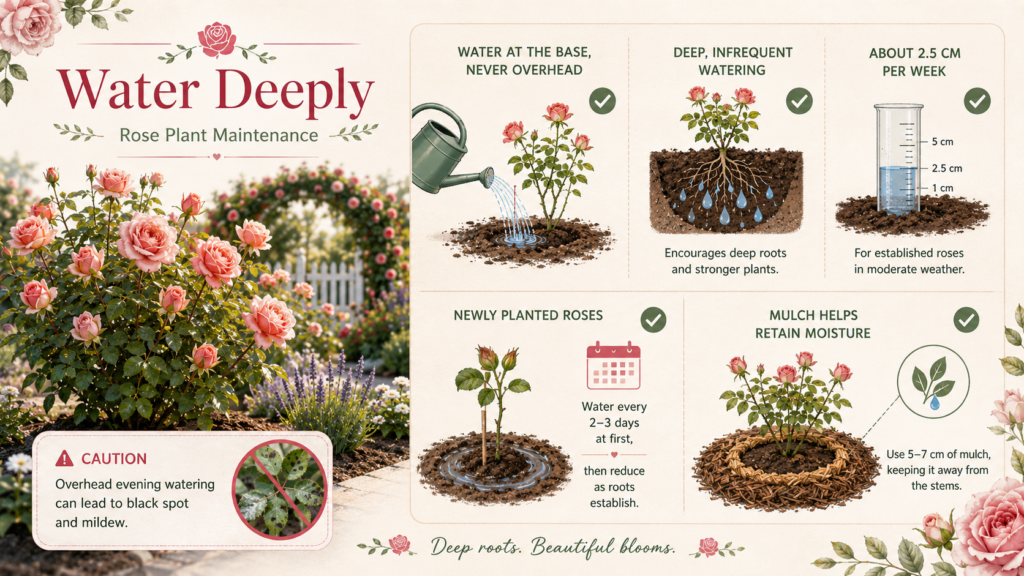
Roses prefer deep, infrequent watering over shallow daily splashes. Water at the base of the plant — never overhead — to keep foliage dry and prevent black spot and mildew. A soaker hose or drip system is ideal. In summer, established roses need roughly 2.5 cm of water per week, more in sandy soil or extreme heat.
Newly planted roses need more frequent watering for the first 6–8 weeks while roots establish. Water every 2–3 days, then gradually reduce to once or twice a week. Mulch helps enormously — it conserves moisture, suppresses weeds, and keeps roots cool in summer.
⚠️ Overhead watering in the evening leaves foliage wet overnight — this is the fastest way to invite black spot and powdery mildew. Always water at ground level, ideally in the morning so any accidental splashing dries quickly.
Feeding & Soil Health
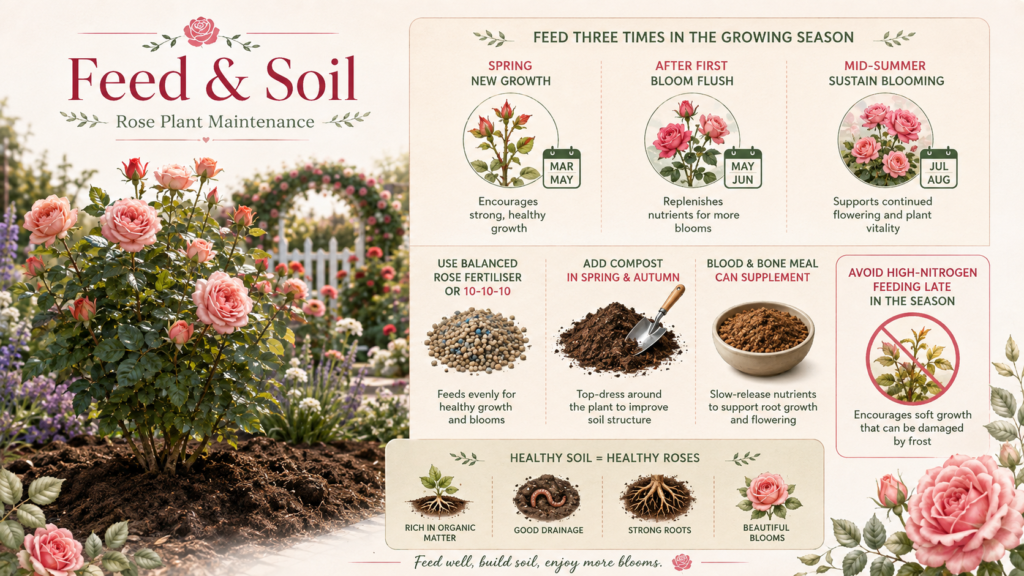
Roses are hungry plants. I feed mine three times during the growing season: first when new growth appears in spring, again after the first flush of blooms, and a final time in mid-summer (no later than 6 weeks before the first expected frost, so new growth hardens off before winter).
Use a balanced rose fertiliser or general-purpose feed (10-10-10) supplemented with a handful of blood and bone meal. Top-dress with compost in spring and autumn. Avoid high-nitrogen feeds late in the season — they promote soft growth that’s vulnerable to frost damage.
Pruning: Timing & Technique
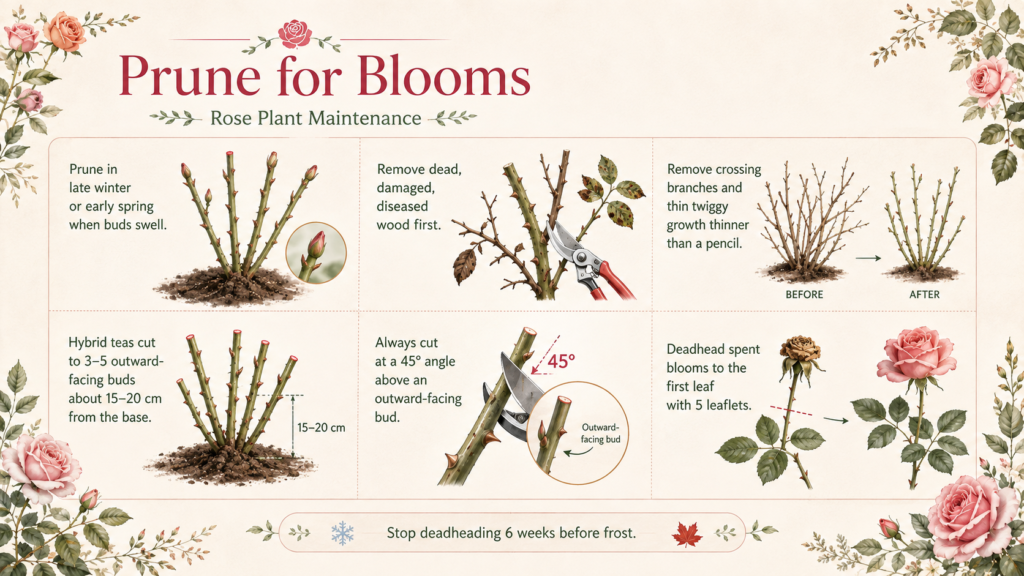
Pruning is the single most impactful thing you can do for roses. It encourages fresh, vigorous growth, improves air circulation (reducing disease), and directs the plant’s energy into producing flowers. The main prune happens in late winter or early spring, just as buds begin to swell — timing varies by climate.
Remove all dead, damaged, and diseased wood first — cut back to healthy white pith. Then remove crossing branches and thin, twiggy growth thinner than a pencil. For hybrid teas, cut remaining stems to 3–5 outward-facing buds (about 15–20 cm from the base). Floribundas can be pruned less severely. Always cut at a 45° angle just above an outward-facing bud.
Throughout the blooming season, deadhead spent flowers by cutting back to the first leaf with 5 leaflets. This redirects energy into producing new blooms rather than seed hips. Stop deadheading 6 weeks before frost to let the plant wind down naturally for winter.
Seasonal Maintenance Calendar
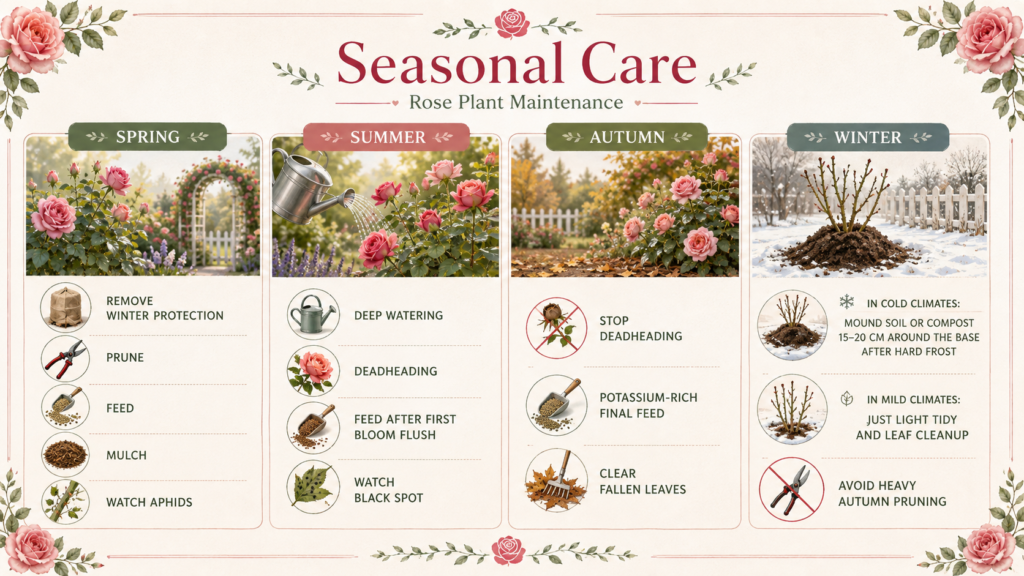
Spring: Remove winter protection, prune, feed, and mulch. Watch for aphids on new growth. Summer: Water deeply, deadhead regularly, feed after the first bloom flush, and monitor for black spot. Spray preventatively if your area is prone to fungal issues. Autumn: Stop deadheading, apply final feed of potassium-rich fertiliser to harden stems, and clear fallen leaves.
Winter: In cold climates, mound soil or compost 15–20 cm around the base after the first hard frost to protect the graft union. In mild-winter areas, a light tidy and leaf cleanup is sufficient. Avoid heavy pruning in autumn — wait until late winter when you can see which wood survived.
Common Problems & Solutions
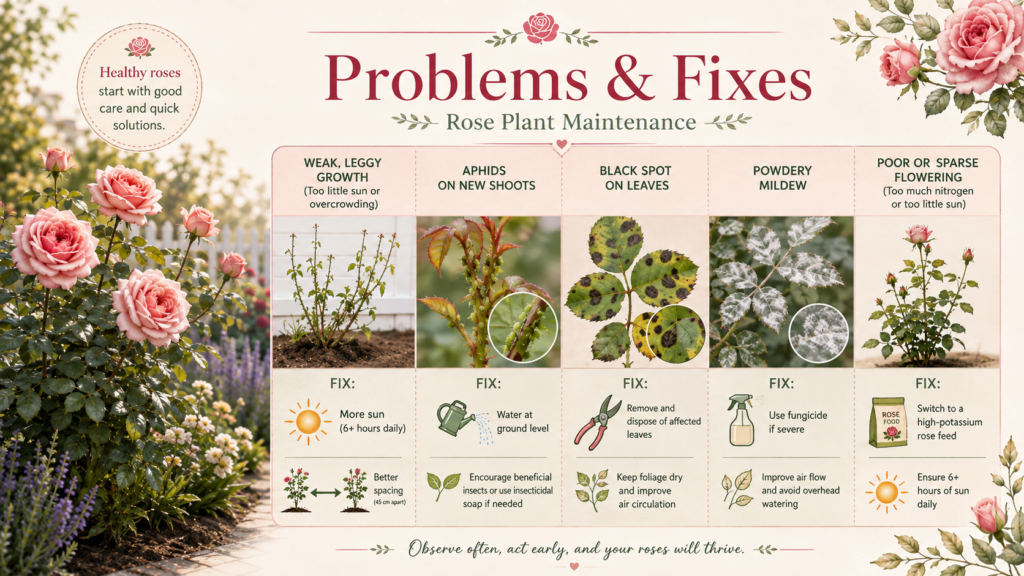
Most rose problems come down to three things: insufficient light, poor air circulation, or inconsistent watering. Here are the issues I encounter most and how I deal with them.
Weak, Leggy Growth
Spindly stems with sparse leaves usually indicate too little sunlight or over-crowding. Ensure each bush has adequate space (60–90 cm between plants) and receives full sun. Hard pruning in late winter can rejuvenate a tired bush — cut back to 15 cm and feed generously as new growth appears.
Aphids, Black Spot & Mildew
Aphids cluster on new shoots in spring — blast them off with a strong water jet or use insecticidal soap. Black spot (yellow-edged dark circles on leaves) spreads via water splash; remove affected leaves, improve air flow, and apply a fungicide if severe. Powdery mildew thrives in warm, dry days with cool nights — water at ground level and space plants generously.
Poor or Sparse Flowering
Roses that produce lots of foliage but few flowers are usually getting too much nitrogen or too little sunlight. Switch to a high-potassium feed (tomato fertiliser works well), ensure 6+ hours of direct sun, and prune properly — under-pruned roses put energy into old wood rather than new flowering stems.
Frequently Asked Questions
What is the best way to maintain a rose plant?
Rose plant maintenance includes regular watering, proper pruning, adequate sunlight, well-drained soil, and seasonal feeding to encourage healthy growth and blooms.
When is the best time to plant roses?
Bare-root roses are best planted in late winter to early spring while dormant. Container-grown roses can be planted any time the ground isn’t frozen, but spring and autumn give the best results as temperatures are mild and rainfall is usually reliable.
How often should I prune my roses?
One major prune in late winter or early spring, plus regular deadheading throughout the blooming season. A light tidy in autumn to remove damaged stems is fine, but save hard pruning for late winter when you can assess frost damage.
Do roses need full sun?
Yes — at least 6 hours of direct sunlight daily for best flowering. Some varieties tolerate partial shade but will produce fewer blooms and are more susceptible to fungal diseases. Morning sun is especially beneficial as it dries dew from leaves quickly.
Why are my rose leaves turning yellow?
Yellow leaves can indicate overwatering, underwatering, nutrient deficiency (especially iron or nitrogen), or black spot disease. Check soil moisture first, then look for dark spots on the leaves. Feed with a balanced rose fertiliser and ensure good drainage.