A practical, step-by-step guide to designing a garden that reliably supports pollinators — from plant selection to bloom-season planning.
When I planted my first pollinator garden eight years ago, I made every beginner mistake: random plants with no bloom overlap, a sunny corner that turned out to be too windy, and a misguided ‘spray first, ask questions later’ approach to pests. The bees didn’t come. The butterflies didn’t stay.
Since then, I’ve rebuilt that garden three times — and helped a dozen neighbours start their own. This guide shares everything I wish I’d known on day one: which plants deliver the most value, how to plan continuous blooms from early spring through late autumn, and the simple practices that keep pollinators safe.
Why Pollinators Matter
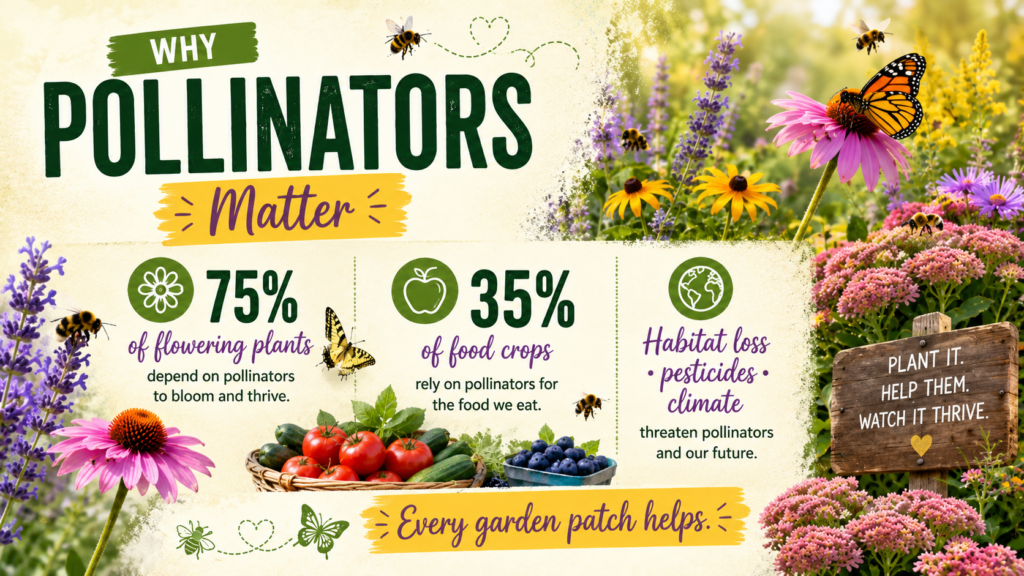
Roughly 75 % of flowering plants and about 35 % of global food crops depend on animal pollination. Bees alone pollinate an estimated $15 billion worth of crops in the United States each year. Yet pollinator populations are declining due to habitat loss, pesticide exposure, and climate shifts.
A home pollinator garden — even a small one — provides forage corridors that connect fragmented wild habitats. Think of your garden as a refuelling station on a long motorway for bees and butterflies. Every patch counts.
Choosing Your Site
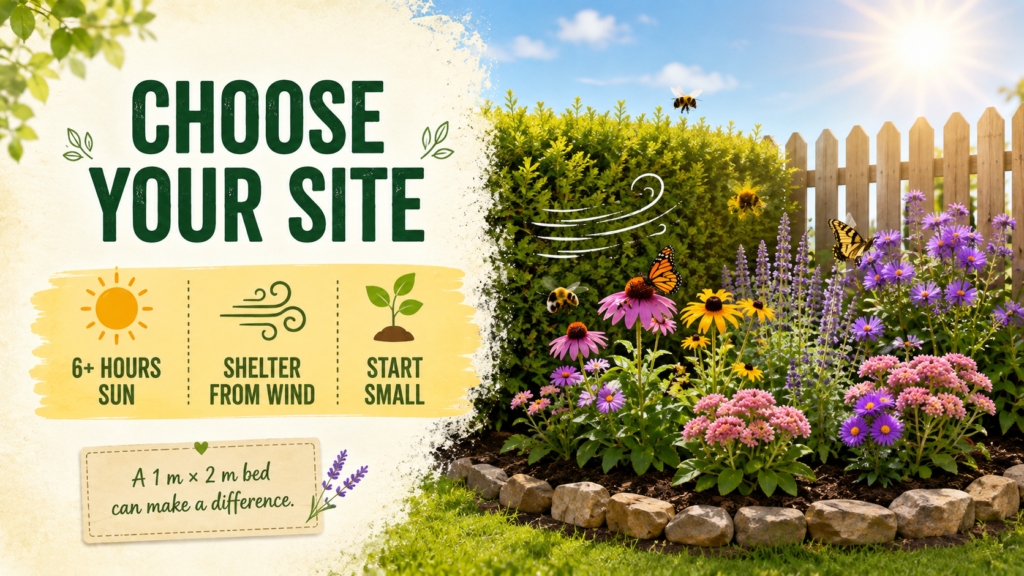
Most pollinator-friendly plants need at least 6 hours of direct sunlight. Choose the sunniest spot you can — a south- or west-facing bed is ideal. Shelter from strong wind matters too: pollinators burn more energy fighting gusts, so a fence, hedge, or wall on the windward side helps enormously.
💡 Pro tip from experience: Start small — even a 1 m × 2 m strip can support dozens of bee species if planted densely with the right mix. You can always expand once you see results.
Best Plants to Grow
Focus on single-petalled, open-faced flowers — they make nectar and pollen accessible. Double-flowered cultivars may look lush but often produce little reward for visiting insects. Native plants are almost always a better bet than exotic ornamentals because local pollinators have evolved alongside them.
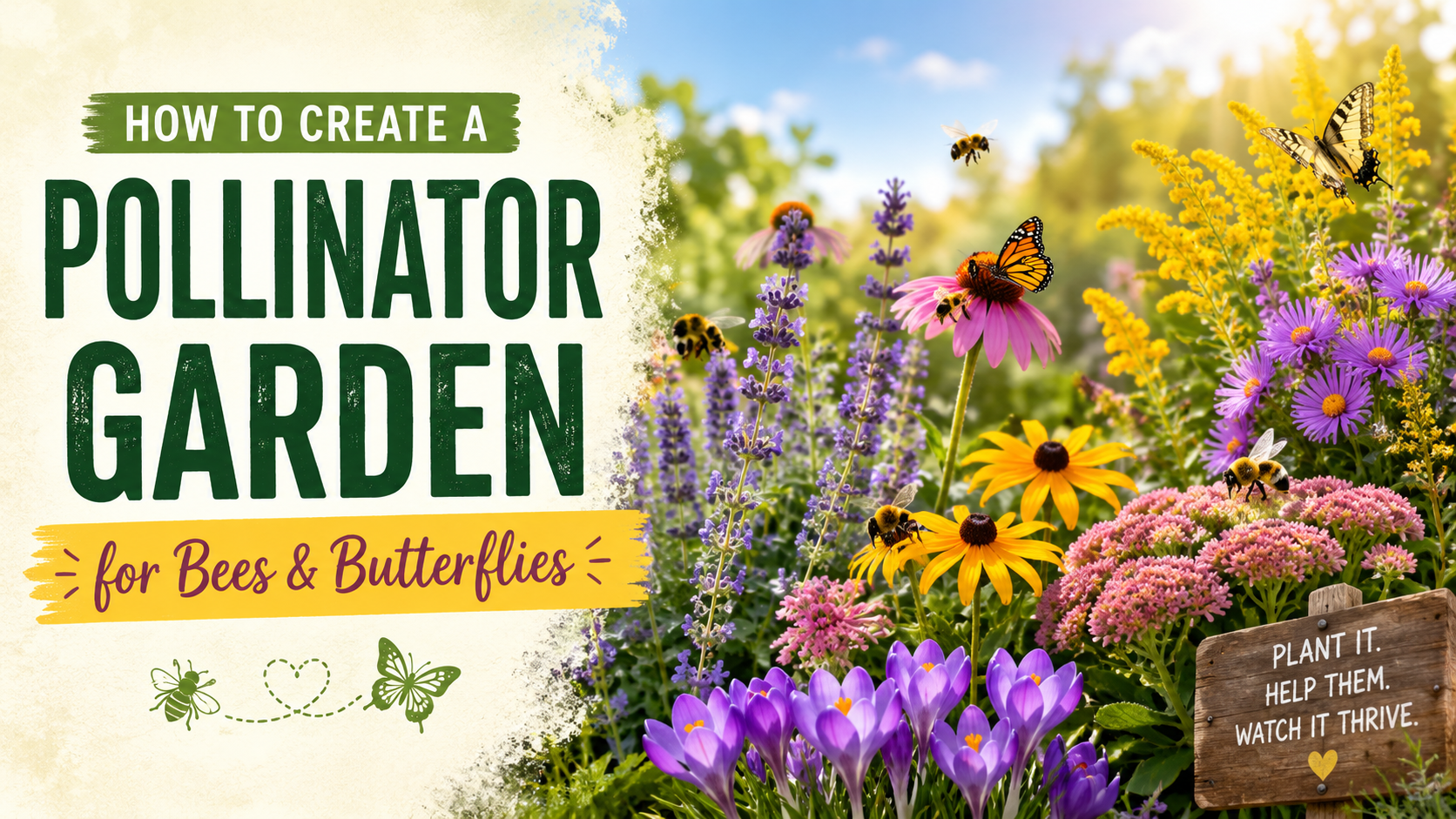
Monarch butterflies rely on coneflowers (Echinacea) as a key nectar source during summer.
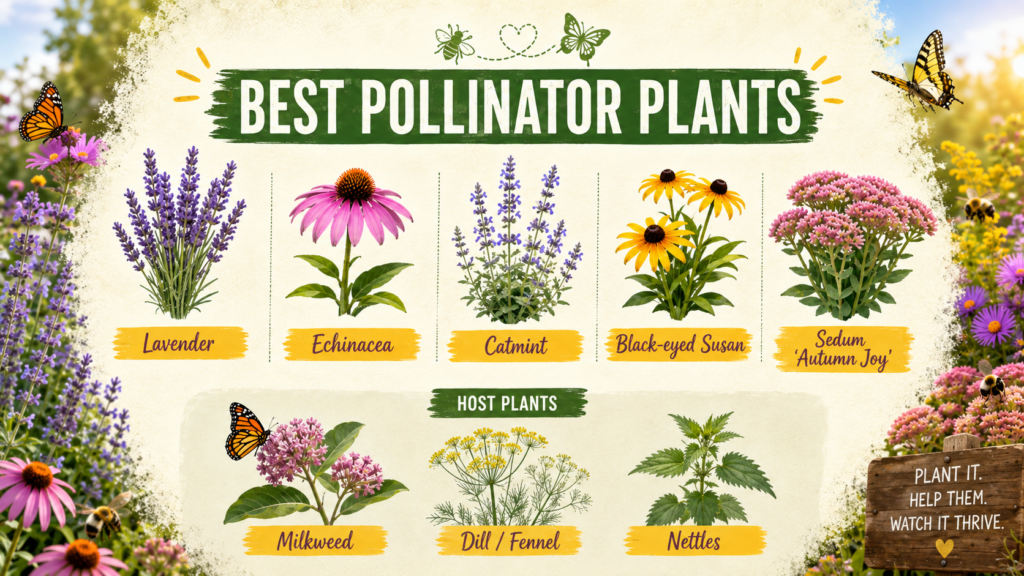
My top five for beginners: Lavender (Lavandula angustifolia), Echinacea purpurea, Catmint (Nepeta), Black-eyed Susan (Rudbeckia), and Sedum ‘Autumn Joy’. These are hardy, low-maintenance, and together cover spring through autumn.
For butterflies specifically, include host plants where caterpillars feed — milkweed for monarchs, fennel or dill for swallowtails, and nettles for painted ladies. A garden that supports the full lifecycle is far more valuable than one offering only adult nectar.
Planning Bloom Succession
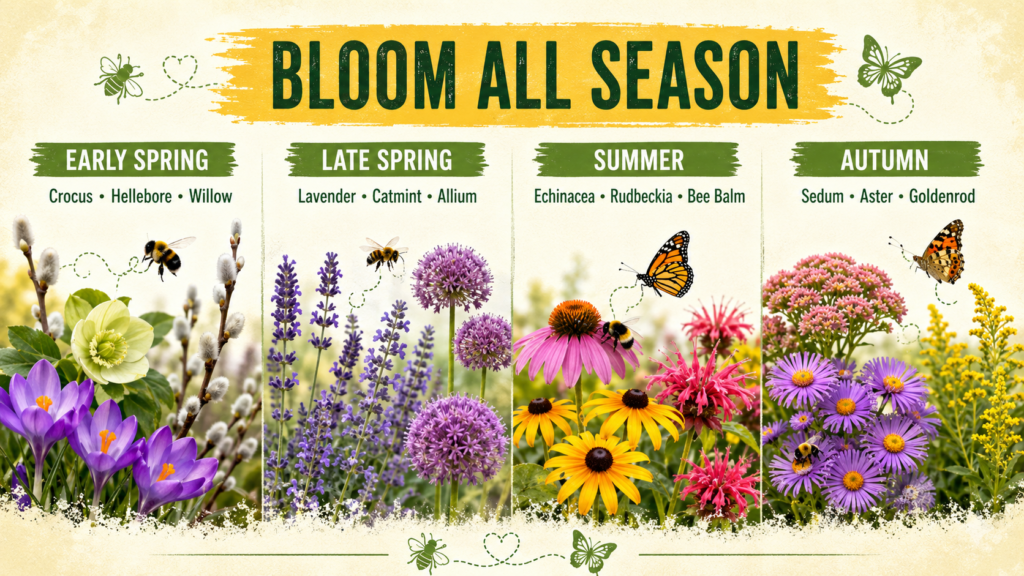
The single biggest mistake new pollinator gardeners make is having everything bloom at once — a spectacular June show followed by nothing. Pollinators need continuous forage from the first warm days of spring until the last mild days of autumn. The table below shows a simple succession plan.
| Season | Key Plants | Pollinators Supported |
|---|---|---|
| Early Spring | Crocus, Hellebore, Willow | Early bumblebees, mining bees |
| Late Spring | Lavender, Catmint, Allium | Honeybees, mason bees, hoverflies |
| Summer | Echinacea, Black-eyed Susan, Bee Balm | Butterflies, bees, hummingbirds |
| Autumn | Sedum, Aster, Goldenrod | Migrating monarchs, late bees |
Water & Shelter
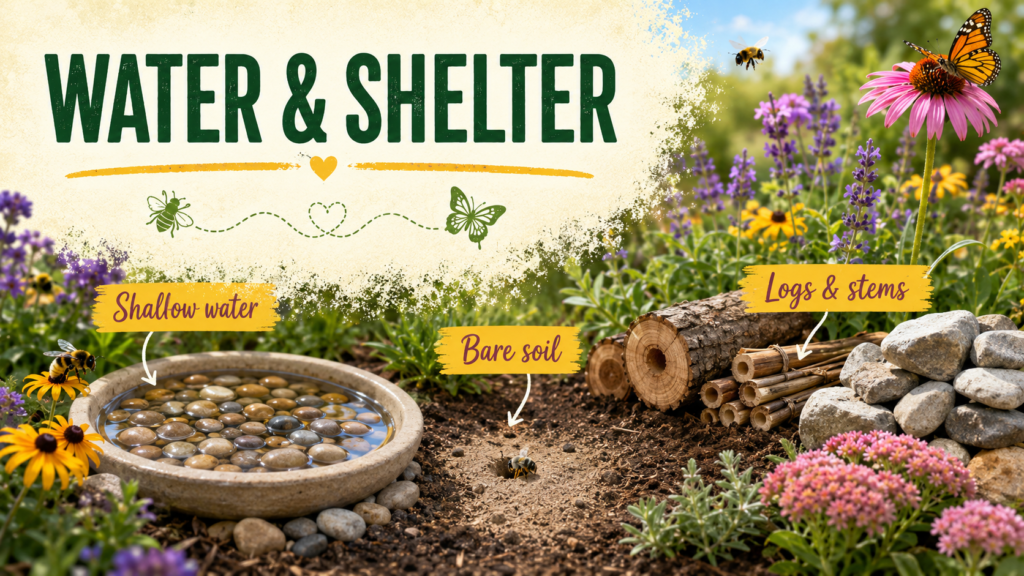
Pollinators need water but can drown in deep containers. Create a ‘puddling station’: a shallow dish filled with pebbles and topped up with water so insects can land safely. Place it in a sunny spot near your flowers.
Leave some bare soil for ground-nesting bees (roughly 70 % of bee species nest underground). A few short logs, a stone pile, or a bundle of hollow stems provides shelter for solitary bees and overwintering butterflies.
Pesticide Cautions
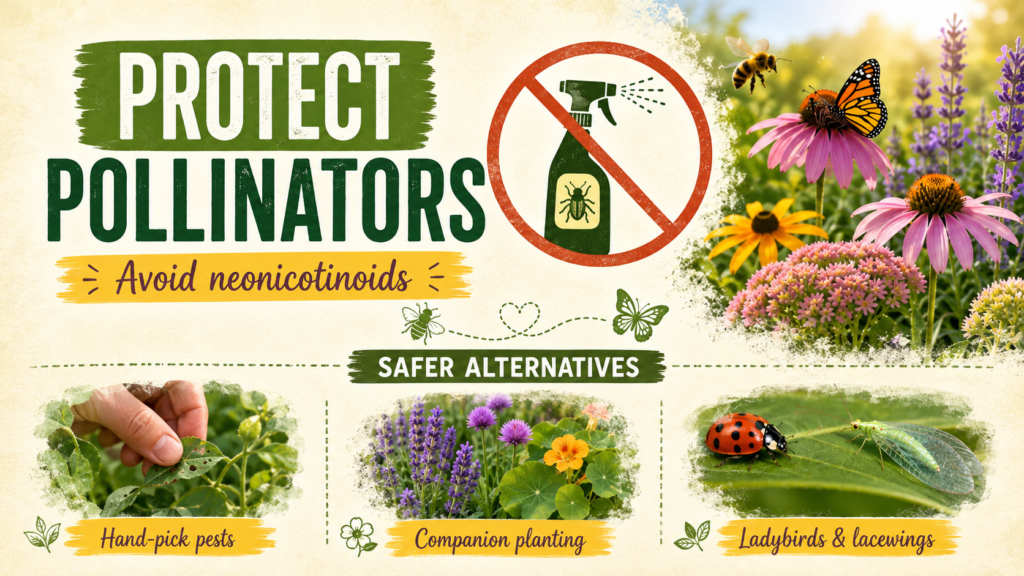
This is where good intentions can go badly wrong. Systemic insecticides — particularly neonicotinoids — are absorbed into plant tissues and expressed in pollen and nectar. Even ‘bee-safe’ labels can be misleading if the product is applied during bloom.
⚠️ Important: Avoid all neonicotinoid-based products (imidacloprid, clothianidin, thiamethoxam) in or near your pollinator garden. Check labels carefully — these chemicals persist in soil for months.
Instead, manage pests with companion planting, hand-picking, or targeted biological controls like ladybirds and lacewings. Tolerate minor cosmetic damage — a few nibbled leaves are a sign of a healthy ecosystem, not a crisis.
Simple Layout Tips
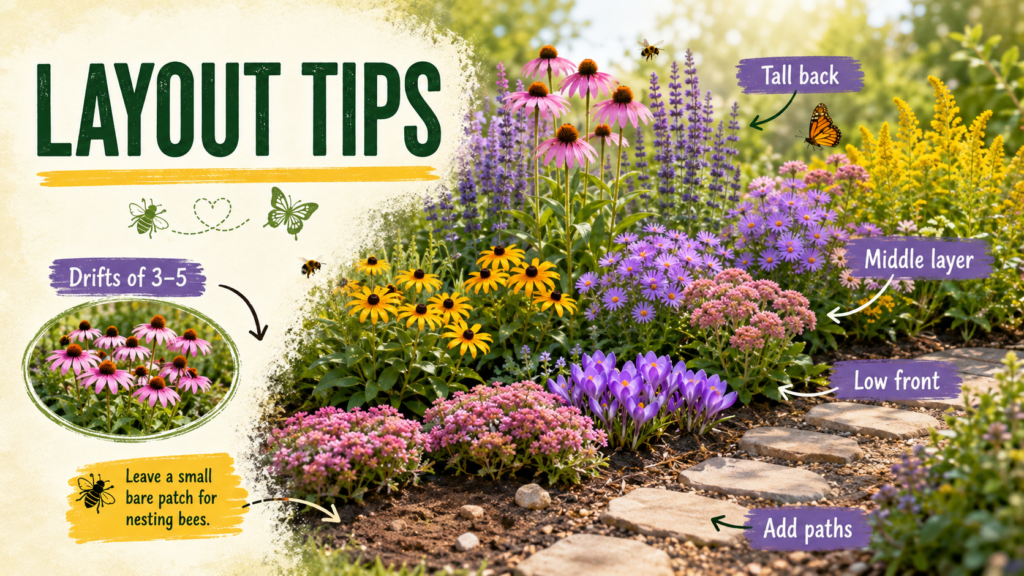
Plant in drifts of 3–5 of the same species rather than one of everything. Pollinators are more efficient when they can move between identical flowers without re-learning how to access nectar. Group tall plants at the back, medium in the middle, and low-growers at the front for sun access.
Leave narrow pathways (stepping stones work well) so you can tend plants without compacting soil. Curved borders look natural and create microclimates at the edges. Don’t mulch too heavily — remember, some bees need bare ground to nest.
Frequently Asked Questions
How much space do I need for a pollinator garden?
You can start with any sunny patch, even a 1 m × 2 m strip or a few large containers. Plant densely with a mix of nectar flowers and host plants, then expand as you learn what thrives in your conditions.
What flowers attract the most bees and butterflies?
Choose open, single-petalled flowers such as lavender, catmint, echinacea, black-eyed Susan, sedum, and native wildflowers. A diverse selection that blooms from spring through autumn will support more pollinators than one standout plant.
Should I remove weeds from a pollinator garden?
Remove invasive or harmful plants, but do not aim for a perfectly tidy bed. Some so-called weeds provide nectar, seeds, or caterpillar food. Leave a little leaf litter and bare soil for nesting and overwintering insects.
How can I protect pollinators from pesticides?
Avoid neonicotinoids and other broad-spectrum insecticides, especially when plants are flowering. Try hand-picking pests, companion planting, or targeted biological controls, and accept minor leaf damage as part of a healthy ecosystem.