
How to measure, place, time, and troubleshoot Garden-Tone for productive vegetable beds, raised gardens, herbs, and containers.
| Editorial principle: Use Garden-Tone to correct or prevent nutrient limitations—not as a substitute for soil testing, sunlight, water, healthy roots, pollination, or pest management. |
Garden-Tone can be a useful part of a productive vegetable garden, but the biggest harvest does not come from simply adding more fertilizer. It comes from matching nutrients to what the soil and crop actually need, applying the correct amount in the active root zone, watering appropriately, and feeding at the right stage of growth.
Garden-Tone at a Glance
What Is Garden-Tone?
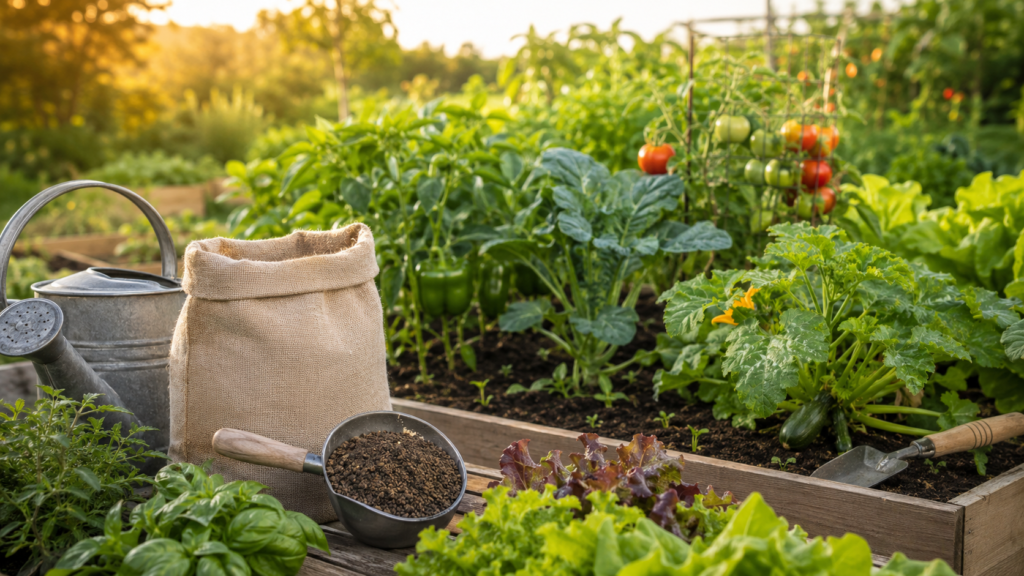
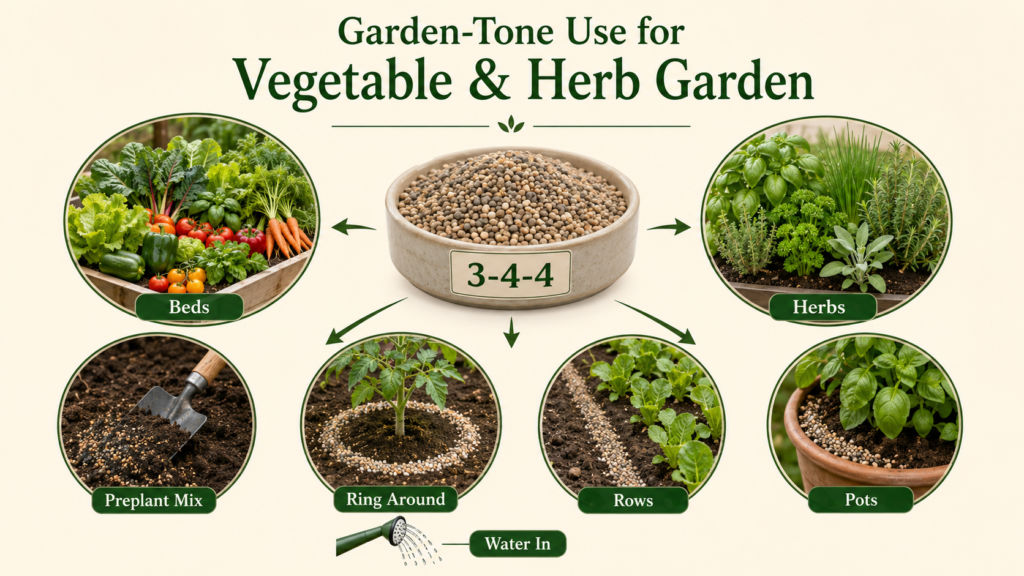
Garden-Tone is a dry, granular plant food sold by Espoma for vegetable and herb gardens. Unlike a fast liquid feed, it is applied to the soil so nutrients become available over time as moisture and biological activity interact with the fertilizer. It can be incorporated before planting or used as a side-dressing around established crops according to the package directions.
For a mixed home vegetable garden, the attraction is simplicity: one product can be used around many common vegetables and culinary herbs. That does not mean every crop needs the same amount or that every garden needs a complete 3-4-4 fertilizer each season. University Extension guidance emphasizes that fertilizer need depends on existing soil fertility, organic matter, the fertilizer used, and the crop.
What Does 3-4-4 Mean?
The three numbers on a fertilizer label are the guaranteed analysis for nitrogen, phosphate, and potash. A 3-4-4 fertilizer contains 3% nitrogen (N), 4% available phosphate (P₂O₅), and 4% soluble potash (K₂O) by weight. These nutrients support many plant processes, but they work as part of a larger system—not as independent “yield switches.”
- Nitrogen supports proteins, chlorophyll, and vegetative growth. Too much available nitrogen can encourage lush leaves at the expense of fruiting in some crops.
- Phosphorus is involved in energy transfer, genetic material, and other essential processes. Adding phosphorus to soil that already tests high does not create extra benefit.
- Potassium helps regulate water relations, enzyme activity, and overall plant function. Existing soil potassium still matters when deciding whether a complete fertilizer is needed.
Will Garden-Tone Actually Increase Yield?
It can improve plant performance when nutrients are limiting, but fertilizer cannot manufacture yield by itself. A tomato with inadequate sun, heat-stressed flowers, diseased roots, poor pollination, or inconsistent watering may produce poorly even if the soil contains adequate nutrients. Likewise, feeding an already fertile bed can add nutrients without adding harvest.
| Yield comes from the system: adequate fertility + healthy soil + enough light + consistent water + suitable temperatures + pollination + spacing + pest and disease management. |
7 Powerful Garden-Tone Tips for a More Productive Garden
Tip 1: Test the Soil Before You Fertilize
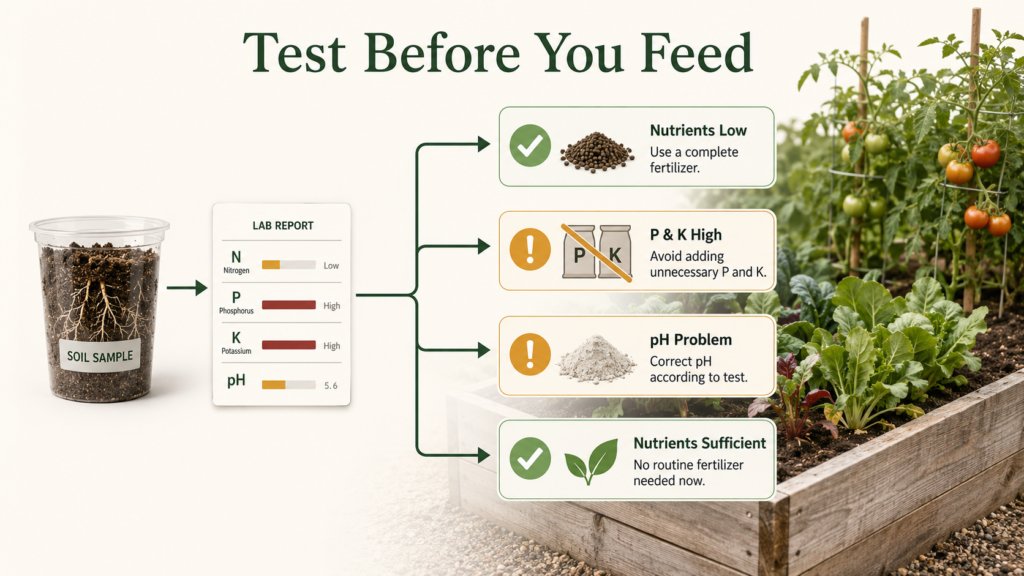
The most powerful Garden-Tone tip is also the least flashy: find out what the soil already contains. Virginia Cooperative Extension says the best way to determine vegetable-garden fertilizer needs is soil testing because the required amount depends on natural fertility, organic matter, fertilizer type, and crop. University of Maryland Extension likewise recommends basing applications on laboratory soil-test results and plant needs.
This matters especially in beds that receive compost, manure, or complete fertilizers every season. Phosphorus and potassium can accumulate. If a test already shows high levels, repeatedly applying a complete fertilizer may add nutrients that are not needed. Maryland Extension specifically recommends avoiding additional P and K when soil already has plentiful levels.[3]
What to look for on a soil test
- Soil pH, because pH affects nutrient availability and crop performance.
- Phosphorus and potassium levels, especially in long-established or heavily amended beds.
- Organic matter and previous amendment history.
- Crop-specific fertilizer recommendations when the testing lab provides them.
- A pattern of repeated fertilization that could explain unusually high nutrient levels.
Tip 2: Measure Garden-Tone Instead of Guessing
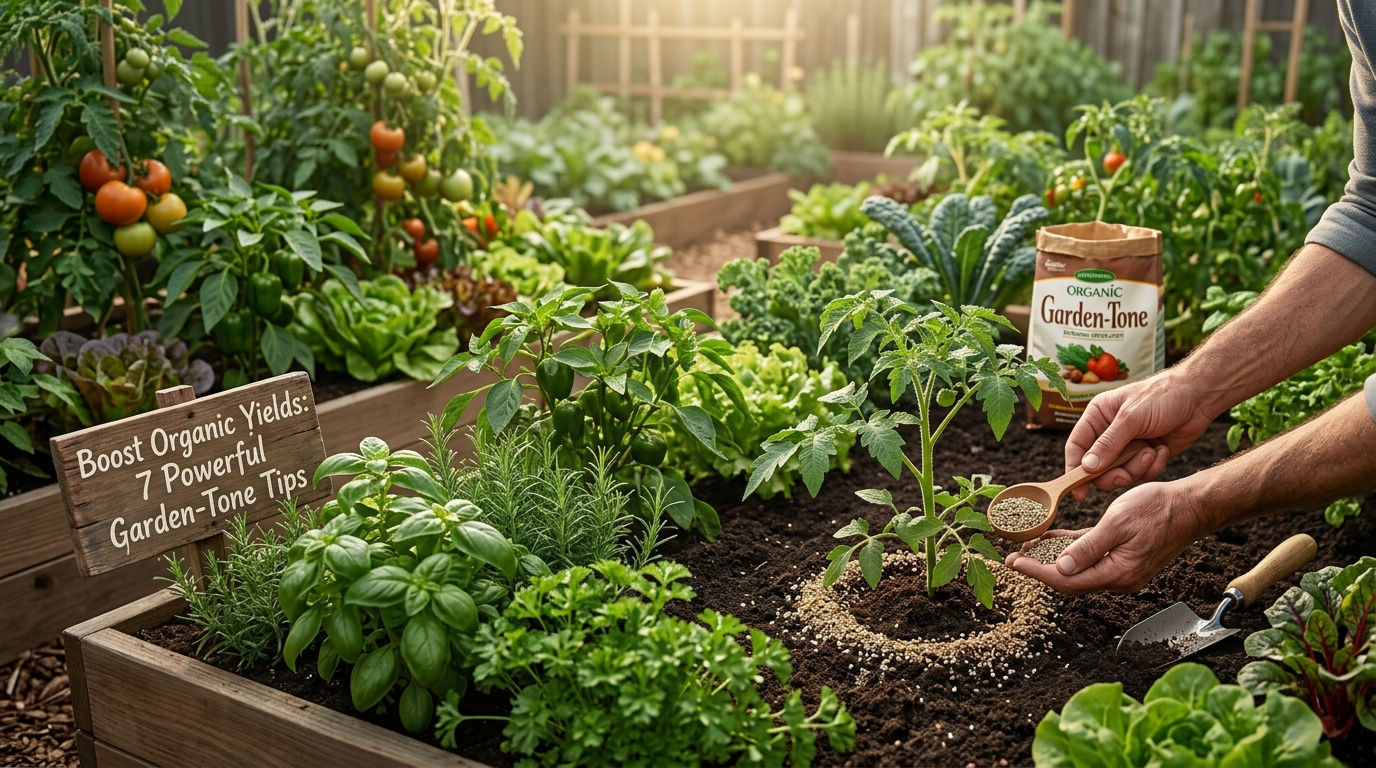
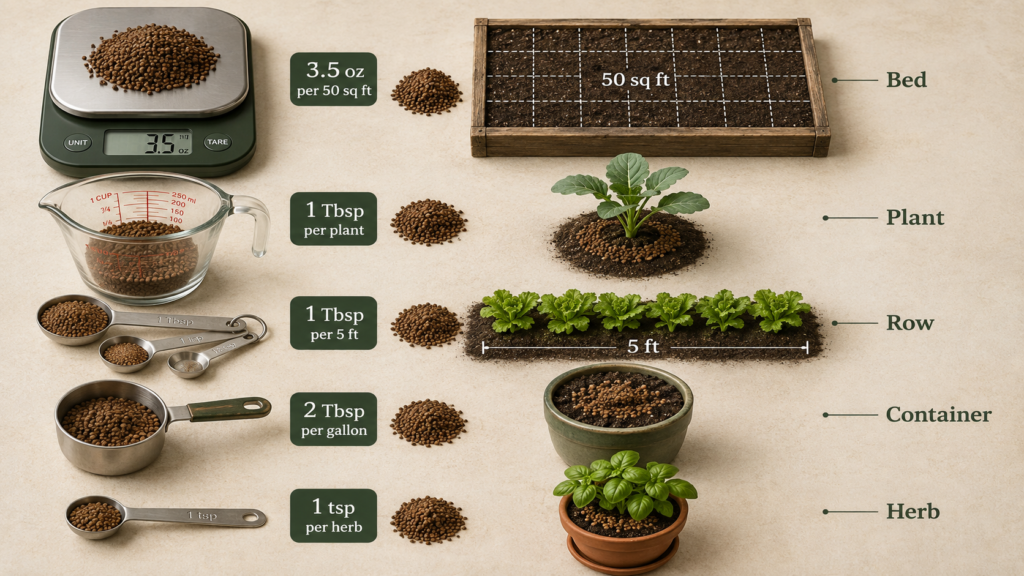
Granular fertilizer is easy to overapply when it is shaken directly from a bag. Measure it first. Espoma’s current page lists 3 lb per 50 square feet for soil preparation, up to 1/3 cup for a single established vegetable plant, and 1⅓ cups along each side of a 5-foot crop row.[1]
Those are label directions—not a reason to ignore a soil test. If your soil report recommends less fertilizer or no phosphorus and potassium, use the test as the decision layer and the current product label as the application-safety layer. When in doubt, contact your local Extension service or the manufacturer rather than improvising a heavier rate.
| Situation | Current manufacturer direction | Practical note |
| Before planting a vegetable bed | 3 lb per 50 sq ft; work into top 4–5 in | Scale to bed area only if a complete fertilizer is appropriate for the soil |
| Single established plant | Up to 1/3 cup per plant | Distribute around the root/drip-line zone; do not mound against the stem |
| Rows | 1⅓ cups on each side per 5 ft of row | Band evenly along both sides where roots are growing |
| New container mix | 2 cups per cubic foot of potting soil | Mix thoroughly before planting |
| Established container | 1.5 tsp per 4 in pot diameter | Place along outer soil edge and water thoroughly |
| Herbs in garden | 1 tbsp per plant | Herbs generally need less frequent feeding than heavy-producing vegetables |
| Herbs in containers | Half the established potted-plant rate | Measure carefully because root volume is small |
Tip 3: Put the Fertilizer Where Roots Can Reach It
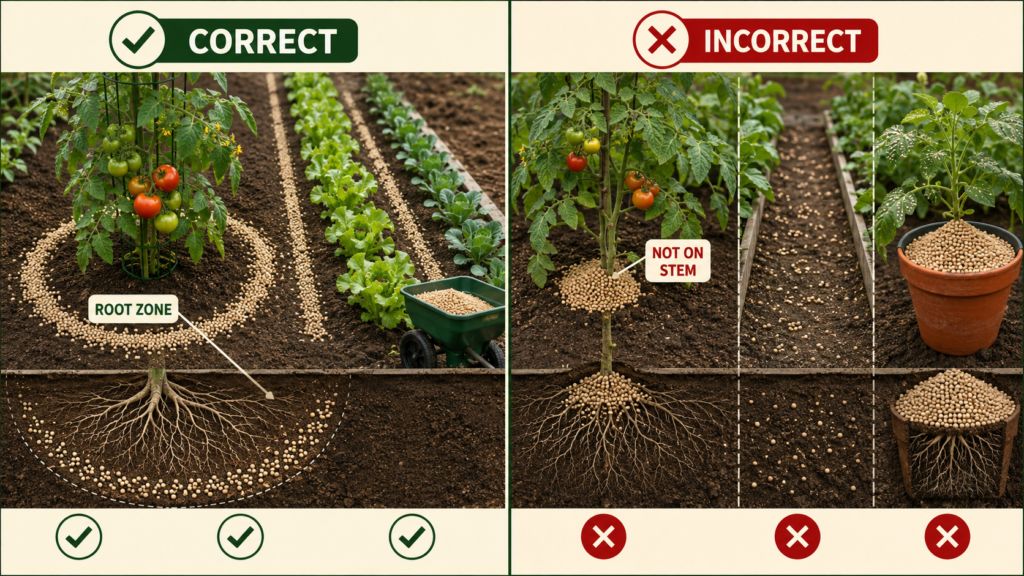
Correct placement matters. Espoma directs gardeners to sprinkle Garden-Tone around the drip line of individual plants and evenly along each side of row crops, while keeping fertilizer away from the main stem and foliage.[1] The goal is a distributed feeding zone, not a concentrated pile.
For individual vegetables
Spread the measured amount in a broad ring or band over the active root zone. Pull mulch back first if a thick layer prevents granules from reaching the soil. After application, return the mulch without burying the stem.
For row crops
Band the fertilizer along both sides of the row instead of scattering it into paths. Maryland Extension notes that fertilizing only the planting area reduces waste because walkways do not need fertilizer.[3]
For containers
Use the container-specific rate and distribute it around the outer edge of the potting mix. Container roots occupy a small volume, so a garden-bed scoop can become an excessive dose very quickly.
Tip 4: Water After Application—But Don’t Create Runoff
After applying Garden-Tone to established containers, Espoma specifically instructs gardeners to water thoroughly.[1] The same practical principle matters in beds: moisture helps begin the process of moving nutrients into the soil environment where roots and soil organisms can access them.
Water enough to moisten the active root zone, not enough to wash soil and nutrients out of the bed. If a heavy storm is imminent, delaying a surface application can reduce the chance of granules moving with runoff. Maryland Extension warns that leaching and runoff carry nutrients away from roots and can contribute to water pollution.[3]
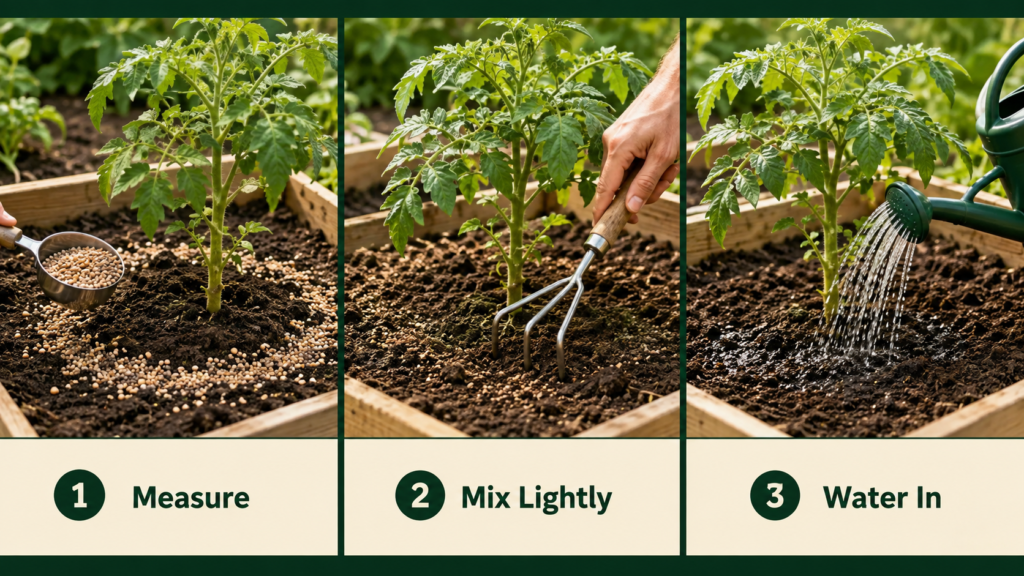
A simple sequence
1. Remove weeds and pull back thick mulch where needed.
2. Measure the appropriate amount.
3. Distribute it evenly over the intended root zone.
4. Lightly scratch into the soil when appropriate and without damaging roots.
5. Water the root zone thoroughly but avoid runoff.
Tip 5: Feed at the Right Stage of Growth
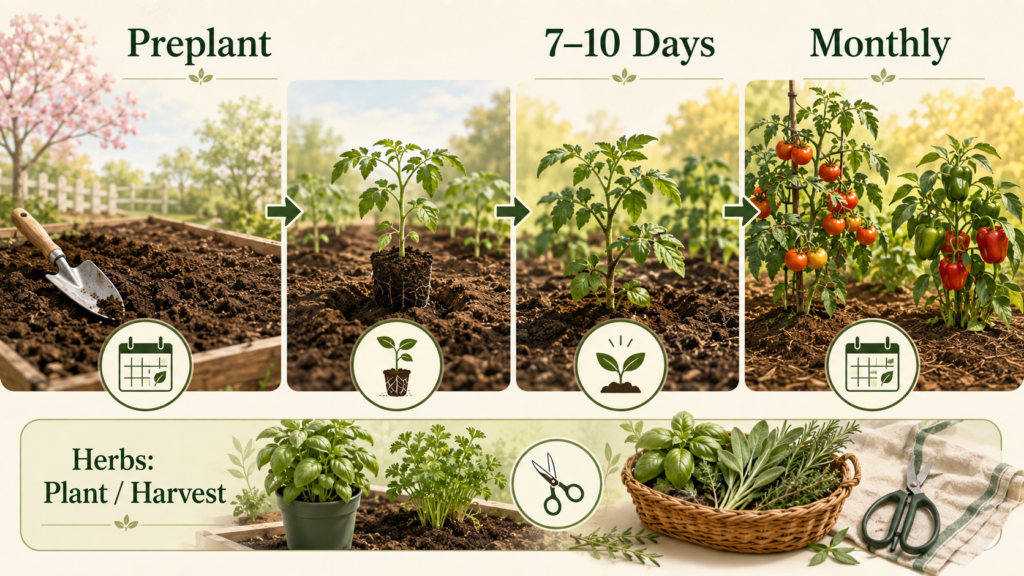
Timing matters because crop demand changes through the season. Espoma’s current directions say to mix Garden-Tone into soil before planting, feed seedlings or transplants 7–10 days after planting, and feed established plants monthly from May through August. Herbs generally need feeding at planting or after a large harvest.[1]
Treat these directions as a seasonal framework. Your local climate, crop schedule, soil test, and planting date can shift the practical calendar. A gardener in a long-season climate may not plant on the same dates as someone in a short-season climate, and a soil already rich in nutrients may not need every possible feeding.
Tip 6: Match Fertility to the Crop
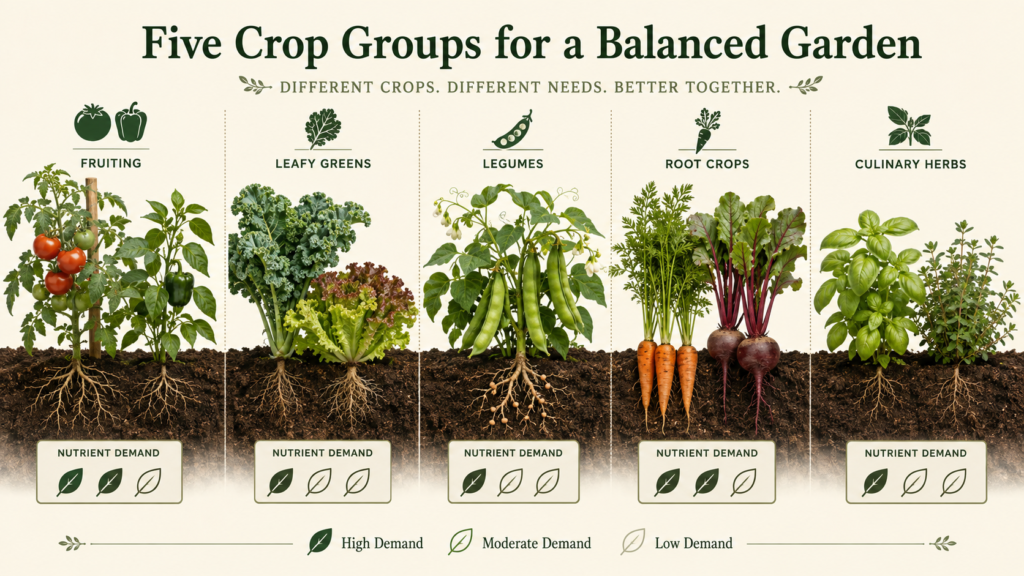
Not all vegetables have the same nutrient demand. Maryland Extension notes that nutrient needs vary among plant families and species and gives tomatoes and leafy greens as examples of crops that require more nitrogen than beans.[3] Virginia Tech similarly emphasizes that fertilizer requirements depend partly on the crop being grown.[2]
| Crop type | Examples | How to think about Garden-Tone |
| High-demand / long-season crops | Tomatoes, peppers, squash, corn, many brassicas | More likely to benefit from planned fertility when soil nutrients are limiting; monitor growth and fruiting rather than automatically increasing the rate |
| Leafy crops | Lettuce, kale, chard, spinach | Need adequate nitrogen for leaf growth, but excessive feeding can still be wasteful and unnecessary |
| Legumes | Beans, peas | Often need less supplemental nitrogen because of their relationship with nitrogen-fixing bacteria; follow soil and crop guidance |
| Root crops | Carrots, beets, radishes | Avoid chasing top growth with excessive fertility; balanced soil conditions matter |
| Culinary herbs | Basil, parsley, oregano and others | Generally lighter feeding; Espoma’s current directions specify planting-time or post-harvest feeding for herbs |
Tip 7: Don’t Expect Fertilizer to Fix a Non-Fertilizer Problem
When a plant looks weak, adding fertilizer feels like an easy fix. It may be the wrong fix. Yellow foliage, slow growth, poor flowering, and small harvests can result from water stress, poor drainage, root disease, compacted soil, temperature extremes, inadequate light, pests, pH problems, or nutrient imbalance.
Over-application can create new problems. Maryland Extension warns that both synthetic and organic fertilizers can be overapplied; excess nitrogen can produce lush leaves at the expense of fruit and can make plants more vulnerable to some pest or disease problems.[3] Alabama Cooperative Extension also notes that repeated use of some organic nutrient sources can contribute to excessive soil phosphorus.[4]
| If a plant is struggling after feeding, diagnose the growing conditions before adding another dose. |
How to Use Garden-Tone in Raised Beds
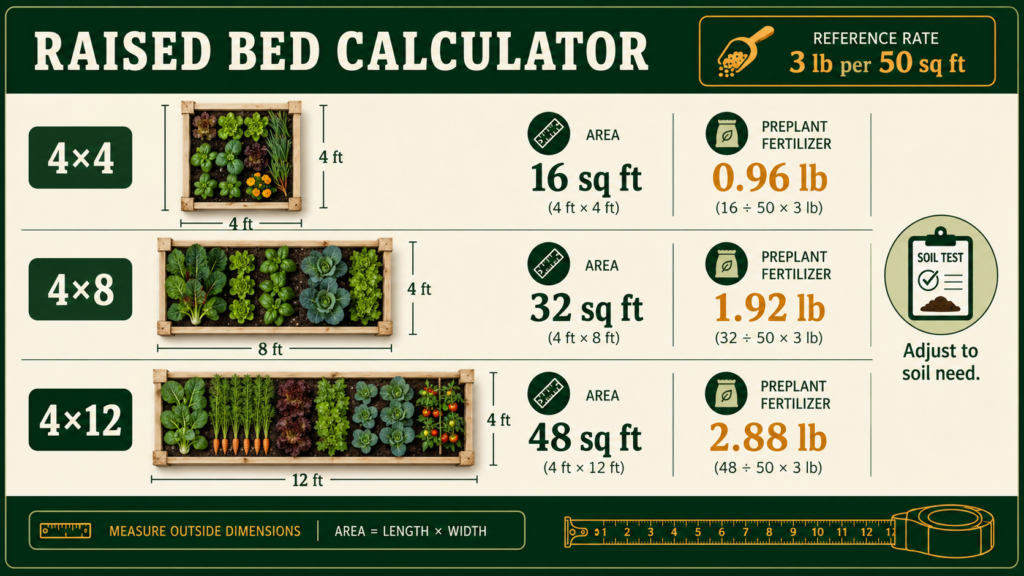
Raised beds are easy to measure, which makes them ideal for precise fertilizer calculations. Start with bed area, then scale the current label rate only when a complete fertilizer is appropriate for the soil.
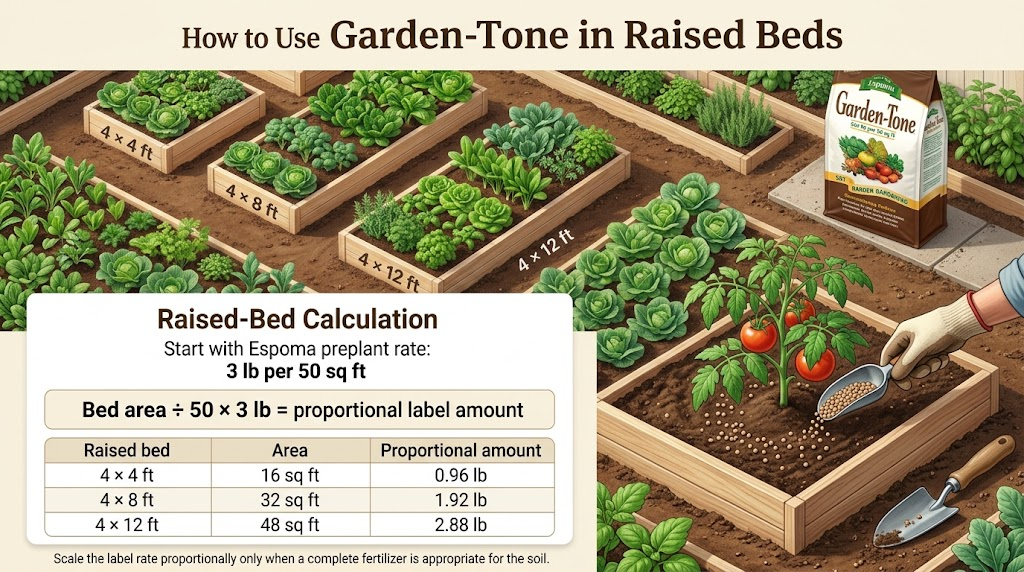
Raised-bed calculation
Current Espoma preplant rate: 3 lb per 50 sq ft.[1]
Formula: bed area ÷ 50 × 3 lb = proportional label amount.
| Raised bed | Area | Proportional amount at 3 lb / 50 sq ft* |
| 4 × 4 ft | 16 sq ft | 0.96 lb |
| 4 × 8 ft | 32 sq ft | 1.92 lb |
| 4 × 12 ft | 48 sq ft | 2.88 lb |
*These are mathematical conversions of the current preplant label rate, not individualized soil recommendations. Reduce or omit a complete fertilizer if a soil test indicates that nutrients are already sufficient or high.
Practical raised-bed workflow
1. Measure the actual planted bed area; do not include paths.
2. Review the latest soil test and amendment history.
3. Confirm the current rate on the package.
4. Weigh or measure the calculated amount instead of estimating by handfuls.
5. Distribute evenly and incorporate to the label depth before planting, or side-dress established crops according to the current directions.
6. Water appropriately and record what you applied so the next feeding is not accidental duplication.
How to Use Garden-Tone in Containers
Containers require their own rates because the root zone is much smaller than a garden bed. For new containers, Espoma’s current directions call for 2 cups of Garden-Tone per cubic foot of potting soil, mixed thoroughly. For established container plants, the current direction is 1.5 teaspoons per 4 inches of pot diameter, sprinkled along the outer edge and watered thoroughly.[1]
Do not convert the garden-bed pounds-per-square-foot rate into a pot. Use the container rate. Also remember that container problems often come from watering, drainage, root crowding, or heat—not only fertility.
Can You Use Garden-Tone on Tomatoes and Peppers?
Yes. Espoma includes tomatoes and peppers among the vegetables for Garden-Tone and gives directions for feeding vegetables and tomatoes. For fruiting crops, however, more fertilizer is not automatically better. Virginia Tech notes that when soils test high in phosphate and potash, excessive early fertilization of tomatoes and peppers can encourage vegetative growth and reduce fruit set.
That is why the best tomato or pepper feeding plan starts with the soil, not the fertilizer bag. If the bed has received years of compost and complete fertilizer, the correct strategy may be a reduced rate or a nutrient-specific amendment rather than another full dose of 3-4-4.
Garden-Tone for Herbs
Garden-Tone is also intended for culinary herbs. Espoma’s current directions list 1 tablespoon per plant in the garden and half the standard established-container rate for herbs in pots. The company also says herbs generally need feeding at planting or after a large harvest rather than the monthly schedule used for established vegetables.[1]
This lighter approach makes sense for many herbs, where excessive fertility can produce soft, overly lush growth. Always account for the potting mix or soil you are starting with, because some commercial mixes already contain fertilizer.
Garden-Tone and Compost: Should You Use Both?
They solve different problems. Compost is primarily a soil amendment that contributes organic matter, supports soil structure, and adds nutrients in variable amounts. Garden-Tone is a formulated fertilizer with a known guaranteed analysis. Espoma recommends mixing the preplant application with organic matter such as compost or humus when possible.[1]
But “compost plus full fertilizer” should not be an automatic annual recipe. Repeated compost, manure, and complete fertilizer applications can raise phosphorus and other nutrient levels over time. A soil test tells you whether the bed needs both, one, or neither.
Can You Use Too Much Garden-Tone?
Yes. Organic fertilizers are still fertilizers. Applying more than the soil and crop need can waste money, create nutrient imbalances, contribute to runoff or leaching, and—in the case of excess nitrogen—encourage leafy growth at the expense of fruit.[3] Repeated organic nutrient applications can also contribute to excessive phosphorus in some soils.[4]
| “Organic” describes the source or production standard; it does not mean “apply without limits.” |
8 Common Garden-Tone Mistakes
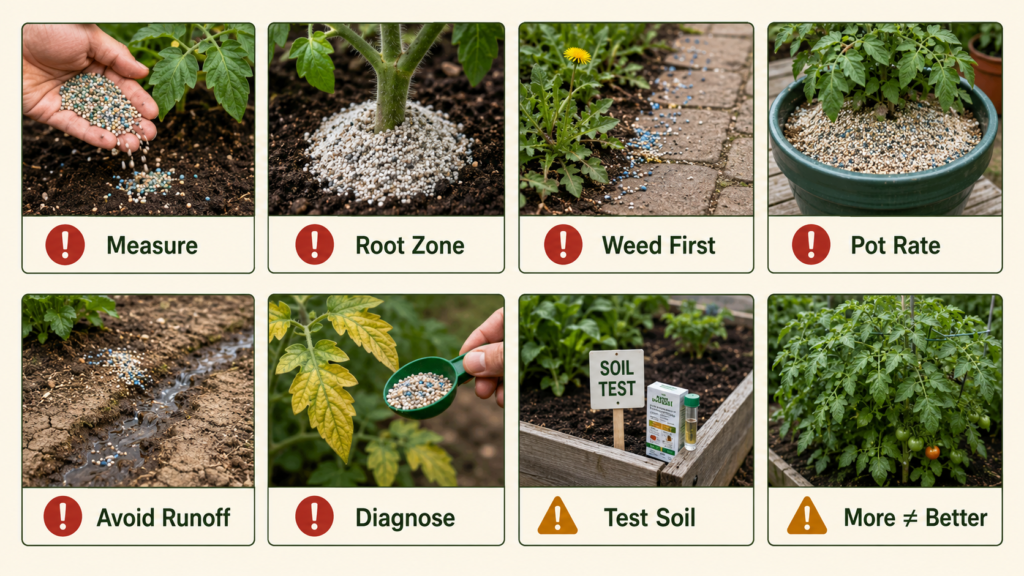
| Mistake | Why it matters | Better approach |
| Guessing the amount | Handfuls are inconsistent and can lead to overapplication | Measure or weigh the product |
| Skipping the soil test | The bed may already contain enough phosphorus or potassium | Test first, especially in established beds |
| Piling fertilizer against stems | Creates a concentrated zone where the label does not direct application | Spread around the active root/drip-line zone |
| Fertilizing walkways and weeds | Wastes nutrients and feeds competitors | Weed first and apply only where crop roots grow |
| Using garden-bed rates in pots | Container root volume is much smaller | Use the manufacturer’s container-specific rate |
| Feeding every yellow plant | Yellowing has many non-nutrient causes | Check roots, water, light, pH, pests, and disease |
| Applying more because organic is “safe” | Organic nutrients can still accumulate or damage plants when overapplied | Follow the current label and soil-test recommendations |
| Ignoring runoff or heavy rain | Nutrients can leave the root zone | Water deliberately and avoid applications likely to wash away |
Garden-Tone vs. Tomato-Tone: Which One Should You Use?
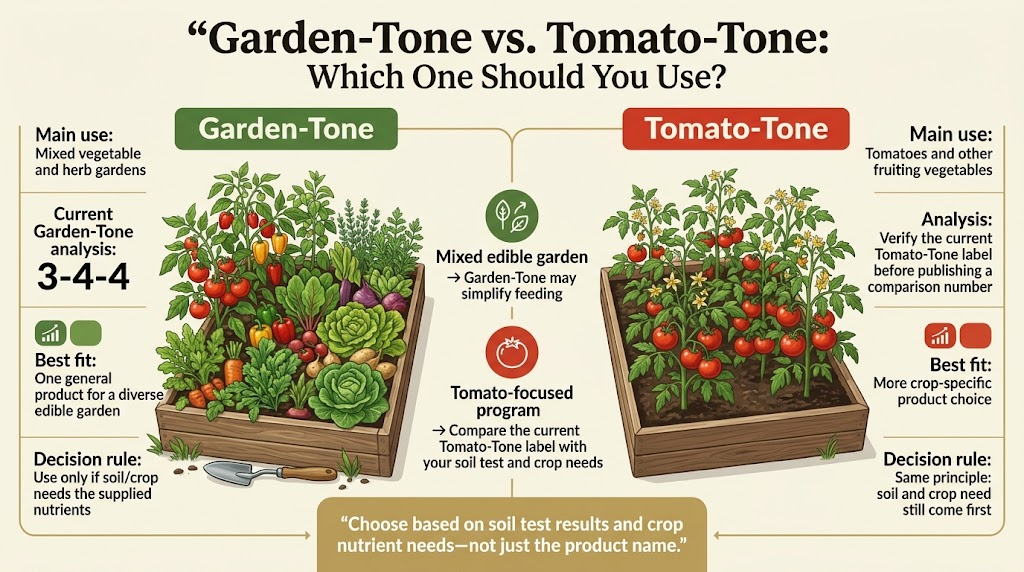
Garden-Tone is positioned as a broad vegetable-and-herb fertilizer, making it convenient for mixed beds. Tomato-Tone is a separate Espoma product marketed more specifically for tomatoes and other fruiting vegetables. If your garden is mostly mixed vegetables, Garden-Tone may simplify feeding; if you are building a tomato-focused program, compare the current Tomato-Tone label with your soil test and crop needs.
| Question | Garden-Tone | Tomato-Tone |
| Main use | Mixed vegetable and herb gardens | Tomatoes and other fruiting vegetables |
| Current Garden-Tone analysis | 3-4-4 | Verify the current Tomato-Tone label before publishing a comparison number |
| Best fit | One general product for a diverse edible garden | More crop-specific product choice |
| Decision rule | Use only if soil/crop need the supplied nutrients | Same principle: soil and crop need still come first |
Frequently Asked Questions
What is Garden-Tone used for?
Garden-Tone is a granular fertilizer formulated for vegetable and herb gardens. It can be mixed into soil before planting or used around established vegetables, rows, herbs, and containers according to the current package directions.
Is Garden-Tone organic?
Espoma sells Garden-Tone as part of its organic gardening product line. For any certification claim used in marketing copy, verify the wording on the current bag or manufacturer page before publication.
What does 3-4-4 mean?
It is the fertilizer analysis: 3% nitrogen, 4% available phosphate, and 4% soluble potash by weight.
How often should I apply Garden-Tone?
Espoma’s current directions say established vegetables can be fed monthly from May through August, while herbs generally need feeding at planting or after a large harvest. Your soil test, crop, climate, and planting schedule may justify less.
How much Garden-Tone should I use?
Use the situation-specific rate on the current package. Current directions include 3 lb per 50 sq ft for preplant soil preparation, up to 1/3 cup for a single plant, row rates, and separate container and herb rates.
Do I water after applying Garden-Tone?
Yes, watering is part of the current container directions and is a practical step after soil application. Water the root zone thoroughly without creating runoff.
Can I use Garden-Tone in a raised bed?
Yes. Measure the planted square footage, check the current label and your soil-test recommendation, then distribute the appropriate amount evenly.