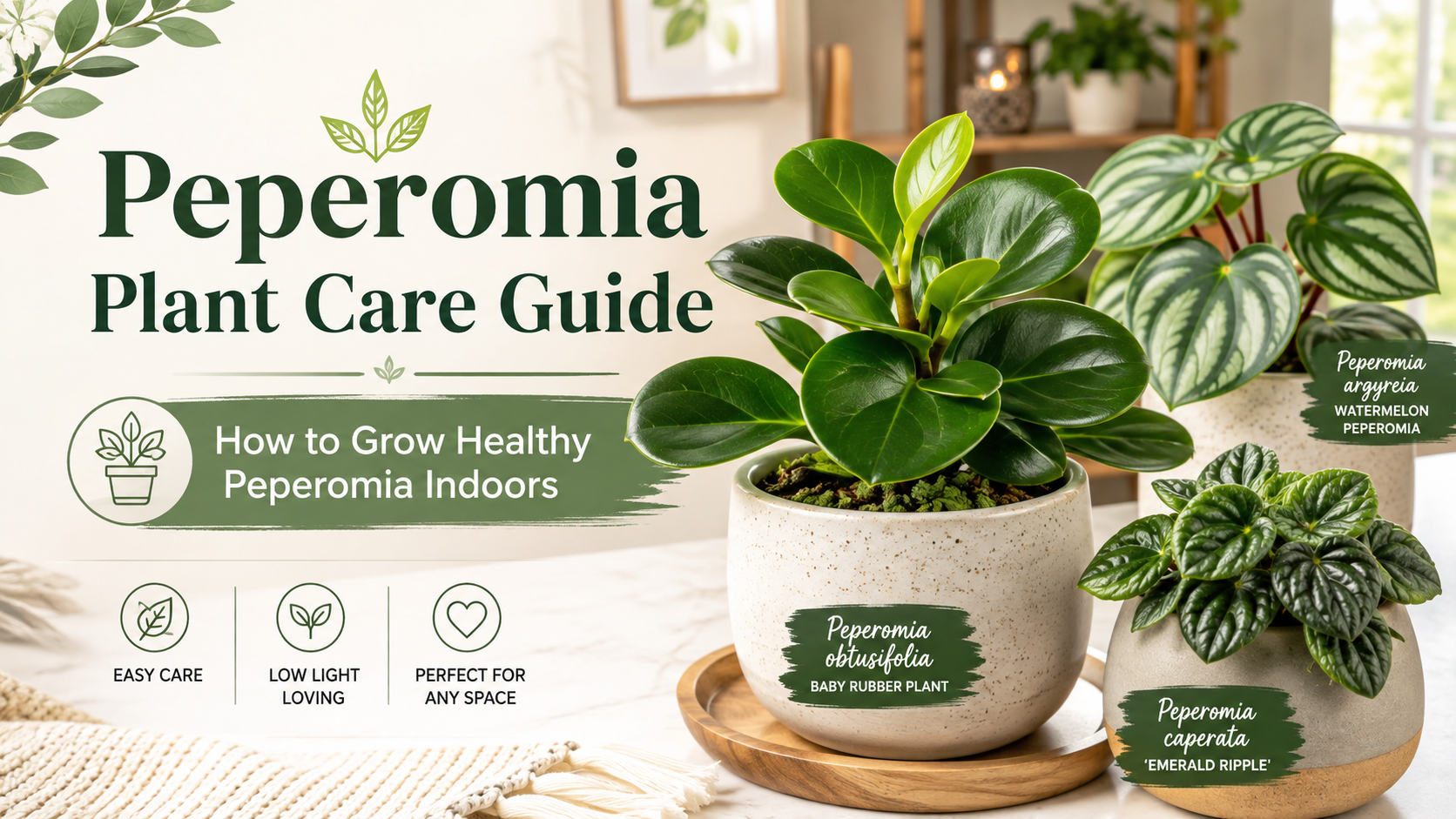

Learn how to care for a peperomia plant indoors with clear, practical guidance on light, watering, soil, feeding, propagation, and popular varieties such as baby rubber plant and watermelon peperomia.
Most peperomia plants are forgiving when their roots are not kept wet.
For dependable peperomia plant care, give your plant bright indirect light, a pot with drainage, and a loose mix that can dry partly between waterings. Peperomias store some moisture in their leaves and stems, but they are not all cared for exactly like desert succulents. Check the mix before watering instead of following a fixed weekly schedule.
Peperomia plant care at a glance
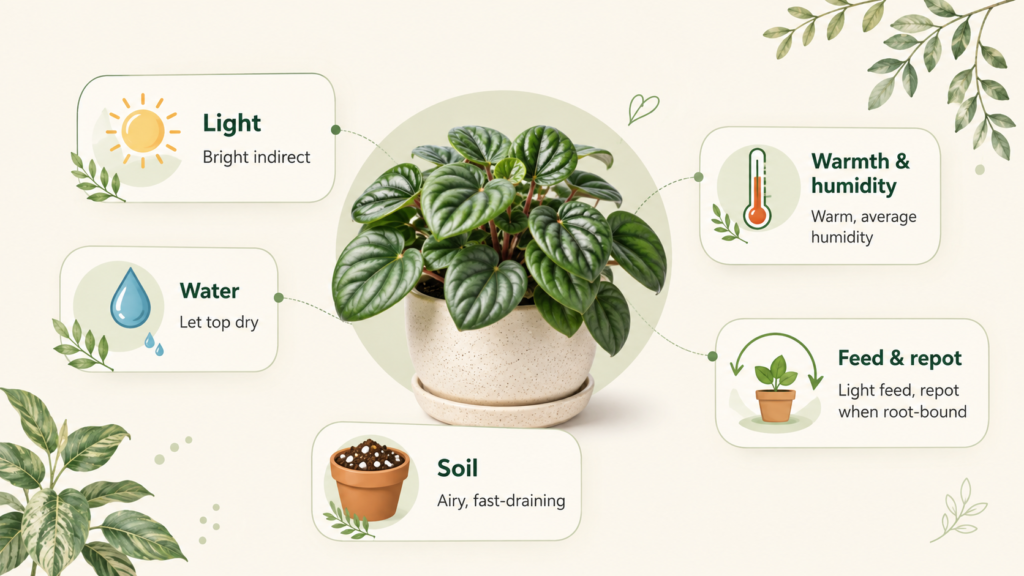
Use these preferences as a starting point. The right watering rhythm changes with your pot size, potting mix, room temperature, season, and the specific peperomia you are growing.
| Care factor | Peperomia preference |
|---|---|
| Light | Bright, indirect light; protect delicate leaves from harsh midday sun |
| Water | Water thoroughly after the upper part of the mix has dried |
| Soil | Loose, airy, fast-draining mix in a pot with drainage holes |
| Temperature & humidity | Typical warm household conditions; average indoor humidity suits many types |
| Fertilizer & repotting | Feed lightly in active growth; repot only when the plant is genuinely root-bound |
What is a peperomia plant?
Peperomia is a large genus of mostly tropical plants in the Piperaceae family, the same family that includes black pepper. Houseplant varieties come in many leaf shapes, colors, and growth habits: some stand upright, some trail, and others form compact rosettes.
Many peperomias have thick leaves or stems that hold a little water, which is why they can cope with an occasional missed watering. That does not mean every type wants to stay bone-dry. A healthy peperomia needs air around its roots and a watering routine that responds to its actual growing conditions.
Peperomia care: light, water, soil and feeding
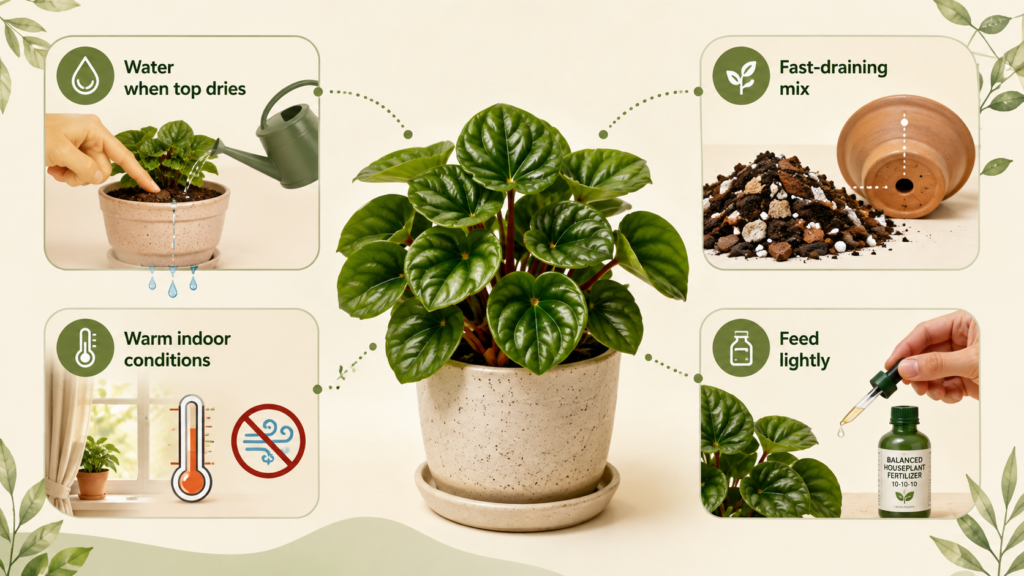
Most peperomia plants grow best near a bright window with filtered or indirect light. An east-facing window is often gentle enough, while a south- or west-facing window may need a sheer curtain or a little distance from the glass. Low light can keep a peperomia alive, but growth may become sparse and variegated leaves may lose contrast. Strong direct sun can scorch thin or patterned foliage.
How to water peperomia properly
Feel the potting mix before watering. For many common peperomias, wait until the top 1 to 2 inches of mix is dry, then water slowly until excess drains from the bottom. Empty the saucer afterward. Thick-leaved types may dry a bit further than fine-leaved types, so use the leaves and soil as your guide rather than watering every seven days.
Choose a fast-draining potting mix
A quality indoor potting mix improved with perlite, pumice, or fine orchid bark helps water move through while still holding enough moisture for roots. The pot must have a drainage hole. Dense soil and decorative pots without drainage make root rot far more likely, especially in dim rooms or during winter.
Keep conditions comfortably warm
Peperomias generally prefer ordinary indoor warmth and dislike cold drafts. Keep them away from frosty windows, air-conditioning blasts, and heating vents. Average household humidity is usually enough, although very dry air can contribute to brown tips on more delicate varieties.
Fertilize lightly during active growth
Use a balanced houseplant fertilizer diluted according to its label during spring and summer, when your plant is actively producing new leaves. Skip feeding when growth slows in low winter light. More fertilizer is not better: excess salts can damage roots and leave brown leaf edges.
The best watering test is the pot, not the calendar
Lift the pot, touch the mix, and observe the leaves. A plant in a small terracotta pot by a bright window may need water much sooner than the same plant in a large plastic pot in low light. Soft stems and wet soil point to too much moisture; slightly limp leaves with dry mix point to thirst.
When to repot a peperomia
Peperomias often prefer being slightly snug in their pots, so do not repot on a fixed annual schedule. Move up only one pot size when roots circle densely, grow from drainage holes, or the mix dries unusually fast. Spring is usually the easiest time to repot because the plant has a growing season ahead to recover.
Popular types of peperomia
Care overlaps across the genus, but leaf thickness and growth habit matter. Use the following notes as variety-specific adjustments rather than assuming every peperomia needs identical treatment.
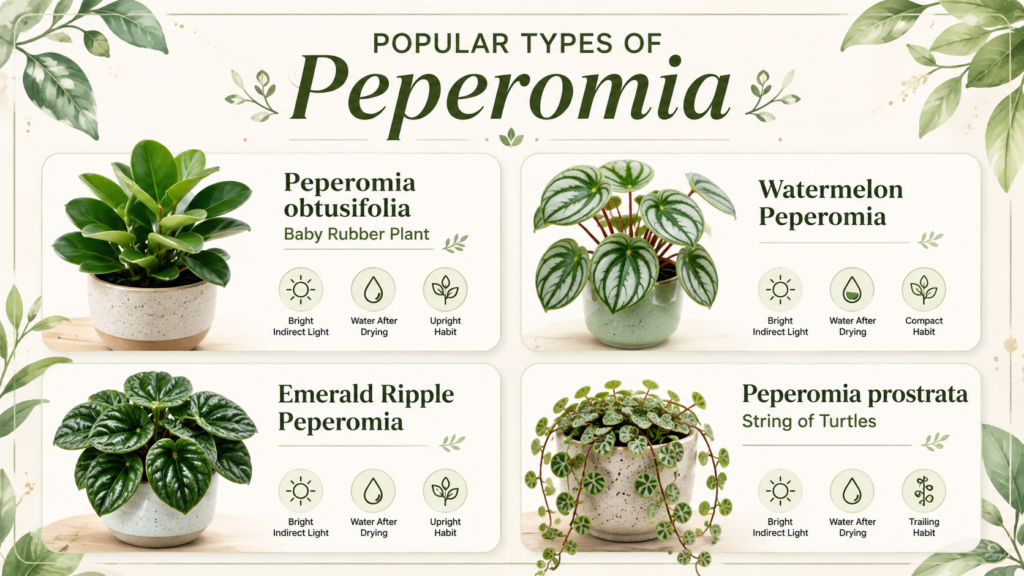
Peperomia obtusifolia — baby rubber plant
Peperomia obtusifolia, often called baby rubber plant, has thick oval leaves and an upright, compact habit. It is one of the more forgiving choices for beginners. Give it bright indirect light and let much of the upper mix dry before watering. Variegated cultivars usually need brighter light than solid-green forms.
Watermelon peperomia care
Watermelon peperomia, Peperomia argyreia, is known for rounded leaves marked with silver-green stripes. Keep it in bright indirect light and avoid soaking the crown. Its thinner leaf stalks can slump when the plant is thirsty, but always confirm that the mix is dry before watering.
Emerald ripple peperomia
Emerald ripple peperomia, usually sold as Peperomia caperata, forms a compact mound of deeply textured leaves. Its denser foliage appreciates gentle airflow and careful watering at soil level. Avoid leaving water pooled among tightly packed leaves, particularly in cool or dim conditions.
Peperomia prostrata — string of turtles
Peperomia prostrata is a trailing type with tiny patterned leaves. It is well suited to a hanging pot or shelf with bright filtered light. Because its stems are fine and its root zone is small, let the mix dry only partly rather than allowing it to stay dry for long periods.
How to propagate peperomia
Many peperomia plants can be propagated from stem cuttings, and some can grow from leaf cuttings. Stem cuttings are often the most reliable option because they include a node, the point where new roots and shoots can form. Water propagation can work for some varieties, but transferring a rooted cutting into airy potting mix is important for long-term success.
- Take a healthy cutting with clean scissors, ideally with one or more nodes and a few leaves.
- Place the node in water or insert it into a lightly moist, airy propagation mix; keep it warm in bright indirect light.
- Pot the new plant once it has a small root system, then water sparingly while it adjusts.
Common peperomia problems
Most peperomia problems are linked to watering, low light, temperature stress, or pests. Inspect the potting mix and roots before treating the foliage alone. If you find widespread pests or persistent decline, isolate the plant and seek advice from a local plant professional or extension service.
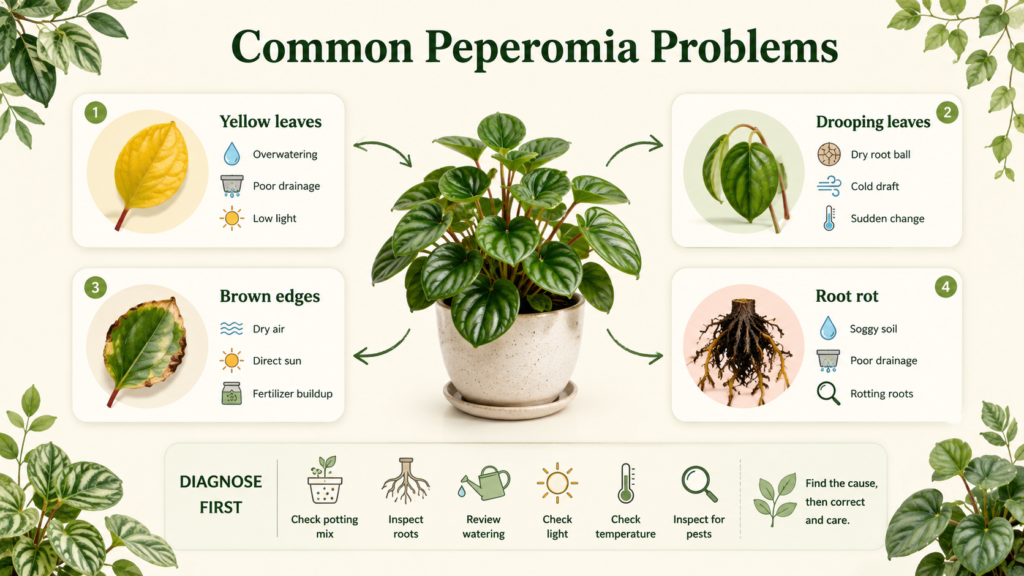
| What you see | What to check first |
|---|---|
| Yellow leaves | Often overwatering, poor drainage, or low-light stress. Let the mix dry more between waterings and inspect roots if the soil stays wet. |
| Drooping or falling leaves | Check for a very dry root ball, cold drafts, sudden environmental change, or persistently saturated soil. |
| Brown edges or curling | Look for dry air, underwatering, fertilizer buildup, or hot direct sun. Trim only damaged tissue after correcting the cause. |
| Soft stems or dark roots | These can signal root rot. Remove the plant from wet soil, trim damaged roots with clean tools, and repot into fresh fast-draining mix. |
Peperomia plant FAQ
Is peperomia easy to care for?
Many common peperomias are beginner-friendly because they stay compact and tolerate a missed watering better than plants with thin leaves. Their biggest vulnerability is overwatering, so a drainage hole and an airy mix make care much easier.
Can peperomia grow in low light?
Peperomia can tolerate moderate light, but it generally grows best in bright indirect light. In a dim spot, growth may slow, stems may stretch, and patterned leaves may become less colorful. Move it closer to a bright window without placing sensitive leaves in harsh sun.
How big does a peperomia get indoors?
Size depends on species. Compact varieties such as baby rubber plant and emerald ripple peperomia often stay around 6 to 12 inches tall indoors, while trailing types can spread or cascade farther. Slow, tidy growth is one reason peperomias are popular for desks, shelves, and apartments.