
Learn how to read the clues on your plants, tell helpful insects from harmful ones, and choose a response only when a pest is truly causing a problem.
The short answer
Do not start with a spray. First identify the plant, inspect both sides of affected leaves, and look for the insect or its evidence. Many garden visitors are beneficial, and minor damage often does not need treatment.
Start with a careful inspection
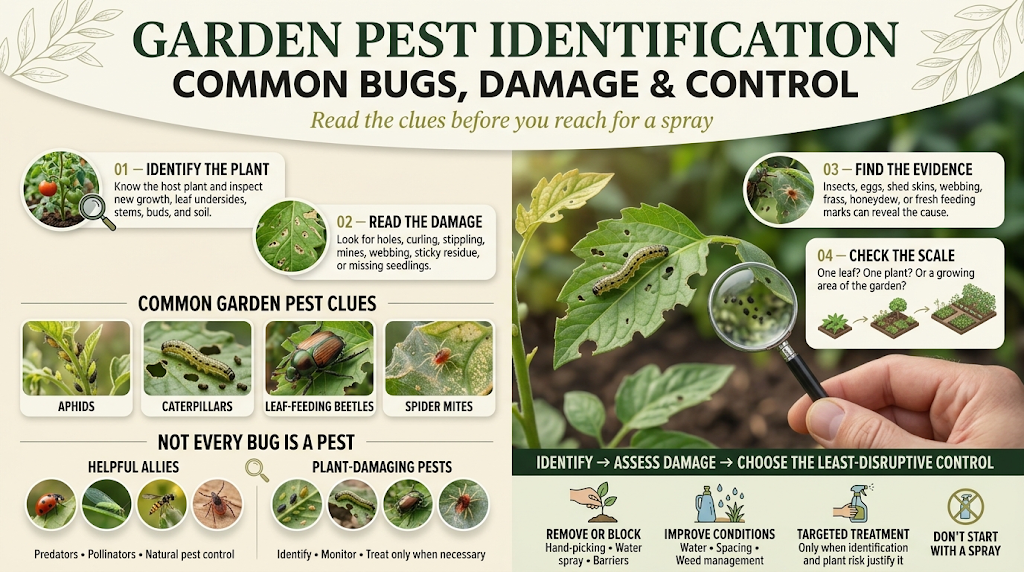
A reliable identification begins with observation, not a product. Check plants in good light and inspect new growth, leaf undersides, stems, flower buds, and the soil surface. Bring a hand lens or use your phone camera to enlarge small insects and eggs.
Note what is changing: chewed edges, curled leaves, sticky residue, webbing, holes, discoloration, or missing seedlings. Then look for a living cause. Damage can also come from heat, nutrient stress, wind, disease, or animals, so symptoms alone are not proof of an insect problem.
Four clues to record before you decide
- Which plant is affected, and which part of it is changing first?
- What does the damage look like: holes, stippling, curling, mines, frass, or sticky honeydew?
- Can you find the insect, its eggs, shed skins, webbing, or feeding waste nearby?
- How widespread is the issue: one leaf, one plant, or a growing area of the garden?
Common garden pest clues
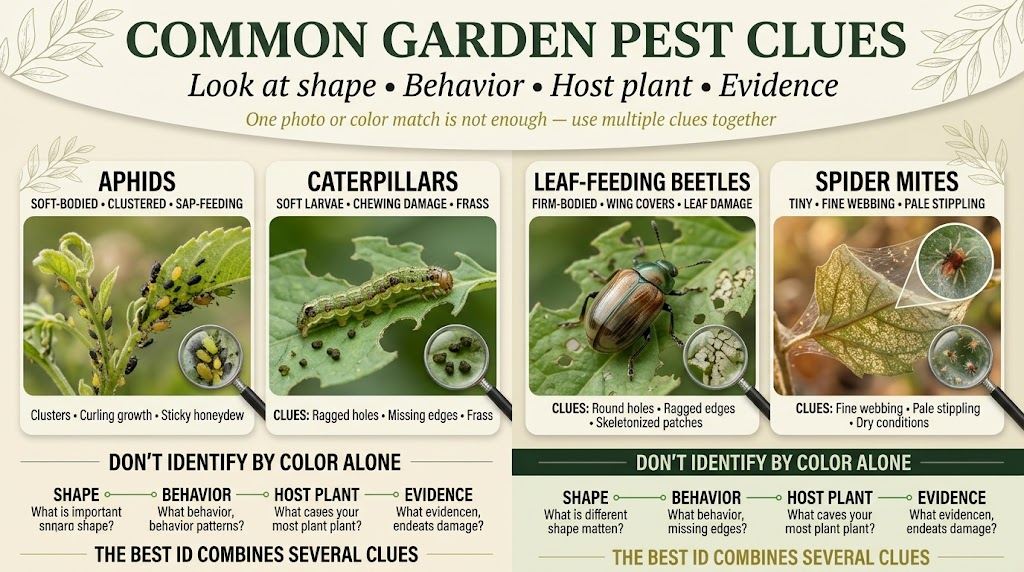
The groups below are common starting points, not a substitute for a regional diagnosis. Look at the insect’s shape, behavior, host plant, and evidence together. A single photo or color match can be misleading.
Aphids
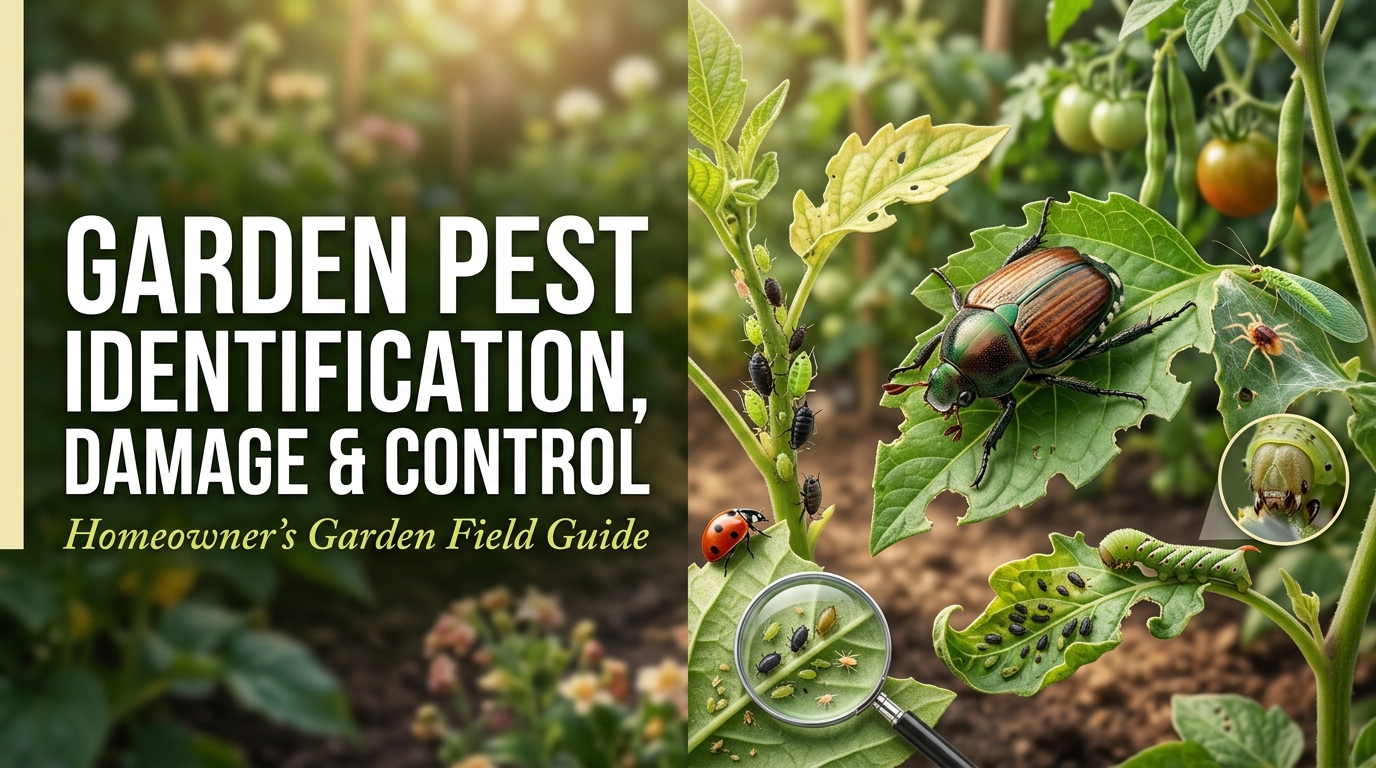
Small, soft-bodied insects clustered on tender shoots or leaf undersides. They often cause curling and leave sticky honeydew that may attract ants or support sooty mold.
Caterpillars
Soft larvae with obvious chewing mouthparts. Look for irregular holes, missing leaf edges, and pellet-like droppings called frass, often hidden near the feeding site.
Leaf-feeding beetles
Adults are typically firm-bodied with wing covers. Depending on species, they may make round shot holes, ragged leaf edges, or skeletonized patches between veins.
Spider mites
Tiny relatives of spiders that are easiest to spot by their fine webbing and pale stippling. They often build on dry, dusty, heat-stressed plants.
Read the damage pattern
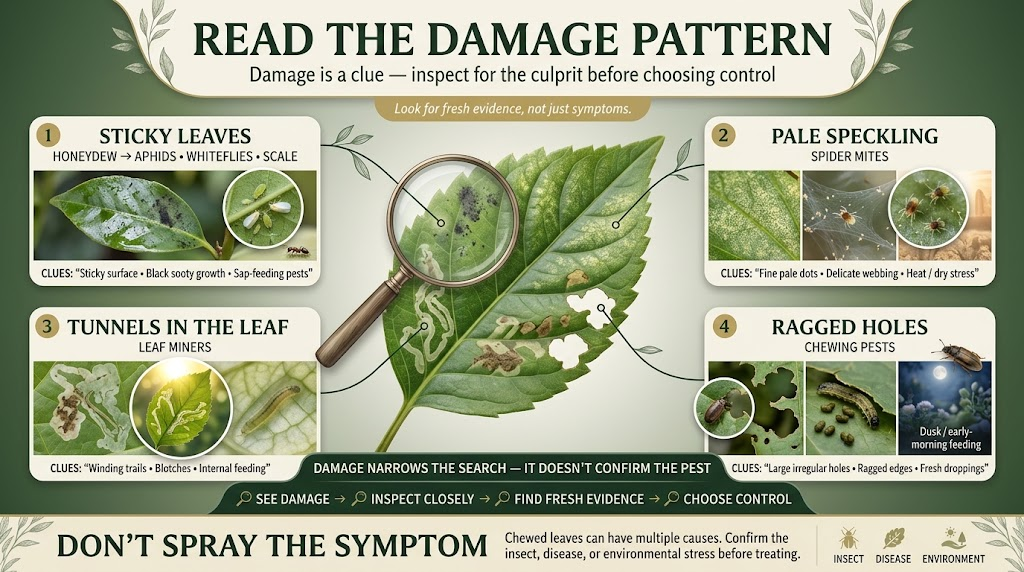
Damage patterns can narrow the search, but they should lead you back to an inspection. For example, holes may come from caterpillars, beetles, slugs, or leaf disease. Find the culprit or fresh evidence before choosing a control.
Quick pattern guide
- Sticky leaves or black sooty growth often point to honeydew-producing pests such as aphids, whiteflies, or scale.
- Fine pale dots and delicate webbing often suggest spider mites, especially in hot, dry conditions.
- Tunnels or blotches inside a leaf can indicate leaf miners; hold the leaf up to the light to inspect the trail.
- Large ragged holes and fresh droppings usually indicate a chewing pest, but inspect at dusk or early morning for hidden feeders.
Do not mistake beneficial insects for pests
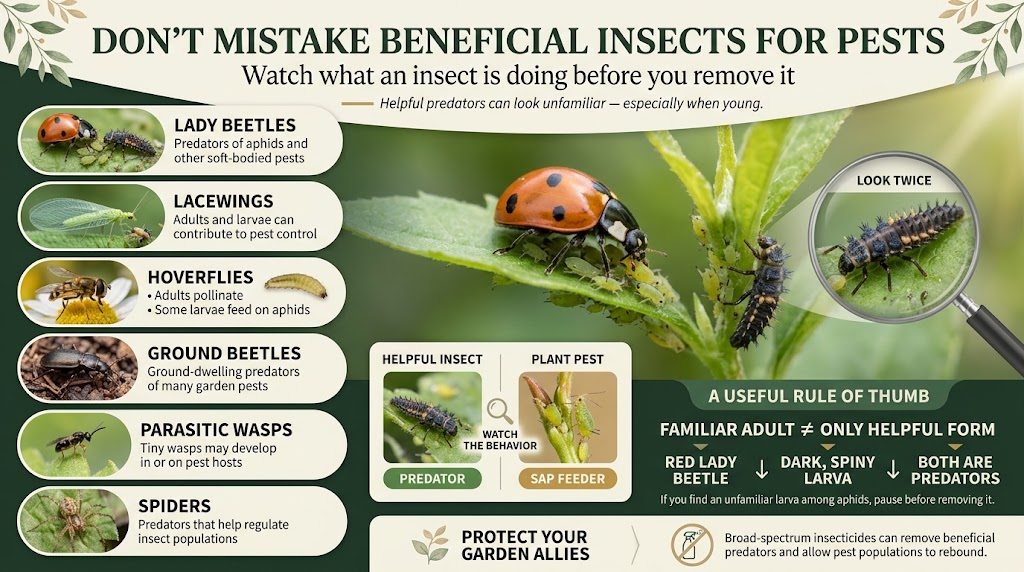
Lady beetles, lacewings, hoverflies, ground beetles, parasitic wasps, and spiders all help keep pest populations in balance. Their immature stages can look unfamiliar and are often mistaken for harmful larvae.
Before removing an insect, watch what it is doing. A predator may be hunting aphids; a tiny wasp may be harmless to people while developing in a pest host. Broad-spectrum insecticides can remove these allies and allow pest numbers to rebound.
A useful rule of thumb
A red lady beetle is familiar, but its dark, spiny-looking larva is also a predator. If you find an unfamiliar larva among aphids, pause before removing it.
Choose the least-disruptive control first
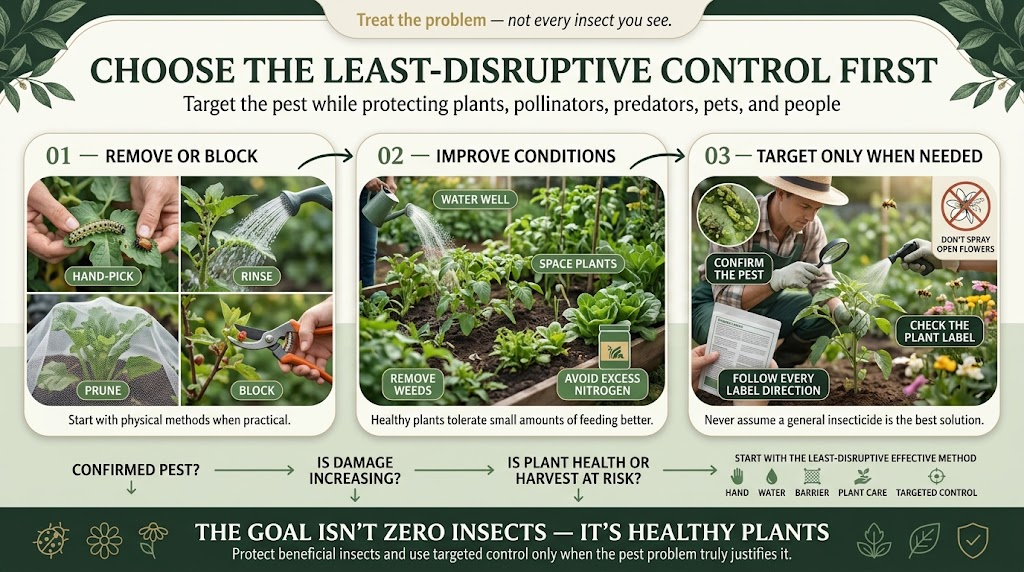
A pest becomes worth treating when its numbers and damage are likely to affect plant health or an acceptable harvest. Start with methods that target the problem while protecting pollinators, predators, pets, and people.
1. Remove or block the pest
Hand-pick large caterpillars or beetles, prune heavily infested tips when practical, rinse aphids from sturdy plants with a firm stream of water, and use barriers such as fine mesh where appropriate.
2. Improve growing conditions
Keep plants watered and spaced according to their needs, remove weeds that shelter pests, and avoid excessive nitrogen fertilizer that can produce soft, aphid-prone growth. Healthy plants tolerate small amounts of feeding better.
3. Use products only when identification supports them
If a product is necessary, choose one labeled for the confirmed pest and plant, follow every label direction, and avoid spraying open flowers or times when pollinators are active. Never assume that a general insecticide is the best solution.
A practical prevention routine
A few minutes of regular observation makes identification easier and helps you act before a localized issue becomes widespread.
- Walk the garden weekly and check new growth, leaf undersides, and plants that struggled previously.
- Keep notes or photos of recurring pests, host plants, dates, and weather conditions.
- Encourage beneficial insects with diverse flowering plants, water, and a reduced reliance on broad-spectrum sprays.
Frequently asked questions
Should I remove every bug I find on a plant?
No. Some insects are pollinators, predators, or decomposers. A small number of pests may also be tolerated by a healthy plant. Identify the insect and assess the actual damage before acting.
Why do I see ants around aphids?
Aphids produce a sugary liquid called honeydew. Ants may feed on it and can protect aphid colonies from natural enemies. Addressing the aphids and managing ant access may both be needed.
When is plant damage serious enough to treat?
Consider treatment when the pest is confirmed, damage is increasing, and the plant’s health, yield, or survival is at risk. One chewed leaf or a small aphid cluster is usually a cue to monitor, not panic.
What is the best approach after garden pest identification?
Start with the least-disruptive option, such as removing pests by hand, blocking access, improving plant conditions, or using a targeted product when identification supports it.