
Alocasia (Upright Elephant Ear)
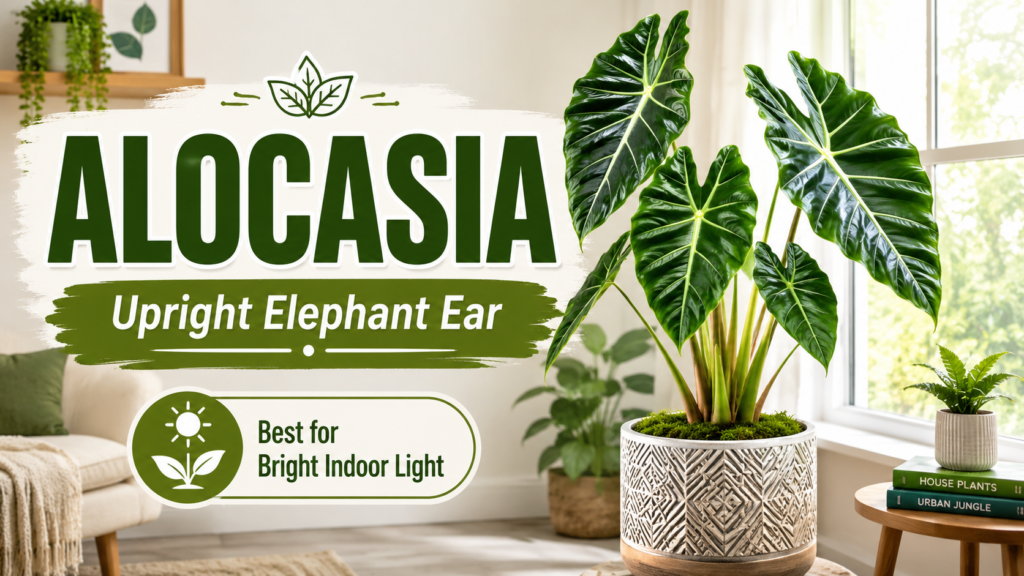
Best for: Indoor spaces with bright indirect light. Leaves point skyward with dramatic, arrow-shaped silhouettes. Popular cultivars include Alocasia Polly, Zebrina, and the massive Alocasia macrorrhiza. Expect 1–5 ft indoors.
Also read this Content: How to Grow Calibrachoa: 5 Secrets to Keep Million Bells Blooming All Summer
Colocasia (Drooping Elephant Ear)
Best for: Outdoor gardens, patios, or pond edges. Leaves droop downward and can grow enormous (up to 3 ft across). They love full sun and consistently moist soil. Easier than Alocasia for beginners. Grows 3–8 ft tall.
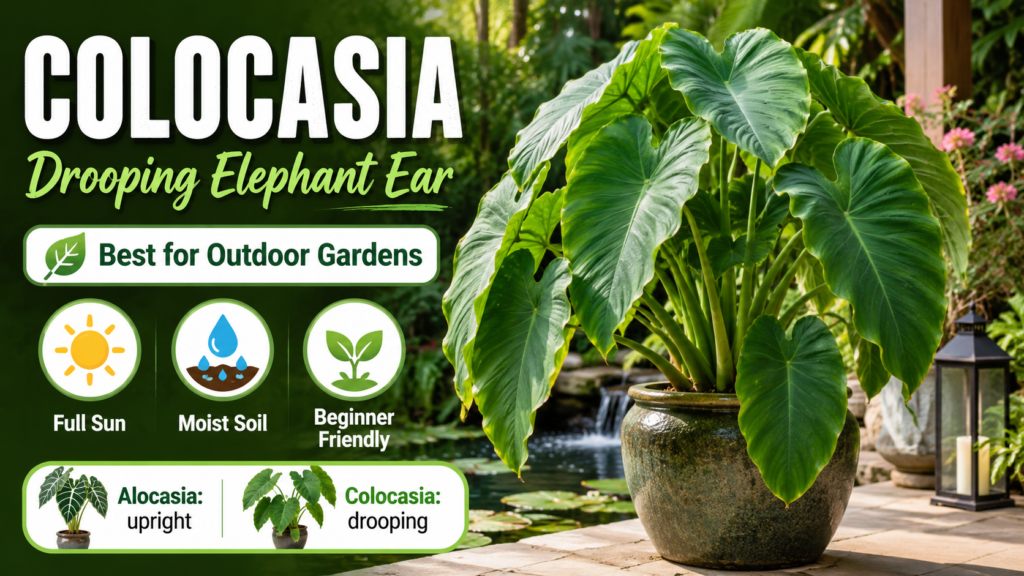
| Feature | Alocasia | Colocasia |
| Leaf Direction | Points upward | Points downward |
| Best For | Indoor / partial shade | Outdoor / full sun |
| Water Needs | Moderate (let dry between) | High (loves wet feet) |
| Size | 1–5 ft indoors | 3–8 ft outdoors |
| Difficulty | Intermediate | Beginner-friendly |
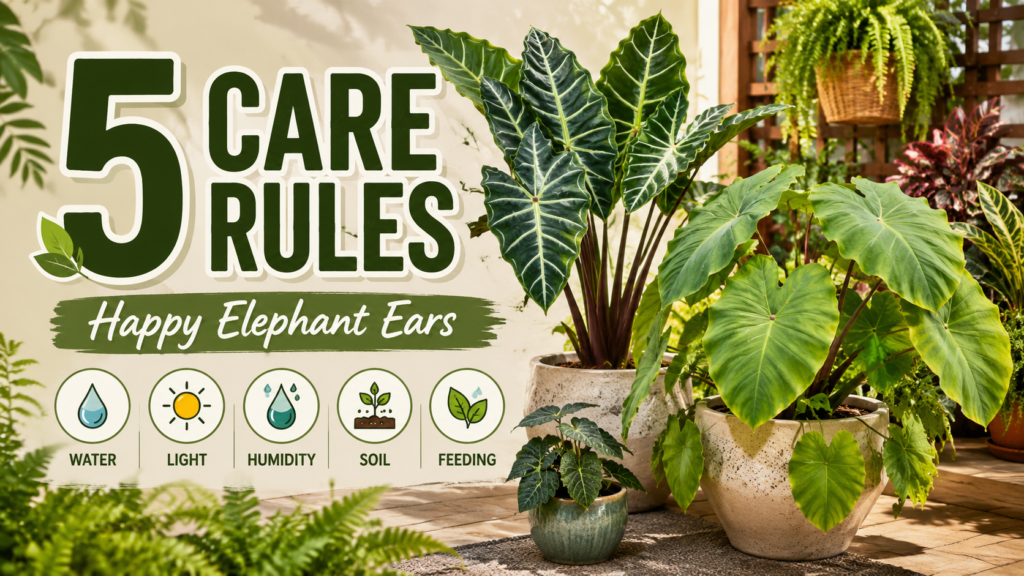
Care Guide: 5 Rules for Happy Elephant Ears
Watering
Stick your finger 2 inches into the soil. Dry? Water thoroughly until it drains. Still damp? Wait another day or two. Alocasias hate soggy roots (hello, root rot), while Colocasias can sit in a saucer of water and be perfectly happy.
Light
Alocasia: Bright indirect light (think 2–4 ft from a south or east window). Direct afternoon sun will scorch the leaves. Colocasia: Full sun to partial shade outdoors. More sun = bigger leaves.
Humidity
Aim for 60%+ humidity. Group your tropical plants together, use a pebble tray, or run a humidifier nearby. If your leaf tips turn brown and crispy, humidity is too low.
Soil & Potting
Use a chunky, well-draining aroid mix: 60% potting soil, 20% perlite, 20% orchid bark. Repot in spring when roots circle the bottom of the pot—go up only 1–2 inches in diameter.
Feeding
Feed every 2–4 weeks during the growing season (spring through early fall) with a balanced liquid fertilizer diluted to half strength. Stop feeding entirely in winter when growth slows.
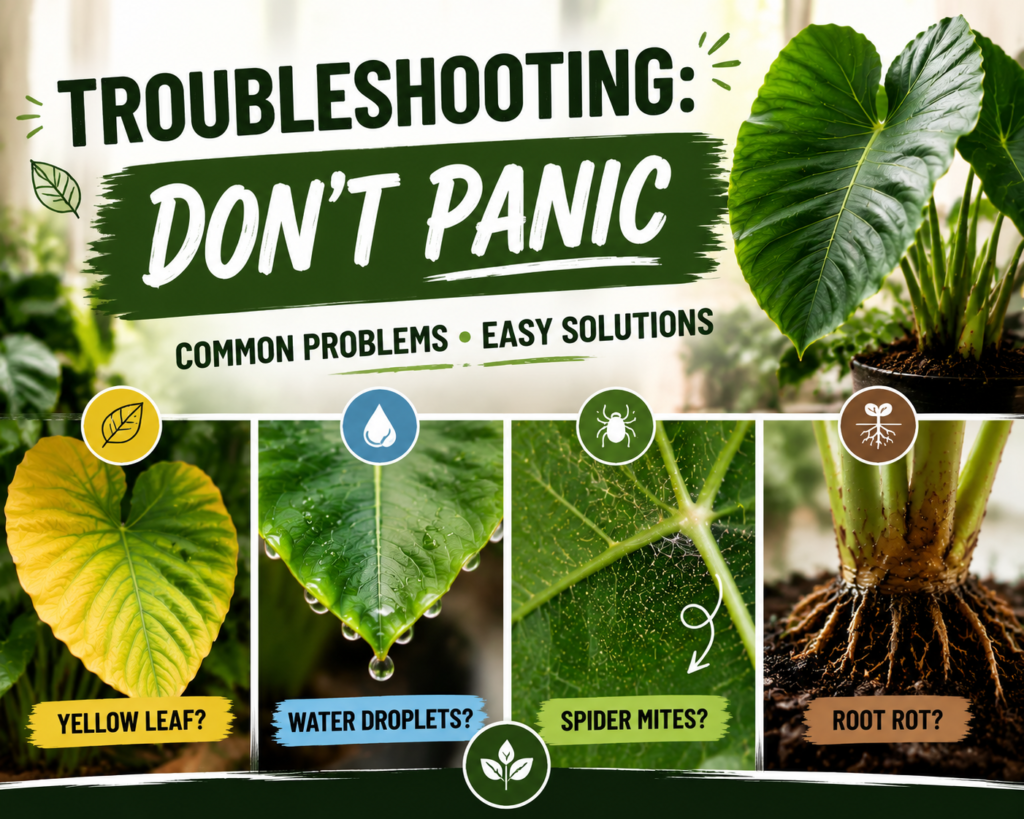
Troubleshooting: Don’t Panic
My oldest leaf is turning yellow — is it dying?
Probably not! Elephant ears are dramatic: they sacrifice older leaves to fuel new growth. If it’s just the lowest, oldest leaf turning yellow while a new leaf unfurls at the top, that’s completely normal. Only worry if multiple leaves yellow simultaneously — that points to overwatering or nutrient deficiency.
There are water droplets on the leaf tips (guttation)
This is actually a sign your plant is healthy and well-hydrated! It’s called guttation — the plant pushes excess moisture out through pores at the leaf edges. You’ll notice it most in the morning. Just wipe the drops off to prevent mineral buildup.
I see tiny webs under the leaves — spider mites?
Yes, likely spider mites — elephant ears are a magnet for them in dry indoor air. Act fast: wipe leaves with a damp cloth, spray with neem oil solution (1 tsp neem + 1 tsp dish soap in 1L water), and boost humidity. Repeat weekly for 3 weeks to break the lifecycle.
The stem is mushy at the base — root rot?
If the base feels soft and smells funky, root rot is likely. Unpot immediately, cut away all brown/mushy roots with sterilized scissors, dust with cinnamon (a natural fungicide), and repot in fresh, dry aroid mix. Don’t water for 3–5 days to let wounds callous. Reduce your watering frequency going forward.
Frequently Asked Questions
Can elephant ears survive winter indoors?
Yes — Alocasias do well as year-round houseplants. They’ll go semi-dormant (slower growth, maybe drop a leaf) but will bounce back in spring. Keep them in a warm spot above 60°F and reduce watering. For outdoor Colocasias in cold climates, dig up the corms after the first frost, let them dry, and store in peat moss in a cool (not freezing) garage until spring.
How fast do elephant ears grow?
In ideal conditions (warm, humid, bright light, regular feeding), expect a new leaf every 1–2 weeks during the growing season. Outdoor Colocasias can shoot up several feet in a single summer. Indoor Alocasias are slower but can still double in size within one growing season.
Do I need a massive pot?
Not necessarily. Elephant ears actually prefer being slightly root-bound — it encourages upward growth rather than root spreading. Only go up 1–2 inches when repotting. A too-large pot holds excess moisture and increases rot risk. Use a pot with drainage holes, always.
Also read this Content: Calla Lily: How to Plant, Grow & Care for Calla Lilies