
Discover the best hardy fuchsia varieties that survive winter, bloom from summer to autumn, and bring vibrant colour to borders, containers, and cottage gardens.
🌸 Quick Answer: Are Fuchsias Hardy?
Yes — many fuchsia varieties are fully hardy perennials that survive freezing winters and regrow each spring. Species like Fuchsia magellanica and cultivars such as ‘Mrs Popple’ and ‘Riccartonii’ are reliable in USDA Zones 6–9. They die back to ground level in cold winters but produce vigorous new growth and flowers the following summer.
What Is a Hardy Fuchsia?
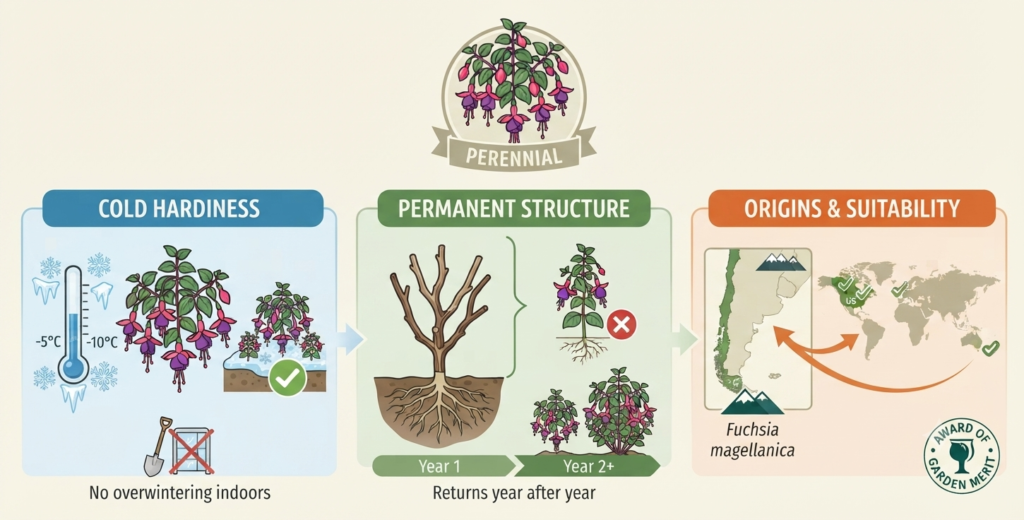
A hardy fuchsia is a fuchsia plant that survives freezing temperatures outdoors without needing to be brought inside for winter. Unlike tender fuchsias — which are killed by frost and grown as annuals or overwintered indoors — hardy fuchsia varieties form permanent shrubs or bushes in the garden. They are true perennial fuchsias that return year after year.
Most hardy fuchsias originate from Fuchsia magellanica, a species native to southern Chile and Argentina where it endures harsh mountain winters. Through breeding and selection, gardeners now have dozens of reliable hardy fuchsia varieties suited to temperate gardens across the UK, US, Canada, and New Zealand. The RHS has awarded many cultivars the Award of Garden Merit for proven reliability.
Best Reliable Hardy Fuchsia Varieties
Choosing the right hardy fuchsia variety is the single most important step for success. The following cultivars have proven themselves through decades of garden performance across a range of climates. All produce the classic pendulous fuchsia flower from midsummer well into autumn.
| Variety | Height | Hardiness (USDA) | Flower Color |
|---|---|---|---|
| Fuchsia magellanica | 3–10 ft | Zone 6–9 | Red & purple |
| ‘Mrs Popple’ | 3–5 ft | Zone 6–9 | Red & violet |
| ‘Riccartonii’ | 5–8 ft | Zone 6–9 | Scarlet & purple |
| ‘Tom Thumb’ | 1–2 ft | Zone 7–9 | Red & mauve |
| ‘Hawkshead’ | 2–3 ft | Zone 7–9 | White |
| ‘Garden News’ | 2–3 ft | Zone 7–9 | Pink & magenta |
For beginners, ‘Mrs Popple’ and Fuchsia magellanica are the safest choices — both have survived temperatures below -10°C (14°F) in well-drained soil. ‘Tom Thumb’ is ideal for containers and small spaces, while ‘Riccartonii’ makes an excellent informal hedge in milder coastal areas.
Hardy Fuchsias vs Tender Fuchsias: Key Differences
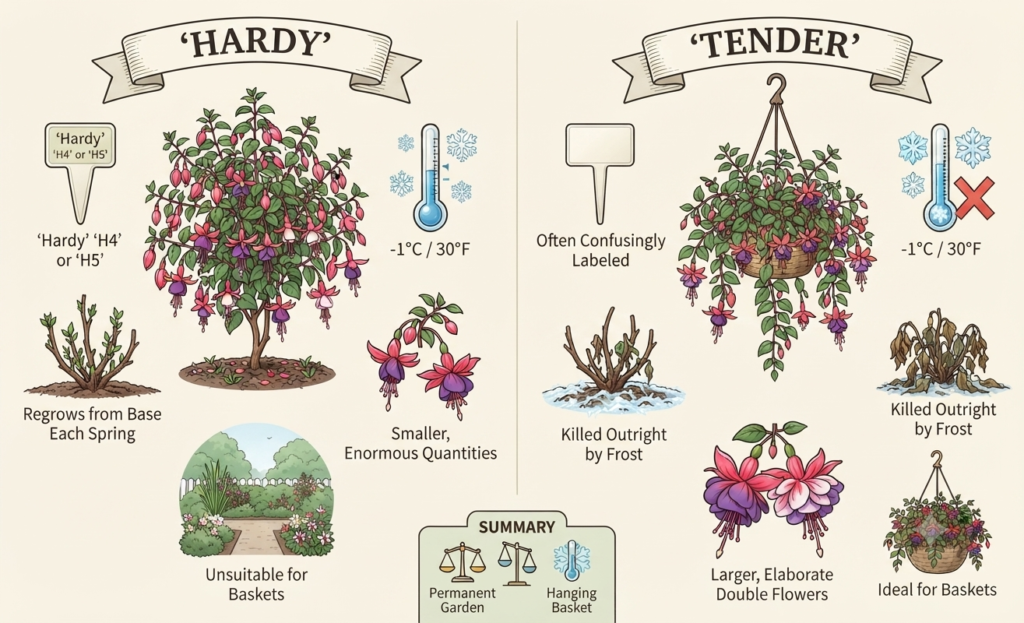
The crucial distinction: hardy fuchsias survive frost and regrow from the base each spring, while tender fuchsias (the type sold for hanging baskets) are killed outright by temperatures below -1°C (30°F). Garden centres often sell both types simply labelled ‘fuchsia’, which causes confusion. Always check the plant label for terms like ‘hardy’, ‘H4’, or ‘H5’ (RHS hardiness ratings) before planting outdoors permanently.
Tender fuchsias typically have larger, more elaborate double flowers and trailing habits — perfect for baskets but unsuitable for permanent garden planting in cold regions. Hardy fuchsias tend to have smaller, single or semi-double flowers produced in enormous quantities. If you’re searching for ‘fuschia’ plants that survive winter (a common misspelling), look specifically for hardy cultivars listed in the variety table above.
How to Plant Hardy Fuchsias
Plant hardy fuchsias in late spring after the last frost, giving them a full growing season to establish roots before their first winter. This is the single most important timing decision — autumn-planted fuchsias are far more likely to fail in their first winter.
- Dig a hole twice the width of the root ball and plant 5cm (2 inches) deeper than the nursery pot level — this protects the crown from frost
- Mix compost or well-rotted organic matter into the planting hole to improve moisture retention and drainage
- Space plants 45–90cm (18–36 inches) apart depending on the variety’s mature spread
- Water thoroughly after planting and apply a 5–8cm (2–3 inch) layer of mulch around the base, keeping it away from the stems
In my experience growing fuchsias for over 15 years, planting deeply is the single biggest factor in winter survival. Plants set at the same depth as their pot are far more vulnerable to crown damage from hard frosts.
Ideal Growing Conditions for Fuchsia Plants
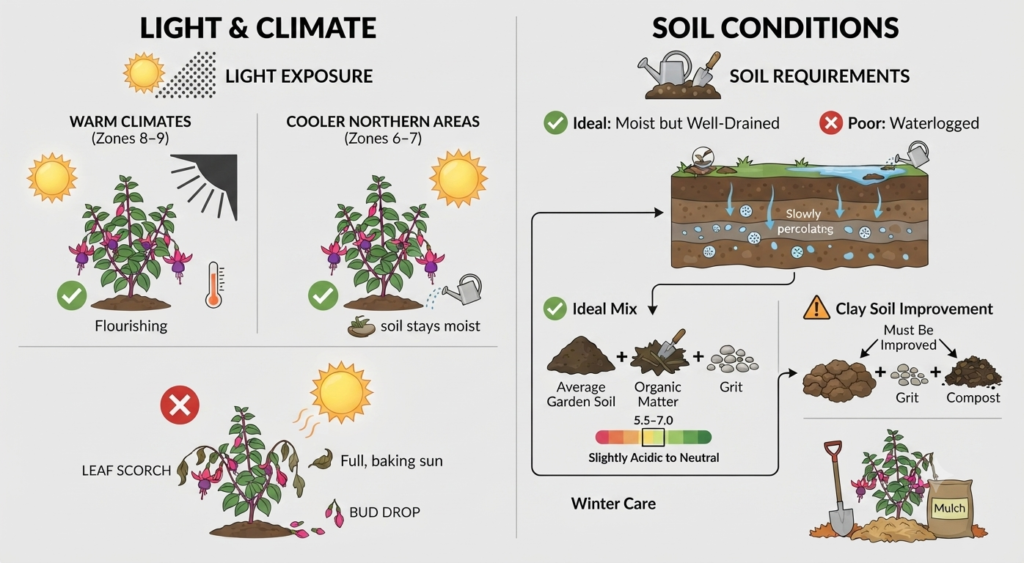
Hardy fuchsias thrive in partial shade to dappled sunlight — they are woodland-edge plants by nature. Morning sun with afternoon shade is ideal in warm climates (Zones 8–9). In cooler northern areas (Zones 6–7), they tolerate more sun provided the soil stays moist. Full, baking sun in hot climates causes stress, leaf scorch, and bud drop.
Soil should be moist but well-drained — fuchsias despise waterlogged conditions, especially in winter. They perform well in average garden soil enriched with organic matter. A slightly acidic to neutral pH (5.5–7.0) is ideal. Clay soils must be improved with grit and compost to prevent root rot during wet winters.
Watering and Feeding Your Fuchsia Bush
Water fuchsias regularly during dry spells, especially newly planted specimens and those in containers. In borders, established plants typically need deep watering once or twice weekly during hot weather. Container-grown fuchsias may need daily watering in summer as pots dry rapidly. Never let the compost dry out completely — inconsistent watering causes bud drop.
Feed with a balanced liquid fertiliser (such as tomato feed, which is high in potassium) every two weeks from May to September. Avoid high-nitrogen feeds — these promote lush green growth at the expense of flowers. Stop feeding by mid-September to allow stems to harden before winter.
Pruning Hardy Fuchsias: When and How
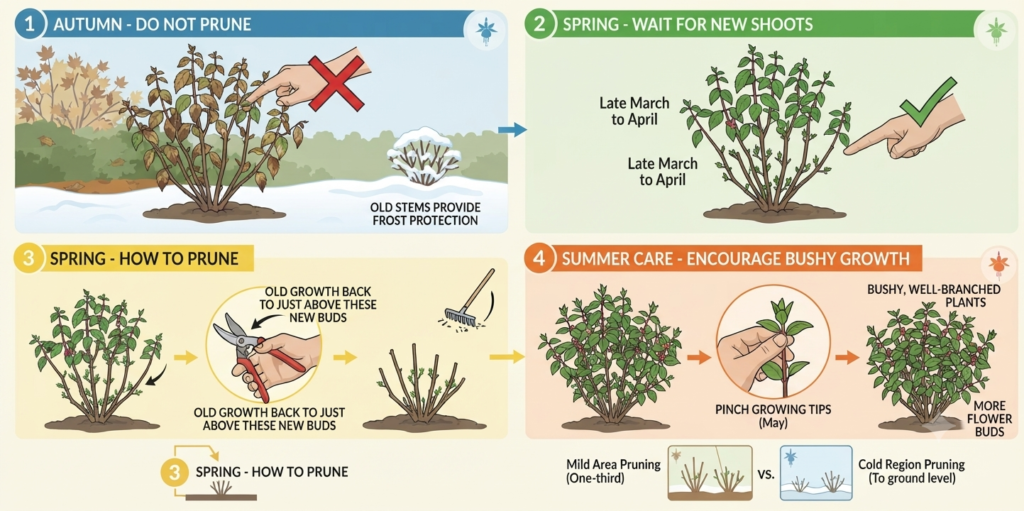
The golden rule of fuchsia pruning: wait until spring. Do not cut back hardy fuchsias in autumn — the old stems provide frost protection to the crown over winter. In spring (typically late March to April), wait until you see new shoots emerging from the base or lower stems, then cut all old growth back to just above these new buds.
In mild areas where stems survive intact, prune by one-third to maintain shape. In cold regions where stems die back entirely, simply cut dead wood to ground level and let fresh growth emerge. Pinch the growing tips of new shoots in May to encourage bushy, well-branched plants with more flower buds.
Growing Fuchsias in Pots and Containers
Hardy fuchsias make excellent container plants for patios, decks, and balconies. Choose compact varieties like ‘Tom Thumb’, ‘Lady Thumb’, or ‘Alice Hoffman’ for pots. Use a container at least 30cm (12 inches) in diameter with good drainage holes. Fill with multipurpose compost mixed with 20% perlite for drainage.
Container fuchsias are more vulnerable to frost because pot soil freezes solid more easily than ground soil. In Zones 6–7, move pots against a sheltered house wall for winter or wrap the entire pot in bubble wrap. Alternatively, sink the pot into the ground in autumn and mulch heavily over the top.
Winter Care and Frost Protection
In most temperate climates, established hardy fuchsias need minimal winter protection in well-drained soil. However, young plants in their first winter, those in exposed positions, or gardens in USDA Zone 6 benefit from extra care:
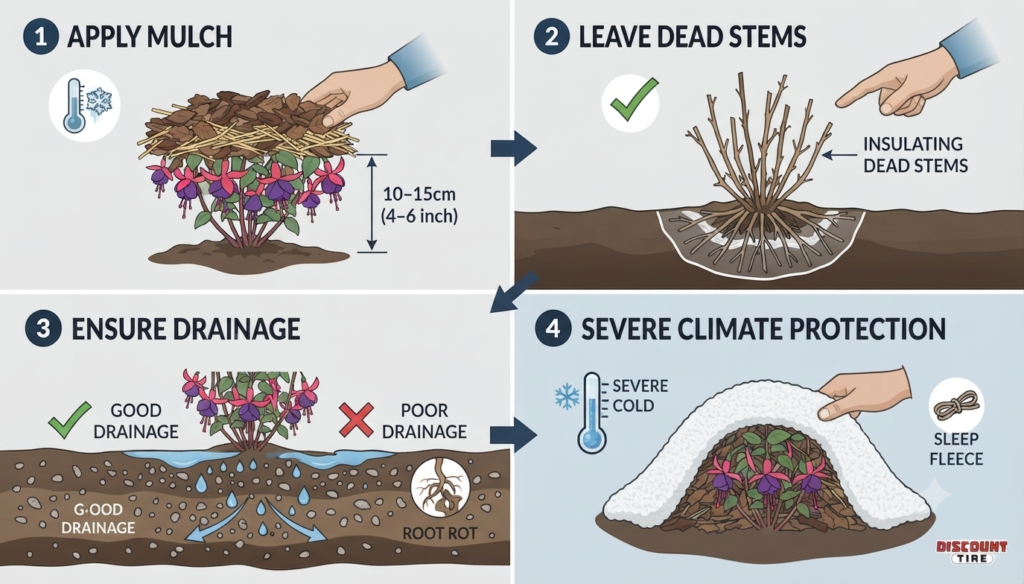
- Apply a thick 10–15cm (4–6 inch) mulch of bark chips, straw, or leaves over the crown after the first hard frost
- Leave dead stems standing — they insulate the crown and help you locate the plant in spring
- Ensure soil drains freely — more fuchsias are lost to waterlogging than to cold temperatures
- In severe climates, cover the crown with a mound of dry compost or straw held in place with fleece
In spring, be patient — hardy fuchsias are late starters and may not show growth until May or even June. Don’t assume the plant is dead if nothing appears by April. Gently scrape a stem near the base: if you see green tissue beneath the bark, the plant is alive.
Common Pests and Diseases of Fuchsia Plants
Hardy fuchsias are generally trouble-free, but watch for these common problems:
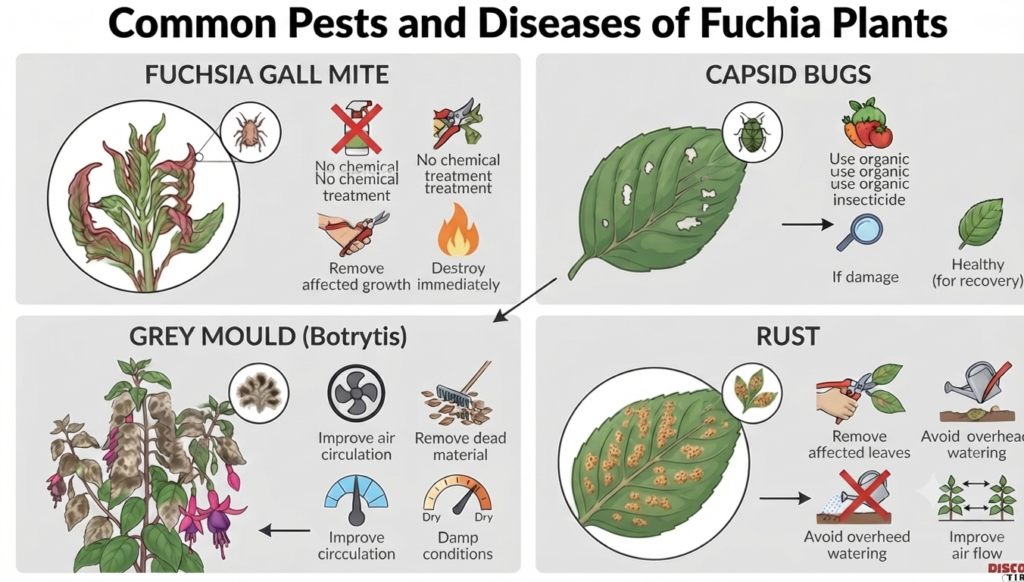
- Fuchsia gall mite — causes distorted, reddened growth at shoot tips. Remove and destroy affected growth immediately. No chemical treatment available
- Capsid bugs — create small ragged holes in leaves and distorted shoot tips. Spray with an organic insecticide if damage is severe
- Grey mould (Botrytis) — affects plants in damp, poorly ventilated conditions. Improve air circulation and remove dead material promptly
- Rust — orange pustules on leaf undersides. Remove affected leaves and avoid overhead watering. Improve air flow between plants
Frequently Asked Questions About Hardy Fuchsias
Are fuchsias perennials or annuals?
Hardy fuchsias are true perennials — they live for many years and regrow each spring. Tender fuchsias are treated as annuals in cold climates because they cannot survive frost. When shopping for a perennial fuchsia, look for varieties listed as hardy to your USDA zone.
Do hardy fuchsias attract hummingbirds?
Yes! Fuchsia flowers are irresistible to hummingbirds. The tubular, pendulous blooms are perfectly shaped for hummingbird feeding. Red and red-purple varieties are especially attractive. Hardy fuchsias bloom from midsummer through autumn, providing nectar during the hummingbird migration period.
Is it spelled fuchsia or fuschia?
The correct spelling is fuchsia — named after the German botanist Leonhart Fuchs. ‘Fuschia’ is a very common misspelling. Whether you search for fuchsia or fuschia, you’re looking for the same beautiful flowering plant!
Should I cut back my fuchsia in autumn?
No — leave hardy fuchsias standing through winter. The old stems protect the crown from frost damage. Wait until spring when new shoots appear, then prune back dead growth to just above the fresh buds. Cutting in autumn removes this natural insulation and increases the risk of winter loss.
Why is my fuchsia not flowering?
The most common causes are too much shade (move to brighter conditions), excess nitrogen fertiliser (switch to a potassium-rich tomato feed), drought stress (water consistently), or the plant is young and still establishing. Hardy fuchsias also bloom on new growth, so ensure you prune in spring to stimulate fresh flowering shoots.
Can hardy fuchsias grow in full sun?
In cool climates (UK, Pacific Northwest, northern US), hardy fuchsias tolerate full sun if the soil remains moist. In warmer regions (Zones 8–9), they prefer morning sun with afternoon shade. Full baking sun in hot climates causes leaf scorch, bud drop, and stressed plants. Partial shade or dappled sunlight is safest in most situations.