
Quick Calla Lily Care Summary
| Care Need | Best Practice |
| Botanical name | Zantedeschia |
| Plant type | Rhizomatous flowering perennial |
| Light | Full sun to partial shade |
| Soil | Rich, moist, well-draining soil |
| Watering | Keep evenly moist, never soggy |
| Best for | Containers, borders, patios, cut flowers |
| Planting depth | About 2–4 inches deep |
| Spacing | Around 12–18 inches apart |
| Winter care | Protect from frost or lift rhizomes in cold areas |
| Pet safety | Toxic to cats and dogs if eaten |
What Is a Calla Lily?
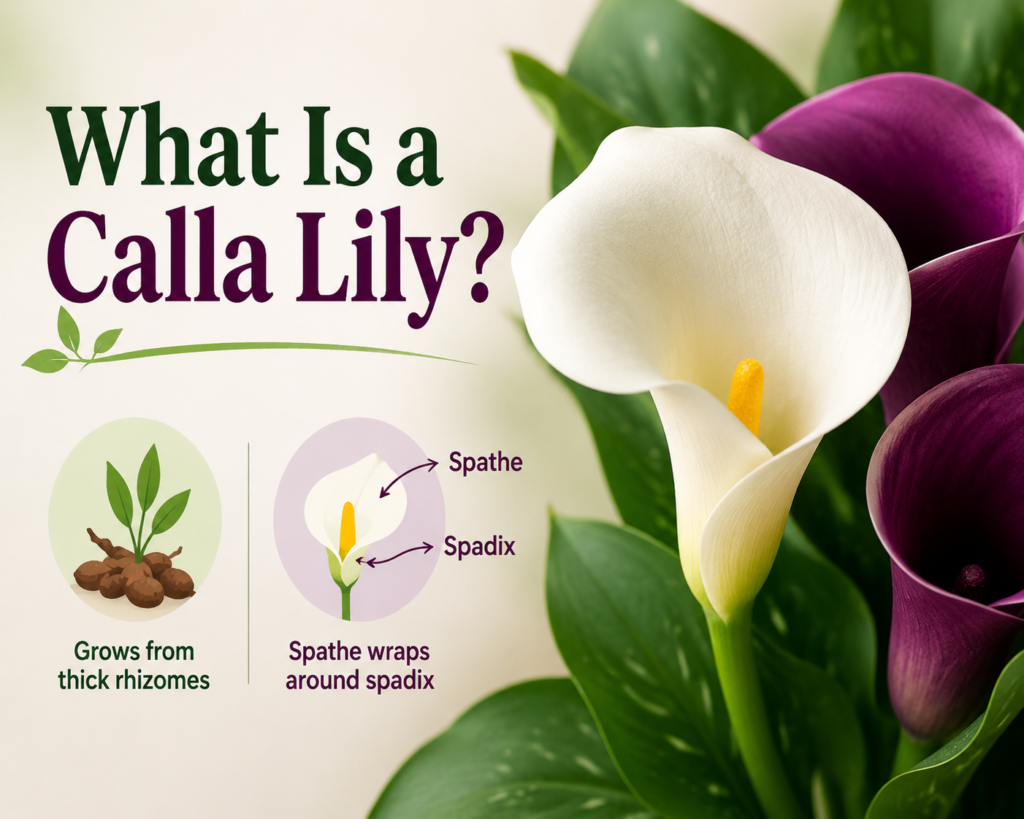
A calla lily is not a true lily. It belongs to the Zantedeschia group and grows from thick underground rhizomes, often sold as “calla lily bulbs” in garden centers.
Those elegant “flowers” are actually a curved spathe wrapped around a central spadix. That’s why calla lilies look so polished in modern gardens, wedding bouquets, and patio containers.
When to Plant Calla Lilies
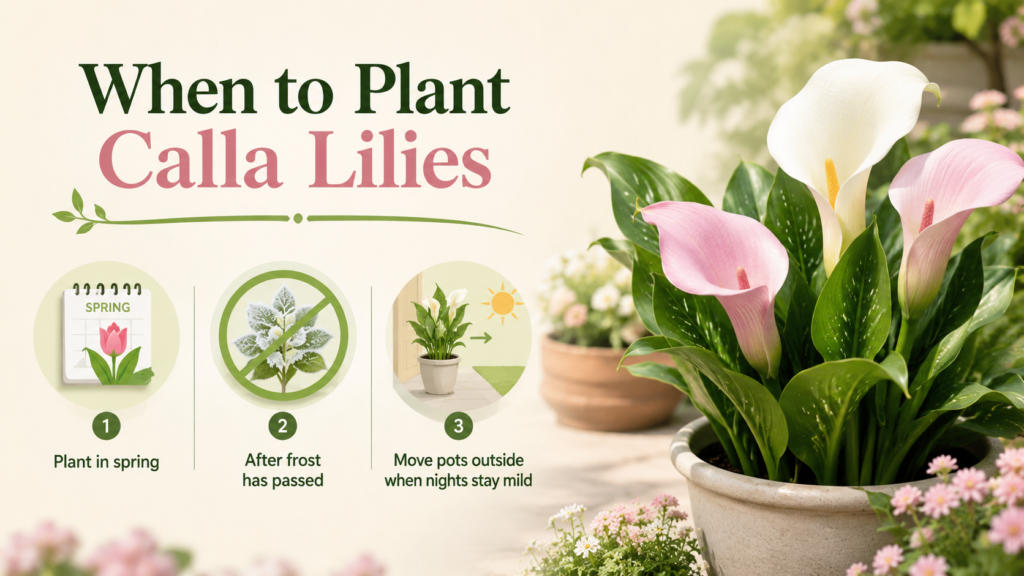
Plant calla lilies in spring after the danger of frost has passed. They enjoy warm soil, so don’t rush them into cold, wet ground.
If you’re planting in pots, you can start them indoors earlier and move them outside once nights stay mild. This gives your patio a head start without risking frost damage.
Where to Plant Calla Lilies
Choose a spot with bright light, warmth, and shelter from harsh wind. In cooler climates, full sun usually works well. In hot regions, afternoon shade helps protect leaves and flowers.
Calla lilies suit stylish borders, entryway planters, poolside pots, balcony gardens, and mixed containers. For that upscale look, plant several of the same color together instead of scattering one here and there.

Best Soil for Calla Lilies
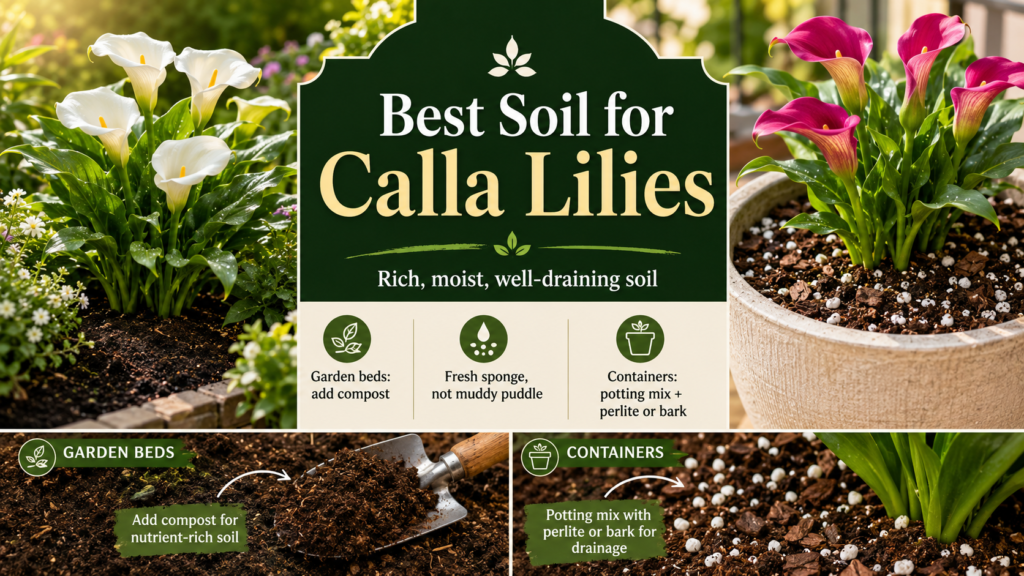
Calla lilies like soil that feels rich and moist but still drains well. Think “fresh sponge,” not “muddy puddle.”
Also read this Content: Lily of the Valley – Complete Plants Care and Growing Guide
For garden beds, improve heavy soil with compost and organic matter. For containers, use a high-quality potting mix with added perlite or bark to keep the roots breathing.
How to Plant Calla Lily Rhizomes in the Ground
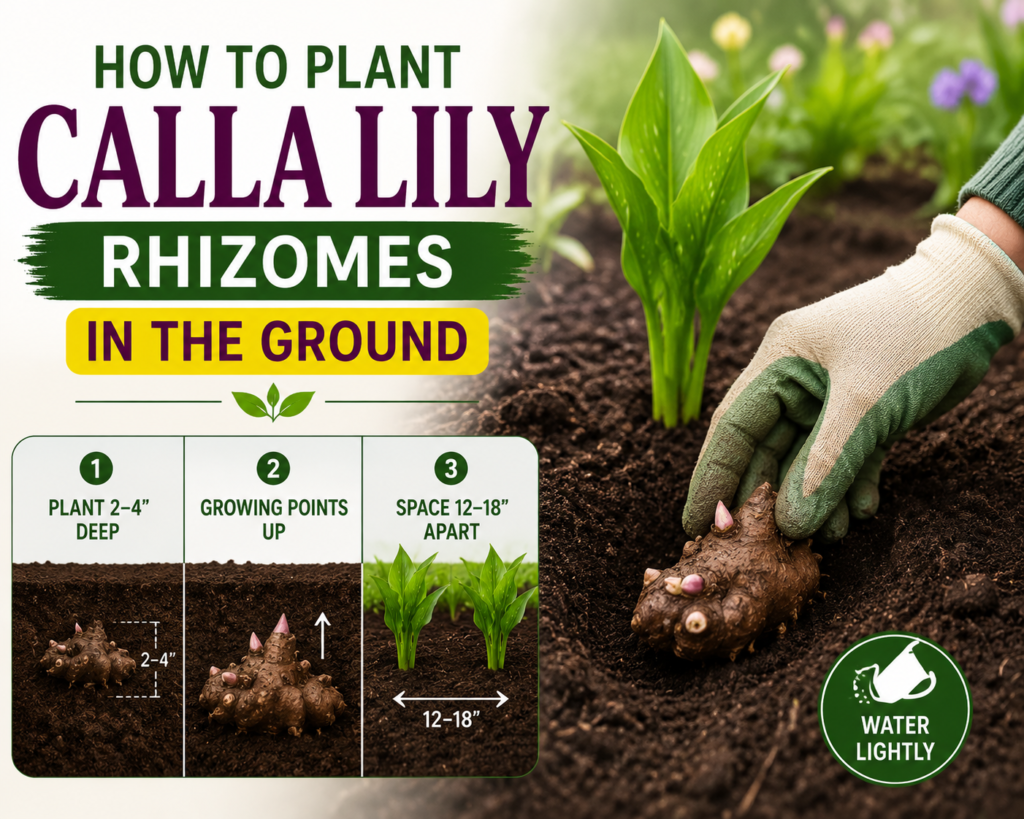
Plant calla lily rhizomes about 2–4 inches deep with the growing points facing upward. Space them around 12–18 inches apart so the leaves can expand without looking cramped.
After planting, water lightly. Once shoots appear, water more regularly. This helps reduce the risk of rot while the rhizome is still waking up.
How to Grow Calla Lilies in Pots
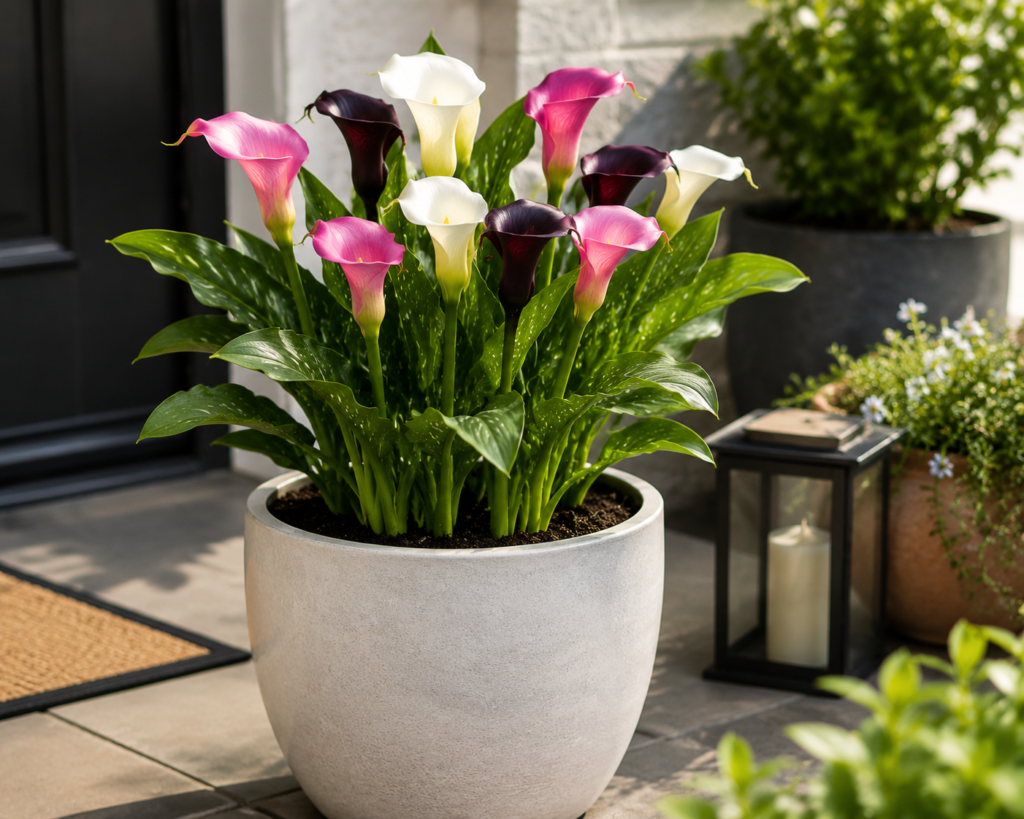
Calla lilies are excellent container plants, which makes them perfect for patios, balconies, and front-door styling. Choose a pot with drainage holes because trapped water is the fastest way to ruin the rhizome.
Use one medium rhizome in a 10–12 inch pot, or group several in a larger container for a fuller display. A simple ceramic pot in white, charcoal, stone, or terracotta can make the plant look instantly designer.
Fertilizer for Calla Lilies
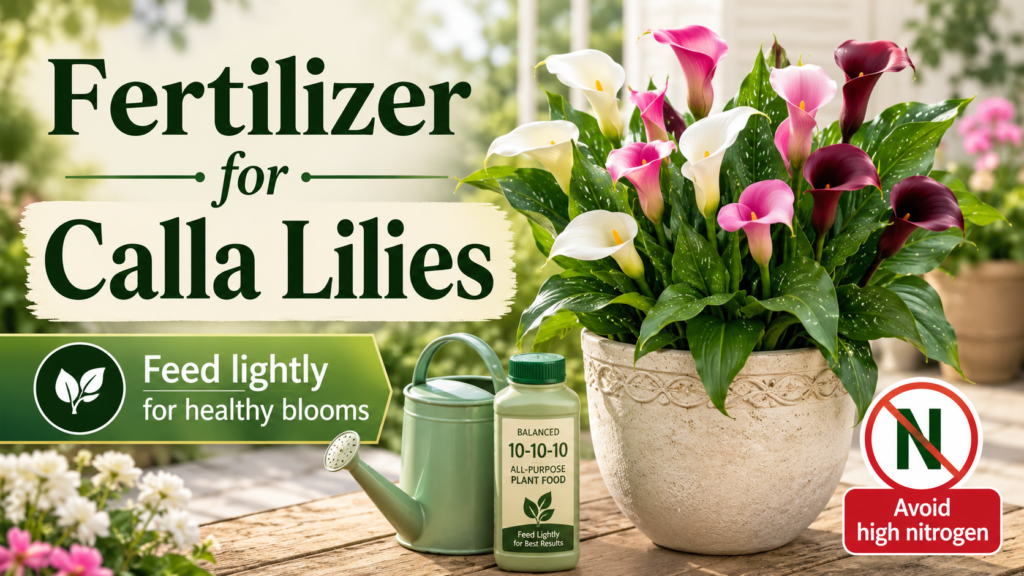
Feed calla lilies lightly during active growth. A balanced flower fertilizer or bulb fertilizer works well, especially when the plant begins producing leaves.
Avoid overfeeding with high-nitrogen fertilizer. It can create lush leaves but fewer flowers, which is not the goal when you want that elegant calla lily display.
Indoor Calla Lily Care
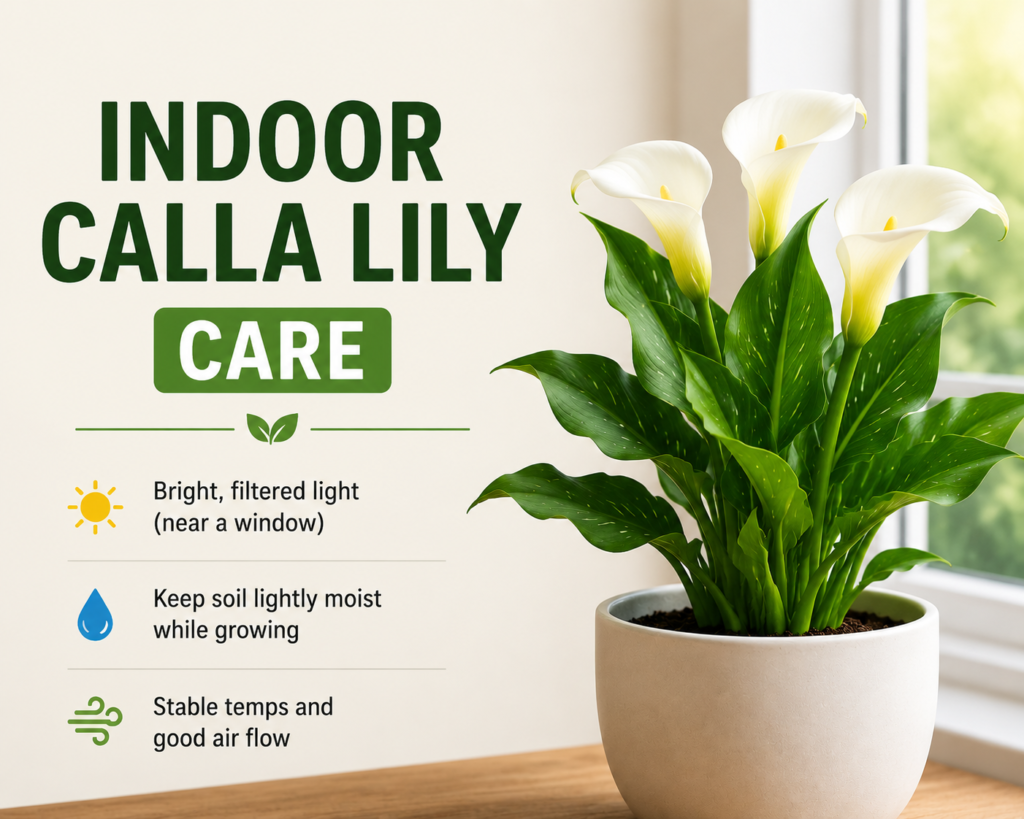
Indoors, place your calla lily near a bright window with filtered light. Avoid dark corners because the plant needs good light to bloom well.
Keep the soil lightly moist while it grows, then reduce watering when the plant begins resting. Indoor calla lilies also appreciate stable temperatures and good air movement.
Also read this Content: How to Grow Calibrachoa: 5 Secrets to Keep Million Bells Blooming All Summer
Common Calla Lily Problems
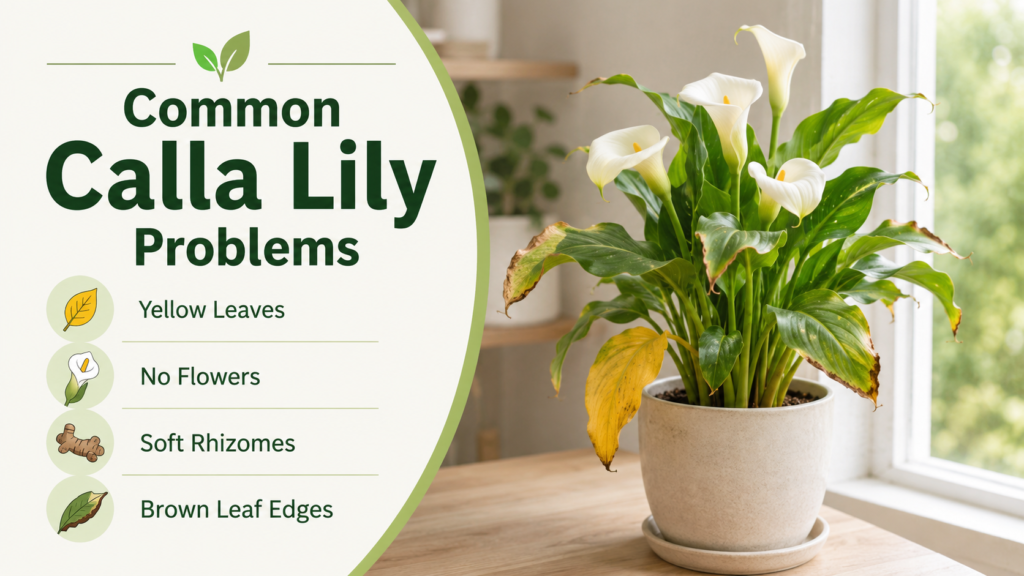
Yellow Leaves
Yellow leaves often point to overwatering, poor drainage, cold stress, or weak light. Check the soil first before adding more water.
No Flowers
A calla lily may refuse to bloom if it gets too much shade, too much nitrogen, or not enough rest between growing seasons.
Soft or Rotten Rhizomes
Soft rhizomes usually mean the soil stayed too wet. Always use drainage holes and avoid planting in heavy, waterlogged soil.
Brown Leaf Edges
Brown edges can happen from dry air, inconsistent watering, fertilizer buildup, or hot afternoon sun. Adjust one issue at a time.
FAQs About Calla Lily Care
Are calla lilies better in pots or in the ground?
Both work well. Pots give you more control over soil, drainage, and winter protection. Garden beds work beautifully if your soil drains well and your climate is warm enough.
How deep should I plant calla lily bulbs?
Plant calla lily rhizomes around 2–4 inches deep. Place the growing points upward and cover them with loose soil or potting mix.
How often should I water calla lilies?
Water when the top inch of soil begins to dry. Keep the soil evenly moist during growth, but never let the rhizome sit in soggy soil.
Do calla lilies come back every year?
They can come back every year in warm, frost-free climates. In colder areas, you need to dig up and store the rhizomes before winter.
Why is my calla lily not blooming?
Common reasons include too much shade, too much nitrogen fertilizer, cold soil, overcrowding, or a weak dormancy period.
Can calla lilies grow indoors?
Yes. They need bright, indirect light, a pot with drainage, steady moisture during growth, and reduced watering during dormancy.
Final Thoughts
A calla lily is perfect when you want a garden that looks graceful, intentional, and a little luxurious. It delivers big visual impact without demanding hours of daily care.
Start with one beautiful pot near your doorway or patio seating area. Once you see those elegant blooms rise above the leaves, you’ll understand why calla lilies never really go out of style.