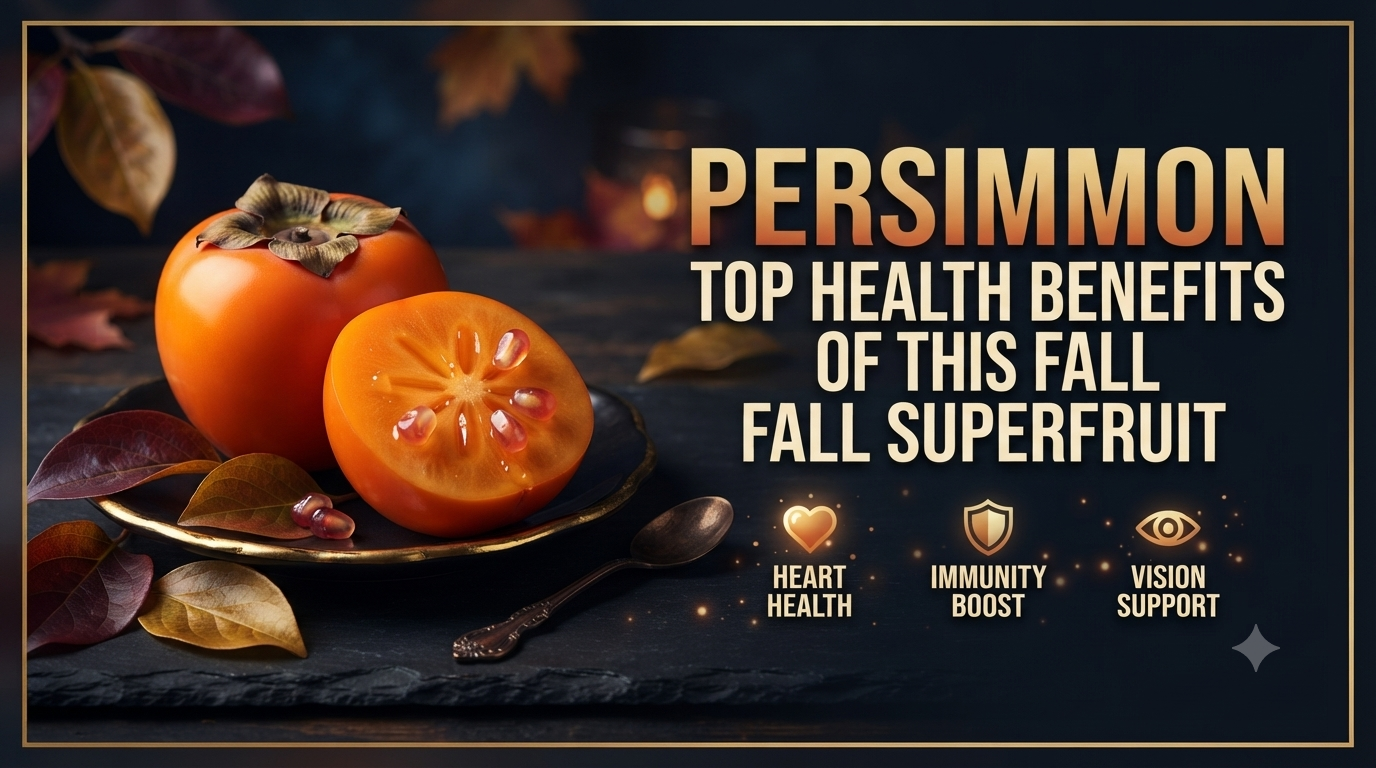

Everything you need to know about persimmon kaki fruit — nutrition facts, science-backed health benefits, how to eat it, ripeness tips, and common questions answered.
🍊 Quick Answer: Is Persimmon Kaki Fruit Healthy?
Yes. One medium persimmon fruit provides 55% of your daily vitamin A, 21% of fiber needs, and powerful antioxidants like beta-carotene and zeaxanthin. Persimmon kaki fruit supports heart health, digestion, eye health, and immunity — all with only 118 calories. It’s the same fruit sometimes called caquis fruit in Spanish-speaking countries.
What Is Persimmon Kaki Fruit?

Persimmon kaki fruit (Diospyros kaki) is an edible berry native to East Asia, now grown commercially in the United States, Spain, Italy, Israel, and Brazil. The name “kaki” comes from the Japanese word for persimmon, and the fruit is also known as caquis fruit in Spanish-speaking regions, Sharon fruit in Israel, and simply persimmon fruit in everyday English. Despite the different names, they all refer to the same species.
Persimmons are in season from October through January in the Northern Hemisphere, making them a quintessential fall and winter superfruit. They have a honey-sweet flavor when ripe, with a smooth, custard-like texture (Hachiya type) or a crisp, apple-like bite (Fuyu type). The bright orange skin is edible, and the fruit contains no fat, no cholesterol, and very little sodium.
Persimmon Nutrition Facts (Per Medium Fruit)
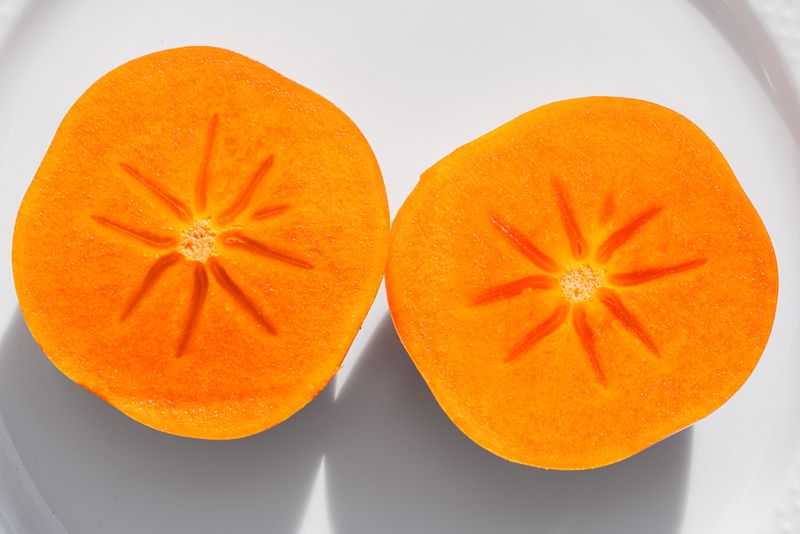
Persimmon kaki fruit is nutrient-dense relative to its calorie content. According to the USDA FoodData Central database, one medium Japanese persimmon (168 g) provides a notable concentration of fiber, vitamin A (as beta-carotene), manganese, and vitamin C. Here’s the complete nutritional breakdown:
| Nutrient | Per 1 Medium Fruit (168g) | % Daily Value |
|---|---|---|
| Calories | 118 kcal | — |
| Fiber | 6 g | 21% |
| Vitamin A | 2,733 IU | 55% |
| Vitamin C | 12.6 mg | 14% |
| Manganese | 0.6 mg | 30% |
| Potassium | 270 mg | 6% |
| Copper | 0.2 mg | 18% |
Source: USDA FoodData Central, NDB #09263, Japanese persimmon (raw). Percent Daily Values based on a 2,000-calorie diet.
Top Health Benefits Of Persimmon Kaki Fruit
1. Supports Digestive Health — Persimmon fruit is an excellent source of dietary fiber (6 g per fruit). Fiber promotes regular bowel movements, feeds beneficial gut bacteria, and may reduce the risk of colorectal issues. The soluble fiber in persimmons also helps slow sugar absorption after meals.
2. Rich In Antioxidants — Persimmon kaki fruit contains beta-carotene, lycopene, lutein, and zeaxanthin — carotenoid antioxidants that help neutralize free radicals and reduce oxidative stress. Research published in Food Chemistry confirms that persimmons rank among the highest-antioxidant fruits available seasonally.
3. Promotes Heart Health — The combination of fiber, potassium, and antioxidants in persimmon fruit supports cardiovascular function. Potassium helps regulate blood pressure, while soluble fiber can reduce LDL cholesterol levels. The tannins in persimmons may also reduce inflammation in blood vessel walls.
4. Supports Eye Health — With 55% of the daily value for vitamin A, persimmon kaki fruit is a standout for vision. Beta-carotene converts to retinol in the body, supporting night vision and corneal health. Lutein and zeaxanthin accumulate in the retina and may lower the risk of age-related macular degeneration.
5. Boosts Immunity — Vitamin C (14% DV) combined with vitamin A supports immune cell function. Vitamin A maintains the integrity of mucous membranes (your first line of defense), while vitamin C stimulates white blood cell production and enhances their pathogen-fighting ability.
Persimmon vs. Caquis Fruit: Are They Different?
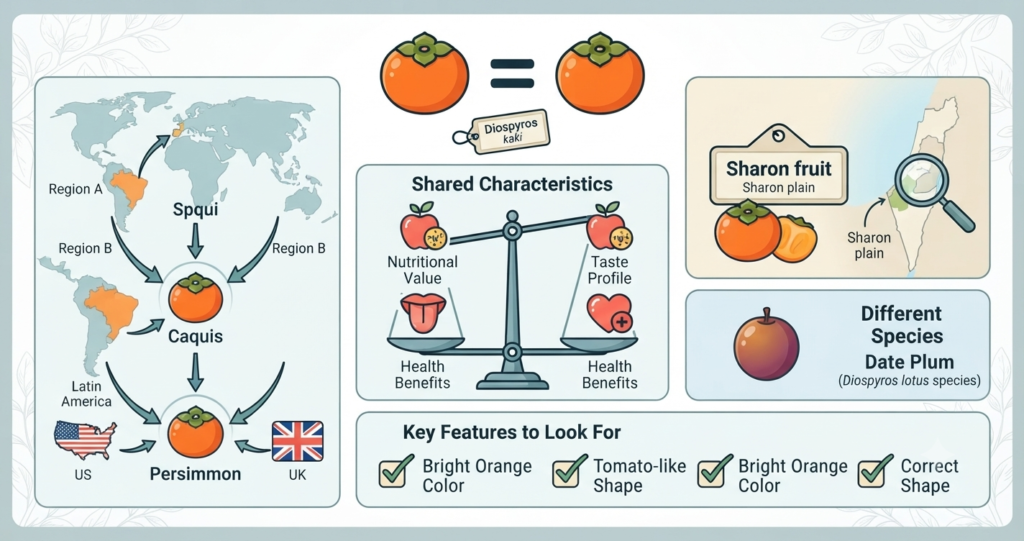
No — persimmon fruit and caquis fruit are the same species (Diospyros kaki). “Caquis” (also spelled “caqui” or “kaki”) is simply the Spanish and Portuguese name for persimmon. You’ll see this name in grocery stores across Spain, Brazil, and Latin America. The nutritional profile, taste, and health benefits are identical regardless of the label.
Other regional names include Sharon fruit (Israel — a Fuyu-type variety grown in the Sharon plain), kaki (Japan, France, Germany), and date plum (for the smaller Diospyros lotus species). When shopping, look for the bright orange color and tomato-like shape — that’s your persimmon kaki fruit, no matter what the sign says.
Fuyu vs. Hachiya Persimmons: Which Should You Buy?
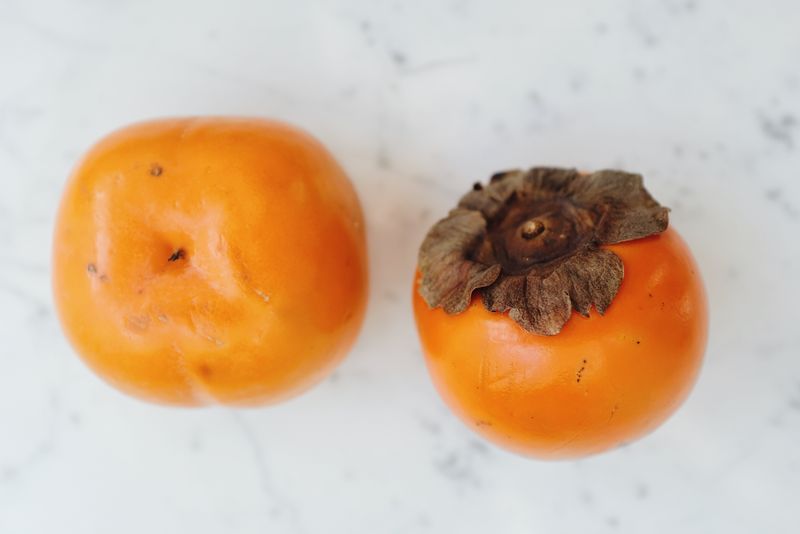
Fuyu persimmons are squat and flat-bottomed (like a tomato). They’re non-astringent, meaning you can eat them while still firm — slice them like an apple for salads, snacking, or cheese boards. Fuyu is the best choice for beginners because there’s no risk of the unpleasant chalky taste of an unripe astringent variety.
Hachiya persimmons are elongated and acorn-shaped. They’re astringent when unripe — extremely tannic and mouth-puckering. You must wait until they’re completely soft (jelly-like) before eating. Once ripe, Hachiya persimmons have an intense, honey-sweet custard flavor that’s perfect for baking persimmon bread, puddings, and smoothies. Both varieties offer the same core nutritional benefits.
Is Persimmon Good For Weight Loss?
Persimmon fruit can support weight management as part of a balanced diet. At 118 calories per medium fruit with 6 grams of fiber, it provides natural sweetness and satiety without empty calories. The fiber content slows digestion, helping you feel full longer and reducing the urge to snack between meals.
However, persimmons are relatively higher in natural sugars (about 21 g per fruit) compared to berries or citrus. If you’re counting carbs or managing blood sugar, enjoy persimmon in moderation — one fruit per day is a reasonable portion. Pair it with a protein source (yogurt, nuts) to further stabilize blood sugar response. Persimmons are not a “fat-burning” food, but they’re a smart, nutrient-dense swap for processed sweets.
How To Eat Persimmon Kaki Fruit
Persimmon fruit is versatile and easy to prepare. The skin is edible on both Fuyu and Hachiya varieties (though some people prefer to peel Hachiya). Here are simple ways to enjoy persimmon kaki fruit:
- Fresh and raw — slice Fuyu persimmons into wedges and eat like an apple, or scoop soft Hachiya flesh with a spoon
- In salads — pair sliced persimmon with arugula, goat cheese, walnuts, and balsamic vinaigrette
- In smoothies — blend ripe Hachiya pulp with banana, yogurt, and cinnamon for a creamy fall smoothie
- Baked goods — use puréed Hachiya persimmon in place of applesauce in muffins, bread, and cookies
- Dried — dehydrated persimmon slices make a naturally sweet, chewy snack with concentrated nutrients
Storage tip: Keep unripe persimmons at room temperature until they reach desired softness. Ripe Fuyu persimmons last 3–5 days in the refrigerator. Ripe Hachiya can be frozen whole and used later in baking or smoothies.
When Is Persimmon Ripe? How To Tell
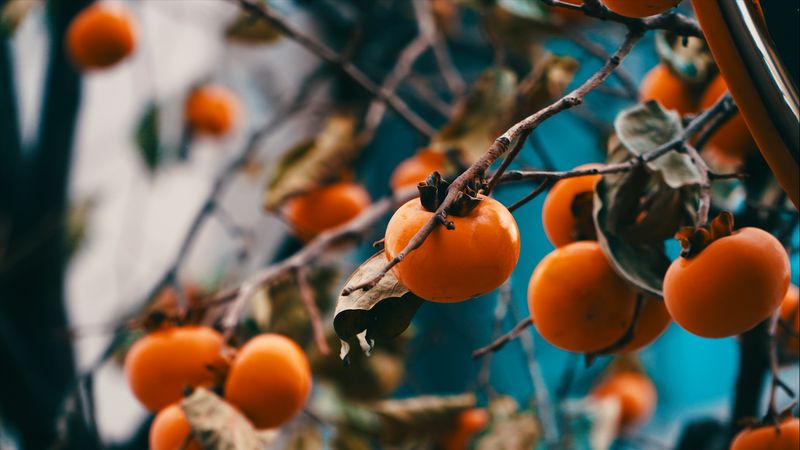
For Fuyu persimmons: They’re ready to eat when the skin is deep orange and the flesh is firm but yields slightly to gentle pressure — similar to a ripe tomato. You can eat Fuyu while still crisp; there’s no need to wait for it to soften completely.
For Hachiya persimmons: Wait until the fruit is extremely soft — almost translucent, with the texture of a water balloon. The skin should look slightly wrinkled. If it feels firm at all, it’s not ready and will taste unbearably astringent. To speed ripening, place Hachiya in a paper bag with a banana or apple (the ethylene gas helps). Freezing and thawing also removes astringency.
Potential Side Effects And Precautions
Eating unripe (astringent) persimmons on an empty stomach can cause bezoars — hard masses of undigested tannin-fiber compounds that form in the stomach. This is rare but has been documented in medical literature, particularly in people who eat large quantities of unripe fruit. Always ensure Hachiya persimmons are fully ripe before consumption.
People with diabetes should monitor portions due to the natural sugar content (21 g per fruit). Those taking blood pressure medication should be aware of persimmon’s potassium content. Allergic reactions to persimmon are uncommon but possible. As with any dietary change, consult a healthcare professional if you have specific medical conditions or concerns.
Frequently Asked Questions About Persimmon Kaki Fruit
Can you eat persimmon skin?
Yes — persimmon skin is edible and contains additional fiber and antioxidants. Fuyu persimmon skin is thin and pleasant to eat. Hachiya skin can be slightly tougher when very ripe, so some people prefer to scoop out the flesh. Wash the fruit thoroughly before eating.
Is persimmon safe for children?
Yes. Ripe persimmon fruit is safe for children over 6 months as a weaning food (mashed). Its soft texture and natural sweetness make it appealing. Avoid giving unripe astringent persimmon to children. Start with small amounts to check for any allergic reaction.
Can diabetics eat persimmon?
In moderation, yes. One medium persimmon has a glycemic index of approximately 50 (moderate) and contains fiber that slows sugar absorption. However, with 21 g of natural sugar per fruit, people with diabetes should factor it into their daily carbohydrate allowance and monitor blood glucose response. Consult your dietitian for personalized advice.
When is persimmon season?
In the United States, persimmon season runs from October through January, with peak availability in November and December. In the Southern Hemisphere (e.g., Brazil, where they’re sold as caquis fruit), the season is April through June. Look for them at farmers’ markets, Whole Foods, Trader Joe’s, and Asian grocery stores during peak season.
What’s the difference between persimmon and Sharon fruit?
Sharon fruit is a specific non-astringent persimmon variety (Triumph cultivar) grown in Israel’s Sharon plain. It’s been treated to remove tannins, so it can be eaten while still firm. Nutritionally, it’s very similar to Fuyu persimmon. Think of Sharon fruit as a branded subset of persimmon kaki fruit.
How many persimmons can you eat per day?
For most healthy adults, 1–2 medium persimmons per day is a reasonable amount. This provides significant fiber and vitamins without excessive sugar intake. Eating very large quantities (5+ daily) over extended periods could theoretically increase bezoar risk due to tannin accumulation, particularly if the fruit isn’t fully ripe.