
Introduction to Gladiolus
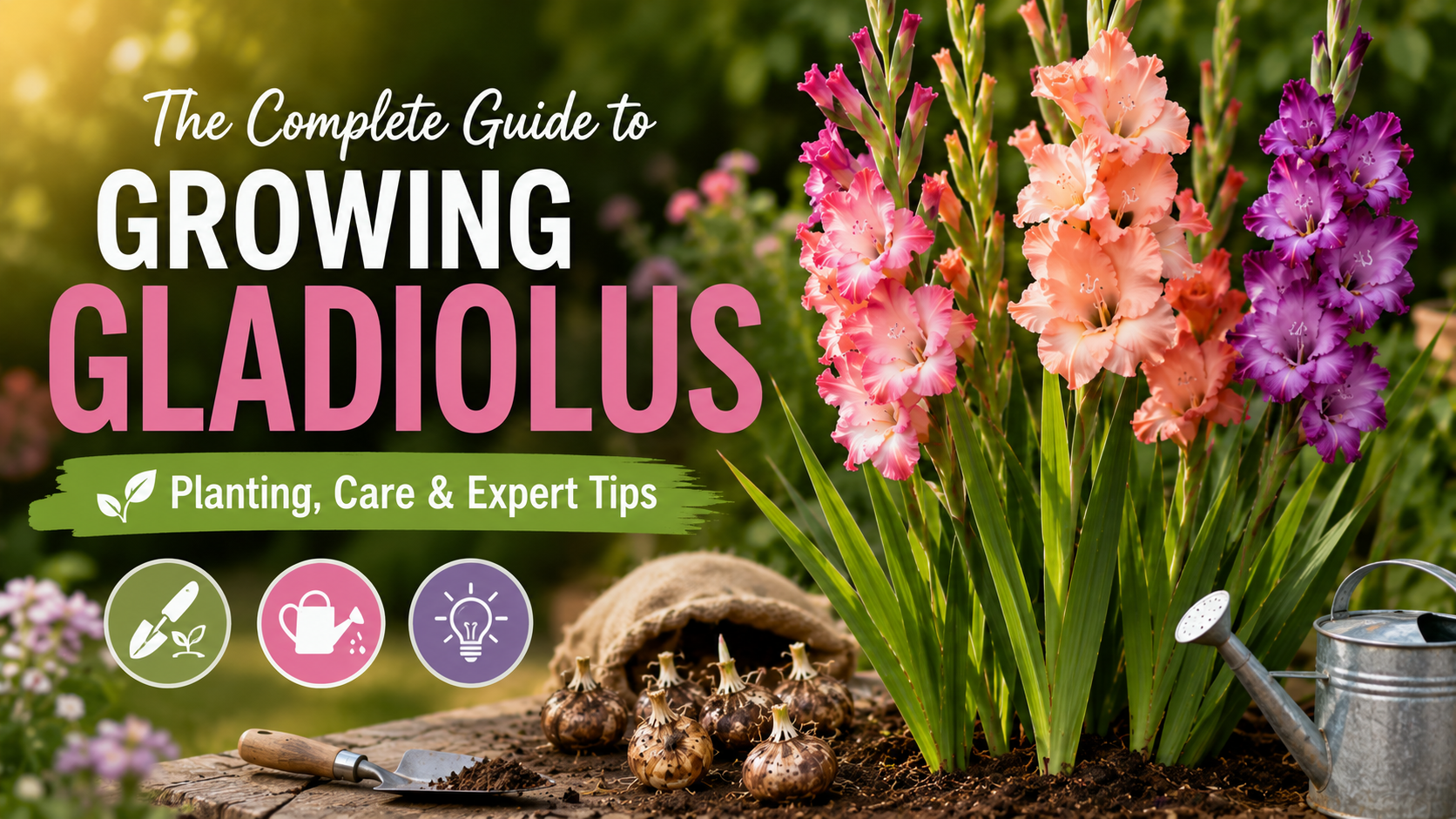
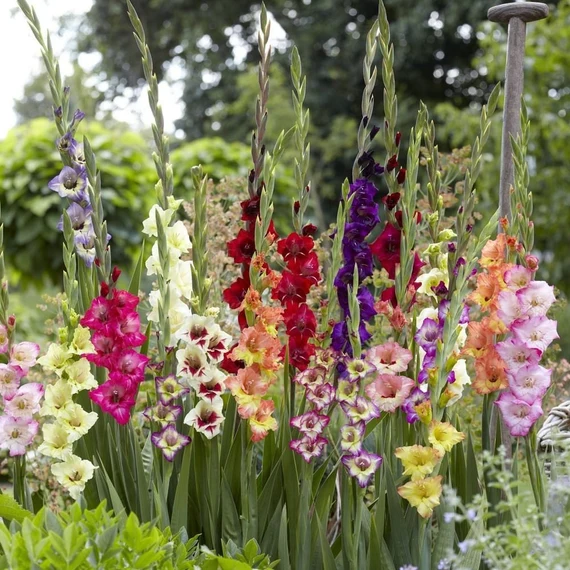
Gladiolus (from the Latin word for “sword,” referring to their blade-shaped leaves) are among the most dramatic flowering plants you can grow. Native to South Africa, these cormous perennials produce tall flower spikes with dozens of blooms in virtually every colour imaginable — from deep burgundy to soft peach, electric pink, and pure white.
Whether you’re growing them as cut flowers, border accents, or a cottage-garden focal point, gladiolus reward minimal effort with maximum impact. In my 15 years of growing them across multiple climate zones, I’ve found them to be one of the most forgiving and rewarding summer bulbs available to home gardeners.
When to Plant Gladiolus
Plant gladiolus corms in spring after the last frost date, when soil temperatures have reached at least 13°C (55°F). In warmer climates like Pakistan’s Punjab region, you can plant as early as February. For a continuous display of blooms from midsummer through autumn, stagger plantings every two weeks from your first planting date until about 12 weeks before the first expected frost.
💡 Expert tip: For succession planting, mark your calendar every 14 days. Each planting will bloom roughly 70–90 days later, giving you fresh cut flowers for months.
If you live in USDA zones 8–11 (or equivalent subtropical climates), corms can often overwinter in the ground. In cooler zones, treat them as annuals or lift and store corms after the foliage dies back in autumn.
How to Plant Gladiolus Corms
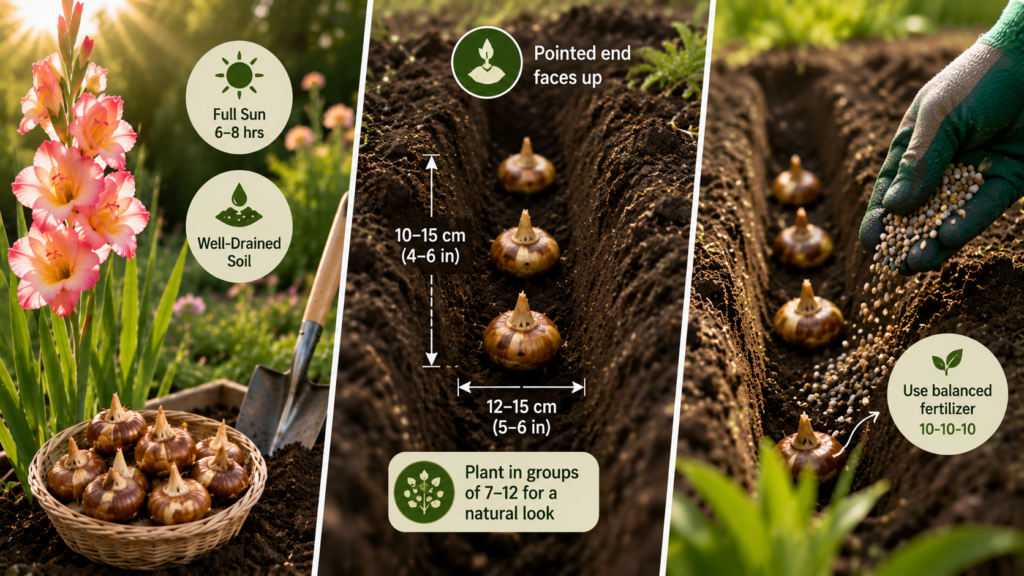
Choose a site with full sun (at least 6–8 hours daily) and well-drained soil. Gladiolus will rot in waterlogged conditions. If your soil is heavy clay, amend it with coarse sand or plant in raised beds.
Dig a trench or individual holes 10–15 cm (4–6 inches) deep. Place corms with the pointed end facing upward, spacing them 12–15 cm (5–6 inches) apart. For a natural look, plant in groups of 7–12 rather than single rows. Backfill with soil and water gently.
Add a balanced granular fertiliser (10-10-10) at planting time, mixing it into the bottom of the trench before placing corms. Avoid direct contact between fertiliser and corms to prevent burn.
Watering & Ongoing Care
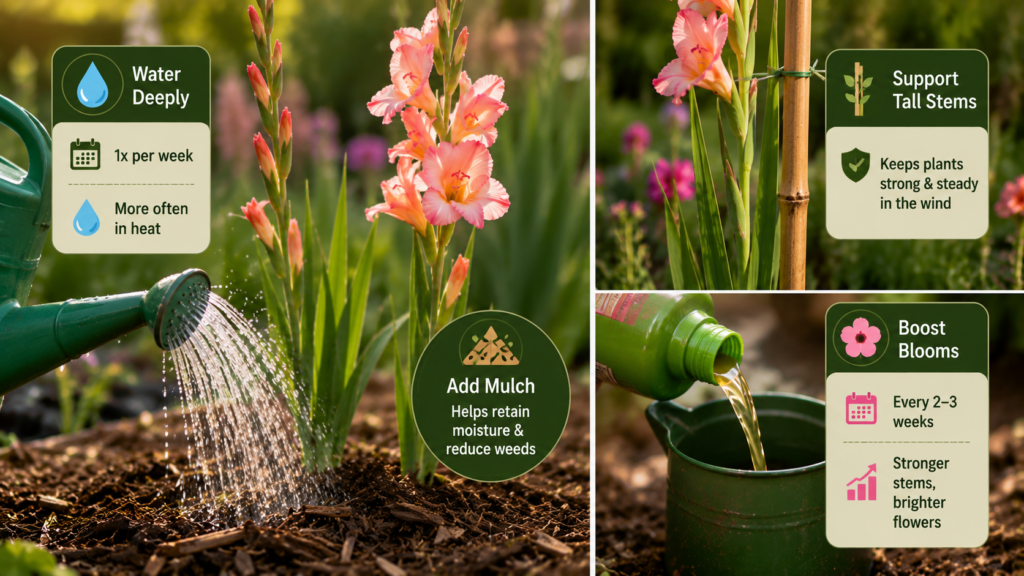
Water deeply once a week, providing about 2.5 cm (1 inch) of water. During hot spells or in sandy soils, increase to twice weekly. Consistent moisture is critical once flower spikes begin forming — irregular watering at this stage can cause bud drop.
Apply a 5–7 cm layer of organic mulch (straw, bark chips, or compost) around plants to retain moisture and suppress weeds. Once stems reach 20 cm in height, stake tall varieties to prevent wind damage — bamboo canes with soft ties work well.
💡 Expert tip: Feed with a high-potassium liquid fertiliser (like tomato feed) every 2–3 weeks once the first flower buds appear. This promotes bigger, more vibrant blooms.
Popular Gladiolus Varieties
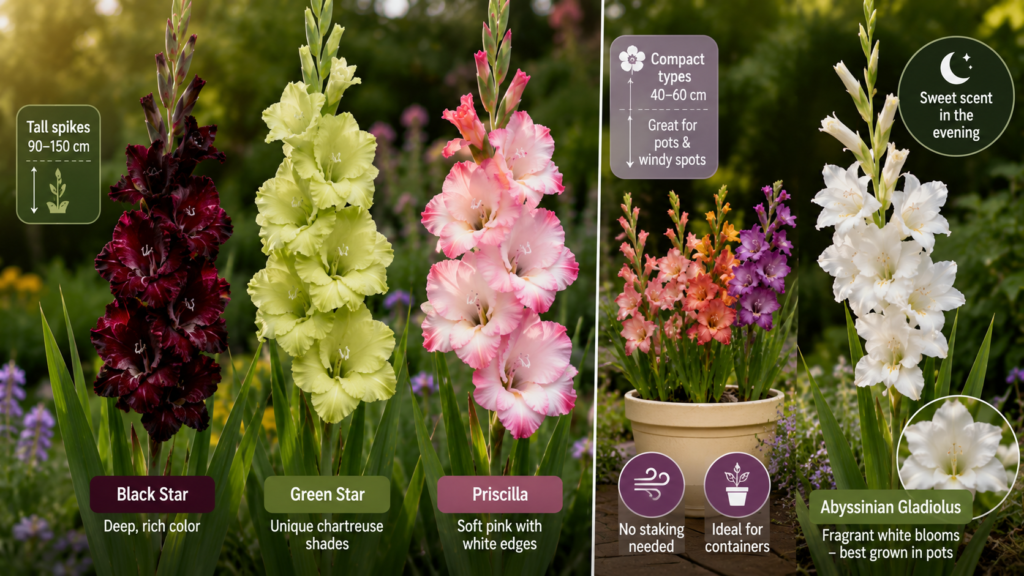
Grandiflorus hybrids are the most common, producing tall spikes (90–150 cm) with large, ruffled flowers. ‘Black Star’ offers deep velvety maroon; ‘Green Star’ provides an unusual chartreuse; and ‘Priscilla’ delivers soft pink with white edges. Nanus varieties are smaller (40–60 cm) and don’t require staking — perfect for windy sites or containers.
For fragrance, seek out Gladiolus murielae (Abyssinian gladiolus), which produces elegant white flowers with a sweet evening scent. It’s slightly less hardy but well worth growing in containers where you can enjoy the perfume up close.
Cutting Gladiolus for the Vase
Cut flower spikes in the early morning when the lowest 2–3 florets have opened. Use a sharp, clean knife and cut at an angle. Leave at least 4 leaves on the plant — these feed the corm for next year’s growth.
Place stems immediately in cool water with flower preservative. Remove the top few unopened buds to redirect energy into the open flowers. With proper care, cut gladiolus will last 7–10 days in the vase, with successive florets opening from bottom to top.
Overwintering & Corm Storage
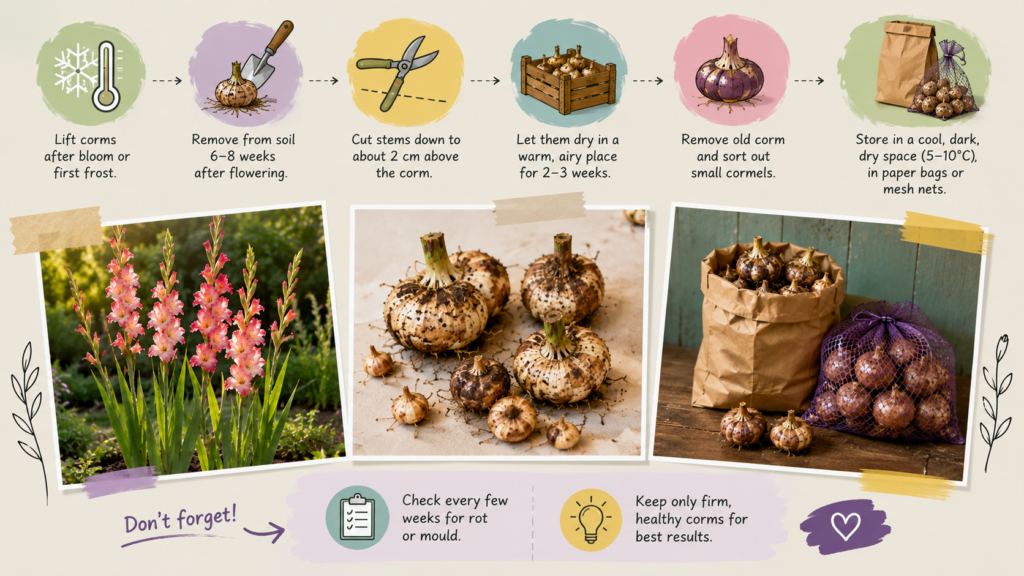
In zones where winter soil temperatures drop below -5°C, lift corms 6–8 weeks after flowering (or after the first light frost blackens foliage). Cut stems to 2 cm above the corm, brush off soil, and cure in a warm, dry, ventilated spot for 2–3 weeks.
Once cured, remove the old shrivelled corm from the base and separate any small cormels (these can be grown on to flowering size in 1–2 years). Store in paper bags or mesh nets in a cool (5–10°C), dark, dry location. Check monthly for signs of rot or mould and discard affected corms.
Frequently Asked Questions
How deep should I plant gladiolus corms?
Plant corms 10–15 cm (4–6 inches) deep. Deeper planting provides better anchorage for tall varieties and reduces the need for staking. In lighter soils, plant slightly deeper; in heavy clay, plant slightly shallower.
Why are my gladiolus leaves turning yellow?
Yellowing can indicate overwatering, underwatering, or natural senescence after flowering. Check soil moisture first. If leaves yellow prematurely before flowering, suspect fusarium wilt — remove and destroy affected corms and avoid replanting gladiolus in that spot for 3–4 years.
Can I grow gladiolus in containers?
Absolutely. Use a container at least 30 cm deep with excellent drainage. Plant 5–7 corms per 30 cm pot. Use quality potting mix and feed regularly, as container plants exhaust nutrients faster. Nanus varieties are especially well-suited to pots.