
Calla Lily Symptom Checker
Use this quick table first. It helps you match what you see with the most likely cause, so you don’t waste time guessing.
| What You See | Most Likely Cause | Quick Fix |
| Yellow leaves | Overwatering, poor drainage, dormancy, or low nutrients | Check soil moisture and drainage first |
| Drooping stems | Too much water, too little water, heat stress, or weak light | Adjust watering and move to bright filtered light |
| Mushy base or bad smell | Bacterial soft rot or rhizome rot | Remove from soil and inspect the rhizome |
| No flowers | Not enough light, too much nitrogen, young rhizome, or no rest period | Improve light and reduce high-nitrogen feeding |
| Brown leaf tips | Dry air, fertilizer burn, underwatering, or hot sun | Flush soil and adjust light/water |
| Leaves dying after blooming | Natural dormancy | Reduce watering and let the plant rest |
| Sticky leaves or webbing | Aphids, mites, or other pests | Wash leaves and treat early |
Yellow Leaves on Calla Lily

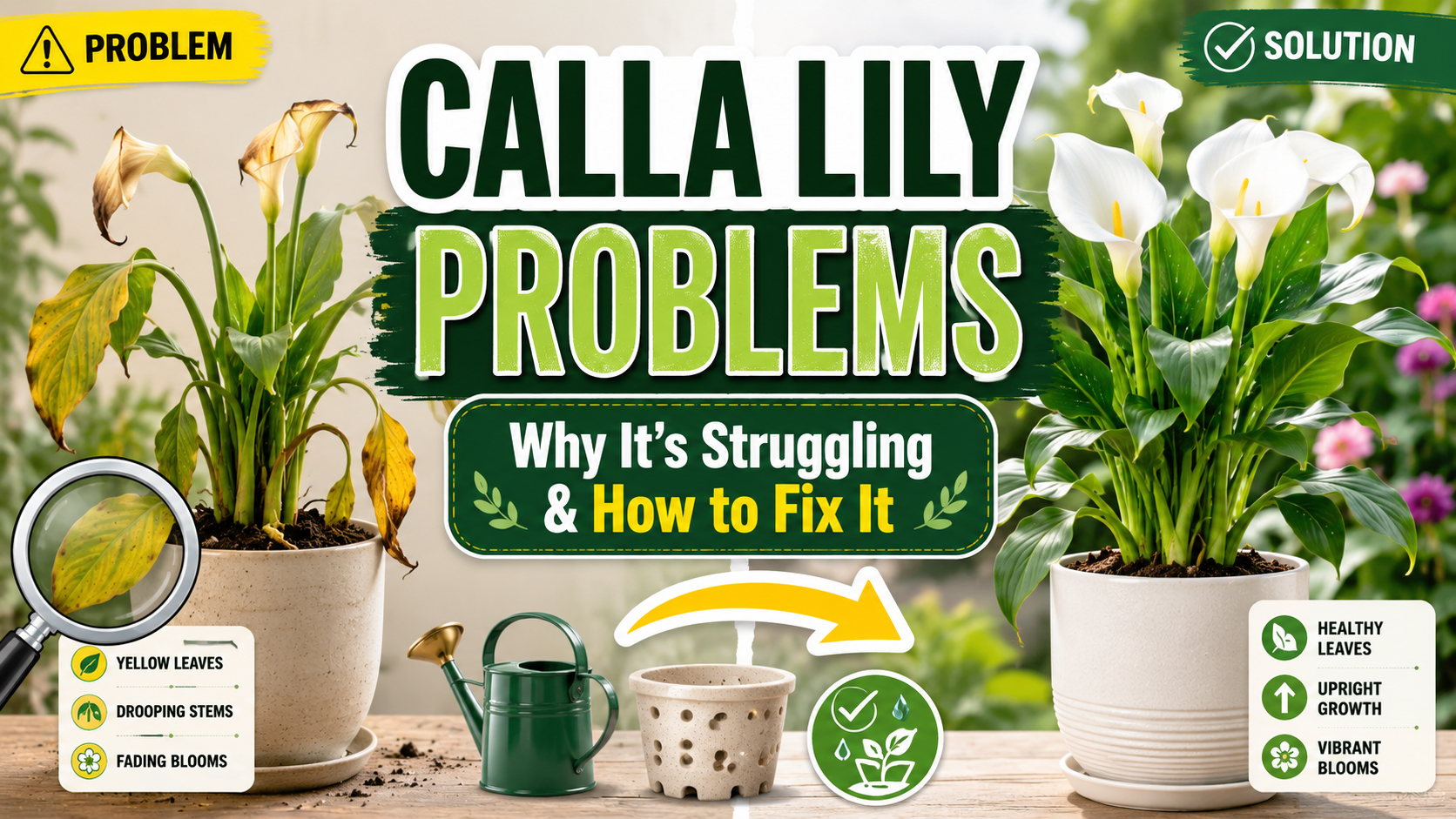
Yellow leaves are one of the most common Calla Lily Problems, especially after someone receives a perfect-looking plant as a gift. The cause is usually water-related. Calla lilies enjoy moisture, but they hate sitting in soggy soil.
First, push your finger one inch into the soil. If it feels wet and heavy, stop watering for several days. If the pot has no drainage hole, repot it immediately into a container that lets extra water escape.
How to Fix Yellow Leaves
Trim fully yellow leaves at the base using clean scissors. Then place the plant in bright, indirect light and water only when the top layer feels slightly dry. Don’t fertilize a stressed plant right away because weak roots can burn easily.
Drooping Calla Lily Stems
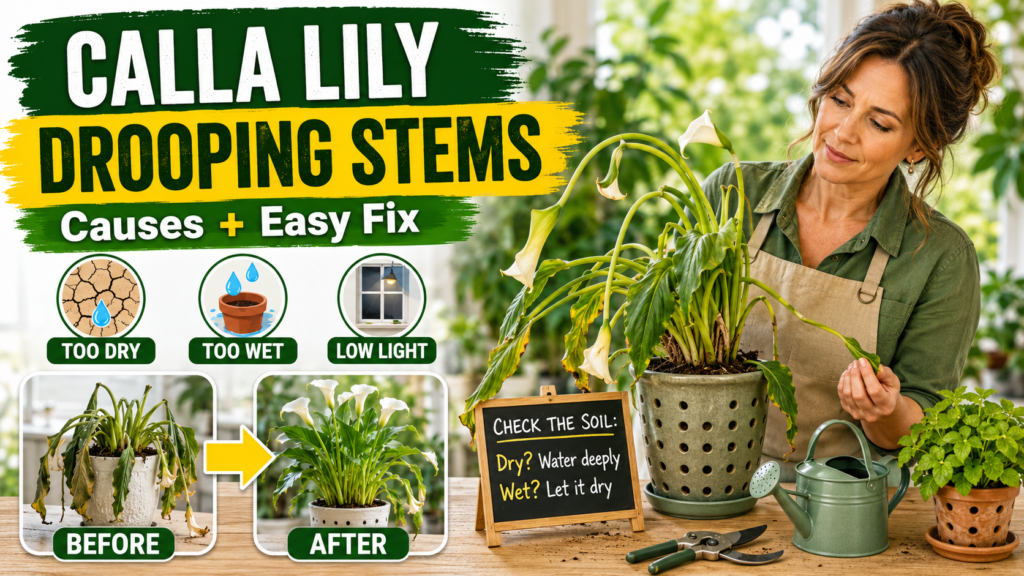
Drooping stems can look dramatic, almost like your plant gave up overnight. In many cases, the issue is watering. Too little water makes leaves limp and papery, while too much water makes stems soft, heavy, and weak.
Light also matters. A calla lily kept in a dark corner may stretch, lean, and flop. Move it near a bright window with filtered light, or outdoors where it gets gentle morning sun and afternoon shade.
How to Fix Drooping Stems
Check the soil before doing anything else. If it’s bone dry, water deeply and let extra water drain away. If it’s wet, don’t add more water. Let the pot dry slightly and improve airflow around the plant.
Mushy Stems or Soft Rhizome

A mushy stem is more serious than a yellow leaf. If the base feels slimy, smells unpleasant, or collapses at soil level, you may be dealing with rhizome rot or bacterial soft rot. This is the hidden problem most gardeners fear.
Remove the plant from the pot and inspect the rhizome. A healthy rhizome feels firm. A rotten one feels soft, watery, brown, or mushy. Sadly, badly rotted sections usually can’t recover.
How to Rescue a Rotting Calla Lily
Cut away rotten parts with a clean, disinfected knife, but only if firm healthy tissue remains. Let the healthy rhizome dry for a day, then repot it in fresh, well-draining potting mix. Never reuse wet, smelly, infected soil.
Calla Lily Leaves Turning Brown
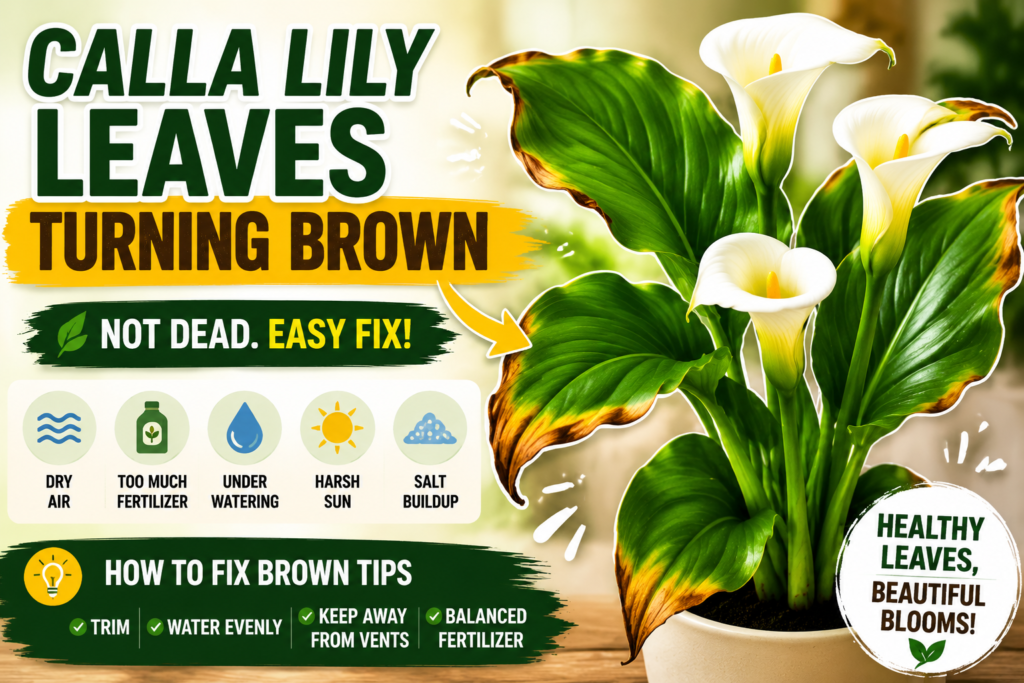
Brown tips often mean the plant is stressed, not dead. Dry indoor air, too much fertilizer, underwatering, harsh sunlight, and salt buildup in the soil can all cause crispy edges. The leaf is basically waving a tiny brown flag.
If only the tips are brown, your plant can still recover. Move it away from hot afternoon sun, flush the soil with clean water, and avoid feeding for a few weeks. Keep moisture steady, not extreme.
How to Fix Brown Tips
Trim brown edges only if they bother you visually. Don’t remove the whole leaf unless it’s mostly damaged. Then water evenly, keep the plant away from heating vents, and use a balanced fertilizer lightly during active growth.
Calla Lily Not Blooming
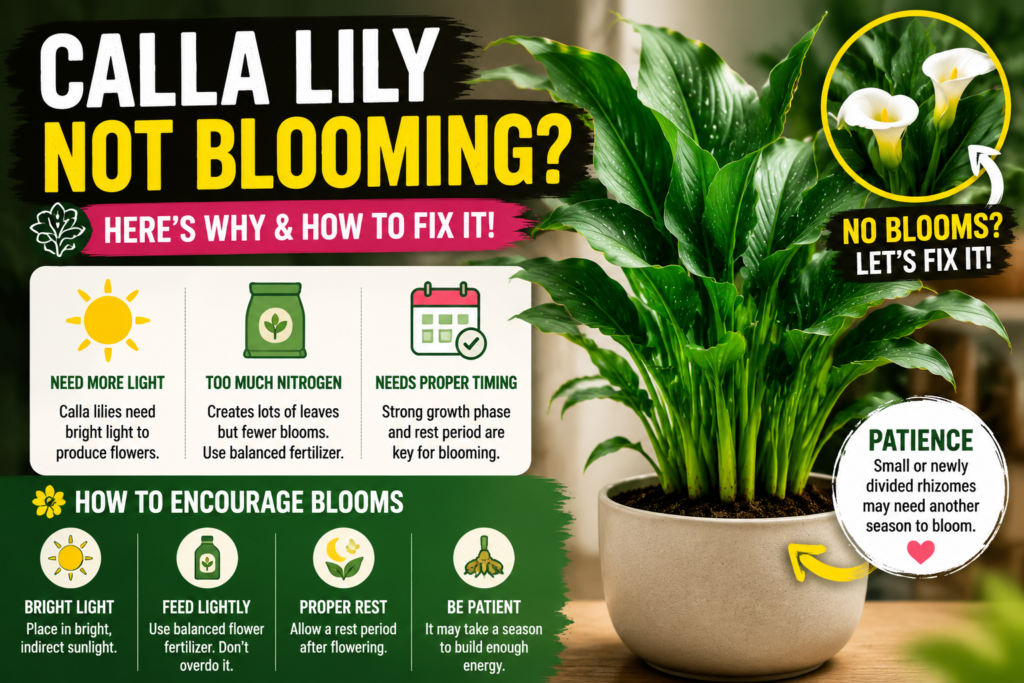
A calla lily with healthy leaves but no flowers usually needs more light or better timing. These plants often need a strong growth phase and a proper rest period before they bloom well again.
Too much nitrogen fertilizer can also create lush leaves with fewer flowers. It’s like feeding the plant for a salad bar instead of a flower show. Use a balanced flower fertilizer, but don’t overdo it.
How to Encourage Blooms
Place your calla lily in bright light, feed lightly during active growth, and let it rest after flowering. If the rhizome is small or recently divided, be patient. It may need another season to build enough energy.
Flowers Fading Too Quickly
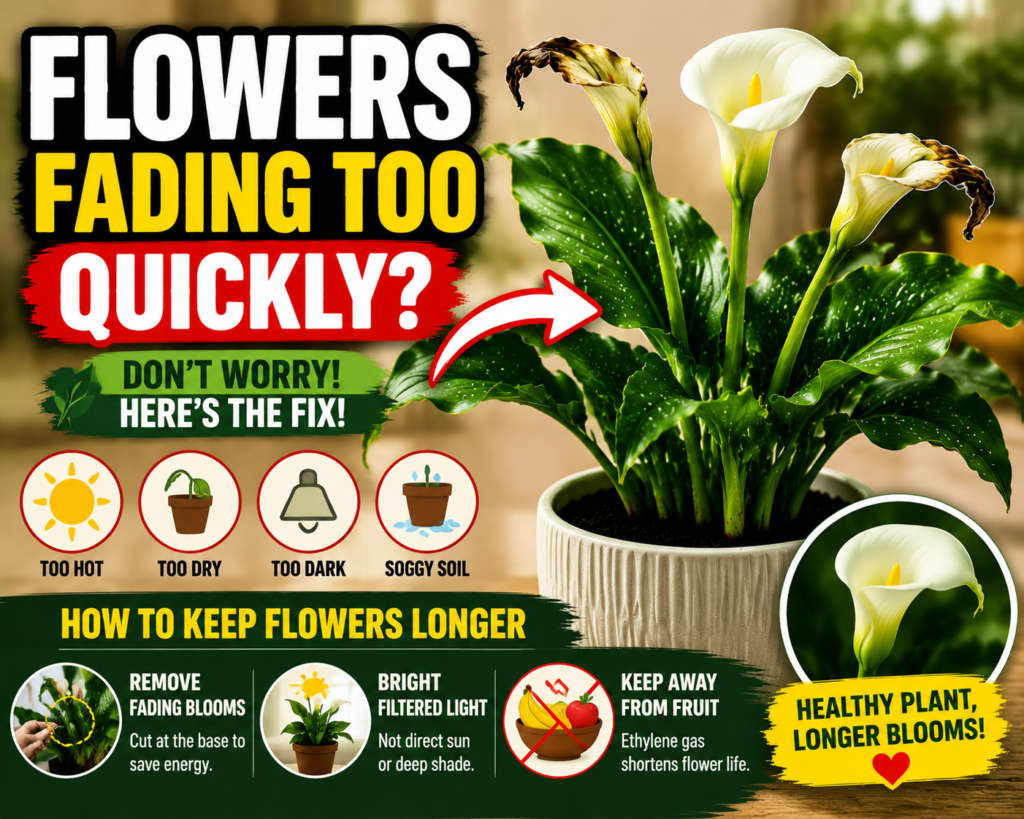
Calla lily flowers naturally fade after their display period, so one faded bloom is not a disaster. However, flowers may drop faster if the plant gets too hot, too dry, too dark, or sits in soggy soil.
Gift plants often decline quickly because they were grown in perfect greenhouse conditions, then moved into a living room with lower light and drier air. That sudden change can shock the plant.
How to Keep Flowers Longer
Remove fading blooms at the base so the plant saves energy. Keep the pot in bright filtered light, away from direct heat, cold drafts, and fruit bowls. Ripening fruit releases ethylene gas, which can shorten flower life.
Calla Lily Leaves Dying After Blooming
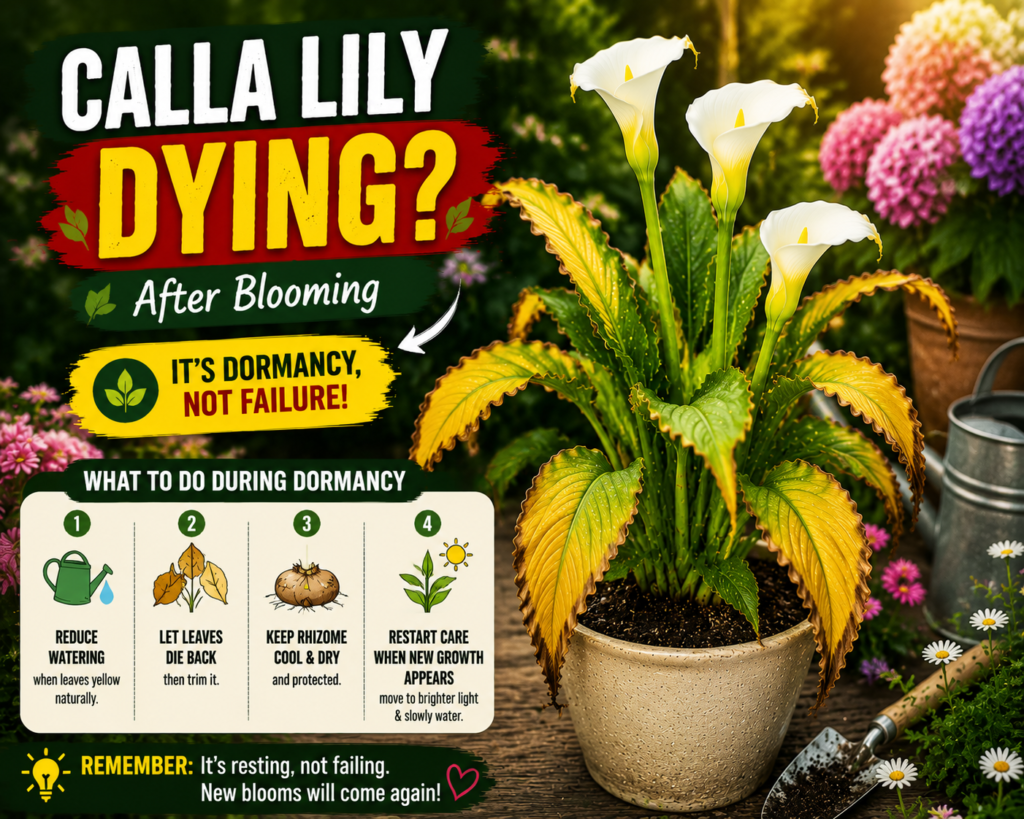
This is the section that saves many plants from the trash. If your calla lily finished blooming and the leaves are slowly yellowing, it may be entering dormancy. That means it’s resting, not failing.
Dormancy often happens after flowering or near the end of the growing season. The top growth fades while the rhizome stores energy underground. It looks sad, but it’s part of the plant’s normal rhythm.
What to Do During Dormancy
Reduce watering when leaves yellow naturally. Let the foliage die back, then trim it. Keep the rhizome cool, dry, and protected. When new growth appears later, slowly restart watering and move it back into brighter light.
Is Calla Lily Safe Around Pets and Kids?
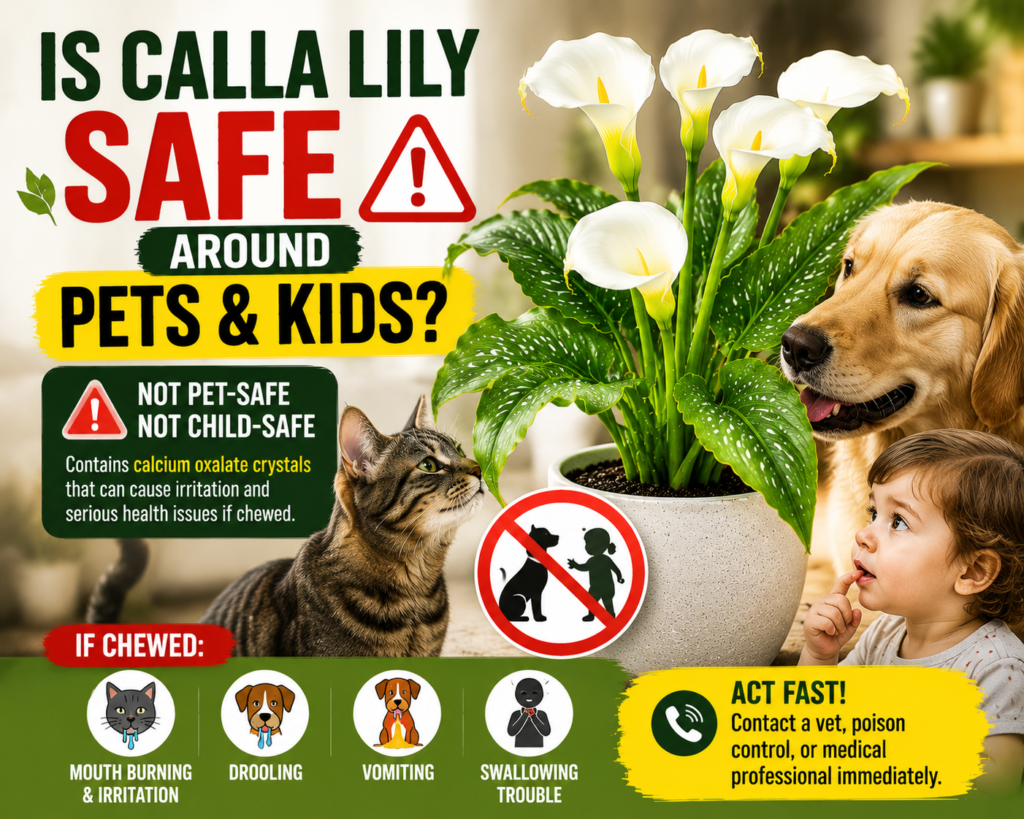
Calla lilies are beautiful, but they are not pet-safe or child-safe if chewed. The plant contains irritating calcium oxalate crystals that can cause mouth burning, drooling, vomiting, and swallowing trouble.
Keep pots out of reach of cats, dogs, and curious children. Wear gloves if your skin reacts to plant sap. If a pet or child chews the plant, contact a vet, poison control service, or medical professional quickly.
Final Thoughts
Most Calla Lily Problems are fixable when you catch them early. Start with the basics: drainage, watering, light, and the rhizome. Those four checks solve more problems than any fancy plant product.
And remember, yellowing after blooms doesn’t always mean goodbye. Your calla lily may simply be going to sleep. Give it the right rest, and that elegant, sculptural beauty can return next season.

FAQs About Calla Lily Problems
Why are my calla lily leaves turning yellow?
Yellow leaves usually come from overwatering, poor drainage, natural dormancy, or nutrient stress. Check the soil first. If it feels soggy, stop watering and improve drainage before adding fertilizer.
Why is my calla lily drooping?
Drooping can happen from too much water, too little water, heat stress, weak light, or transplant shock. Feel the soil before watering because both dry and soggy soil can make stems collapse.
Can an overwatered calla lily recover?
Yes, it can recover if the rhizome is still firm. Stop watering, remove soggy soil if needed, trim damaged leaves, and repot in fresh well-draining mix with a proper drainage hole.
How do I know if my calla lily has root rot?
Root or rhizome rot often causes yellow leaves, mushy stems, bad smell, and collapse near the soil line. A healthy rhizome feels firm, while a rotten one feels soft, slimy, or watery.
Should I cut off dead calla lily leaves?
Yes, remove fully yellow, brown, or mushy leaves with clean scissors. Keep healthy green leaves because they still help the rhizome store energy for future growth and blooming.
Why did my calla lily stop blooming?
Your calla lily may need more light, less nitrogen fertilizer, a larger energy reserve, or a proper dormancy period. Healthy leaves without flowers often mean the plant is building strength.
Is my calla lily dead after the leaves die back?
Not always. If the leaves die back after flowering, the plant may be dormant. Check the rhizome. If it feels firm and solid, it is likely resting rather than dead.
How often should I water a potted calla lily?
Water when the top inch of soil feels slightly dry during active growth. Don’t follow a fixed schedule blindly because pot size, indoor air, sunlight, and weather all change moisture needs.