
A practical, science-informed guide to the tiny birds that make gardens feel alive, from nectar and nests to migration and safe feeder habits.
Few backyard visitors are as instantly recognizable as a hummingbird. Their hovering flight and jewel-like feathers can seem almost unreal, yet their lives depend on precise biology, dependable food, and safe places to rest.
What is a hummingbird?
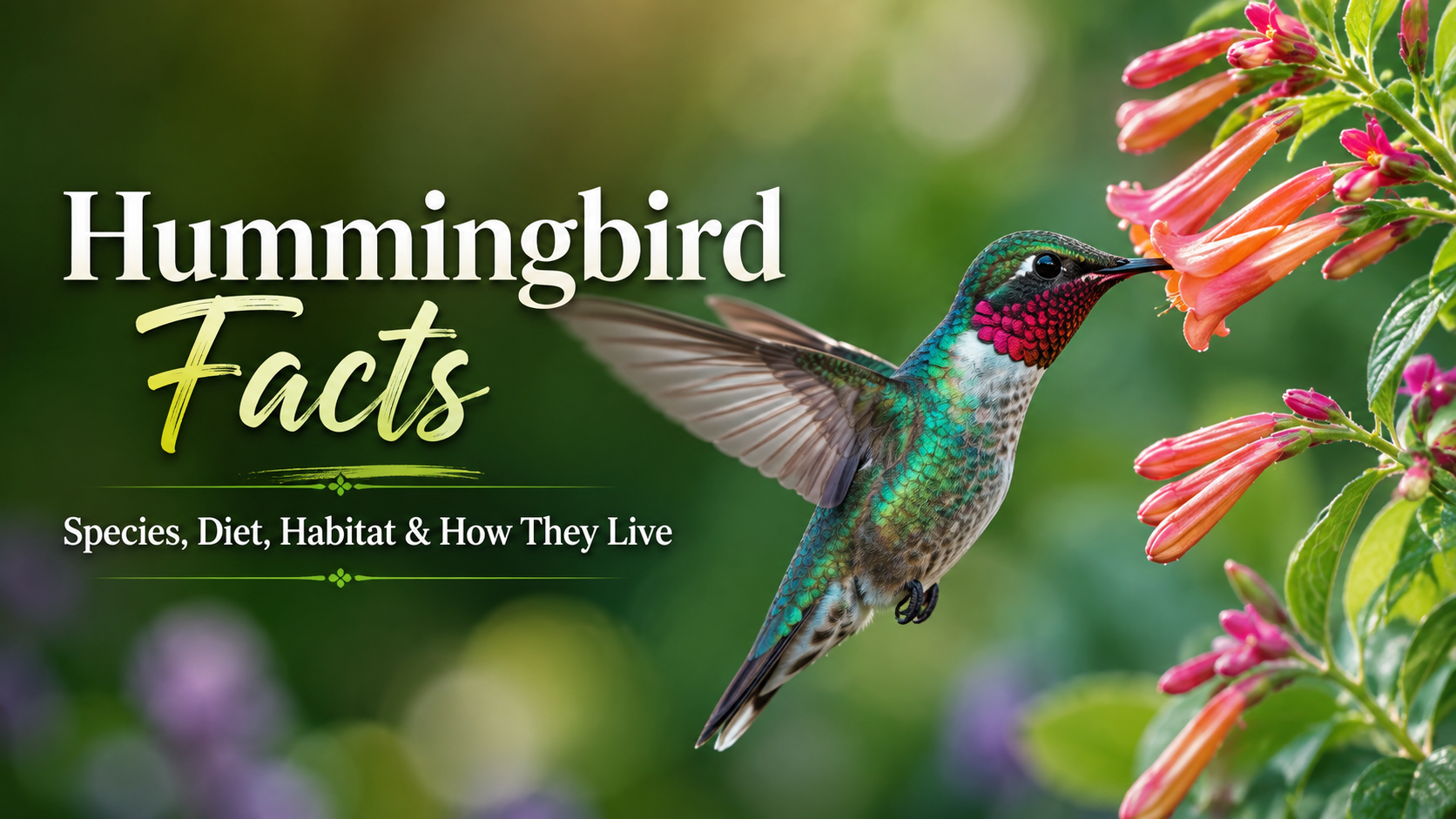
Hummingbirds are small birds in the family Trochilidae. They live only in the Americas, with the greatest diversity in Central and South America. In the United States and Canada, the Ruby-throated Hummingbird is the familiar eastern species, while several species occur in the West.
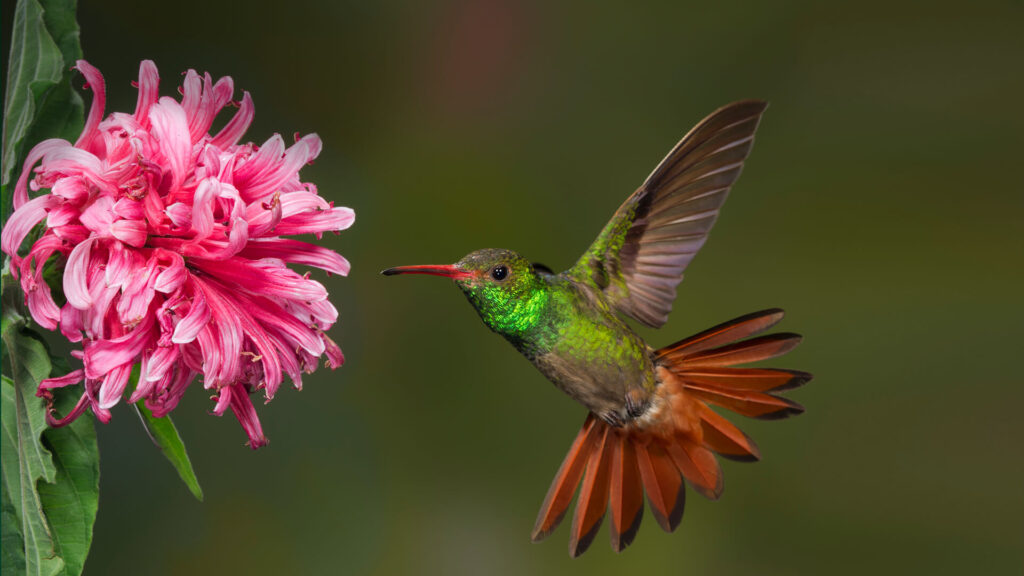
Their long bills and extendable tongues are adapted for collecting flower nectar. Their bodies also support unusually energetic flight: hummingbirds can hover, fly backward, and change direction in an instant. That energy demand is why they feed frequently throughout the day.
Hummingbird species and identification
More than 360 hummingbird species are recognized worldwide. Exact range, plumage, and migration timing vary by location, so a regional bird guide or local birding organization is the best next step for a confident identification.
| Species | Where commonly seen | A useful clue |
|---|---|---|
| Ruby-throated Hummingbird | Eastern North America in breeding season | Adult males show a bright red throat |
| Anna’s Hummingbird | Pacific Coast and parts of the Southwest | Males have a rosy-red head and throat |
| Rufous Hummingbird | Western North America, especially during migration | Warm orange-rufous coloring and a bold temperament |
Field marks can look different in shade, sun, or during immature plumage. Consider bill shape, tail pattern, location, and season—not color alone.
Where hummingbirds live
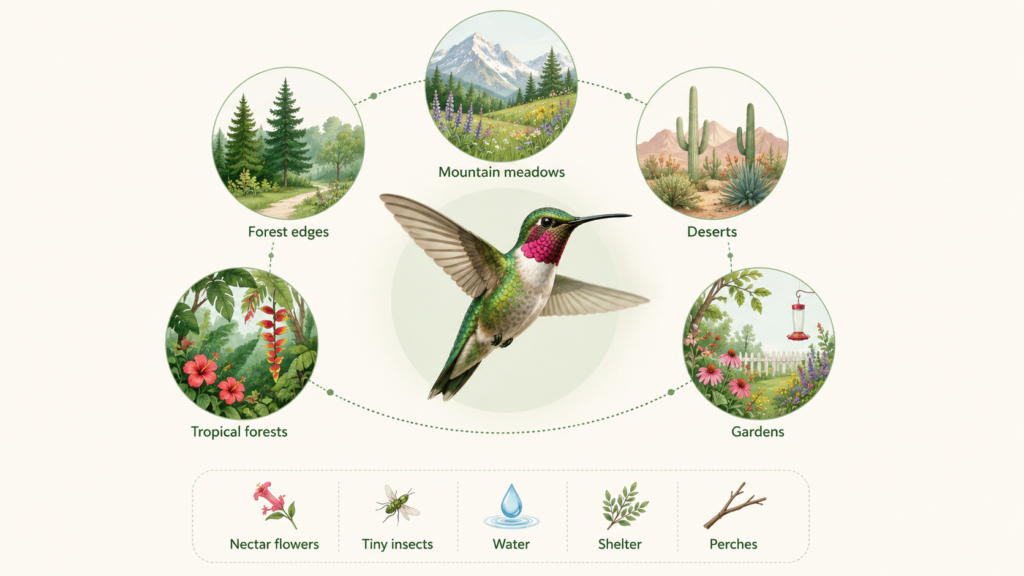
Hummingbirds use many habitats, including forest edges, mountain meadows, deserts, tropical forests, and gardens. What matters most is a dependable mix of nectar-bearing plants, tiny insects, shelter, and perches.
A healthy garden can be useful habitat when it provides native flowering plants across the season, a source of water, and shrubs or small trees where birds can rest. One feeder can supplement this landscape, but it does not replace a diverse planting.
What do hummingbirds eat?
Nectar supplies quick carbohydrate energy, but hummingbirds are not living on sugar alone. They also eat small insects and spiders, which provide protein, fats, vitamins, and minerals needed for growth, feathers, and reproduction.
You may see a hummingbird catching gnats in midair, picking insects from foliage, or visiting sap wells created by sapsuckers. These behaviors are normal and important parts of its diet.
Clean feeders regularly, more often in hot weather, because sugar water can spoil. If the solution looks cloudy, has debris, or shows mold, discard it and wash the feeder before refilling.
How hummingbirds fly and behave
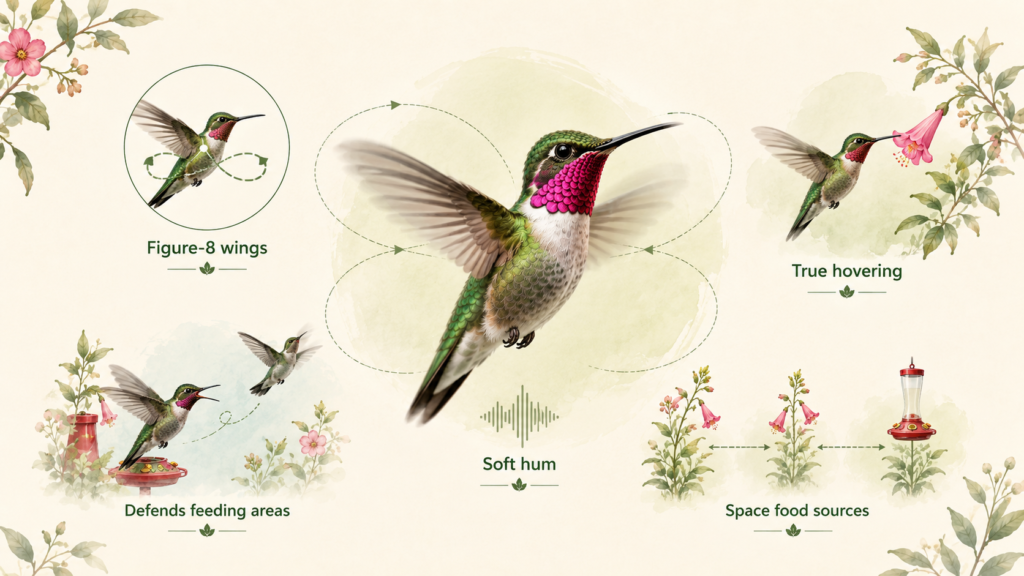
A hummingbird’s shoulder joint allows its wings to sweep in a figure-eight pattern. This creates lift on both the forward and backward strokes, making true hovering possible. It is also why the wingbeat produces the soft hum that gives the birds their name.
Many hummingbirds defend feeding areas, especially when flowers or feeders are concentrated. Chasing is common behavior, not necessarily a sign that a bird is in distress. Offering several well-spaced food sources can reduce competition at a single feeder.
Hummingbird migration
Migration varies greatly by species. Ruby-throated Hummingbirds generally breed in eastern North America and winter farther south, while western species use different routes and schedules. Some Anna’s Hummingbirds remain in portions of their range year-round.
Migration is primarily triggered by changing day length and natural food availability, not by whether one person leaves a feeder up. Keeping a clean feeder available in late summer and fall can help passing birds refuel.
Nesting, breeding, and lifespan
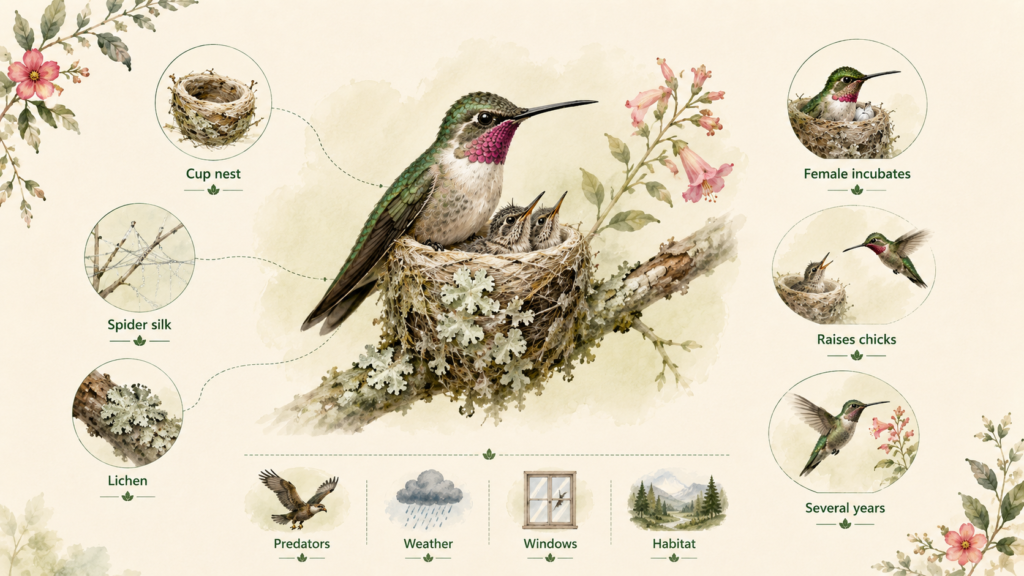
Female hummingbirds typically build tiny cup-shaped nests using soft plant material, spider silk, and camouflage such as lichen. The stretchy silk helps a nest expand as chicks grow. In many species, the female incubates the eggs and raises the young without the male.
Wild hummingbird lifespan is often short because the first year is especially difficult, but birds that survive those early risks can live several years. Predators, weather, window collisions, and habitat conditions all affect survival.
How to attract hummingbirds safely
There is no guaranteed way to attract hummingbirds, because sightings depend on local species, weather, and season. But a garden designed around food, shelter, and safety is more likely to support them than a feeder alone.
A helpful backyard checklist
- Plant a succession of nectar-rich, preferably native flowers so something blooms through the season.
- Use pesticide-free gardening practices whenever possible; hummingbirds need insects as well as nectar.
- Place feeders near, but not directly in, dense cover and keep windows safe with visible collision-deterrent treatments.
- Offer several small feeders or flowering areas if one dominant bird is guarding the food source.
Avoid handling a hummingbird unless directed by a licensed wildlife rehabilitator. If you find an injured bird, contact a local wildlife rescue or your regional wildlife agency for advice.
Four more fascinating hummingbird facts
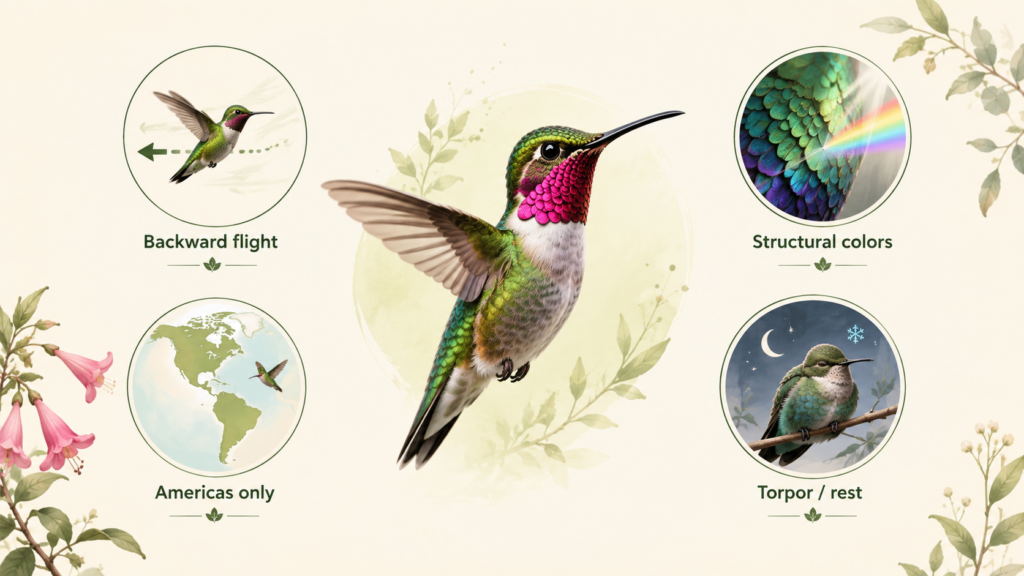
They can fly backward
Hummingbirds are the only birds able to sustain backward flight, thanks to their unusual wing motion.
Their colors are structural
Many shimmering throat and head colors come from feather structure reflecting light, not from ordinary pigment alone.
They are America-only birds
Naturally occurring hummingbirds live only in the Americas, from Alaska to Tierra del Fuego.
Rest still matters
At night or during cold conditions, some hummingbirds enter torpor, a temporary low-energy state that conserves fuel.
Hummingbird FAQs
Should hummingbird nectar be red?
No. Plain clear sugar water is recommended. Red dye is not needed to attract hummingbirds, and it is best avoided. A feeder with red parts is enough to make it easy for birds to notice.
Do hummingbirds only drink nectar?
No. They also eat small insects and spiders. These foods supply nutrients that nectar cannot provide on its own.
Do feeders stop hummingbirds from migrating?
No. Migration is largely guided by seasonal biology and changing daylight. Clean feeders can provide useful fuel to birds moving through your area.