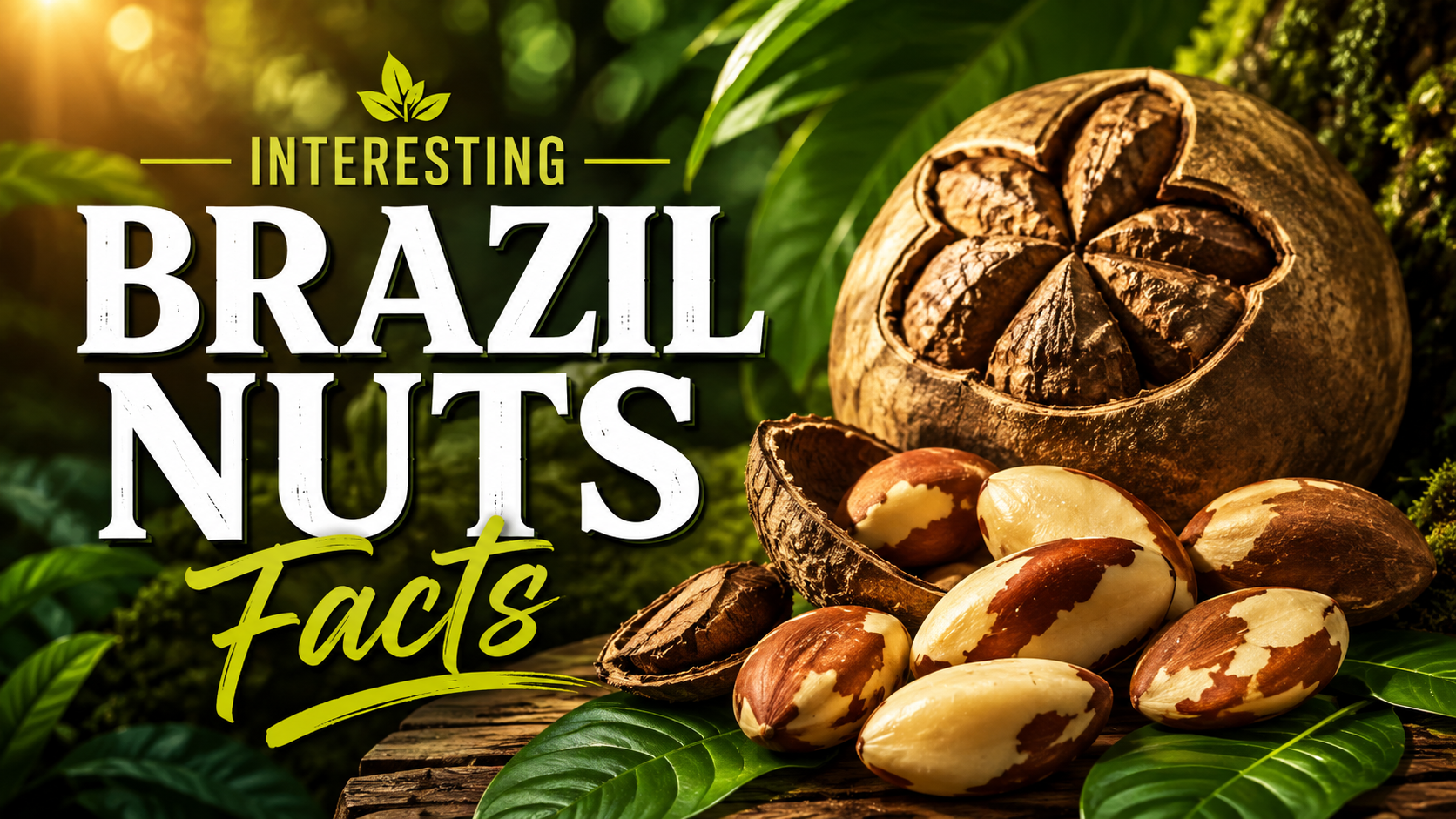

Everything you need to know about origin, nutrition, selenium, harvesting, and why these giant rainforest seeds deserve your attention.
What Are Brazil Nuts?
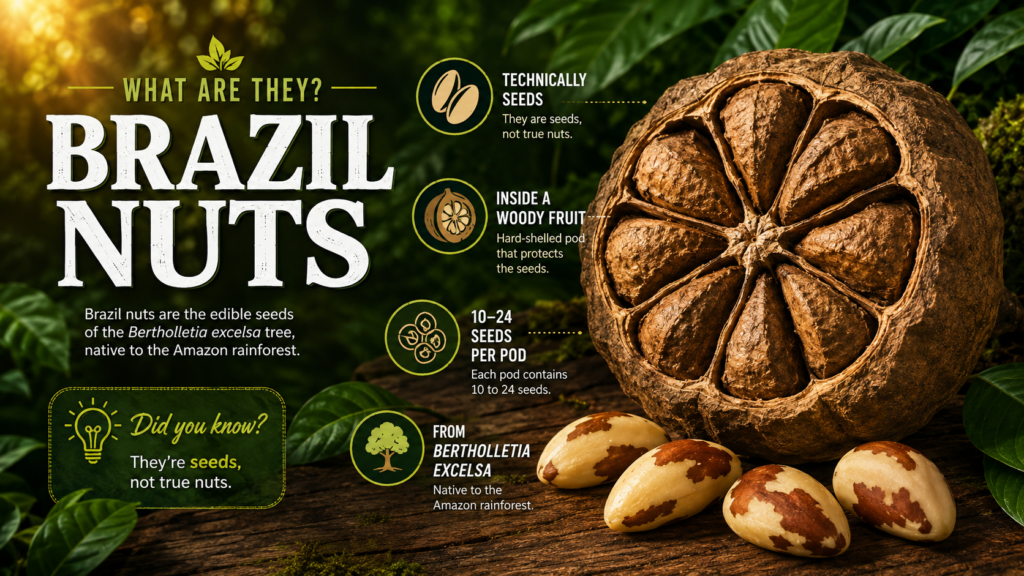
Brazil nuts are large, crescent-shaped seeds harvested from Bertholletia excelsa, one of the tallest and longest-lived trees in the Amazon rainforest. Despite the name, they are botanically classified as seeds rather than true nuts — each one develops inside a heavy, woody fruit capsule that resembles a coconut.
A single fruit pod can weigh up to 2 kg and contains between 10 and 24 tightly packed wedge-shaped seeds arranged like orange segments. These are the familiar Brazil nuts you find in shops, still encased in their own dark, ridged shell.
🌱 Did You Know? Brazil nuts are technically seeds, not nuts. The large pod they grow in is the actual fruit of the tree.
Where Do Brazil Nuts Come From?
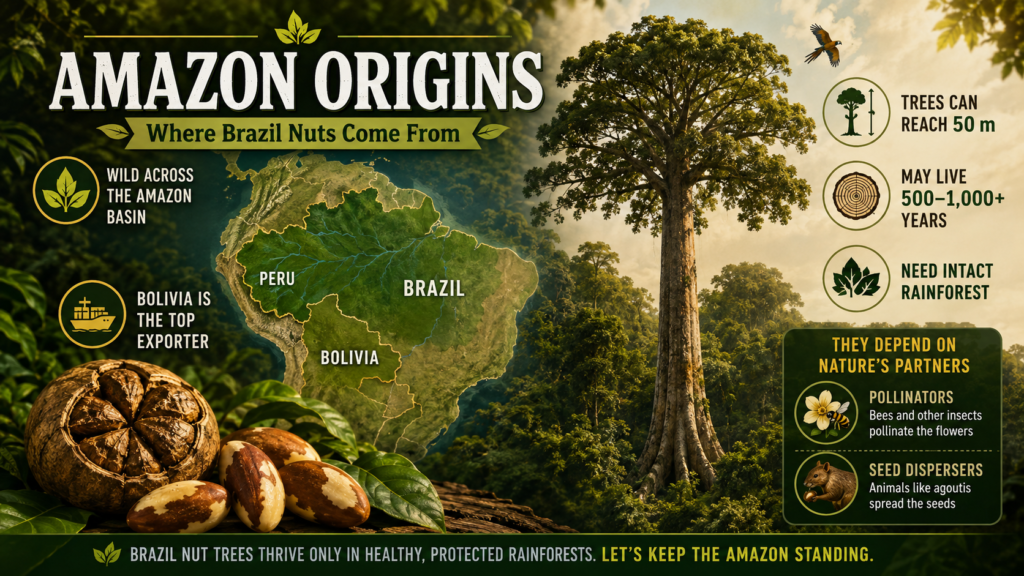
Brazil nuts grow wild across the Amazon Basin, spanning Brazil, Bolivia, Peru, Colombia, Venezuela, and the Guianas. Contrary to what the name suggests, Bolivia is actually the world’s largest exporter of Brazil nuts, followed by Brazil and Peru.
The trees thrive in undisturbed primary rainforest and depend on a complex web of ecological relationships — from specific orchid bees for pollination to agoutis (large rodents) for seed dispersal. This makes commercial plantation farming extremely difficult.
The Brazil Nut Tree
Bertholletia excelsa is a true giant. Mature trees reach 50 metres tall (about 160 feet), towering above the surrounding canopy. Their trunks can exceed 2 metres in diameter, and individual trees may live for 500 to 1,000 years or more.
A Brazil nut tree takes 10 to 30 years before producing its first fruit, and peak production may not occur until the tree is several decades old. The trees require the surrounding forest ecosystem to reproduce successfully — without specific pollinators and seed dispersers, they cannot complete their life cycle.
🌳 Did You Know? A single Brazil nut tree can produce over 250 fruit pods in a good season — each pod falling from heights of 50 metres at speeds that can be genuinely dangerous to anyone standing below.
How Brazil Nuts Are Harvested
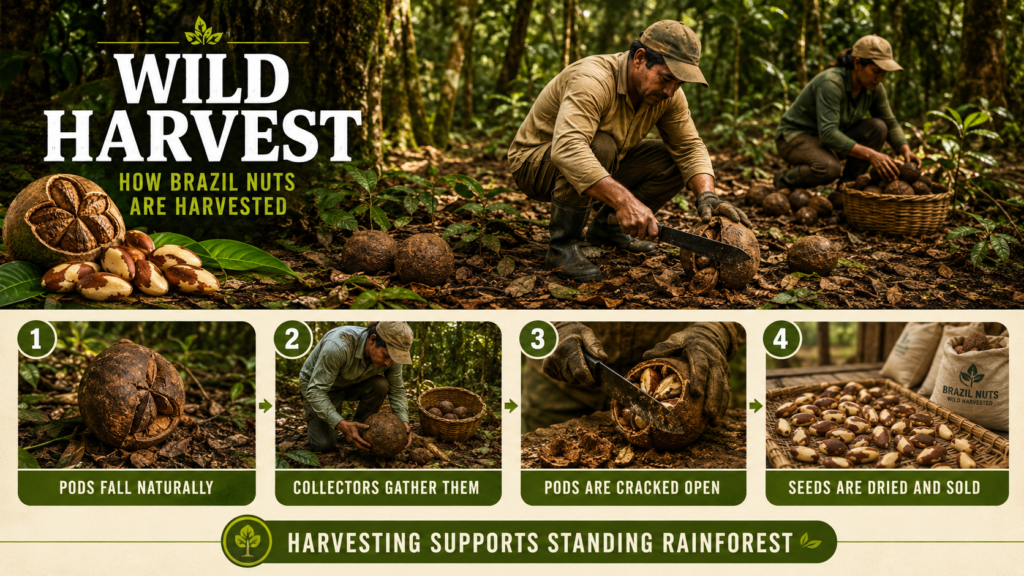
Unlike almonds or walnuts grown in managed orchards, most Brazil nuts are still wild-harvested by local communities called castanheiros. During the rainy season (January to March), the heavy fruit pods fall naturally from the canopy. Harvesters walk the forest floor collecting them, then crack open each pod with a machete to extract the seeds inside.
This wild harvesting model means Brazil nut production supports standing rainforest — giving local communities an economic incentive to protect trees rather than clear land. It also means supply can vary significantly from year to year depending on weather, pollination success, and forest health.
Brazil Nuts Nutrition & Selenium
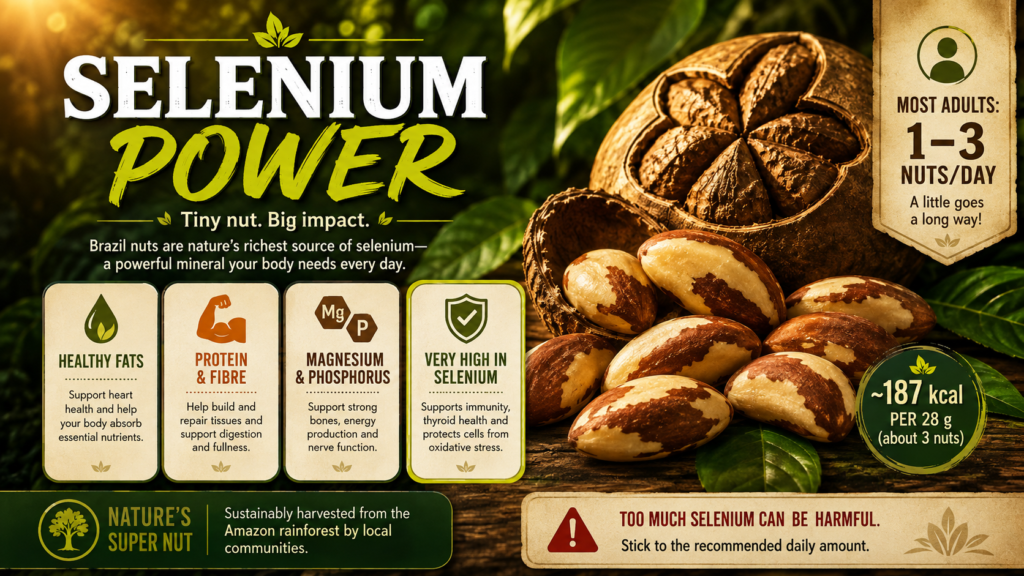
Brazil nuts are nutrient-dense, providing healthy fats, protein, fibre, magnesium, phosphorus, thiamine, and vitamin E. However, their most remarkable nutritional feature is an extraordinarily high concentration of selenium — a trace mineral essential for thyroid function, immune health, and antioxidant defence.
Nutrition at a Glance (per 28 g / ~6 nuts)
Calories: ~187 kcal · Fat: 19 g (mostly unsaturated) · Protein: 4 g · Fibre: 2 g · Selenium: 544 µg (varies widely) · Magnesium: 106 mg · Phosphorus: 206 mg · Thiamine: 0.18 mg · Vitamin E: 1.6 mg
A single Brazil nut can contain anywhere from 10 µg to over 90 µg of selenium — the variation depends on soil conditions where the tree grew. This wide range is why no single ‘exact number of nuts per day’ works for everyone.
⚡ Did You Know? Brazil nuts contain more selenium per gram than any other commonly eaten food. Just one or two nuts can provide your entire daily selenium requirement.
How Many Brazil Nuts Per Day?
Most nutrition authorities suggest 1 to 3 Brazil nuts per day is a reasonable amount for most adults. This typically provides enough selenium without approaching the tolerable upper intake level (400 µg/day for adults). Because selenium content varies between individual nuts, moderation is key.
Chronic excess selenium intake (selenosis) can cause symptoms including brittle nails, hair loss, garlic breath, fatigue, and gastrointestinal issues. Brazil nuts are best enjoyed as an occasional nutrient boost rather than consumed in large handfuls daily. If you have thyroid concerns, consult a healthcare professional for personalised advice.
Taste & Culinary Uses
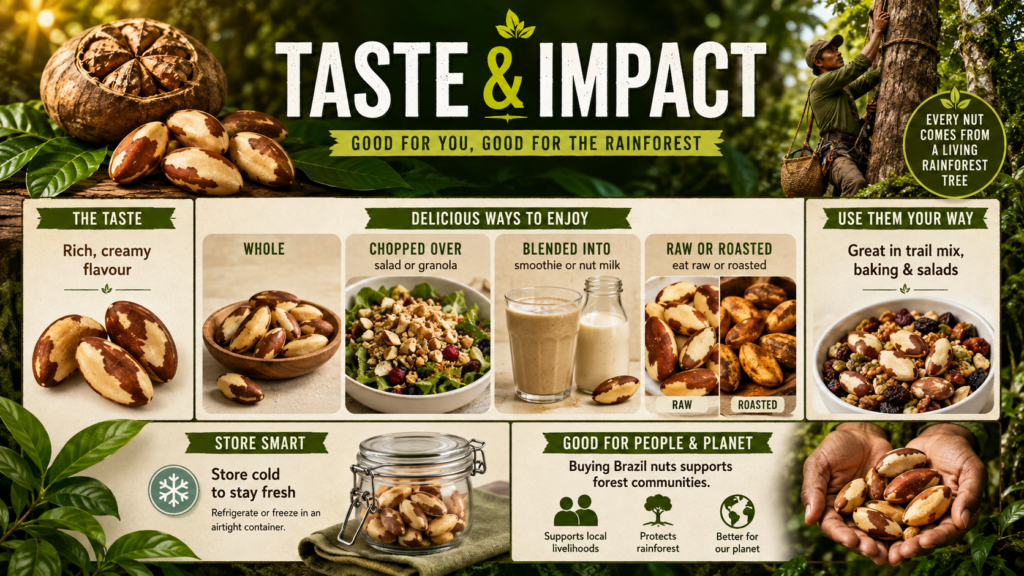
Brazil nuts have a rich, creamy, slightly sweet flavour with a smooth, dense texture. They can be eaten raw, lightly roasted, or used in cooking. Raw Brazil nuts have a milder flavour; roasting intensifies their nuttiness and adds a pleasant crunch.
Common uses include adding them to trail mixes, granola, and baked goods; blending into smoothies or nut milk; chopping over salads; or simply enjoying one or two as a daily snack. Store them in the refrigerator or freezer to prevent the high fat content from turning rancid — they’ll keep for months when stored cold.
Environmental Importance
Brazil nut trees are considered a keystone species of the Amazon. Their towering canopy provides habitat, their fruit feeds wildlife, and their dependence on intact forest means they serve as an indicator of ecosystem health. Because the trees cannot be viably farmed in monoculture plantations, the Brazil nut trade directly incentivises rainforest conservation.
Buying sustainably sourced Brazil nuts supports indigenous and local communities who manage forest resources. Look for fair-trade or sustainably certified options where available. Every Brazil nut you eat came from a living, standing rainforest tree — making them one of the few commercially significant foods that actively depend on forest preservation.
Frequently Asked Questions
Are Brazil nuts actually nuts?
Botanically, no. They are seeds enclosed within a large woody fruit capsule. However, they are classified as tree nuts for culinary and allergy purposes.
Why are Brazil nuts so expensive?
They cannot be efficiently farmed in plantations. Most are wild-harvested from remote rainforest areas, requiring significant manual labour and logistics to transport to market.
Can you eat too many Brazil nuts?
Yes. Because of their very high selenium content, eating large quantities regularly can lead to selenium toxicity. Sticking to 1–3 nuts per day is generally considered safe for most adults.
Can Brazil nut trees be grown on farms?
Attempts have been made, but yields are generally very low outside their natural ecosystem. The trees depend on specific pollinators and growing conditions found only in intact rainforest environments.