

Learn how monarch butterflies live, migrate, feed, and reproduce plus practical, region-aware ways to make a garden more welcoming for these remarkable insects.
The monarch butterfly is one of North America’s best-known insects, recognizable by its orange-and-black wings and its extraordinary seasonal movements. Its story depends on more than a single garden plant: monarchs need suitable host plants, nectar across the season, connected habitat, and lower-risk landscapes throughout their range.
What is a monarch butterfly?
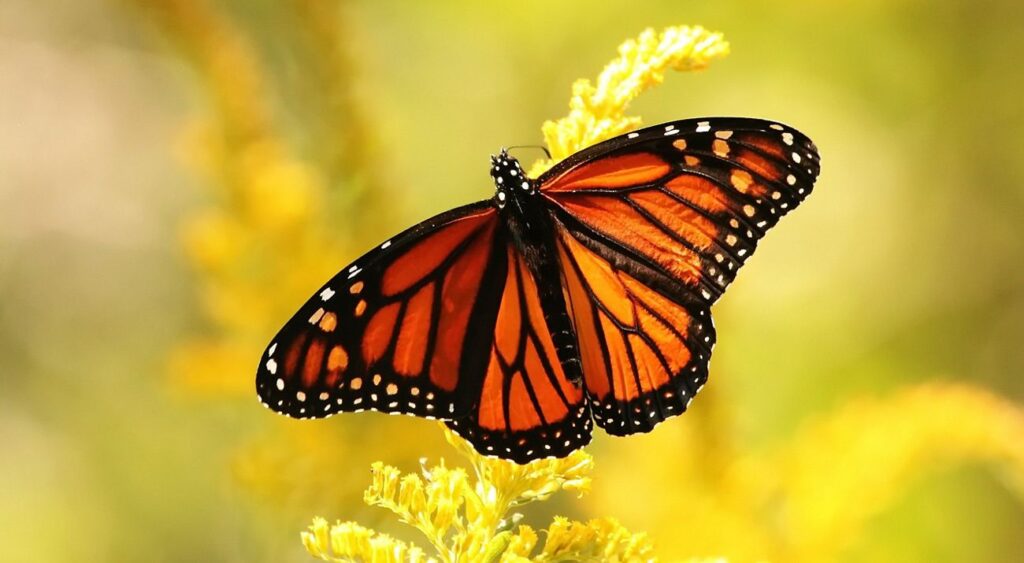
Monarchs are large milkweed butterflies. Adults have orange wings crossed by black veins and bordered in black with white spots. Their bright pattern is a warning signal: monarch caterpillars can retain compounds from milkweed that make the insects unappealing to many predators.
A useful field mark is the underside of the hindwing. Monarchs usually show dark veins across the orange wing. Viceroy butterflies can look similar but are typically smaller and have an extra black line curving across each hindwing.
The monarch butterfly life cycle: four stages
Like all butterflies, monarchs undergo complete metamorphosis. Timing changes with temperature, weather, and season, but the active summer generations can develop from egg to adult in roughly a month. The migratory generation lives much longer than typical summer adults.
A simple life-cycle timeline
- Egg: a female lays a tiny cream-colored egg, usually singly, on the underside of a milkweed leaf.
- Caterpillar: the striped monarch caterpillar feeds on milkweed and grows rapidly through five instars.
- Chrysalis: the caterpillar forms a jade-green pupa with gold details; inside, its body reorganizes into an adult butterfly.
- Adult: after emerging, the butterfly expands and dries its wings before feeding, mating, or, seasonally, joining migration.
What do monarch butterflies eat?
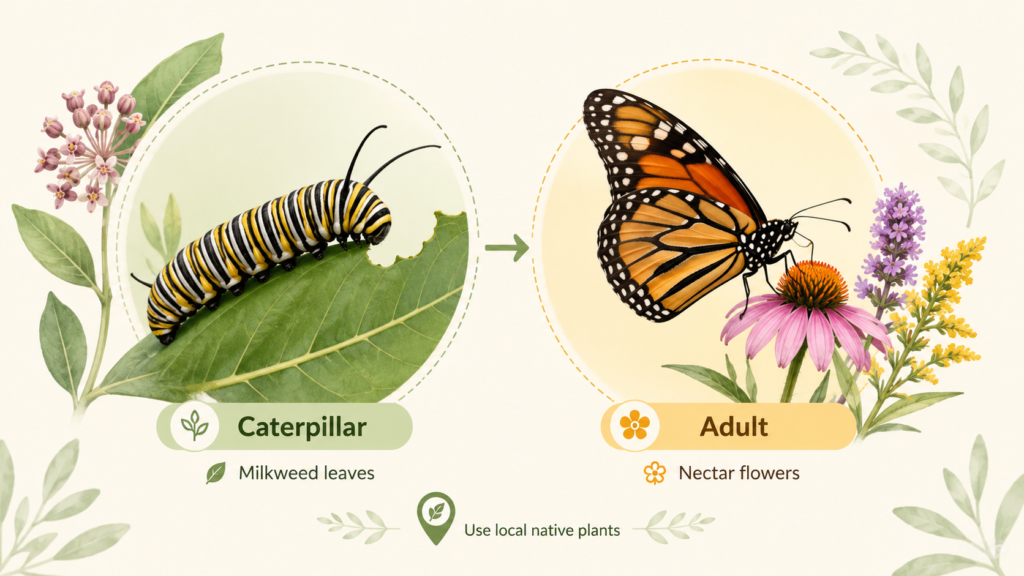
The answer changes by life stage. Monarch caterpillars eat milkweed leaves and depend on plants in the genus Asclepias. Adult monarch butterflies drink nectar from many flowering plants, including native wildflowers, garden flowers, and flowering shrubs that suit local conditions.
Milkweed is not interchangeable everywhere. A species that is native and well adapted in one region may be poorly suited elsewhere. Local native-plant societies, extension services, and regional pollinator guides can help identify appropriate milkweed and nectar plants for your area.
Monarch butterfly migration: east and west
Many eastern monarchs travel south in late summer and fall toward high-elevation oyamel fir forests in central Mexico. In spring, they begin moving north, and successive generations continue the return journey. No single butterfly completes the entire annual round trip.
Western monarch butterflies follow different and more variable routes. Some overwinter along coastal California, while others may move inland or south. Weather, habitat conditions, and annual population dynamics affect where monarchs are observed, so local records can vary substantially from year to year.
| Population | Seasonal pattern | Important context |
|---|---|---|
| Eastern population | Fall movement toward central Mexico; spring expansion north through multiple generations. | Migration timing shifts with latitude, weather, and seasonal plant availability. |
| Western population | Often associated with California coastal overwintering sites, with varied inland and regional movements. | Local observations and conservation guidance are especially valuable because routes are diverse. |
How to support monarch butterflies responsibly
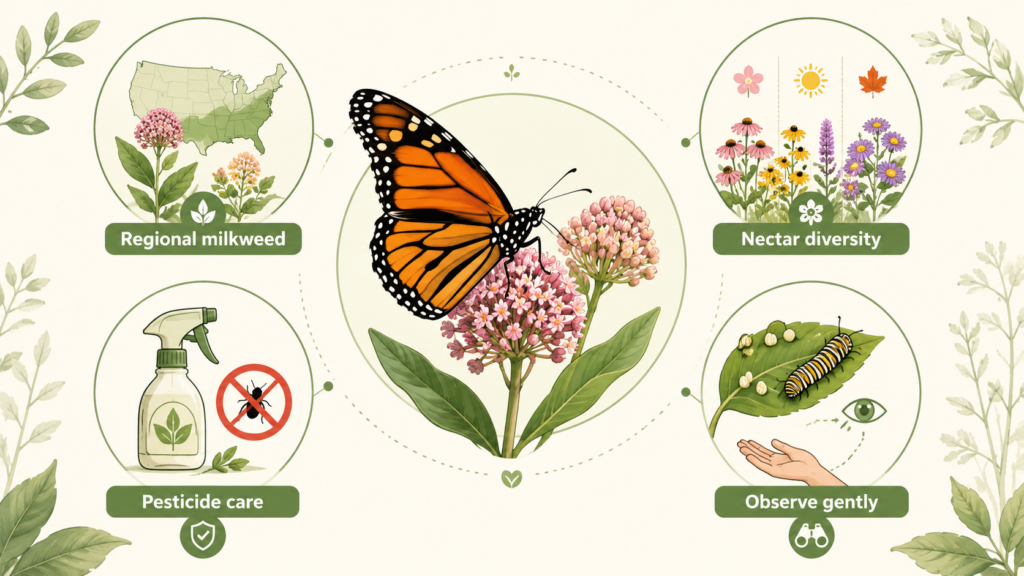
The most practical help is habitat-based: grow regionally appropriate plants, maintain flowering resources across seasons, and reduce avoidable risks. Avoid overstating what one yard can accomplish; monarch conservation works best when many gardens, farms, parks, roadsides, and protected areas contribute connected habitat.
Choose regional milkweed
Use locally recommended milkweed species and plant them where they can grow well. Native-plant guidance is more useful than a one-size-fits-all list.
Add nectar diversity
Include a mix of flowers with different bloom times so adults can find nectar during spring, summer, and fall.
Use pesticides carefully
Avoid routine insecticide use where possible, read labels, and use nonchemical practices first. Even products intended for pests can affect caterpillars and pollinators.
Observe, don’t over-handle
Watching eggs and caterpillars outdoors can be rewarding. Captive rearing has disease and handling risks, so follow current expert guidance if you choose to intervene.
Monarch butterfly facts, safety, and look-alikes
Adult monarchs are often described as poisonous, but a more accurate explanation is that they may be toxic or unpalatable to predators because of compounds associated with milkweed. The degree of protection can vary with the milkweed species and other biological factors.
Monarch abundance is monitored using several methods, including overwintering-area measurements and seasonal observations. These estimates can change year to year, and one count alone does not explain every cause. Habitat loss, climate conditions, pesticide exposure, and other pressures are active areas of research and conservation concern.
Quick monarch butterfly facts
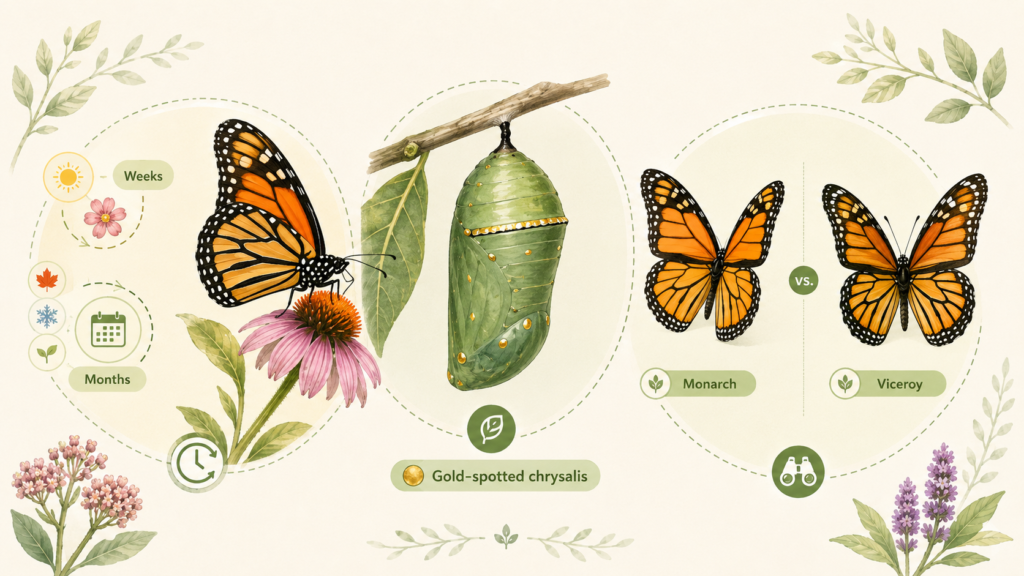
- A typical summer adult may live only a few weeks, while the late-season migratory generation can live for many months.
- The monarch chrysalis is usually green with metallic-looking gold spots and a gold band—an especially recognizable stage of metamorphosis.
- Queens and viceroys can resemble monarchs. Wing pattern, size, range, and hindwing markings help separate them, but a field guide can be useful.
Monarch butterfly FAQs
How long do monarch butterflies live?
Life span depends on the generation and conditions. Summer adults commonly live for several weeks, while the migratory generation produced late in the season can survive through the overwintering period and into spring.
Can I feed monarch caterpillars anything besides milkweed?
Monarch caterpillars are milkweed specialists. They need milkweed leaves to develop normally. Adult monarchs, by contrast, use nectar from many kinds of flowers.
Should I bring monarch eggs or caterpillars indoors?
Outdoor observation avoids many handling and sanitation issues. If you decide to rear monarchs, consult current guidance from reputable monarch organizations and use careful hygiene, adequate space, and locally appropriate timing.