

Everything you need to know about planting, pruning, and caring for these beloved fragrant shrubs.
Lilac Care at a Glance
- Botanical name: Syringa vulgaris
- Sun: Full sun (6+ hours direct sunlight)
- Soil: Well-drained, neutral to slightly alkaline (pH 6.5–7.5)
- Hardiness: USDA Zones 3–7
- Bloom time: Mid to late spring (April–May)
- Height: 2–5 m (6–16 ft) depending on variety
- Prune: Immediately after flowering
What Is a Lilac?
Lilacs (Syringa vulgaris) are deciduous flowering shrubs prized for their intensely fragrant flower clusters that appear each spring. Native to southeastern Europe, they have been cultivated in gardens for over 500 years and remain one of the most popular ornamental shrubs in temperate climates worldwide.
A mature lilac bush typically forms an upright, multi-stemmed shrub with heart-shaped green leaves. The flowers appear in dense panicles—cone-shaped clusters of tiny tubular blooms—ranging from classic purple-violet to white, pink, magenta, and even pale yellow depending on the cultivar.
Popular Lilac Varieties
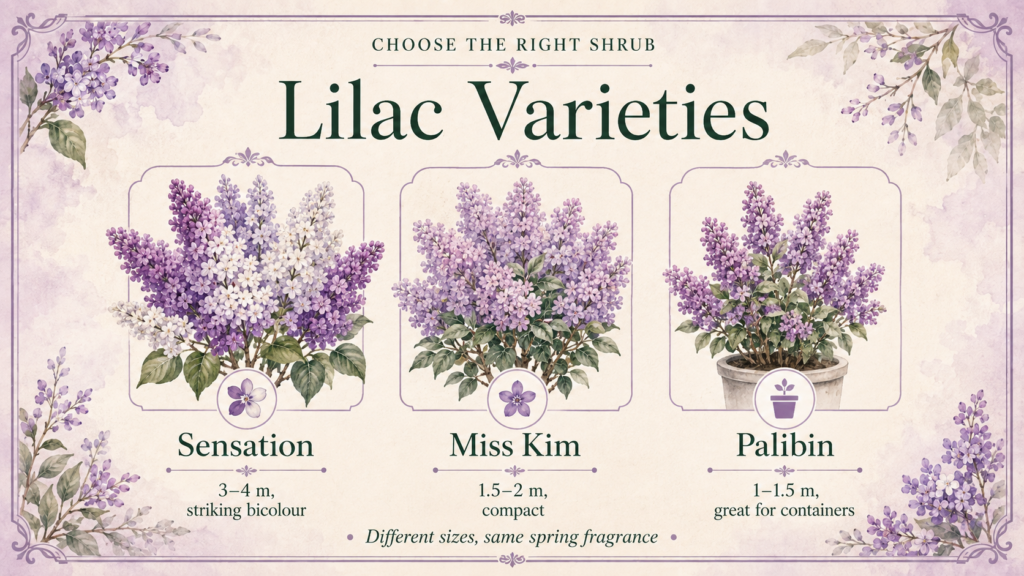
With hundreds of cultivars available, choosing the right lilac for your space is important. Here are reliable choices for different garden situations:
- ‘Sensation’ — Bicolour purple-and-white flowers, 3–4 m tall, striking in borders.
- ‘Miss Kim’ — Compact (1.5–2 m), pale lavender, ideal for smaller gardens.
- ‘Charles Joly’ — Double magenta-red blooms, vigorous grower to 4 m.
- ‘Madame Lemoine’ — Double white flowers, heavy fragrance, classic cottage garden choice.
- ‘Palibin’ (Dwarf Korean Lilac) — Only 1–1.5 m, perfect for containers and small plots.
When & How to Plant Lilacs
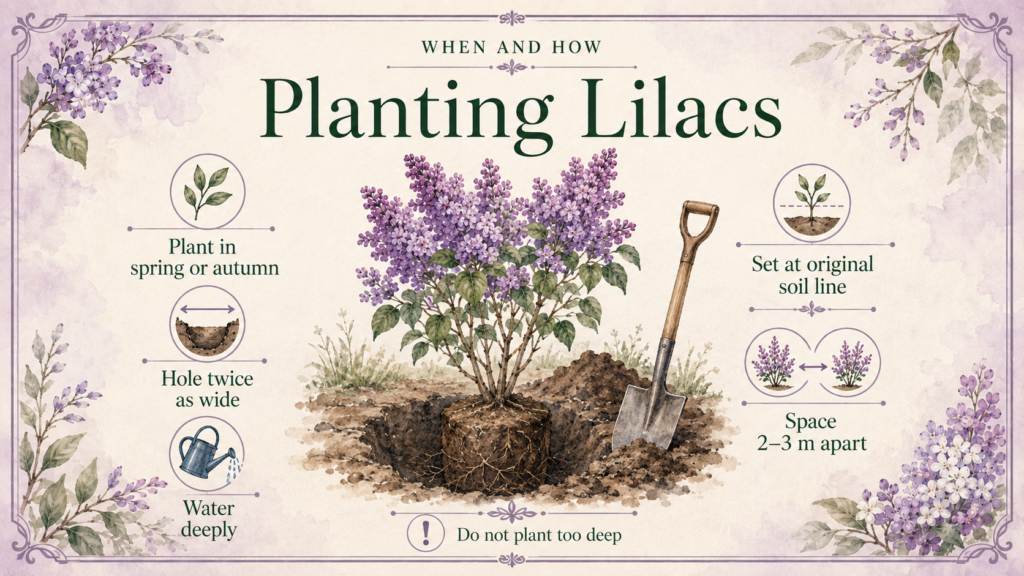
The best time to plant lilacs is in early autumn or early spring while the plant is dormant. Autumn planting gives roots time to establish before the growing season, while spring planting works well in colder regions where early frosts arrive quickly.
Dig a hole twice the width of the root ball and the same depth. Set the plant so the soil line matches where it sat in the pot. Backfill with the original soil (lilacs prefer unamended ground), firm gently, and water deeply. Space standard varieties at least 2–3 metres apart to allow good air circulation.
Avoid planting too deeply—a buried graft union on grafted lilacs can cause the rootstock to dominate. For bare-root plants, soak the roots in water for an hour before planting.
Sunlight & Soil Requirements

Key point: Lilacs flower best in full sun—aim for at least six hours of direct sunlight each day. Shade is the number-one reason lilacs fail to bloom.
Lilacs thrive in well-drained soil with a neutral to slightly alkaline pH (6.5–7.5). Heavy clay soil that stays wet in winter can cause root rot. If your soil is heavy, improve drainage by planting on a slight mound or mixing coarse grit into the planting area.
Avoid very acidic soils—if your soil pH is below 6.0, incorporate garden lime in autumn. A sheltered spot protected from strong winds will help preserve the delicate flower clusters in spring.
Watering & Feeding

Newly planted lilacs need regular watering during their first growing season—aim for a deep soak once a week in dry weather. Once established (after 2–3 years), lilacs are remarkably drought-tolerant and rarely need supplemental watering except during prolonged dry spells.
Feed sparingly. A light application of balanced fertiliser (such as 10-10-10) or bone meal in early spring is sufficient. Avoid high-nitrogen feeds, which promote leafy growth at the expense of flowers. Over-fertilising is a common reason for healthy-looking lilacs that refuse to bloom.
Pruning & Rejuvenation
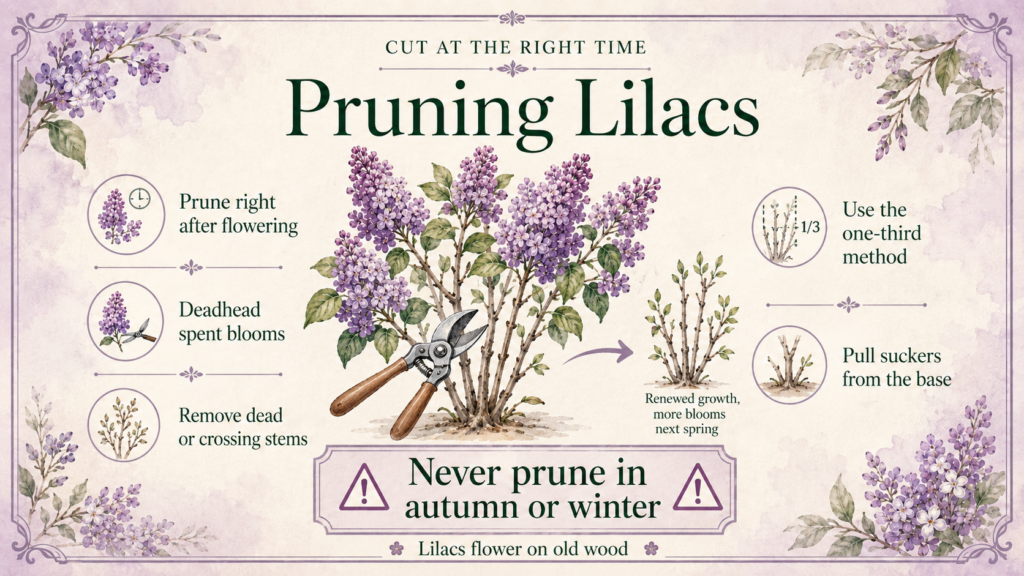
Critical rule: Prune lilacs immediately after flowering—never in autumn or winter. Next year’s flower buds form on old wood within weeks of the current flowers fading.
Annual maintenance pruning is straightforward: once flowers fade, deadhead the spent clusters by cutting back to the first pair of leaves or side shoots below the flower. Remove any dead, damaged, or crossing stems to maintain good air flow through the centre of the bush.
To rejuvenate an old, overgrown lilac that has become tall and bare at the base, use the “one-third” method: each year after flowering, cut one-third of the oldest, thickest stems down to 30–60 cm from the ground. Over three years the bush will regenerate with vigorous young growth.
Manage suckers by pulling them from the base rather than cutting—pulling removes the bud at the root and discourages regrowth. If your lilac is grafted, any suckers from below the graft union should be removed immediately, as they belong to the rootstock, not your chosen variety.
Common Problems & Solutions
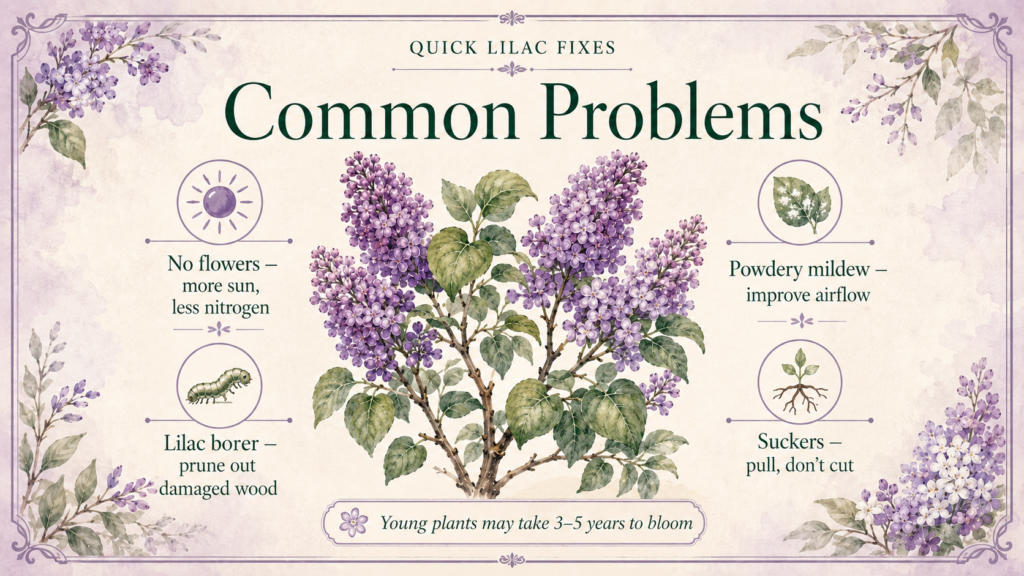
Lilacs are generally robust, but a few issues crop up regularly:
- No flowers — Usually caused by too much shade, pruning at the wrong time, over-feeding with nitrogen, or the plant being too young (most lilacs need 3–5 years to bloom reliably).
- Powdery mildew — A white coating on leaves in late summer. Rarely harmful; improve air circulation and avoid overhead watering.
- Lilac borer — Sawdust-like frass at the base of stems. Prune out affected wood and destroy it.
- Invasive suckers — Common in older bushes. Pull rather than cut, and consider a root barrier for persistent spreaders.
Frequently Asked Questions
Can lilacs grow in containers?
Yes—dwarf varieties like ‘Palibin’ or ‘Josee’ do well in large containers (at least 50 cm wide). Use free-draining compost, water regularly, and repot every few years.
How long do lilac bushes live?
Lilacs are exceptionally long-lived shrubs. With basic care, a lilac can thrive for 50–100 years or more. Some specimens in historic gardens are well over 200 years old.
Why does my lilac have leaves but no flowers?
The most common causes are insufficient sunlight (less than 6 hours), pruning after midsummer (which removes next year’s buds), over-fertilising with nitrogen, or the bush being too young. Address these and most lilacs will flower within a season or two.
When is the best time to move an established lilac?
Move lilacs in late autumn after leaf drop, or in very early spring before buds swell. Dig as large a root ball as possible and water well after replanting. Expect reduced flowering for a year or two while the plant re-establishes.