

Bright, easy-care Asiatic lilies bring bold color to any sunny border.
If you have just picked up a bag of lily bulbs, you are only a few simple steps away from a summer full of gorgeous blooms.
Lilies are one of the most rewarding flowers a beginner can grow. Plant the bulbs at the right depth in a sunny spot with well-draining soil, water sensibly, and they mostly take care of themselves. In this guide you will learn exactly when and how deep to plant lily bulbs, the best soil and light conditions, watering and feeding tips, the key differences between Asiatic and Oriental lilies, and how to keep them thriving after the flowers fade.
Also write this content: Cosmos Flower — How to Grow & Care for Cosmos Plants
What you’ll learn
- 1. When to plant lily bulbs
- 2. How deep to plant lily bulbs
- 3. Best sunlight & soil
- 4. Watering & fertilizing
- 5. Asiatic vs Oriental lilies
- 6. Caring for lilies after blooming
- 7. Common mistakes to avoid
1. When to plant lily bulbs
The best time to plant lily bulbs is in autumn or early spring. Autumn planting gives bulbs time to settle roots before winter, leading to stronger stems and earlier flowers. If you missed autumn, spring is perfectly fine too — just plant as soon as the soil is workable and no longer frozen. Aim to get bulbs in the ground while they are still firm and plump, because lily bulbs never fully go dormant and dislike being stored for long.
Quick tip: Plant bulbs within a week or two of buying them. If you must wait, keep them in a cool, dry place wrapped in slightly damp peat or sawdust so they don’t dry out.
2. How deep to plant lily bulbs
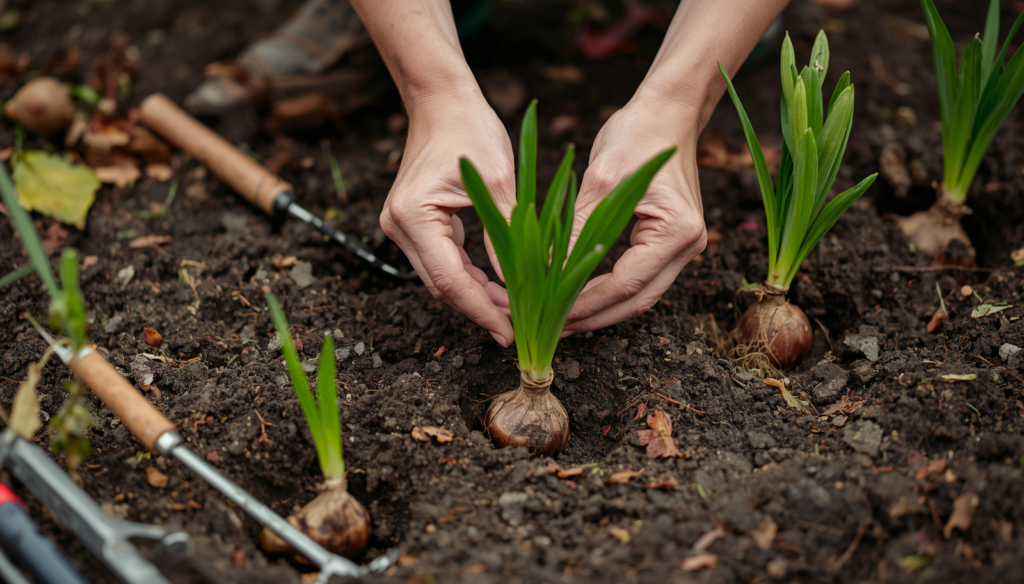
| Plant bulbs pointy-side up, roughly three times as deep as the bulb is tall. |
As a simple rule, plant the bulb about 6 inches deep, or roughly three times the height of the bulb. Set it in the hole with the pointed end facing up and the flat, root end down. Space bulbs about 8 to 12 inches apart so they have room to grow. Planting at the right depth matters: too shallow and stems can flop or dry out, too deep and the bulb wastes energy pushing to the surface. After placing the bulb, backfill with loose soil and water once to settle it in.
Depth cheat sheet: Small bulbs 4 inches deep, medium bulbs 6 inches deep, large bulbs 6 to 8 inches deep.
3. Best sunlight and soil conditions

| Choose a sunny spot with rich, well-draining soil for the best blooms. |
Lilies love the sun. Choose a spot that gets at least 6 hours of direct sunlight a day — the more sun, the stronger the stems and the more flowers you’ll get. Just as important is well-draining soil, because soggy ground is the number one cause of bulb rot. If your soil is heavy clay, mix in compost or coarse grit to improve drainage. A gardener’s favourite trick is to keep the flower heads in the sun but the roots cool and shaded, so a low groundcover or nearby plants around the base works beautifully.
4. Watering and fertilizing tips
Water lilies regularly during the growing season, but let the top inch of soil dry out between waterings — they like moisture, not waterlogging. During hot, dry spells give them a deep soak once or twice a week rather than frequent light sprinkles. For feeding, apply a balanced or high-potassium fertilizer in early spring as shoots appear, then again just before the flower buds open. A light mulch helps hold moisture and keeps the roots cool.
Avoid rot: If your soil stays wet for days, plant bulbs on a small mound or add grit beneath each bulb to keep water moving away.
5. Asiatic vs Oriental lilies: what’s the difference?
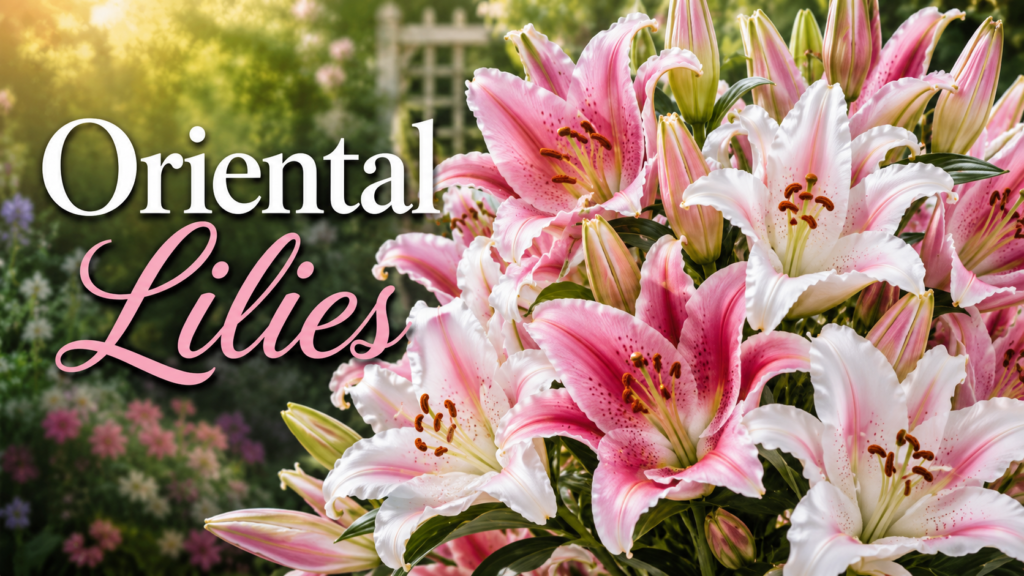
These two popular lily types are easy to mix up, but they behave quite differently in the garden. Asiatic lilies are the low-maintenance, early-blooming crowd-pleasers, while Oriental lilies are the taller, fragrant showstoppers that flower later in the season.
Asiatic Lilies
Bright, bold colors and the easiest lilies for beginners. They bloom early in summer, have little to no fragrance, and are wonderfully low-maintenance.

Oriental Lilies
Larger, richly scented flowers in soft pinks and whites. They bloom later in summer, grow taller, and are the classic fragrant lily for cutting.
| Feature | Asiatic Lily | Oriental Lily |
| Bloom time | Early summer | Mid to late summer |
| Fragrance | Little to none | Strong & sweet |
| Height | 2–4 feet | 3–6 feet |
| Sunlight | Full sun | Sun with cool roots |
| Best for | Easy color, beginners | Fragrance & cut flowers |
Also Read this Content: Mandevilla (Dipladenia) — Complete Plant Care & Growing Guide
6. Caring for lilies after blooming
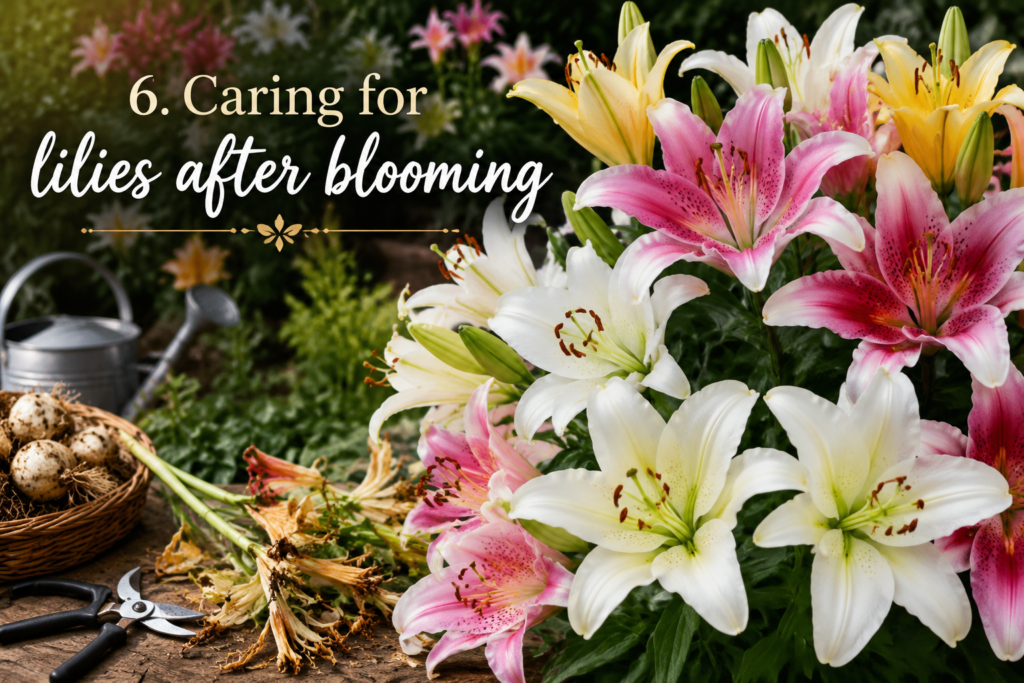
When the flowers fade, snip off the spent blooms so the plant doesn’t waste energy making seeds — but leave the stem and leaves in place. The green foliage keeps feeding the bulb for next year’s flowers, so let it die back naturally before cutting it down to the ground in autumn. In cold climates, add a layer of mulch for winter protection. Lilies come back year after year, and healthy clumps can be lifted and divided every few years to make even more plants.
7. Common mistakes to avoid
- Planting bulbs too shallow, which leaves stems weak and prone to flopping over.
- Choosing a soggy or poorly draining spot, the most common reason bulbs rot.
- Cutting back the leaves too soon — they feed next year’s bloom, so let them yellow first.
- Planting in too much shade, which leads to few or no flowers.
- Letting bulbs dry out before planting; get them in the ground while firm and plump.

Also Read this Content: Elephant Ear Plant — How to Grow, Care & Choose the Right Variety
Frequently asked questions
Why aren’t my lilies blooming?
The usual causes are too much shade, bulbs planted too deep or too shallow, or leaves being cut off too early last season. Make sure they get 6+ hours of sun and are planted about 6 inches deep, and allow the foliage to fully die back naturally.
Which end of the lily bulb goes up?
Plant with the pointed tip facing up and the flatter, root end facing down. If you truly can’t tell, plant the bulb on its side — the shoot will find its way to the surface.
Are Asiatic or Oriental lilies easier for beginners?
Asiatic lilies are the easiest for beginners — they’re hardy, bloom early, and need very little fuss. Oriental lilies are also beginner-friendly but reward you with strong fragrance and taller stems a little later in the season.
Do lilies come back every year?
Yes. Both Asiatic and Oriental lilies are perennials that return each year from the same bulb. Leave the foliage to die back naturally and they’ll multiply into fuller clumps over time..
Sources & further reading
- Royal Horticultural Society (RHS) — Lilies: planting and growing guidance.
- The North American Lily Society — bulb depth and care recommendations.
- University Cooperative Extension horticulture publications on flowering bulbs.
The Garden Bloom Journal — practical, tested growing guides for home gardeners.