
Why Cosmos Actually Thrive on Neglect

Here’s the secret that makes cosmos so beginner-friendly: they evolved in lean, dry Mexican meadows, so they genuinely prefer poor soil. You do not need perfect, rich loam. Whether your backyard is heavy clay or sandy and quick-draining, cosmos will be perfectly happy as long as the spot gets full sun (at least six hours) and water doesn’t pool around the roots.
Also Read this Content: Mandevilla (Dipladenia) — Complete Plant Care & Growing Guide
Skip the compost-heavy beds and rich amendments for these particular flowers. Just loosen the soil, scatter or plant your seeds, water them in, and step back. Truly — that’s most of the job.
| Care Aspect | Cosmos Preference |
| Soil | Poor, sandy, or clay — no amendments needed |
| Sunlight | Full sun (6+ hours daily) |
| Water | Deep but infrequent; let soil dry between waterings |
| Fertilizer | None — skip it entirely |
The “All Leaves, No Flowers” Trap
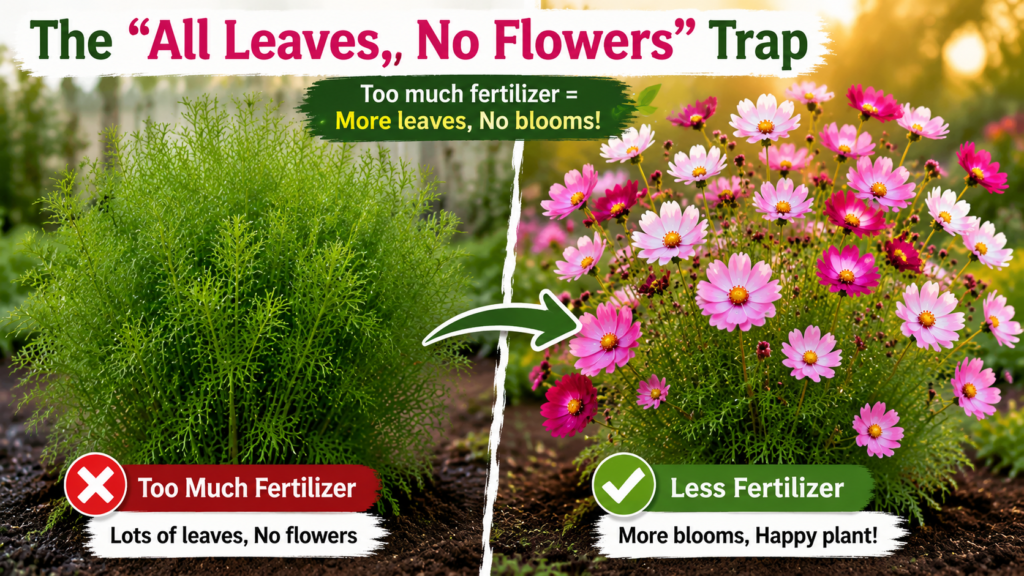
If your cosmos grow tall and bushy like a leafy weed but refuse to bloom, the culprit is almost always too much love — specifically, too much fertilizer (or overly rich soil). Excess nitrogen tells the plant to pour energy into leaves instead of flowers. The fix is simple: stop feeding them entirely. Lean, slightly hungry cosmos are the ones that flower best.
The “Pinching” Trick for Twice the Flowers
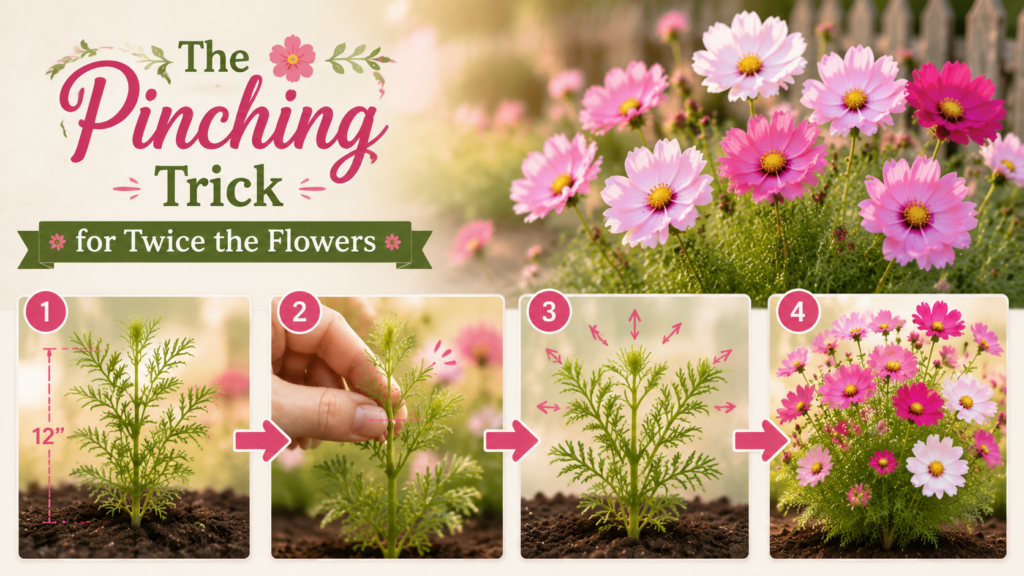
Pinching a young plant takes seconds and pays off all season.
“Pinching back” sounds technical, but it’s the easiest trick in gardening. When your young plant reaches about 12 inches tall, simply use your fingertips (or snips) to nip off the very top inch of the main stem, just above a set of leaves.
That one little snip signals the plant to branch out sideways instead of growing one tall, leggy stalk. The result is a fuller, bushier plant with many more stems — and many more flowers. Don’t be shy; the plant won’t mind, and you’ll be glad you did it.
Keeping Tall Cosmos From Flopping Over
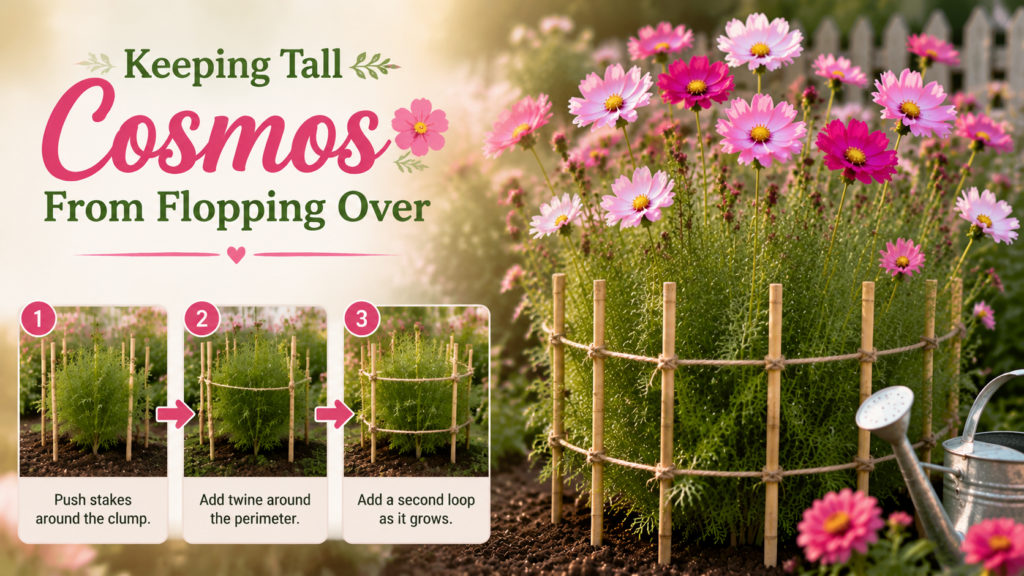
Tall cottage flowers benefit from a little discreet support.
Because cosmos grow tall and slender, a single summer rainstorm or gust of wind can knock them into a muddy tangle. The trick is to support them early, while they’re still upright, rather than trying to rescue a collapsed heap later.
The Easy “Corralling” Method
Push a few bamboo stakes around the outside of a cosmos clump, then run twine around the perimeter at about knee height — like a little fence holding the group together. As the plants grow, add a second loop of twine higher up. No fiddly tying of individual stems needed, and the foliage quickly hides the supports.
A Yard Buzzing With Bees & Butterflies

Open, flat cosmos blooms are a landing pad for pollinators.
Cosmos are pollinator magnets. Their open, daisy-like faces give bees, butterflies, and hoverflies an easy landing pad and plenty of accessible nectar and pollen. Plant them in generous drifts rather than single rows, choose single-petaled varieties (which are easier for insects to feed from than fluffy doubles), and leave a few late blooms to set seed — the goldfinches will thank you.
Cut-Flower Pro Tips for Long-Lasting Bouquets

Homegrown cosmos make cheerful, airy indoor arrangements.
Cosmos are a cutting-garden classic, and the more you cut, the more they bloom. A few simple habits will keep your vases full and your arrangements fresh for days longer.
How to Harvest for the Vase
- 1Cut in the cool of early morning, when stems are full of water — never in the heat of midday.
- 2 Choose buds that are just beginning to open rather than fully open flowers; they’ll keep unfurling in the vase.
- 3Strip any leaves below the waterline, place stems straight into a clean vase of fresh water, and refresh the water every couple of days.
Also Read this Content: White Roses Meaning: From Romance to Remembrance
Frequently Asked Questions
| Method | Timing | Notes |
| Direct Sow | After last frost, when soil is warm | Easiest method; germinates in 7–10 days |
| Indoors | 4–6 weeks before last frost | Gives a head start; transplant after frost risk passes |
When should I sow cosmos seeds?
Cosmos thrive on warmth. Sow direct into the garden after the last frost date when soil has warmed up, or start indoors 4–6 weeks before your last spring frost. They germinate quickly in warm soil — usually within 7–10 days.
How much water do cosmos need?
Once established, cosmos are very drought-tolerant. Water regularly during the first few weeks to help them get rooted, then back off. They prefer drier conditions and may sulk or fail to bloom in overly moist soil. Deep watering once or twice a week is usually plenty.
What should I do with cosmos in autumn?
Let at least a few flowers go to seed if you want cosmos to self-seed the following year. Otherwise, pull up the whole plant once frost has killed it off. Cosmos are annuals in most climates and won’t survive winter.
Can I grow cosmos in containers?
Absolutely. Choose a pot at least 12 inches deep with drainage holes, fill with standard potting soil, and grow one plant per pot. Container cosmos may need more frequent watering than garden plants because pots dry out faster. Otherwise, the same low-fuss rules apply.