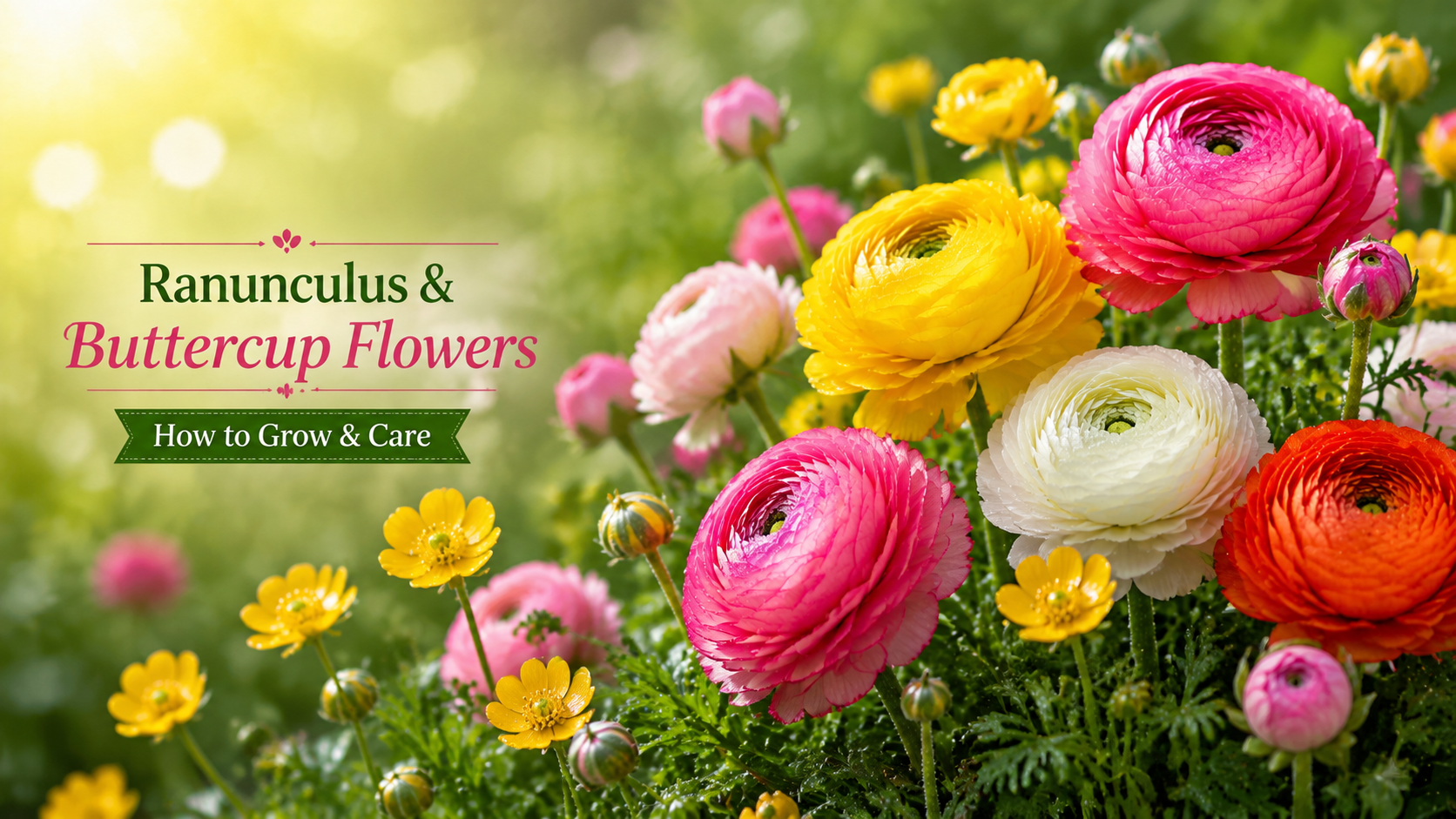

A single peach ranunculus — the layered, papery petals that make these the darling of romantic bridal work.
Hands-in-the-soil experience from a working cutting garden, not theory.
Methods tested across
cold and mild climates
over multiple seasons.
Reviewed for accuracy by a certified horticulturist before publishing.
First, breathe — corms are more forgiving than you think
If you’ve been circling ranunculus for a season or two, terrified of rotting an expensive bag of corms before they sprout, you are exactly the gardener this guide is for. The truth is that ranunculus aren’t fussy — they’re just specific. Get the timing, the soak, and the planting depth right, and they reward you with armloads of those impossibly romantic, rose-meets-peony blooms. We’ll move step by step, and I’ll flag every place where beginners typically lose corms so you can sidestep it entirely.
1. Meet the corm — the little brown octopus
Open your bag and you’ll find what looks like a cluster of dried-up brown claws or tiny shriveled octopuses. Don’t panic — this is exactly what a healthy, dormant ranunculus corm should look like. Each corm has a crown (the flatter top where the legs join) and a set of pointed “legs.” The single most important orientation rule: the legs point DOWN. Plant it claws-down, crown-up, about 2 inches deep. Get this right and you’ve already cleared the hurdle that trips up most first-timers.
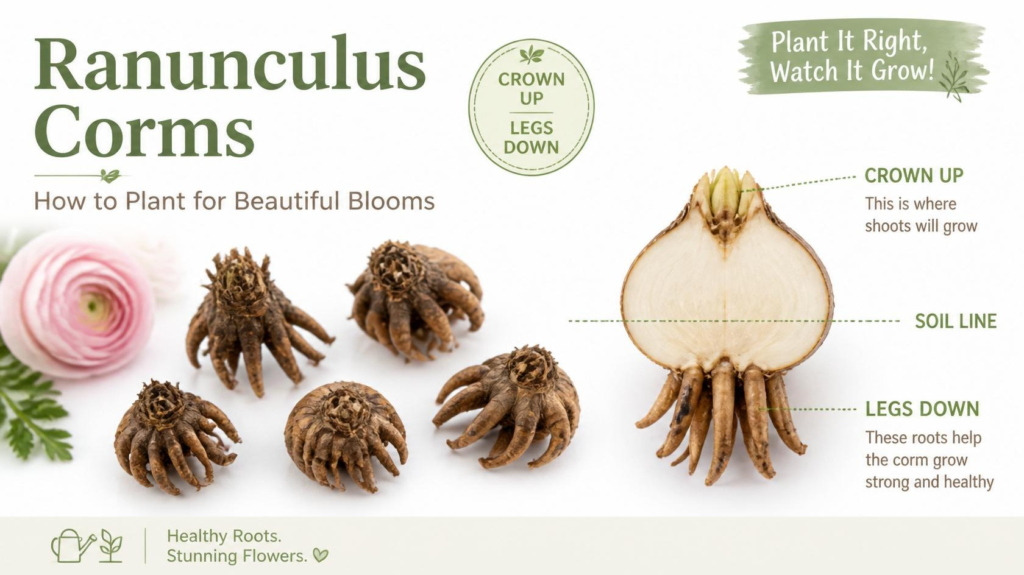
| Quick orientation rule Octopus legs point down, flat crown faces up. If you genuinely can’t tell, plant the corm on its side — the sprout will find its own way up. You cannot “break” a corm by guessing. |
2. The soaking protocol (don’t drown them)
Dry corms are dehydrated and shrunken. A short soak plumps them up and jump-starts growth — but soaking too long suffocates them, which is the first step toward rot. The goal is a gentle drink, not a long bath. Follow these four steps exactly.
Soak in cool water just long enough to plump — never longer than four hours.
| 1 Place corms in a bowl and cover with cool (not warm) water. Warm water encourages bacteria. |
| 2 Soak for 3 to 4 hours only. A trickle of fresh running water, or swapping the water once, keeps oxygen in and prevents drowning. |
| 3 Watch them double in size — they’ll look like fat little spiders. That’s your signal they’re ready. |
| 4 Plant immediately after soaking, or pre-sprout in a tray of barely-damp potting mix in a cool spot for 10–14 days for an even stronger start. |
Also Read this Content: Cosmos Flower — How to Grow & Care for Cosmos Plants
3. The temperature sweet spot
Here’s the single sentence to memorize: ranunculus love the cold and hate the heat. They thrive in the 40–60°F (5–15°C) range and sulk — or melt — once days push past the mid-70s°F (24°C). The right planting time depends entirely on how cold your winters get, which is why online advice feels so contradictory. Use these two simple paths.
Plant into cool soil for the longest, sturdiest stems.
Mild winters (Zone 8+)
Plant in autumn for a head start. Corms establish roots over the cool winter and bloom early spring. Protect from rare hard freezes with a frost cloth.
Cold winters (Zone 7 & below)
Plant in very early spring as soon as soil can be worked — they tolerate light frost. Aim to get them out 6 weeks before your last frost date for maximum cool-weather growing.
4. Stop the rot & grow tall, usable stems
The two disappointments I hear most are mushy corms and frustrating 4-inch stems. Both are preventable, and both come down to water and warmth management.
Fixing mushy corms
Plant into well-draining soil and do NOT water again until you see green sprouts. Soggy soil around a dormant corm is the number-one cause of rot. After sprouting, water deeply but only when the top inch is dry.
Fixing stunted, short stems
Short stems mean it got warm too fast. Plant earlier into cool conditions, give full sun, and feed lightly. The longer they grow in cool temps, the taller and stronger the stems for your arrangements.
5. Harvesting at the “marshmallow stage”
This is the secret to long vase life — and it feels counterintuitive. Don’t wait for blooms to fully open on the plant. Instead, gently squeeze the bud: when it feels soft and squishy like a marshmallow but is still mostly closed and showing color, that’s your moment to cut. Harvested at this stage, ranunculus open beautifully in the vase and can last up to two full weeks.
Also Read this content: Mandevilla (Dipladenia) — Complete Plant Care & Growing Guide
Frequently asked questions
| Are ranunculus and buttercups the same flower?They’re close cousins in the Ranunculus genus. The florist’s ranunculus (Ranunculus asiaticus) is the showy, many-petaled variety used in bouquets, while common buttercups are their smaller, simpler wild relatives. Both love cool weather, but it’s the asiaticus types you’ll grow from corms for cutting |
| How long until ranunculus bloom after planting?Expect roughly 90 days from planting to first bloom, depending on temperature. Fall-planted corms in mild climates bloom in early spring; spring-planted corms in cold climates bloom mid to late spring. Cooler, slower growth gives the best stems. |
| Can I grow ranunculus in containers on a patio?Absolutely — they’re excellent in pots. Use a deep container with drainage holes and a free-draining mix. Containers actually help you control moisture and move plants out of unexpected heat or hard frost, which suits a close-monitoring grower perfectly.Do corms come back year after year? |
| In mild, dry-summer climates they can be perennial if you lift and store the corms once foliage dies back. In wet or hot regions, many growers treat them as annuals and replant fresh corms each season for reliable results. |