Everything you need to know about planting, caring for, and enjoying these stunning layered blooms — from corm to cut flower.
What Is Ranunculus?
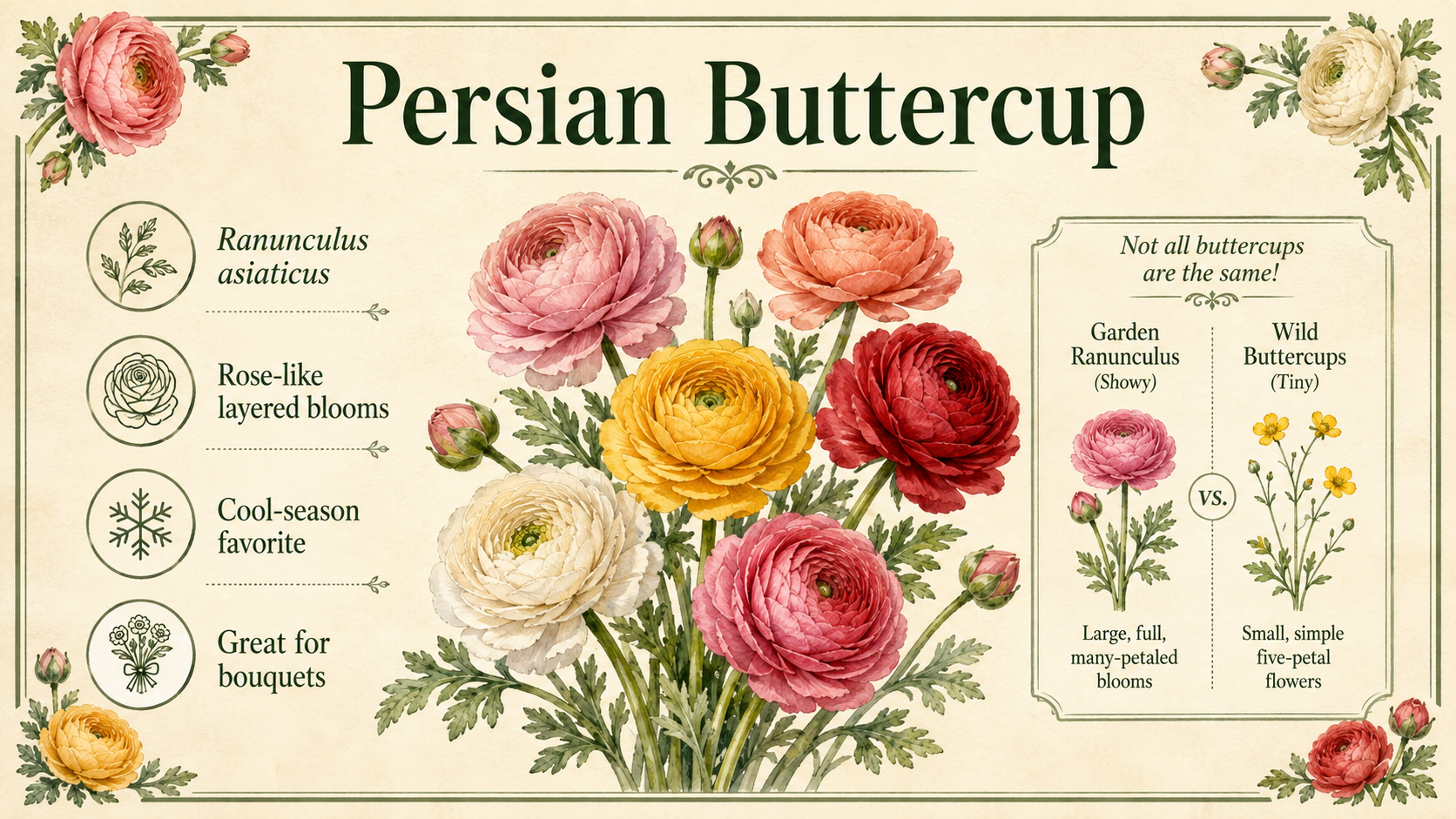
Ranunculus (Ranunculus asiaticus), commonly called Persian buttercup, is a tuberous perennial prized for its densely layered, rose-like blooms. Native to the eastern Mediterranean, these flowers have become a favourite of cut-flower gardeners and florists worldwide thanks to their extraordinary petal count and vibrant colour range — including pink, red, orange, yellow, white, and soft pastels.
While the genus Ranunculus includes common wild buttercups, the garden varieties grown for their showy flowers are almost exclusively cultivars of R. asiaticus. They grow from small, claw-shaped corms (not true bulbs) and thrive in cool growing conditions with excellent drainage.
💡 Key distinction: Wild buttercups are small, weedy perennials. Persian buttercups (the ones sold as ‘ranunculus’ at garden centres) produce large, multi-petalled blooms on strong stems — perfect for bouquets.
Understanding Ranunculus Corms
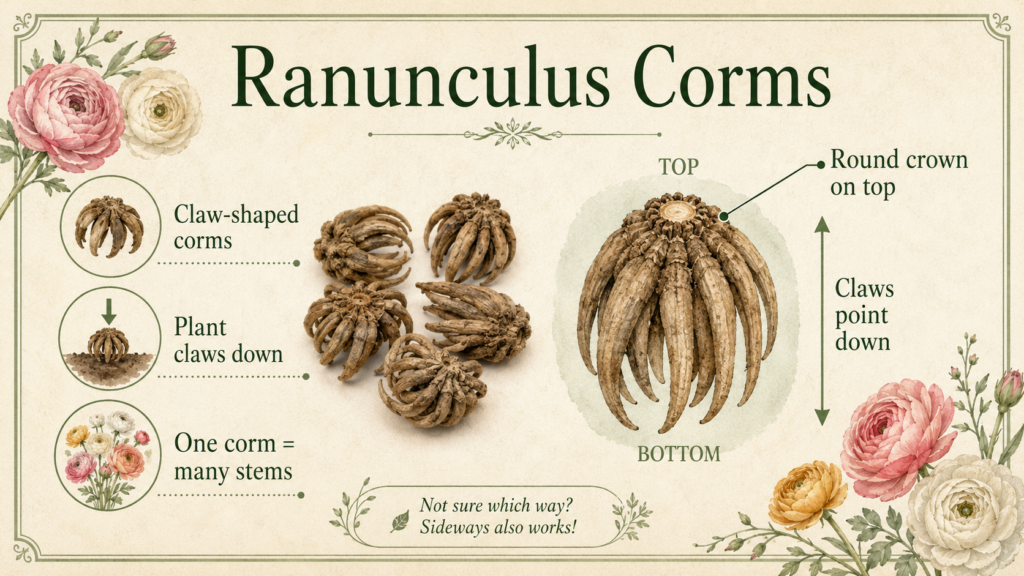
Ranunculus grow from small, dried corms that look like tiny bunches of bananas or octopus tentacles. Each corm has a cluster of pointed ‘claws’ (the growing points) on one side and a rounded crown on the other. When you purchase them, they’ll feel hard and lightweight — almost like dried pasta.
The most important thing to remember: plant with the claws pointing downward. If you’re unsure which end is up, plant sideways — the corm will correct itself. A single healthy corm can produce 5–15 stems and dozens of flowers over its blooming season.
When to Plant Ranunculus
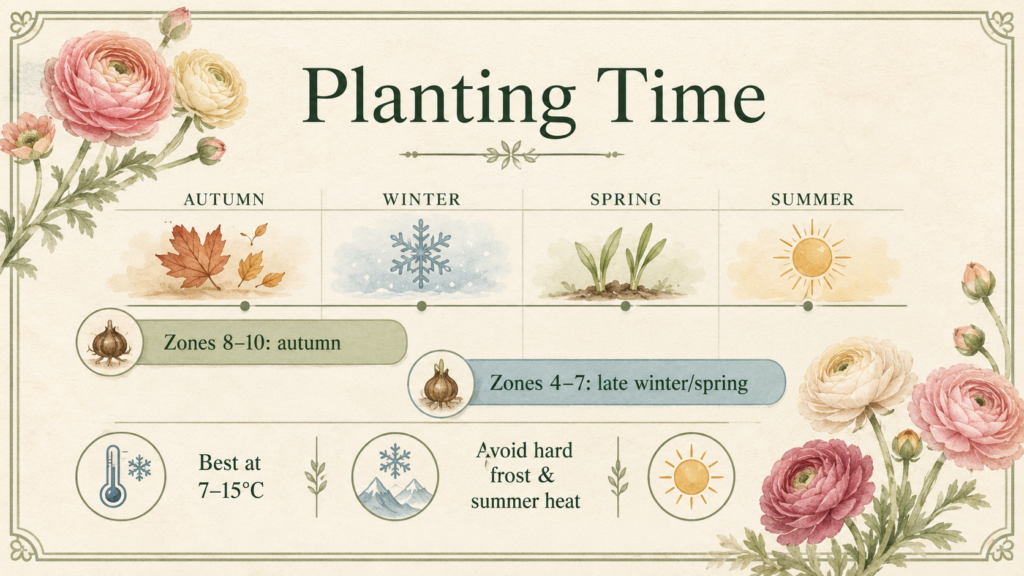
Timing depends on your climate. Ranunculus need cool temperatures (7–15°C / 45–60°F) for root development and dislike both hard frost and summer heat. In mild-winter areas (zones 8–10), plant corms in autumn (October–November) for late-winter to spring blooms. In colder zones (4–7), plant in late winter to early spring once the soil is workable but nights are still cool.
🌡️ Rule of thumb: If your winters regularly drop below -7°C (20°F), plant in spring. If your winters are mild, plant in autumn for the longest flowering season.
In very hot climates (zones 9b–11), treat ranunculus as a cool-season annual planted in autumn and expect blooms to finish before summer heat arrives. The hotter your summers, the more important autumn planting becomes.
How to Plant Ranunculus Corms
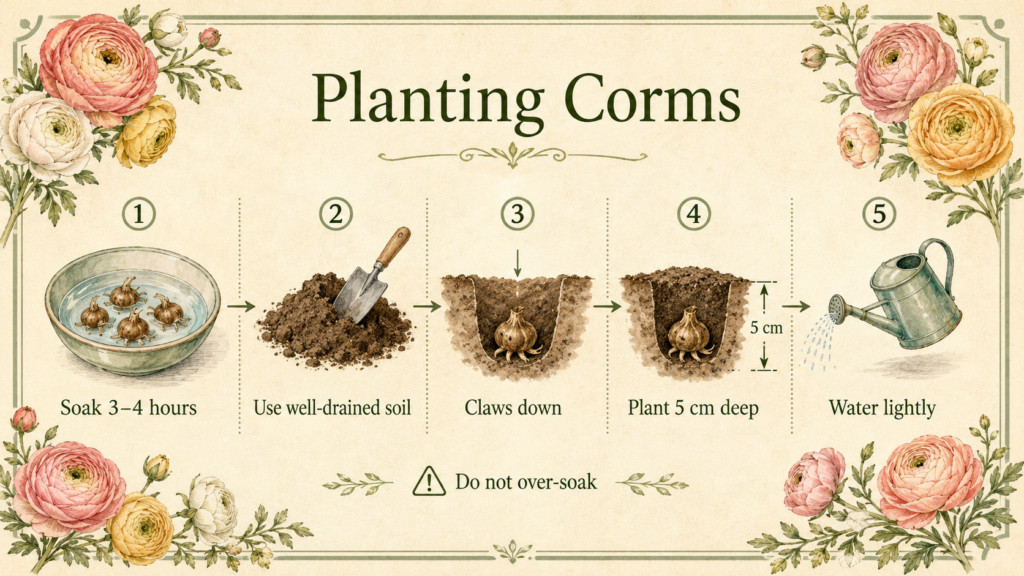
Follow these steps for reliable results:
- Pre-soak corms for 3–4 hours in room-temperature water. They’ll plump up to roughly double their size. Do not soak longer than 6 hours — over-soaking invites rot.
- Prepare the bed or pot with well-drained, fertile soil. Amend heavy clay with perlite or coarse sand.
- Plant corms 5 cm (2 inches) deep with claws pointing down, spaced 10–15 cm (4–6 inches) apart.
- Water lightly after planting — just enough to settle the soil. Do not saturate.
- Mulch with a thin layer of straw or fine bark to insulate and retain moisture without waterlogging.
Sunlight & Soil Requirements
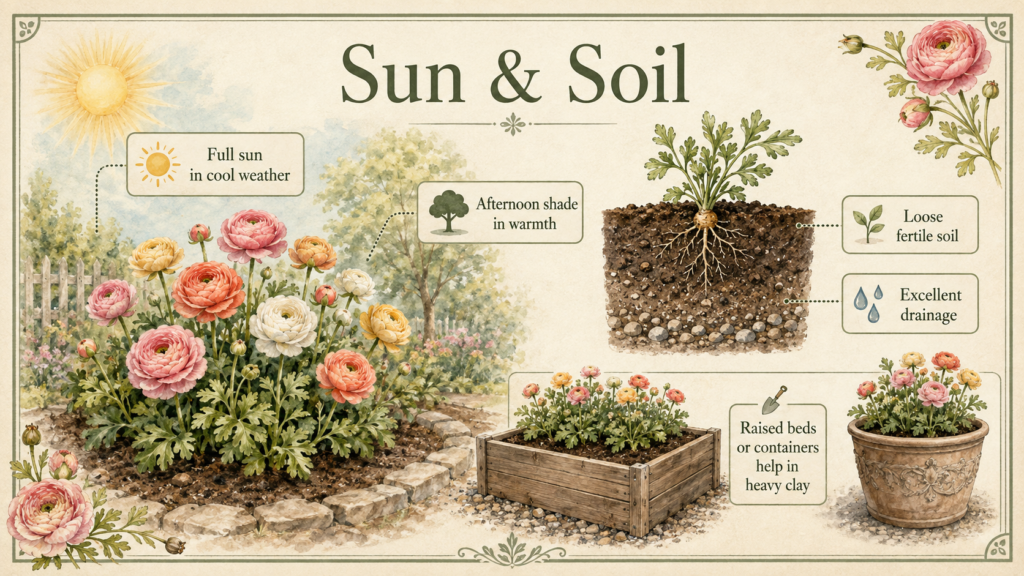
Ranunculus thrive in full sun (6+ hours daily) during cool weather. In warmer climates, afternoon shade helps extend the blooming window. The single most important soil factor is drainage — ranunculus corms will rot quickly in waterlogged conditions.
Ideal soil is loose, fertile, and slightly acidic to neutral (pH 6.0–7.0). Raised beds and mounded rows work beautifully. If your soil is heavy clay, grow in containers or raised beds amended with pumice and compost.
Watering & Feeding
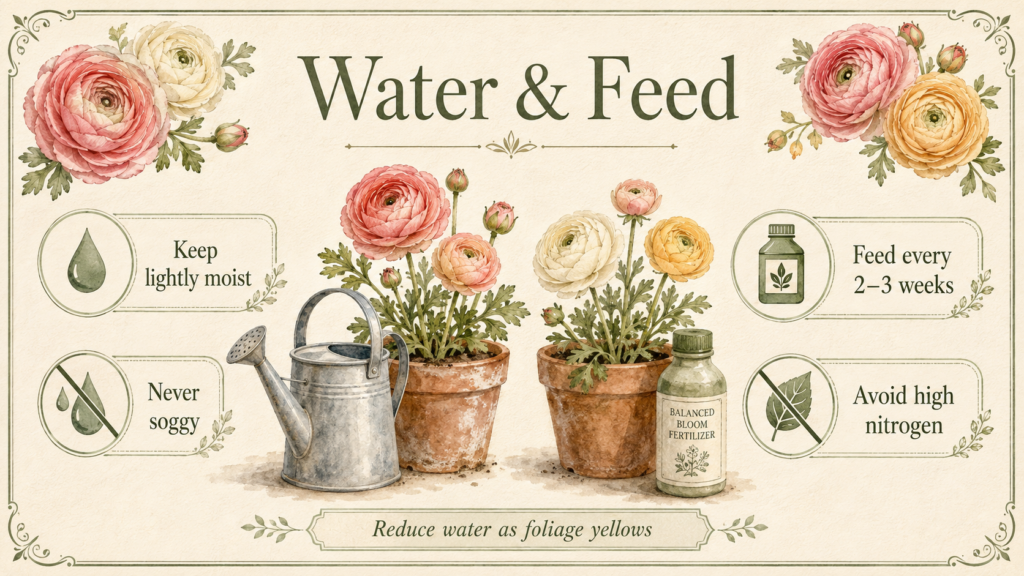
Water consistently but moderately. The soil should stay lightly moist during active growth — never soggy. Once foliage emerges, water when the top 2–3 cm of soil feels dry. Reduce watering after flowers finish and foliage begins to yellow.
Feed every 2–3 weeks with a balanced liquid fertiliser (such as 10-10-10 or a seaweed/fish emulsion) from the time shoots appear until flowering slows. Avoid high-nitrogen feeds, which encourage leaves at the expense of blooms.
Flowering & Cutting for Bouquets
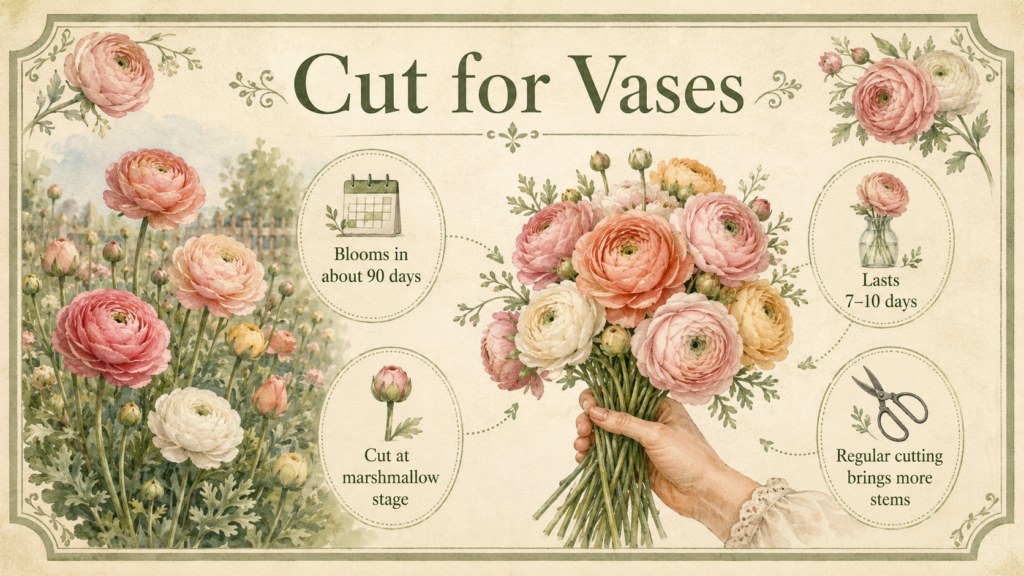
Expect blooms approximately 90 days after planting. Each corm produces multiple stems over 4–6 weeks. Flowers last 7–10 days in a vase when cut at the ‘marshmallow’ stage — when the bud feels soft like a marshmallow but hasn’t fully opened. Cut stems early in the morning and strip lower leaves.
Regular cutting actually encourages the plant to produce more stems. Deadhead spent blooms promptly to redirect energy. Colours available include hot pink, coral, peach, butter yellow, crimson, pure white, and bicolours — making ranunculus one of the best flowers for arrangements.
Growing Ranunculus in Containers
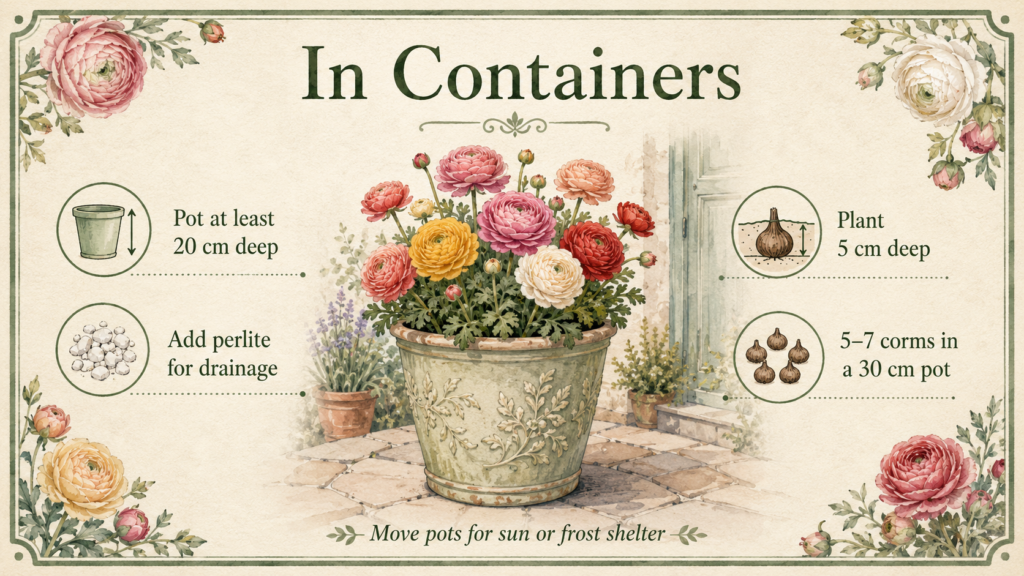
Ranunculus are excellent container plants. Use a pot at least 20 cm (8 inches) deep with drainage holes. Fill with a quality potting mix amended with perlite for extra drainage. Plant corms 5 cm deep and 7–10 cm apart — you can fit 5–7 corms in a 30 cm pot.
Container growing offers a key advantage: you can move pots to follow the sun or shelter them from frost. Place in full sun and water when the top layer dries. Feed fortnightly once shoots appear.
After-Flowering Care & Storing Corms
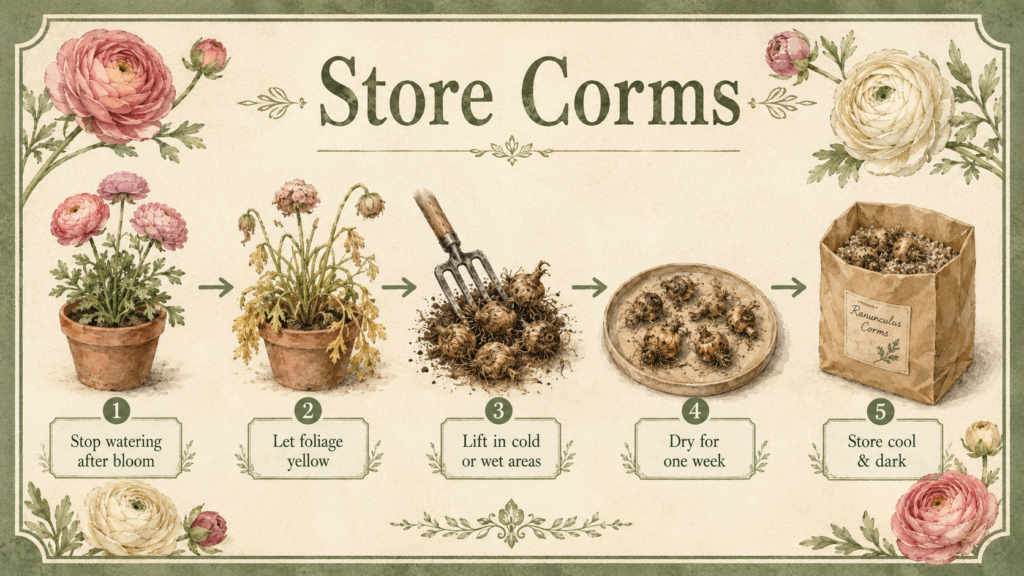
Once blooming finishes and foliage yellows, stop watering and let the corms dry out in the ground. In zones 7–10 with dry summers, corms can remain in place and will re-sprout the following season. In colder or wet-summer areas, lift the corms after foliage dies back.
To store: brush off soil, let corms dry in a shaded spot for a week, then store in a paper bag with dry peat moss or vermiculite in a cool (10–15°C), dark place. Replant the following season. Stored corms may produce slightly smaller flowers the second year.
Common Problems & Solutions
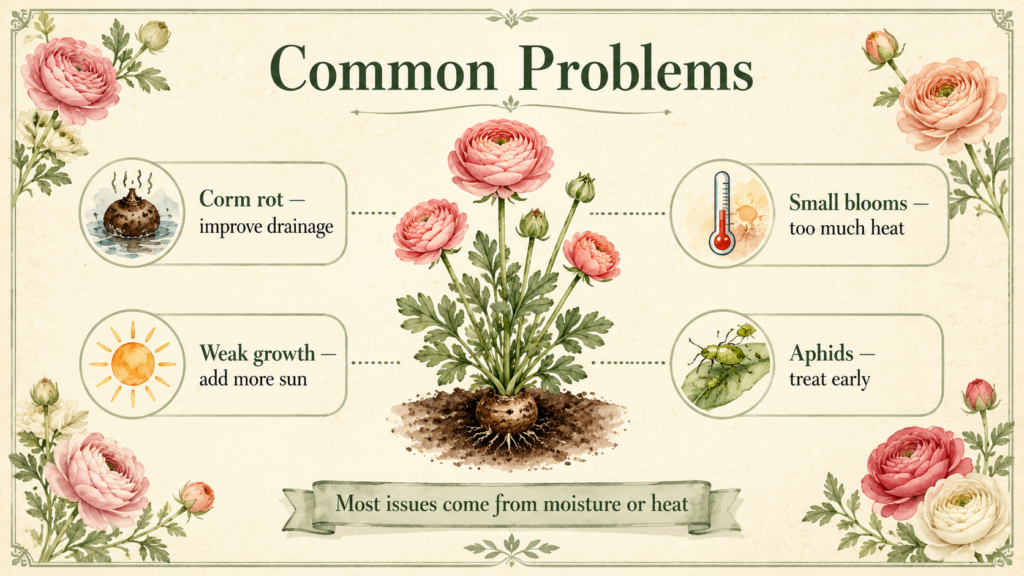
Most ranunculus problems stem from too much moisture or heat:
- Corm rot — caused by overwatering or heavy soil. Improve drainage and reduce watering frequency.
- Weak, leggy growth — usually too little sunlight. Move to a sunnier position.
- Flowers shrinking or stopping — temperatures are too high. Ranunculus naturally decline above 25°C (77°F). Provide afternoon shade.
- Aphids on stems — blast with water or treat with insecticidal soap. Check undersides of leaves regularly.
Frequently Asked Questions
How long do ranunculus take to bloom?
Expect the first flowers about 90 days after planting, with blooms continuing for roughly 4–6 weeks in cool conditions.
Should ranunculus corms be soaked before planting?
Yes. Soak them in room-temperature water for 3–4 hours so they plump up, but never leave them submerged for more than 6 hours.
Can ranunculus grow in containers?
Absolutely. Choose a pot at least 20 cm deep with drainage holes, use a free-draining mix, and place it in full sun during cool weather.