
A simple guide to what legumes are, which foods count, how beans and peas differ, and what to know about their protein and fiber.
Legumes can be confusing because the words beans, peas, lentils, chickpeas, and pulses overlap. The easiest place to start is this: legume is the big botanical category, while many familiar foods are specific types within it.
What is a legume?
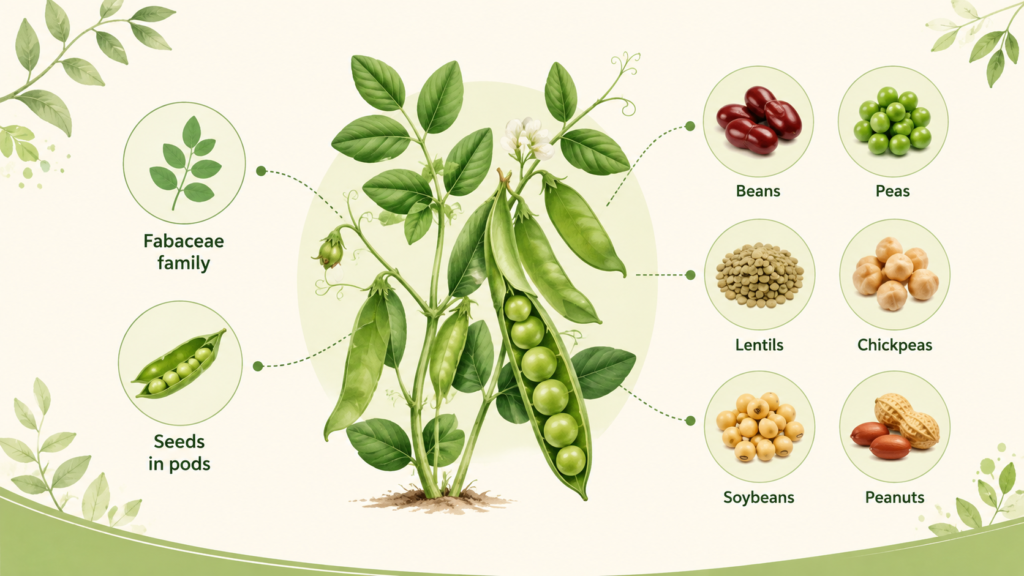
A legume is a plant in the Fabaceae family, also called the pea or bean family. These plants usually produce seeds inside a pod. Common edible examples include beans, peas, lentils, chickpeas, soybeans, and peanuts.
In everyday eating, people often use “legumes” to mean the foods harvested from these plants. Botanically, though, the term can refer to the whole plant family, not only the seed on your plate.
Legumes vs pulses: what is the difference?
Pulses are the dried, edible seeds of certain legume crops. Dry beans, dried peas, lentils, and chickpeas are commonly described as pulses. The word is useful because it distinguishes dried seeds from fresh vegetables and from legumes grown mainly for oil.
For example, fresh green peas are legumes, but they are usually treated as a vegetable. Split peas are dried peas, so they are pulses. Soybeans and peanuts are legumes too, yet they are often grouped separately because of their oil content and food uses.
Common types of legumes
These familiar categories make it easier to recognize the broad range of foods that belong to the legume family.
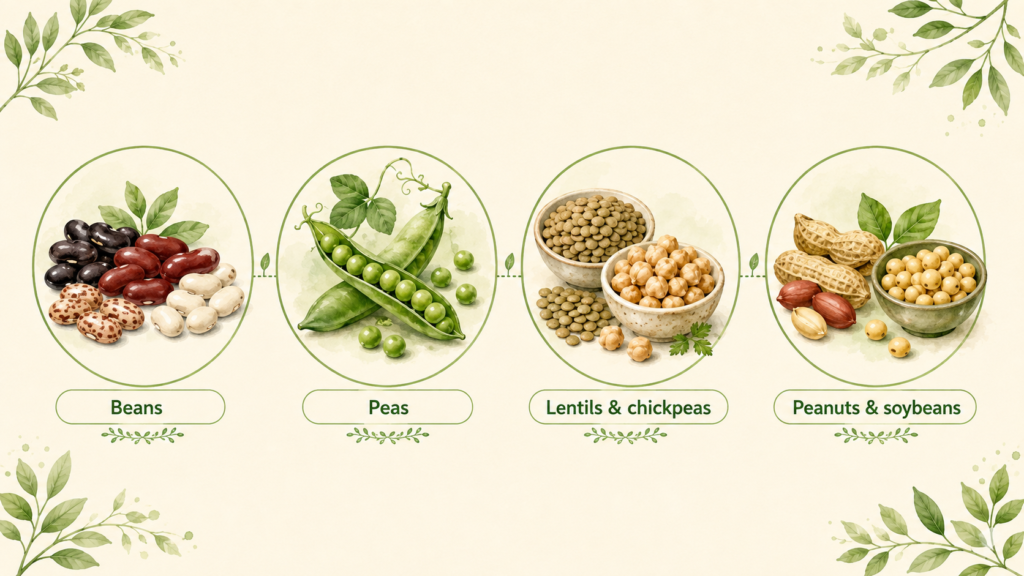
Beans
Black beans, kidney beans, pinto beans, navy beans, cannellini beans, and mung beans are all widely eaten legumes.
Peas
Garden peas, snow peas, snap peas, black-eyed peas, and dried split peas are all connected to the legume family.
Lentils & chickpeas
Lentils come in several colors, while chickpeas are round, nutty-tasting legumes also called garbanzo beans.
Peanuts & soybeans
Despite their names and uses, both peanuts and soybeans are legumes rather than tree nuts or cereal grains.
Beans vs peas: how are they different?
Beans and peas are both legumes, so they share the basic trait of growing seeds in pods. The main difference is classification and common culinary use. “Beans” is a broad everyday label for many seed types, while peas usually refer to plants and seeds in the genus Pisum or closely related crops.
Fresh peas are often eaten as a green vegetable, whereas many beans are eaten after the seeds mature and dry. There are exceptions: green beans are immature bean pods, and black-eyed peas are actually a type of bean called cowpea.
| Feature | Beans | Peas |
|---|---|---|
| Examples | Black, kidney, pinto, navy, cannellini | Garden, snow, snap, split, black-eyed peas |
| Often sold as | Dried or canned mature seeds | Fresh pods, frozen peas, or dried split peas |
| Kitchen texture | Usually creamy, firm, or starchy when cooked | Often sweet and tender when fresh; soft when split |
Legume nutrition: protein, fiber, and more
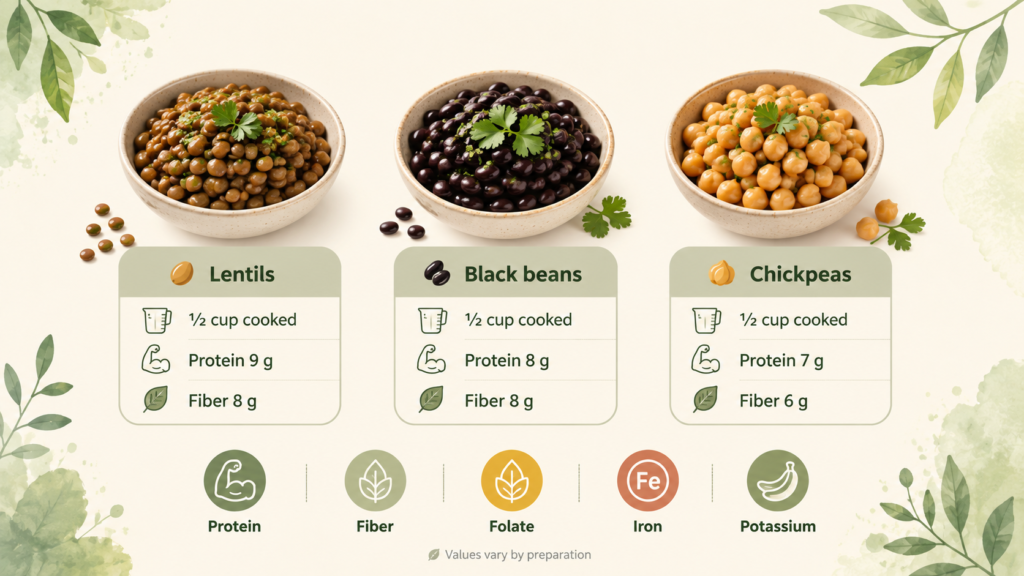
Cooked legumes can contribute plant protein, dietary fiber, folate, iron, potassium, and other nutrients. Their exact nutrition varies by food, serving size, preparation method, and whether a product is canned, dried, fresh, or seasoned.
A meal containing legumes can be satisfying because it combines carbohydrate, protein, and fiber. They fit into many eating patterns, but they are not a cure-all. Overall food choices, portion size, health needs, and individual tolerance still matter.
| Cooked food | Serving | Protein | Fiber |
|---|---|---|---|
| Lentils | ½ cup cooked | About 9 g | About 8 g |
| Black beans | ½ cup cooked | About 8 g | About 8 g |
| Chickpeas | ½ cup cooked | About 7 g | About 6 g |
Figures are rounded educational estimates from standard USDA FoodData Central entries. Recipes, varieties, and preparation methods can change nutrition values.
How to use legumes in everyday meals
Legumes work in soups, salads, curries, grain bowls, tacos, pasta sauces, dips, and baked dishes. Start with a familiar food and build from there: add chickpeas to a tray bake, lentils to soup, or beans to a salad.
Practical buying and cooking tips
- Choose dried legumes for lower cost and pantry storage, or choose canned legumes when convenience matters.
- Rinse dried beans before cooking, and follow package directions for soaking where recommended.
- If legumes are new to your diet, increase portions gradually and drink enough fluids to support a higher-fiber eating pattern.
- People with peanut or soy allergy should avoid those specific legumes and follow guidance from a qualified clinician.
For variety, rotate different legumes through the week. Each has a distinct cooking time, texture, flavor, and nutrient profile, so there is no need to rely on one single option.
How legumes grow
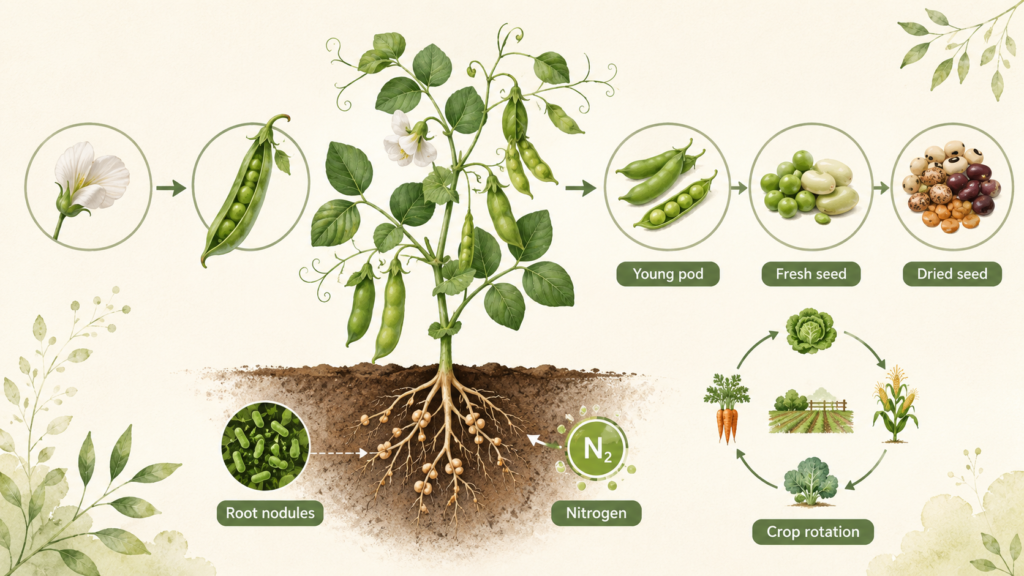
Legume plants produce pods that hold their seeds. Depending on the crop, people may eat the young pod, the fresh seed, or the mature dried seed. Green beans and snap peas are examples where the tender pod is often part of the meal.
Many legumes can form relationships with soil bacteria that help make nitrogen available to the plant. This is one reason legumes are important in crop rotation and home gardens, although the result depends on the crop, soil, climate, and growing practices.
Legume FAQs
Are beans legumes?
Yes. Beans are a common type of legume. However, the word legume includes other foods too, including peas, lentils, chickpeas, soybeans, and peanuts.
Are peas legumes?
Yes. Fresh peas, snap peas, snow peas, dried peas, and split peas all come from legume plants. Fresh peas are usually used as a vegetable, while dried peas are generally called pulses.
Are peanuts legumes or nuts?
Peanuts are botanically legumes because they grow in pods and belong to the Fabaceae family. They are called nuts in culinary language because of their flavor, texture, and common uses.