Everything you need to know about caring for these stunning, drought-tolerant succulents—from soil and sun to propagation and flowering.
Agave Care at a Glance
- Botanical name: Agave (multiple species)
- Sun: Full sun (6+ hours direct sunlight)
- Soil: Fast-draining, sandy or gritty mix
- Hardiness: USDA Zones 5–11 (varies by species)
- Watering: Infrequent—allow soil to dry completely
- Height: 15 cm – 3 m+ depending on variety
- Growth rate: Slow to moderate
What Is an Agave?
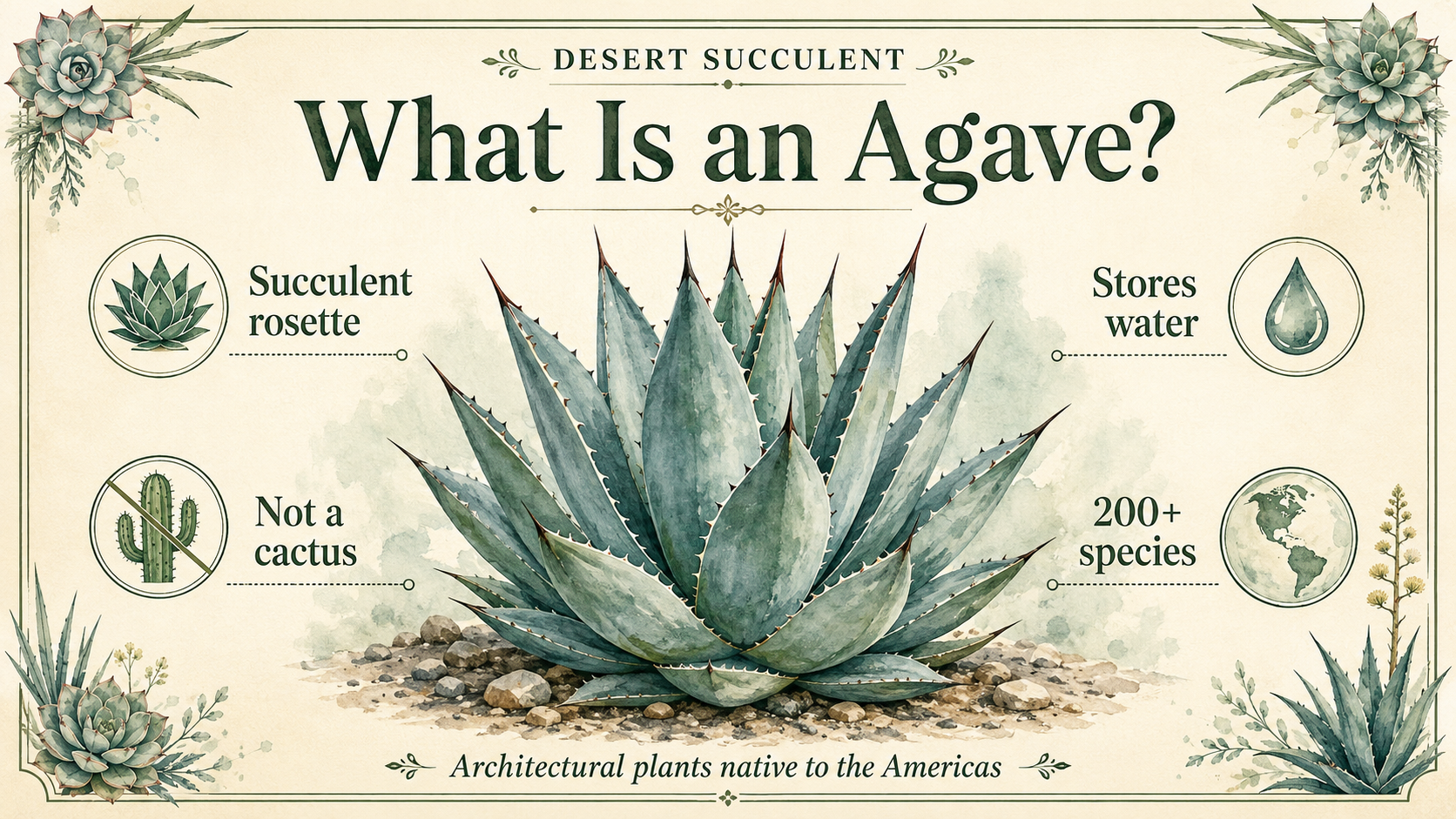
Agaves are succulent plants native to the Americas—primarily Mexico, the southwestern United States, and Central America. They form dramatic rosettes of thick, fleshy leaves that store water, making them superbly adapted to hot, dry environments. Despite common confusion, agaves are not cacti; they belong to the Asparagaceae family.
With over 200 species ranging from compact, container-friendly plants to massive landscape specimens, agaves are valued for their bold architectural form, low maintenance requirements, and exceptional drought tolerance. Many species feature striking blue-green, grey, or variegated foliage with distinctive terminal spines.
Popular Agave Varieties
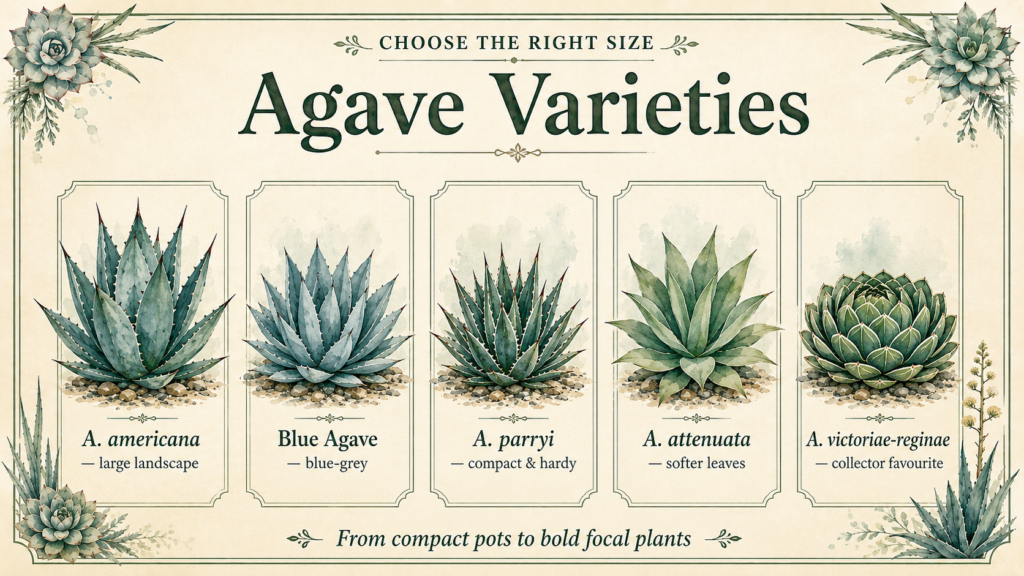
Choosing the right agave for your space is crucial—some stay compact enough for windowsills while others can span 2–3 metres. Here are reliable choices for different situations:
- Agave americana (Century Plant) — Large and dramatic, 1–2 m tall with a wider spread. Best for spacious landscapes.
- Agave tequilana (Blue Agave) — Striking blue-grey foliage, 1.2–1.8 m. Famous for tequila production.
- Agave parryi — Compact (30–60 cm), cold-hardy to -20°C. Excellent for smaller gardens and colder climates.
- Agave attenuata (Fox Tail Agave) — Soft, spineless leaves. Popular for patios and family gardens where sharp tips are a concern.
- Agave victoriae-reginae — Compact, highly architectural rosette ideal for containers and collectors. Grows to 30–45 cm.
Sunlight & Temperature
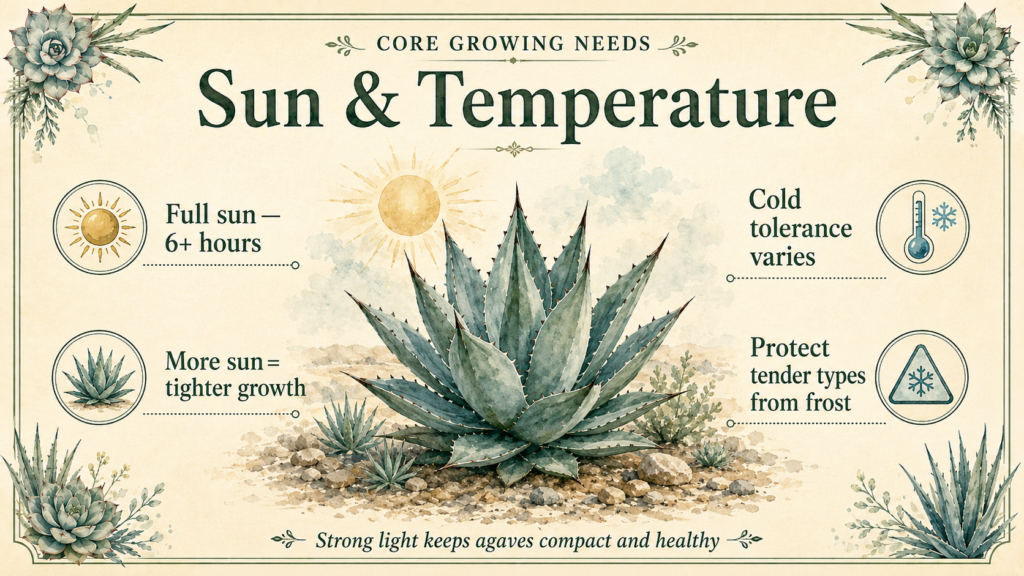
Key point: Agaves need strong, direct sunlight—at least 6 hours daily. Insufficient light causes etiolation (stretching), weak growth, and floppy leaves.
Most agaves thrive in full sun and can handle intense heat that would scorch many other plants. In extremely hot desert climates (above 40°C), some species appreciate light afternoon shade to prevent leaf scorching, but generally more sun equals a healthier, more compact rosette.
Cold tolerance varies significantly by species. Agave parryi can survive -20°C, while tropical species like Agave attenuata suffer below 0°C. In frost-prone areas, grow tender species in containers you can move indoors during winter, or mulch around the base and cover with horticultural fleece during cold snaps.
Soil & Drainage
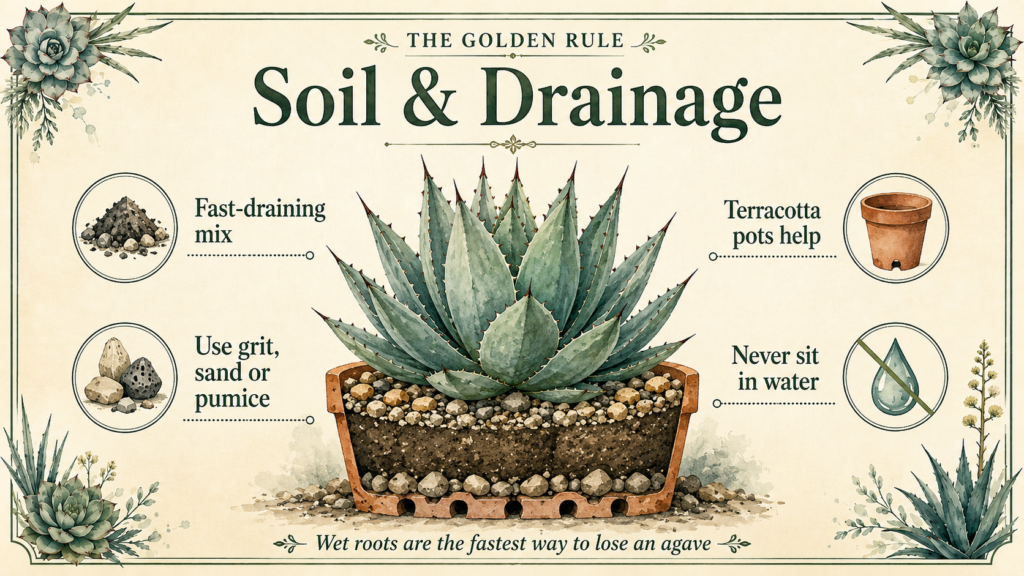
Drainage is the single most important factor for agave success. These plants rot quickly in wet soil. Use a fast-draining mix: combine regular potting soil with equal parts coarse sand, perlite, or pumice. For in-ground planting, amend heavy clay with generous amounts of gravel or plant on raised mounds.
A good test: water your soil mix thoroughly—it should drain through within seconds, not minutes. Terracotta pots are ideal because they wick moisture away from roots. Never let agaves sit in saucers of standing water. If planting in the landscape, choose a slightly elevated spot where rainwater naturally runs off.
Watering Your Agave
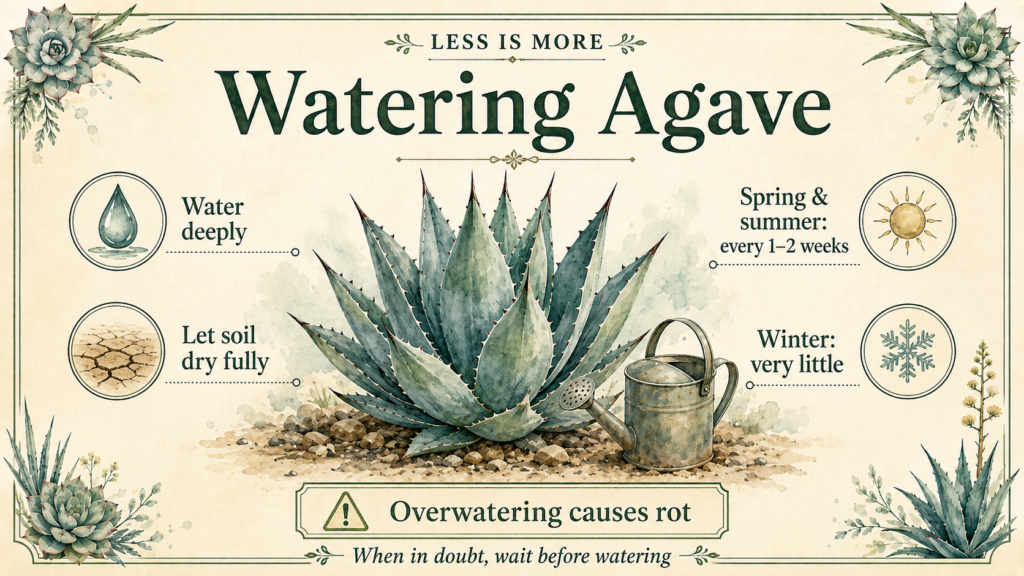
Golden rule: Agaves tolerate drought far better than wet soil. When in doubt, don’t water. Overwatering is the number-one killer of agave plants.
During the active growing season (spring and summer), water deeply but infrequently—once every 1–2 weeks depending on heat and pot size. Allow the soil to dry completely between waterings. In winter, most agaves need little to no supplemental water, especially if grown outdoors where they receive some rainfall.
Signs of overwatering include yellowing lower leaves, a soft or mushy base, and a foul smell from the crown. If you catch it early, stop watering immediately, remove the plant from wet soil, trim any rotted roots, and repot in completely dry mix. Let it sit without water for at least a week before resuming.
Growing Agave in Containers
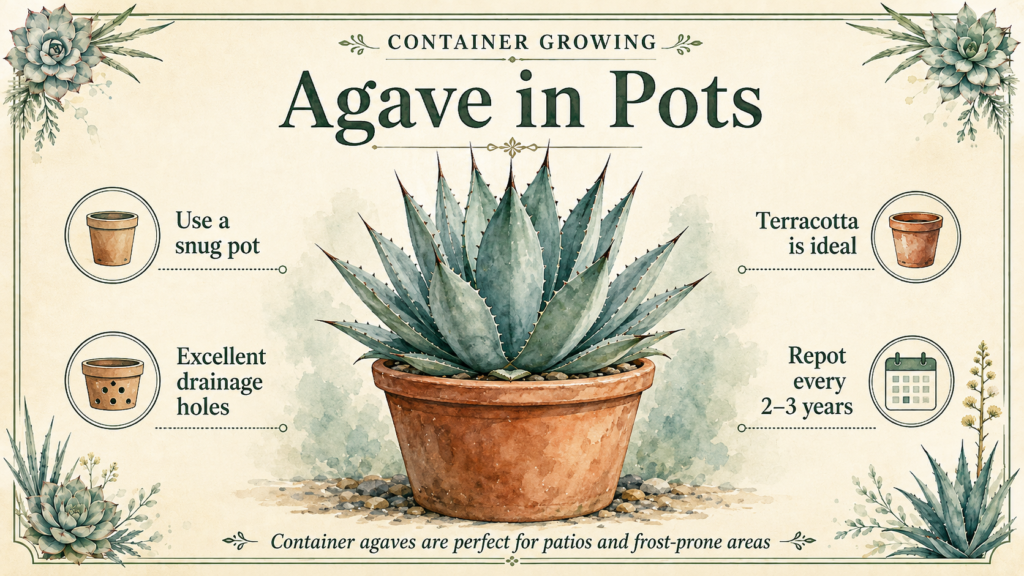
Agaves make outstanding container plants. Choose a pot only slightly larger than the root ball—agaves prefer snug conditions. Unglazed terracotta with drainage holes is ideal. Use a gritty, fast-draining mix and ensure water flows freely from the bottom when you irrigate.
Repot only when the plant has clearly outgrown its container (roots circling the bottom or the rosette overhanging the pot edges significantly). Repotting every 2–3 years is typical for actively growing specimens. Use thick gloves when handling—the leaf spines can cause painful punctures.
Propagating Agave Pups
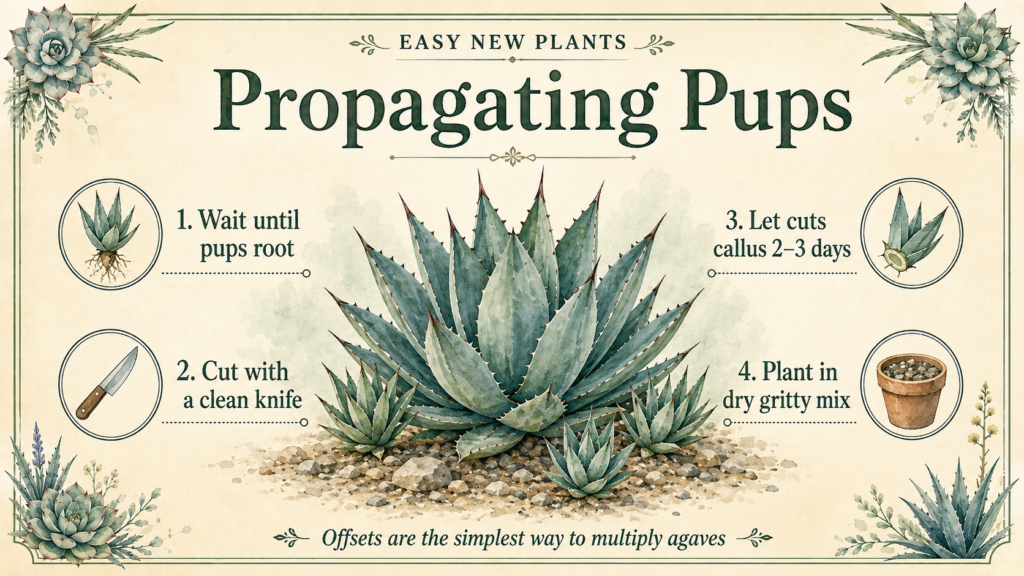
Most agaves produce offsets—small “pups”—around the base of the mother plant. These are genetic clones and the easiest way to propagate. Wait until pups are at least 10 cm across and have developed their own root system before separating them.
To remove a pup, carefully dig around it and sever the connecting root or stolon with a clean, sharp knife. Let the cut end dry for 2–3 days in a shaded spot to form a callus, then plant in dry, gritty mix. Wait a week before watering lightly. Roots should establish within a few weeks.
Flowering & Life Cycle
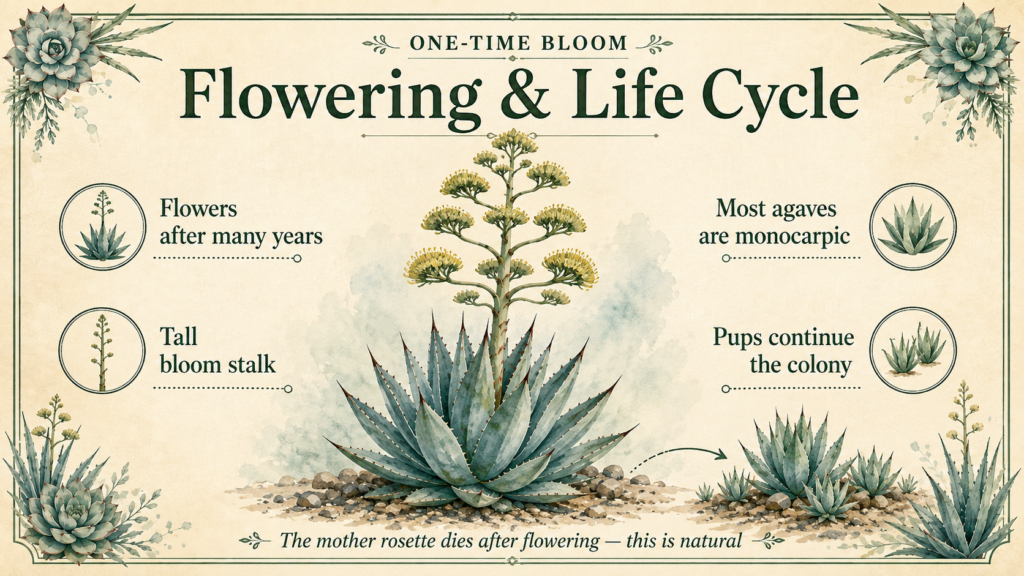
Many agaves are monocarpic—the rosette flowers once after many years (often 10–30 years, not the mythical 100), sends up a dramatic flower stalk that can reach 3–10 metres tall, then gradually dies. This is natural and not a sign of poor care.
The good news: most species produce pups before or during flowering, so the colony continues. When you notice a flower stalk emerging (a thick asparagus-like shoot from the centre), enjoy the spectacle—it’s a once-in-a-lifetime event for that rosette. After flowering completes, remove the dead mother plant and let the pups fill the space.
Common Problems & Solutions
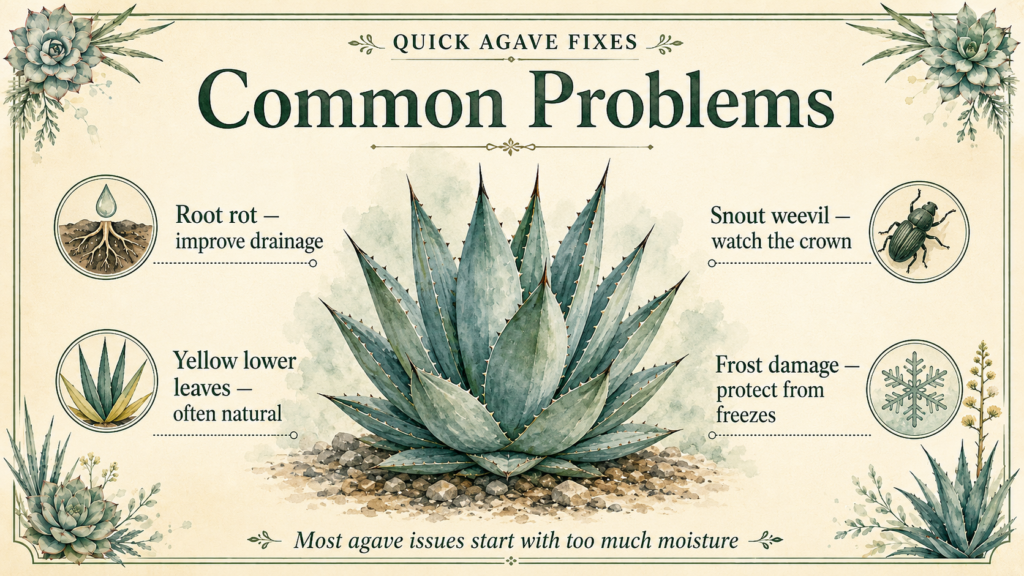
Agaves are generally pest- and disease-resistant, but a few issues appear regularly:
- Root rot — The most common killer. Caused by overwatering or poor drainage. Prevention is easier than cure: use gritty soil and water sparingly.
- Agave snout weevil — Adults bore into the base; larvae eat the interior. Signs include wilting or leaning despite good watering. Apply systemic insecticide preventatively in affected regions.
- Yellowing lower leaves — Often natural as the plant reabsorbs old leaves. If accompanied by softness, suspect overwatering.
- Frost damage — Leaves become translucent or mushy. Move containers indoors before freezes; for in-ground plants, cover with fleece.
Frequently Asked Questions
Is agave a cactus or succulent?
Agave is a succulent, not a cactus. While both are drought-tolerant, cacti belong to the Cactaceae family and typically have areoles (specialised structures that produce spines). Agaves belong to the Asparagaceae family and store water in their thick, fleshy leaves rather than stems.
Can agave grow indoors?
Yes, but only with very bright, direct light—a south-facing window at minimum. Smaller species like Agave victoriae-reginae and Agave parryi truncata adapt best to indoor conditions. Reduce watering significantly indoors and ensure excellent drainage.
Does agave die after flowering?
The individual rosette that flowers will die—this is normal for monocarpic plants. However, most agaves produce offsets (pups) before or during flowering, so the colony survives. Think of it as the parent plant passing the torch to the next generation.
How do I safely handle agave spines?
Always wear thick leather gloves and long sleeves when working with agave. The terminal spines can penetrate skin deeply, and some species have irritating sap. For plants near walkways, you can clip the sharp tips with pruning shears without harming the plant. Consider spineless varieties like Agave attenuata for high-traffic areas.