
Leaves are not green by accident. Here is the simple science behind chlorophyll, sunlight, photosynthesis, and the surprising colors hiding inside plants.
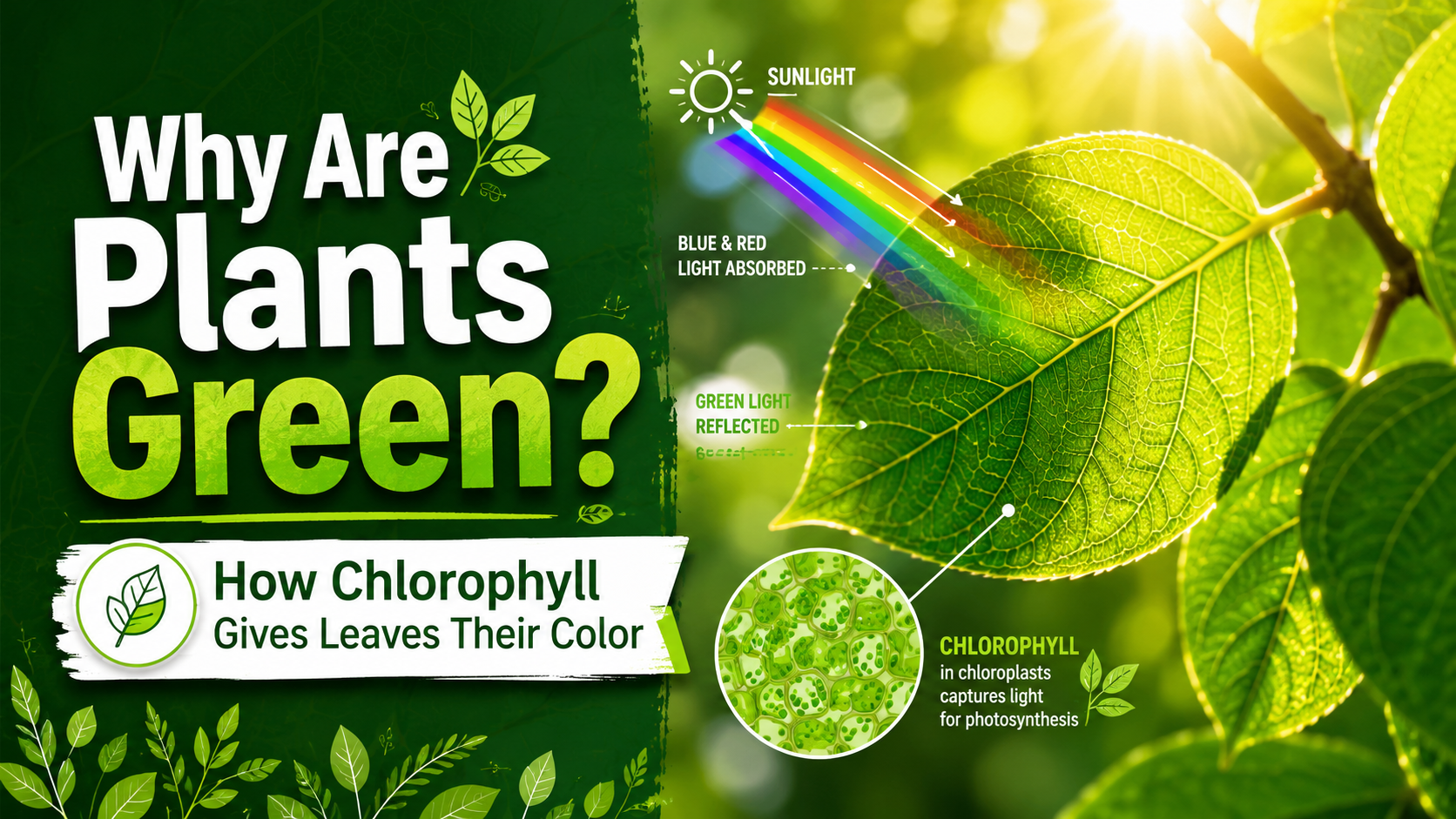
Plants look green because chlorophyll absorbs much of the red and blue light used for photosynthesis while reflecting or transmitting more green wavelengths. That leftover green light is what our eyes see.
Chlorophyll is what makes most green plants look green
Chlorophyll is a family of green pigments found inside tiny plant-cell structures called chloroplasts. Its main job is to capture light energy. Plants use that energy to turn water and carbon dioxide into sugars that help them grow.
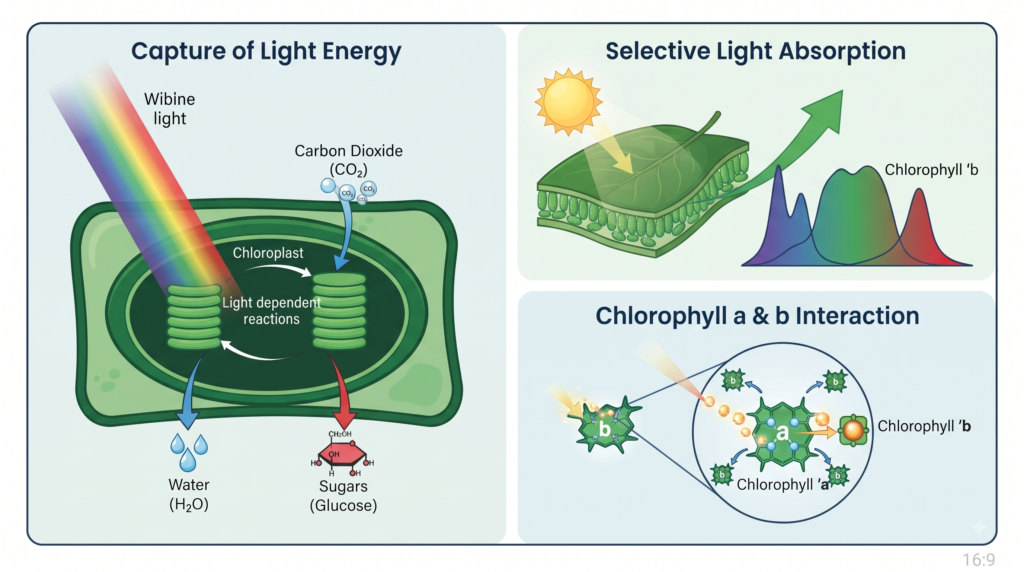
A pigment looks a certain color because it interacts with light selectively. Chlorophyll is especially good at taking in blue and red parts of visible light. It does not absorb green light as strongly, so more green light is reflected from the leaf or passes through it.
Chlorophyll a
The primary photosynthetic pigment. It sits at the heart of the light-capturing process and absorbs strongly in blue-violet and red light.
Chlorophyll b
A helper pigment found in plants and green algae. It captures a slightly different range of light and passes that energy along to chlorophyll a.
Why green light is the color that reaches your eyes
White sunlight is a blend of visible colors. When sunlight hits a leaf, chlorophyll absorbs a large share of blue and red wavelengths. Green wavelengths are less strongly absorbed, so they bounce back toward your eyes or travel through the leaf. That is why a green plant looks green in daylight.
Where chlorophyll lives
Chlorophyll is packed into chloroplasts, which are concentrated in the cells of leaves and green stems. A healthy leaf contains so many chloroplasts that their color usually overwhelms other pigments present in the tissue.
How photosynthesis connects light to plant growth
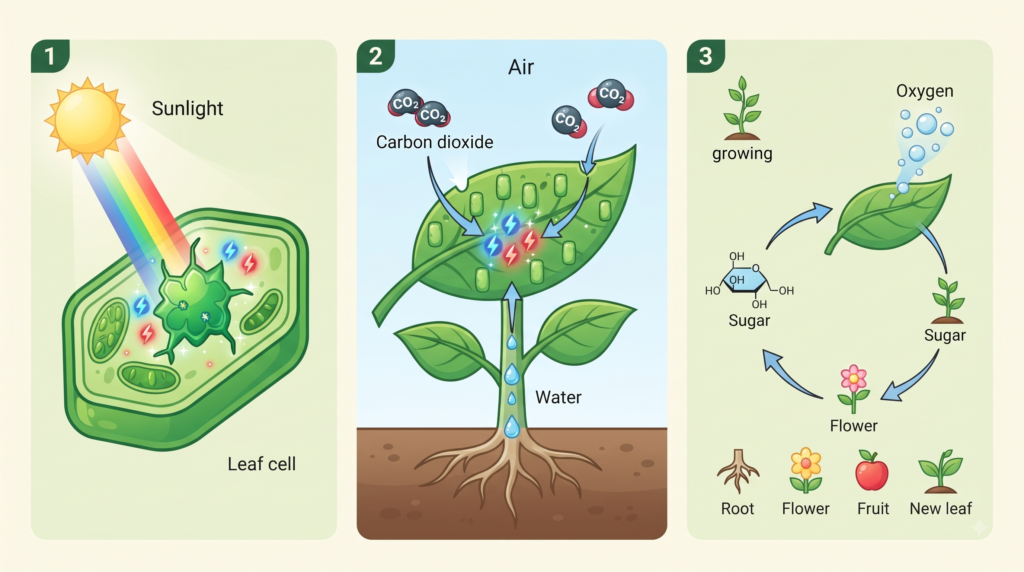
Photosynthesis is the process that lets plants store energy from light in sugars. Chlorophyll does not make plants green just for appearance—it helps power the chemistry that supports leaves, roots, flowers, fruit, and new growth.
Photosynthesis in three simple steps
- Chlorophyll absorbs useful light energy, especially from red and blue wavelengths.
- The plant combines that energy with water from roots and carbon dioxide entering through tiny leaf pores.
- The result is sugar for growth and oxygen released as a by-product. Plants also use some sugars immediately for their own energy.
Why aren’t all plants green?
Green is common, not compulsory. Plants contain more pigments than chlorophyll, and different combinations can change the color you notice. Some plants also have less chlorophyll in particular leaves or leaf sections.
Red and purple leaves
Anthocyanins can make leaves look red, purple, or deep burgundy. Young leaves may use these pigments as temporary protection while they develop.
Yellow and orange leaves
Carotenoids are yellow, orange, and gold pigments. They are present in many green leaves but are often hidden by the stronger green of chlorophyll.
Variegated leaves
Cream, white, or yellow patches usually contain fewer chloroplasts or less chlorophyll. These areas contribute less to photosynthesis than the green parts.
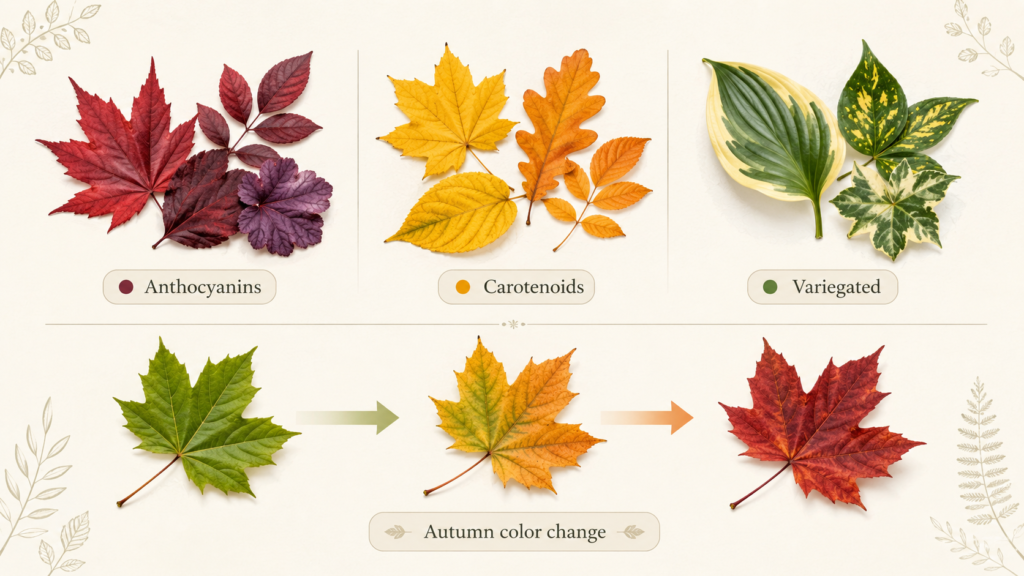
Why leaves turn yellow, orange, or red in autumn
In many deciduous trees, shorter days and cooler conditions signal that winter is coming. The tree gradually breaks down chlorophyll and moves some of its components elsewhere. As green fades, carotenoids become visible. In some species, anthocyanins are produced, creating red or purple fall color.
Frequently asked questions
Why are plants green in colour?
Plants are usually green because chlorophyll absorbs red and blue light more strongly than green light. The green wavelengths that are reflected or transmitted are the ones our eyes detect.
Can plants photosynthesize if their leaves are red or purple?
Yes. Most red or purple leaves still contain chlorophyll, often beneath or alongside anthocyanin pigments. They can photosynthesize, although the pigment balance and light conditions can affect how efficiently they do so.
Do plants use any green light at all?
Yes. Chlorophyll can absorb some green light, and green light can penetrate farther into a thick leaf or plant canopy than red and blue light. The key point is that chlorophyll absorbs it less strongly overall.
Why are new leaves sometimes red?
New leaves may contain anthocyanins that make them look red, bronze, or purple. These pigments can help screen intense light and may offer protection while delicate young tissue expands. As leaves mature, green chlorophyll often becomes more visible.