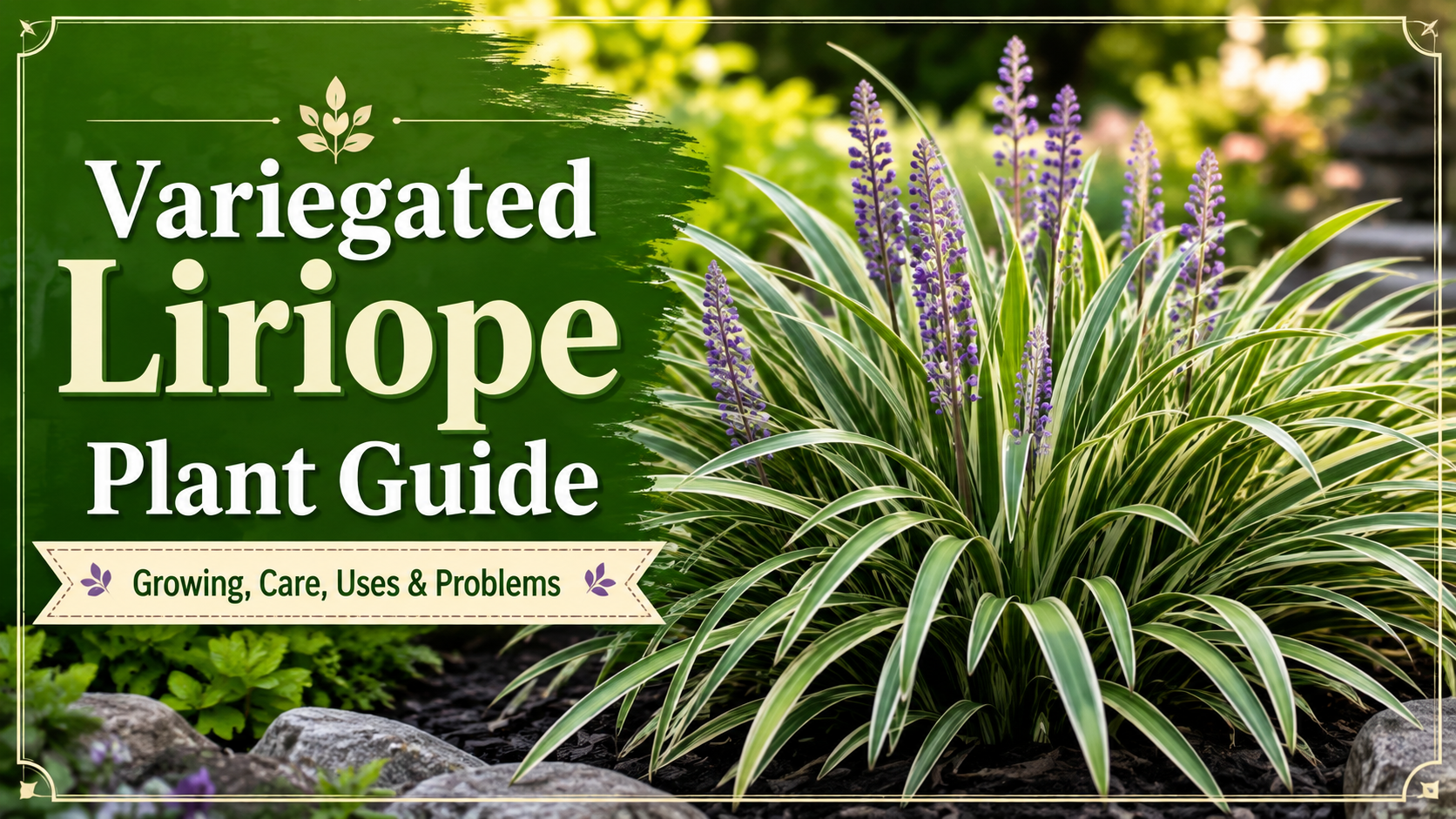

Is variegated liriope right for your garden? Learn the difference between clumping and spreading types, plus practical planting, pruning, watering, and troubleshooting advice for tidy borders.
Variegated liriope can be an excellent low-maintenance edging or shade-border plant when you choose a clumping Liriope muscari selection. It handles part shade, ordinary well-drained soil, and moderate drought once established. The key caution: do not assume every liriope behaves the same—spreading Liriope spicata can travel beyond the bed in favorable conditions.
What is variegated liriope—and does it spread?
Variegated liriope is an evergreen-to-semievergreen, grass-like perennial grown for arching leaves striped in green and cream. Most garden-center plants sold as variegated liriope are selections of Liriope muscari, often called lilyturf. They form dense, fountain-shaped clumps and may send up short spikes of lavender flowers in late summer.
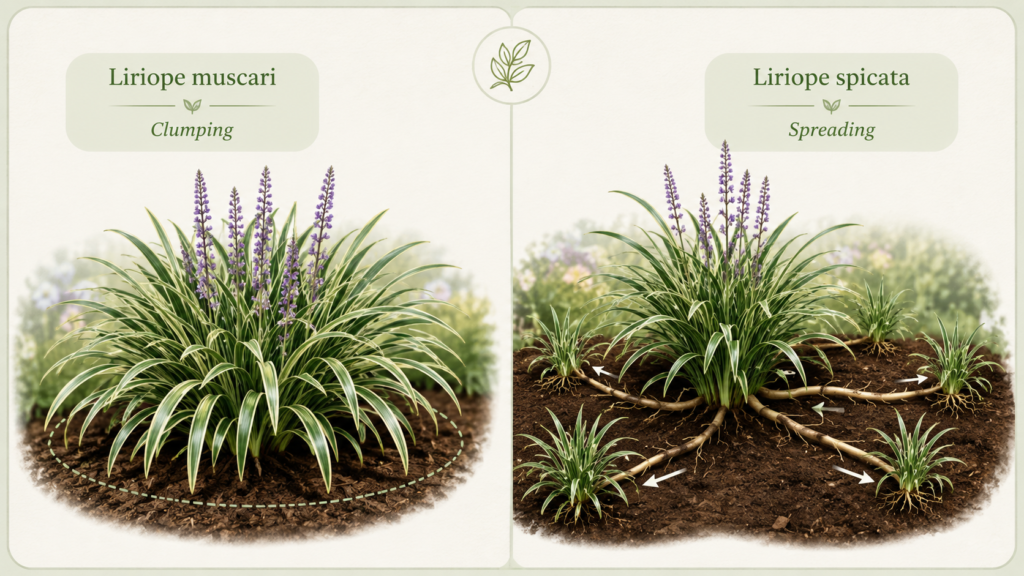
For landscape planning, the botanical name matters more than the common name. A clumping L. muscari gradually widens but usually stays where you plant it. Liriope spicata, commonly called creeping lilyturf, spreads by underground runners and can fill open ground much faster. Read the plant tag before planting near lawns, natural areas, or small mixed borders.
Usually the tidy choice: Liriope muscari
Clumping habit. Typically 12–18 inches tall and 12–18 inches wide. Best for formal edging, foundation beds, and places where you want a defined plant shape.
Spreading choice: Liriope spicata
Runner-forming habit. It can work on difficult slopes or broad ground-cover areas, but may need edging and monitoring. Check local invasive-plant guidance before using it.
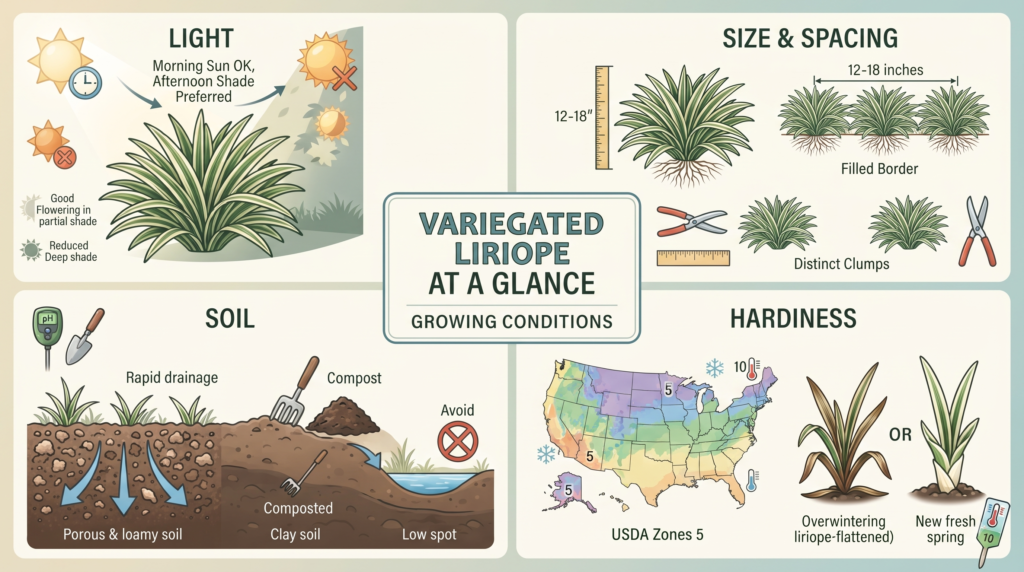
Variegated liriope growing conditions at a glance
Variegated selections are forgiving once rooted in, but they look their best with a little protection from intense afternoon heat and soil that drains after rain. In colder parts of its range, foliage may brown or flatten over winter; new leaves usually refresh the clump in spring.
Quick care checklist
Light
Part shade to shade is ideal in warm regions. Morning sun is usually fine; deep shade may reduce flowering, while hot afternoon sun can fade or scorch variegated leaves.
Soil
Average garden soil with reliable drainage. Amend heavy clay with compost only as needed, and avoid low spots that stay wet after rain.
Size & spacing
Most clumping varieties reach about 12–18 inches tall and wide. Space plants 12–18 inches apart for a filled-in border; use wider spacing for distinct individual clumps.
Hardiness
Many Liriope muscari selections are commonly grown in USDA Zones 5–10, though winter appearance and cultivar performance vary. Check your specific plant label.
How to plant, water, and feed liriope
Plant in spring or early fall when temperatures are moderate and roots have time to settle in. Liriope does not need rich soil or frequent feeding; healthy establishment comes from proper planting depth, even moisture during the first season, and enough room for air to move around the clumps.
A simple planting routine
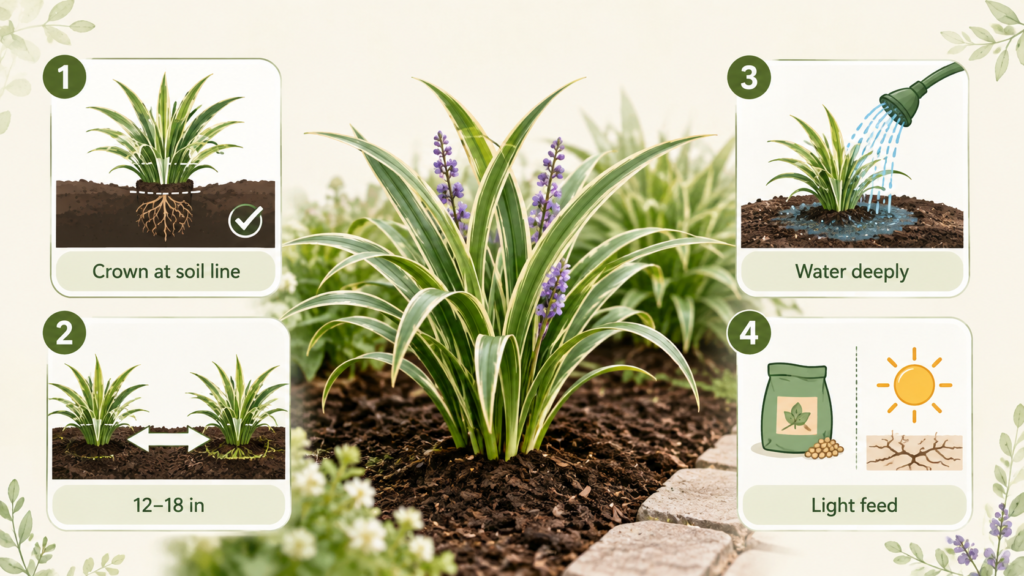
- Set the crown at the same depth it grew in the nursery pot. Planting too deeply keeps the crown damp and can encourage rot.
- Space clumping plants 12–18 inches apart. Measure from the center of one plant to the center of the next for a consistent edge.
- Water deeply after planting, then water when the top few inches of soil begin to dry. Newly planted liriope needs regular moisture for its first growing season.
- After establishment, water during prolonged dry spells. A light spring application of a balanced, slow-release fertilizer is usually enough if soil is poor; avoid heavy feeding.
When and how to cut back variegated liriope
A yearly cleanup keeps variegated liriope looking intentional instead of shaggy. In regions with winter damage, cut old leaves back in late winter or very early spring before fresh growth begins. In mild climates, you may only need to comb out brown leaves and trim damaged tips.
Before-and-after pruning checklist
- Wait until the risk of severe cold is passing and new shoots have not yet stretched above the old leaves.
- Use clean shears and cut foliage back to about 3–4 inches above the soil, taking care not to cut emerging new growth.
- Remove the cut leaves from the bed, especially if you saw leaf spots or crown rot the previous season.
- Divide crowded clumps in spring by lifting the plant, separating rooted sections, and replanting promptly at the original depth.
Where variegated liriope works best in a landscape
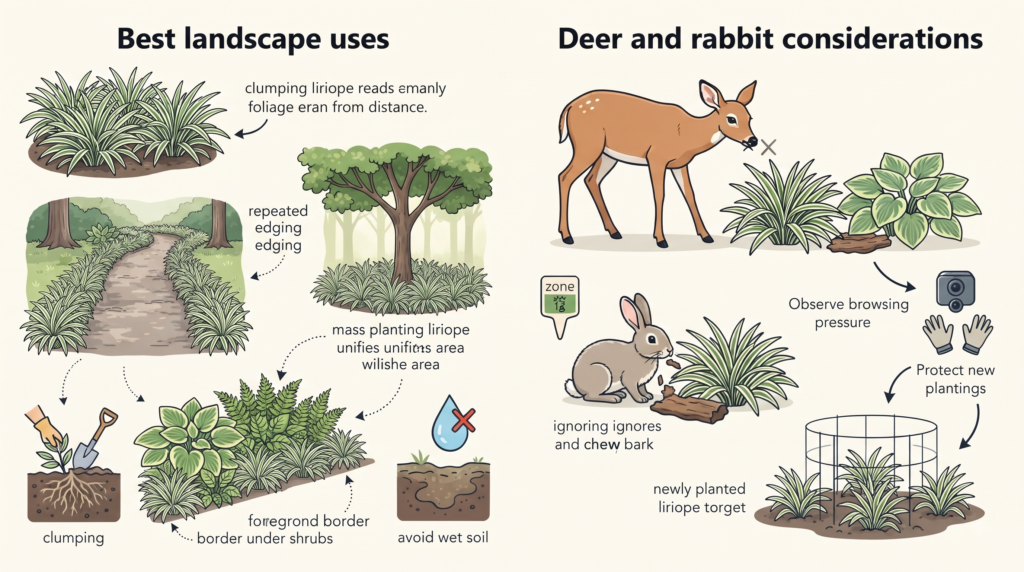
The striped foliage reads clearly from a distance, making variegated liriope useful for brightening dim planting beds. It is especially effective along shaded paths, beneath open-canopy trees, in foundation beds, and as a repeated edging plant. Keep it away from locations with constantly wet soil or from natural areas where a spreading type could escape maintenance.
Best landscape uses
Try clumping variegated liriope as a border under shrubs, around tree bases with filtered light, beside walkways, or in repeated groups to unify a mixed shade planting.
Deer and rabbit considerations
Liriope is often described as deer resistant, but no ornamental plant is deer proof when food is scarce. Observe your local browsing pressure and protect new plantings if deer or rabbits are active.
Frequently asked questions
Does variegated liriope stay green in winter?
In mild climates, it often stays mostly evergreen. In colder areas, leaves may brown, flatten, or look ragged by late winter. That is usually a cosmetic issue, not a sign the roots have failed; trim old leaves before spring growth begins.
Can variegated liriope grow in full sun?
It can tolerate sun in cooler climates or where soil remains evenly moist, but variegated leaves are more likely to scorch in hot afternoon sun. Morning sun with afternoon shade is usually a safer choice in warm regions.
How far apart should I plant variegated liriope?
For a solid-looking border, space clumping varieties 12–18 inches apart. Use the wider end of that range in moist or humid locations so foliage has room to dry and individual clumps can keep their shape.
Is variegated liriope the same as variegated spider plant or rubber plant?
No. They share the word “variegated,” which simply describes leaves with more than one color. Variegated liriope is an outdoor landscape perennial; variegated spider plant and variegated rubber plant are typically grown as houseplants and need different care.