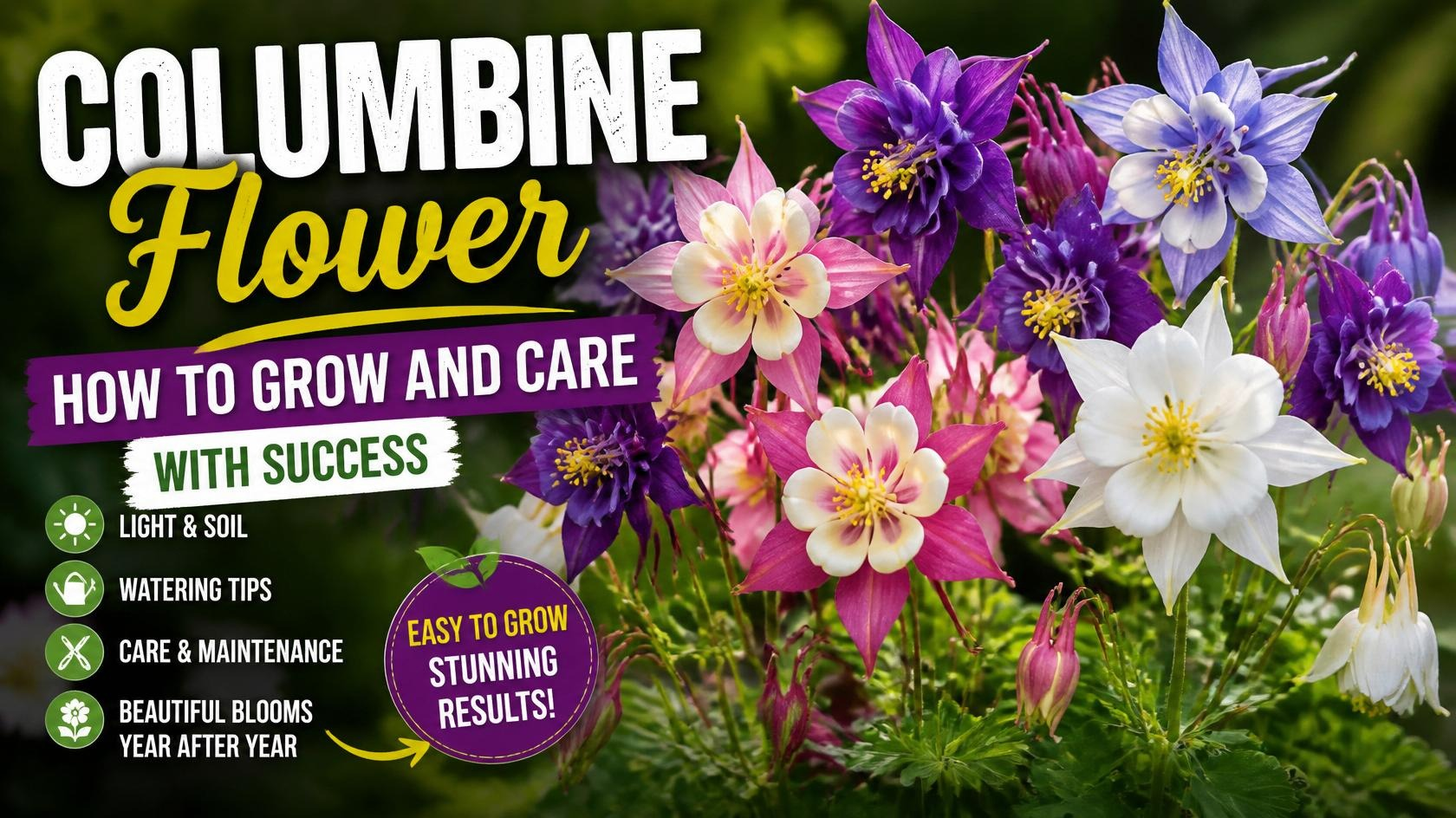

The enchanting, low-maintenance perennial that fills your garden with hummingbirds, butterflies, and compliments from the neighbors.
20+ years growing perennials in Zones 4–8 · Certified through the Extension Master Gardener Program
Columbine At A Glance
| Care Element | Requirement |
| USDA Zones | Zones 3–9 (Extremely cold-hardy) |
| Sunlight | Part shade preferred (Full sun in the North; morning sun/afternoon shade in the South) |
| Soil | Loose, rich, and sharply well-draining |
| Water | Regular when young; highly drought-tolerant once established |
| Blooms | Spring to early summer |
| Wildlife | Magnet for hummingbirds, bees, and butterflies |
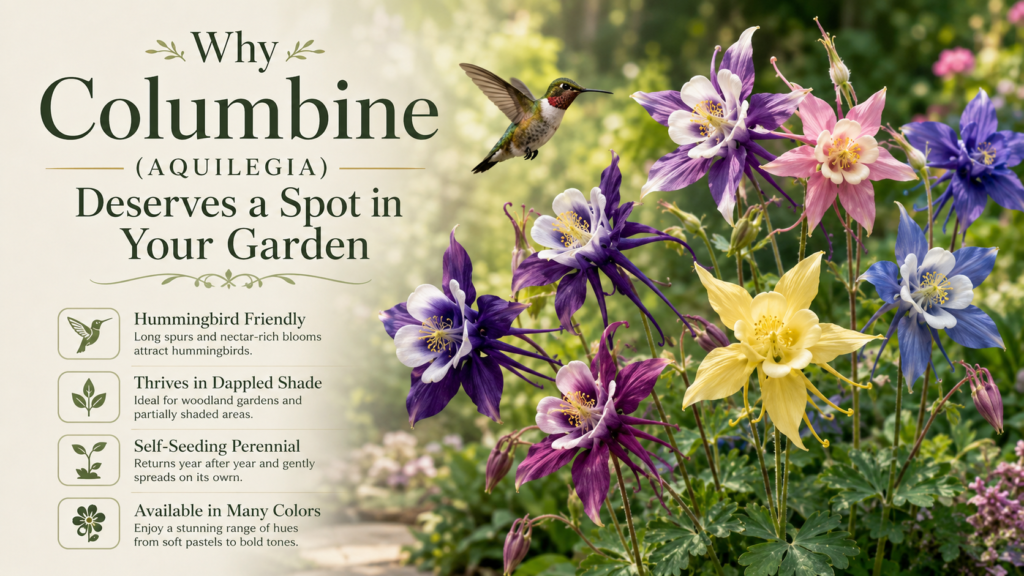
Why Columbine Deserves a Spot in Your Garden
If you’ve ever dreamed of a cottage garden that practically tends itself — one where hummingbirds hover at eye level and neighbors slow their morning walk to admire the display — Columbine (Aquilegia) is your answer. These graceful perennials produce intricate, spurred blooms in nearly every color imaginable, from deep violet to buttery yellow and bicolor combinations that look hand-painted.
Better yet, Columbine thrives in the dappled shade beneath trees where many showier plants refuse to perform. They naturalize effortlessly, self-seeding to create drifts that evolve year after year — meaning your initial investment multiplies without extra work on your part.
Where Columbine Grows Best
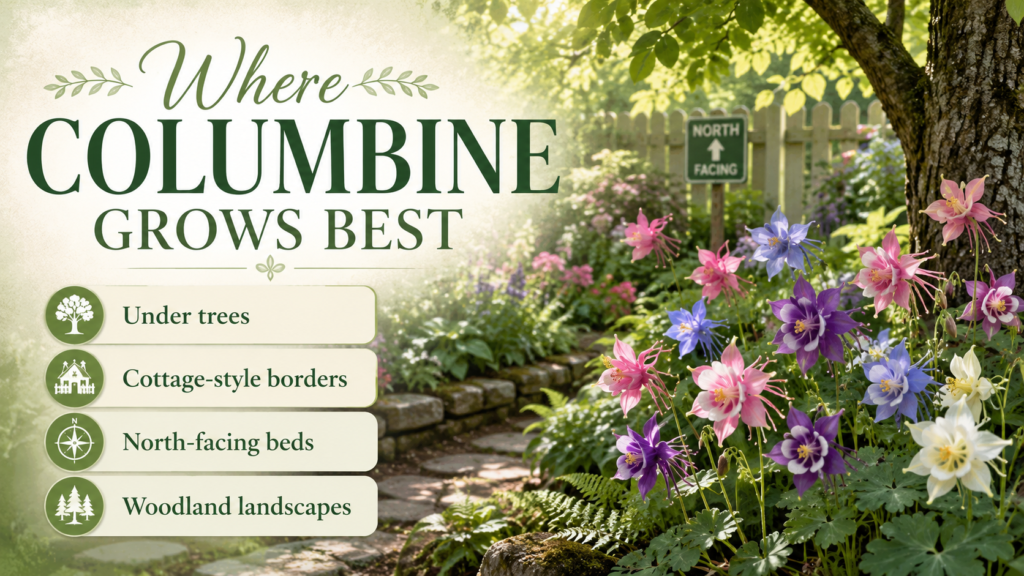
Columbine naturally prefers dappled shade, making it perfect for:
- Under trees
- Cottage-style garden borders
- North-facing garden beds
- Woodland-inspired landscapes
- Perfect for natural woodland-style gardens and shaded, low-light spaces.
In hotter regions, avoid harsh afternoon sun—it can shorten blooming time and stress the plant.
Popular Columbine Varieties
| Variety | Color | Height | Key Features |
|---|---|---|---|
| ‘Double Flowered Mix’ | Mix of reds, purples, pinks, white | 24–30 inches | Fully double petals, long-lasting blooms, heirloom charm |
| ‘McKana’s Giant’ | Bicolors: blue-white, red-yellow, pink-white | 28–36 inches | Extra-large flowers, dramatic spurs, excellent cut flower |
| ‘Nora Barlow’ | Rose-pink with cream center | 28–32 inches | Pompom-like double flowers, vintage appeal, thornless spurs |
| ‘Barlow Project Purple’ | Deep purple with white double petals | 24–28 inches | Ultra-double blooms, striking bicolor contrast |
| ‘Dwarf Fairyland Mix’ | Pastels: cream, pink, blue, yellow | 12–15 inches | Compact form, perfect for borders, early bloom time |
How To Plant Columbine: A Simple Blueprint
Sunlight
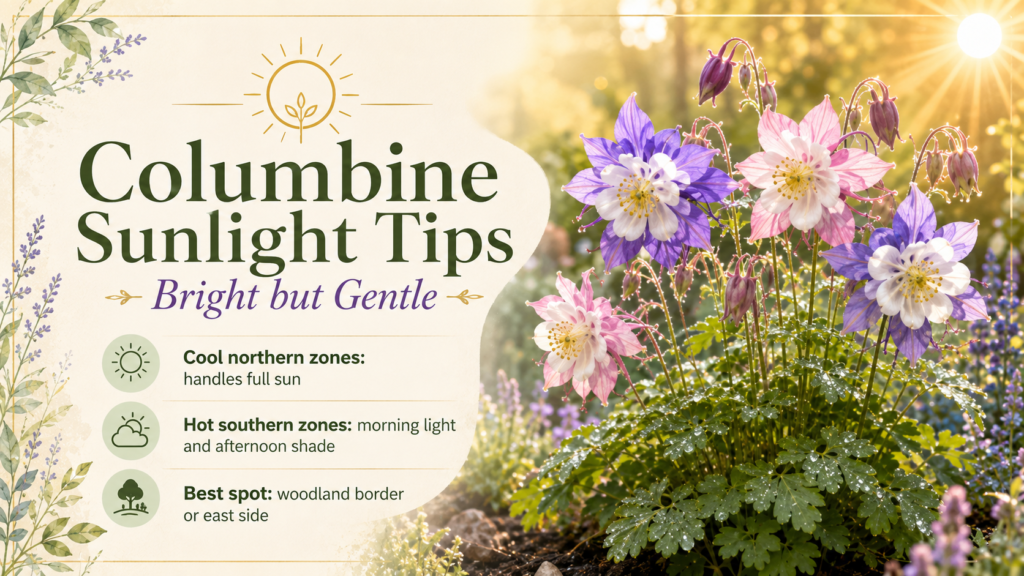
- Morning sun and afternoon shade are ideal.
- Full sun works in cool zones if kept moist.
- Keep away from hot, south-facing walls.
Soil
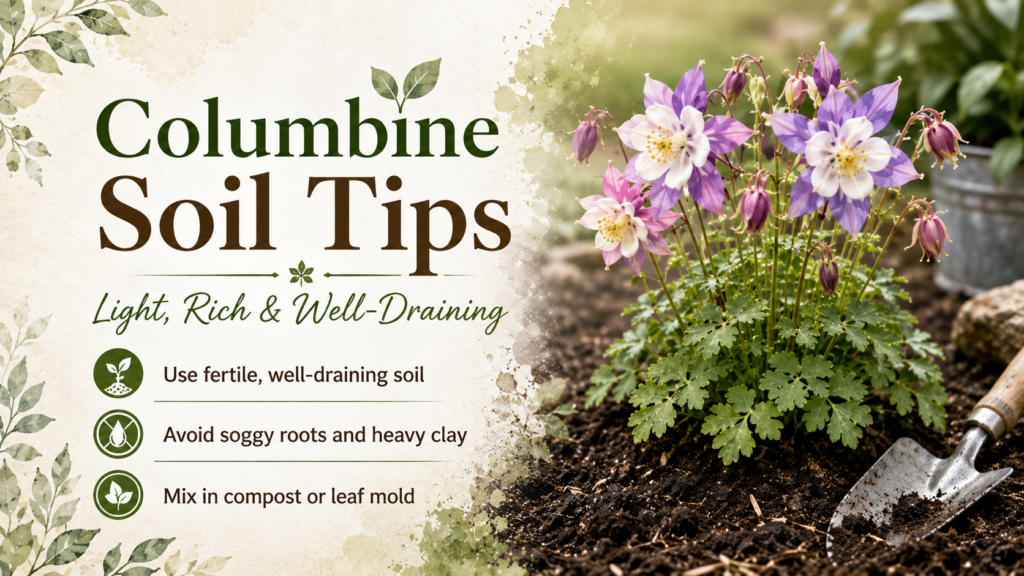
Mix 2–3 inches of compost into the soil before planting. While columbine tolerates a range of pH levels, it requires excellent drainage; raise the bed by 6 inches or add perlite if your soil collects puddles.
Water & Care
- Space plants 12–18 inches apart.
- Water deeply right after planting.
- Add 2 inches of mulch; skip fertilizer.
Ongoing Care: Keep It Simple
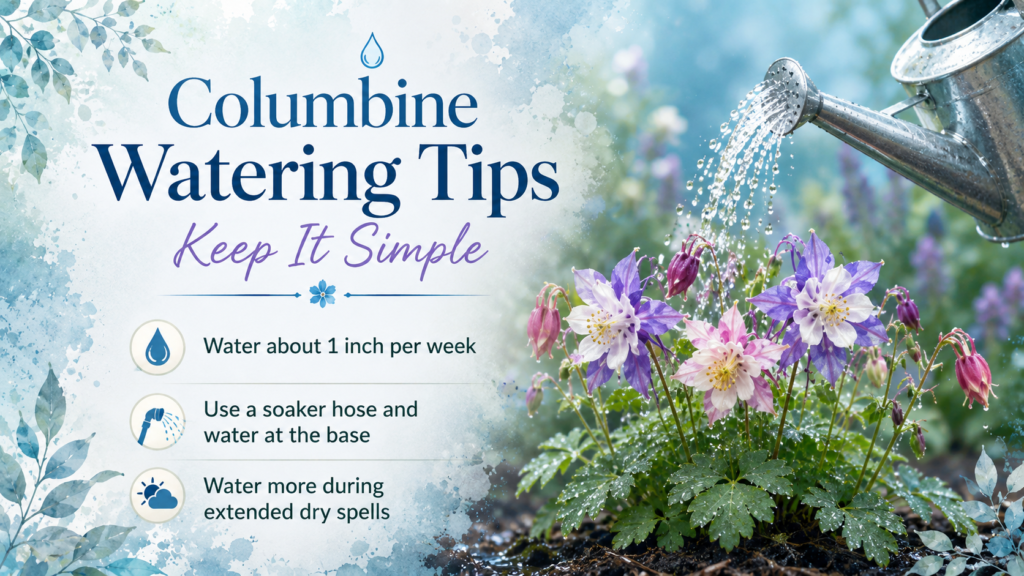
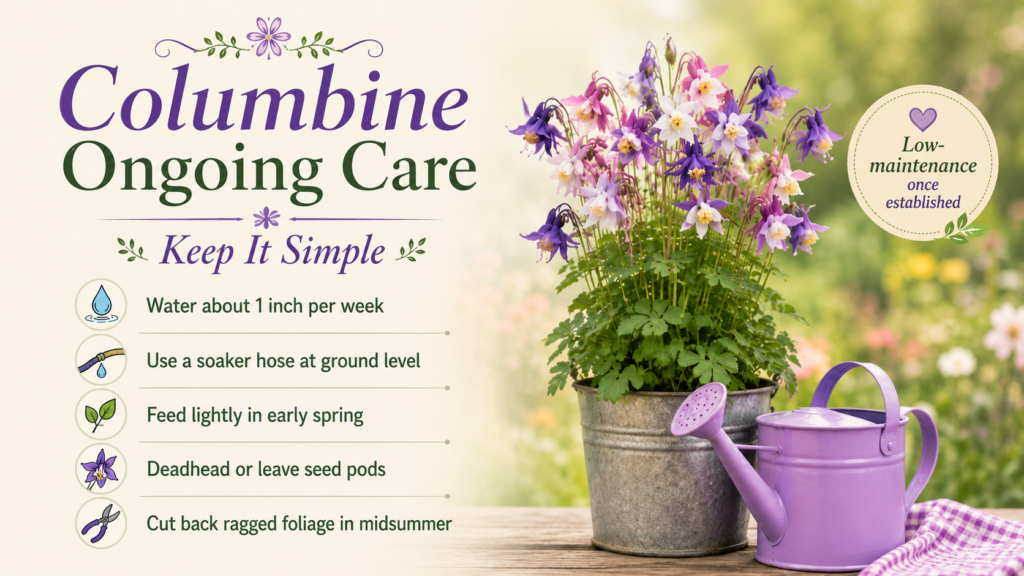
Water about one inch per week during the growing season. A soaker hose at ground level is ideal — overhead watering encourages powdery mildew on the leaves. Once established (after their first full season), Columbine is surprisingly drought-tolerant.
Feed lightly in early spring with a balanced, slow-release granular fertilizer or a top-dressing of compost. Avoid high-nitrogen feeds that push floppy foliage at the expense of blooms.
After the bloom flush fades in late spring, you have a choice: deadhead spent flowers to keep the plant tidy, or leave a few seed pods to mature if you want volunteer seedlings next year. Cut the entire plant back to the basal rosette in midsummer if foliage becomes ragged — fresh leaves will emerge within weeks.
Troubleshooting: Pests & Problems
Leaf miners are the most common nuisance. You’ll notice white, squiggly trails on the leaves in late spring. The good news: they rarely kill the plant. Simply remove and discard affected leaves — do not compost them. For heavy infestations, cut the entire plant to the ground; it will regrow clean.
Powdery mildew appears as a dusty white coating, usually in humid weather or when plants are crowded. Prevention is key: space plants for air circulation, water at the base, and avoid wetting foliage in the evening.
Aphids occasionally cluster on new growth. A strong spray of water from the hose knocks them off, or use insecticidal soap if populations explode. Avoid broad-spectrum pesticides — you want to protect the pollinators that make this plant so magical.
How to Plant Columbine Successfully
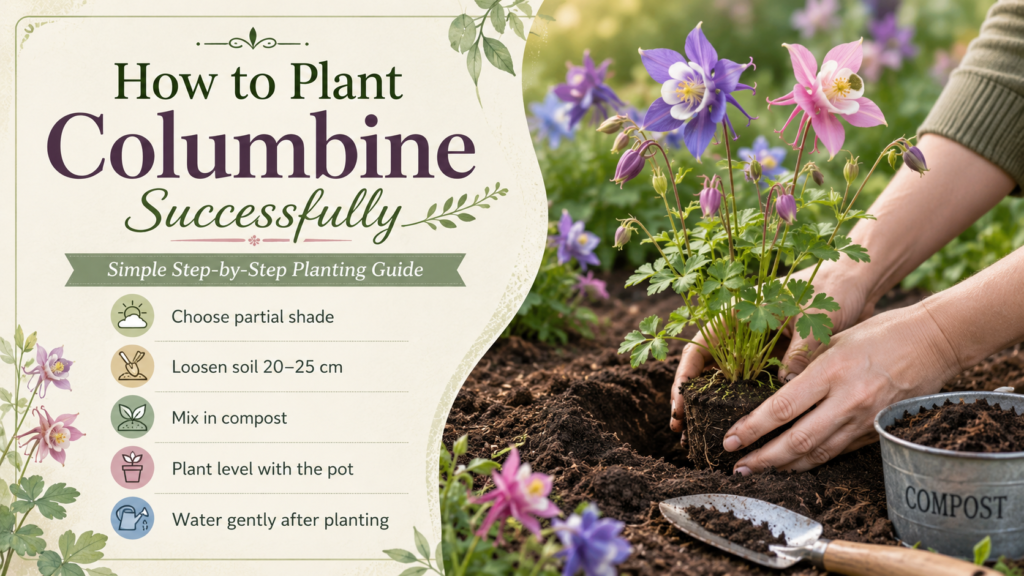
To avoid the most common beginner mistake (poor drainage), follow this simple planting method
Step-by-Step:
- Choose a partially shaded location
- Loosen soil 20–25 cm deep
- Mix in compost or organic matter
- Plant at the same depth as the nursery pot
- Water gently after planting
Propagation: Ensuring Long-Lasting Success
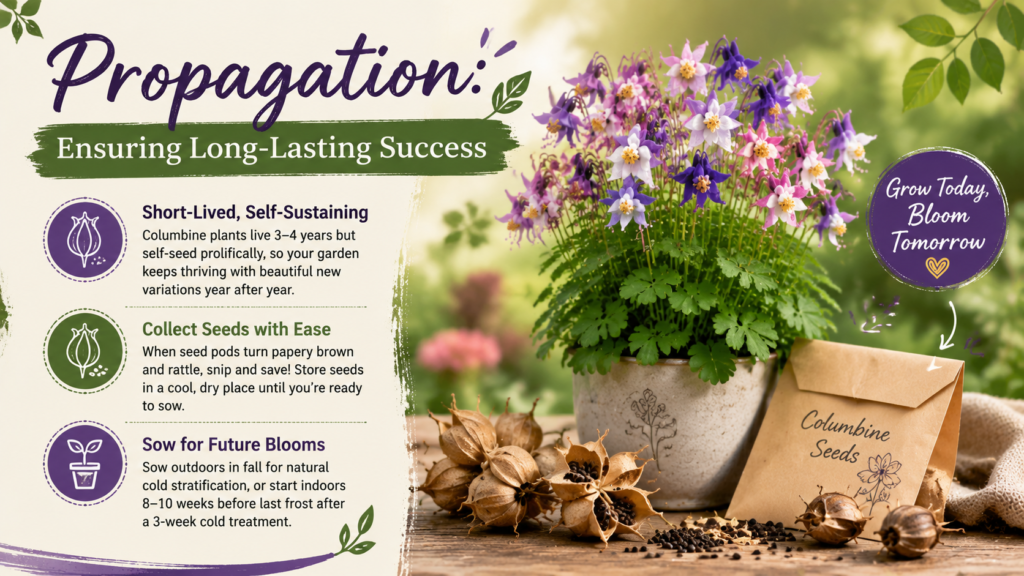
Here’s something most guides gloss over: individual Columbine plants are short-lived, typically 3–4 years. But don’t panic — this is by design. They self-seed prolifically, so your colony actually grows over time. The “mother” plant fades, but her offspring carry on in slightly different color variations, creating a naturalized look that money can’t buy.
To collect seeds intentionally, wait until seed pods turn papery brown and rattle when shaken (usually 3–4 weeks after blooming). Snip the pods, tip them into an envelope, and store in a cool, dry place. Sow directly outdoors in fall — they need a cold stratification period to germinate. Or start indoors 8–10 weeks before last frost, refrigerating seeds in a damp paper towel for 3 weeks first.
Frequently Asked Questions
Why did my Columbine disappear after 3 years?
This is completely normal! Columbine plants are naturally short-lived perennials (3–4 years). However, they self-seed generously. Look around the base of the original plant — you’ll likely find seedlings that will bloom the following year. Let them grow and your colony will actually expand over time.
Can I grow Columbine in full shade?
Columbine tolerates light shade beautifully but struggles in deep, full shade (less than 2 hours of direct light). Aim for morning sun with afternoon shade, or bright dappled light throughout the day. In too much shade, you’ll get leggy growth and fewer blooms
Are Columbine flowers deer resistant?
Yes! Columbine is generally deer resistant and rabbit resistant. The foliage contains compounds that most browsing animals find unpalatable. While no plant is completely deer-proof when animals are desperate, Columbine is one of the safer bets for gardens with wildlife pressure.
What’s the best time to plant Columbine seedlings?
Spring (after last frost) or early fall are ideal. Fall planting gives roots time to establish before their first growing season. If planting in spring, harden off seedlings gradually and wait until soil is workable. Avoid planting in the heat of summer — transplants stress easily
Do Columbine flowers attract other pollinators besides hummingbirds?
Absolutely! Butterflies, bees, and sphinx moths all visit Columbine blooms. The tubular spurs are specifically adapted for pollinators — their shape and nectar reward make them irresistible. You’ll often see a rotation of visitors throughout the day, especially in early morning and late afternoon.