
A homeowner’s field guide to spotting bagworms, judging the risk to your trees and shrubs, and choosing effective treatment without unnecessary spraying.
At a glance
Bagworms are caterpillars that live in small, portable cases hanging from branches. A few cases can usually be hand-picked. Larger numbers can strip evergreen foliage and weaken shrubs, so inspect early and act while caterpillars are young.
How to identify bagworms
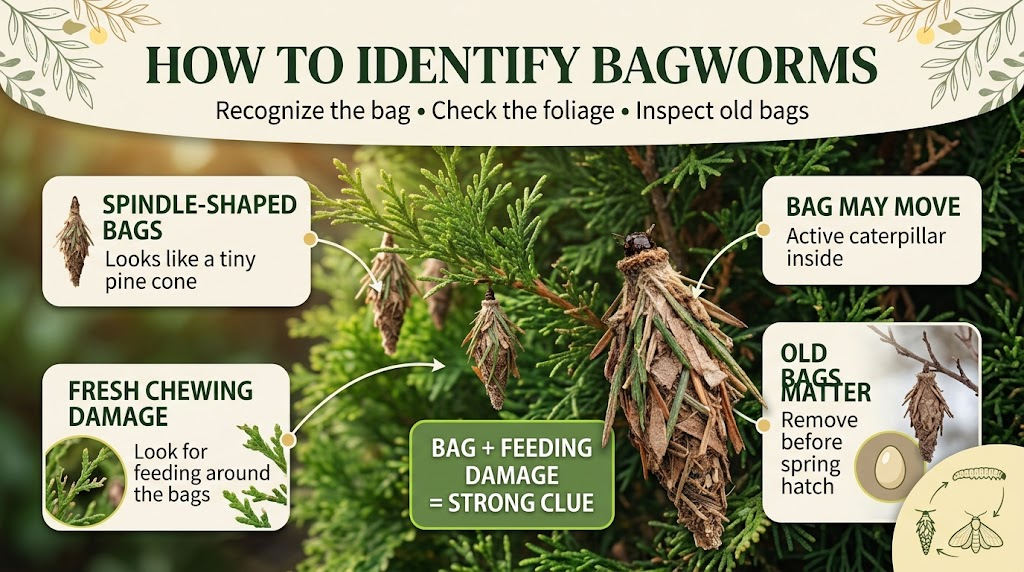
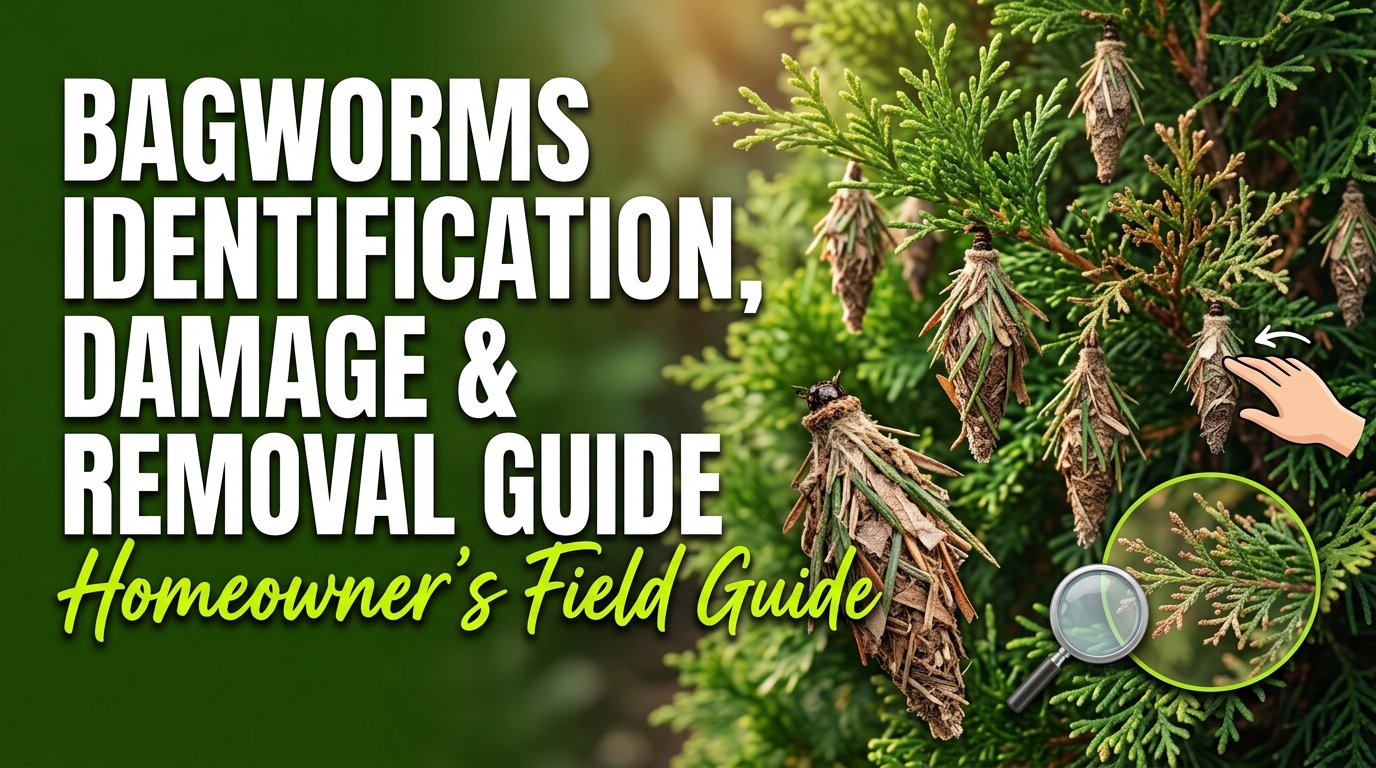
Bagworms are the larval stage of a moth. Instead of moving openly across leaves, each caterpillar carries a tapered bag made of silk and pieces of the host plant. The bag hangs from foliage when the insect rests and becomes larger as the caterpillar feeds and grows.
What to look for on plants
- Small, spindle-shaped bags dangling from twigs, needles, or leaf stems; they may look like tiny pine cones or clumps of dried foliage.
- Fresh chewing damage, including missing needles, ragged leaves, or thin patches of foliage concentrated around the bags.
- Bags that move slightly when touched or when the caterpillar extends from the top to feed.
Mature bags are often about 1 to 2 inches long, though size varies by species and season. In winter, old bags can remain attached to branches and may hold eggs, so they are still important to remove before spring hatch.
What bagworm damage looks like
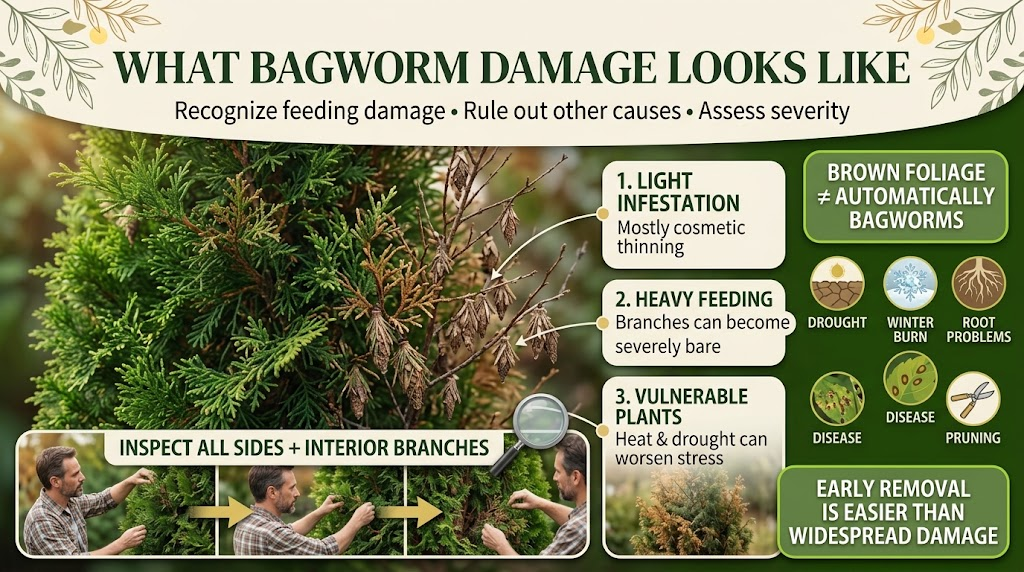
Bagworms feed on a broad range of trees and shrubs. Damage is often most noticeable on evergreens because chewed needles do not grow back from bare sections. Arborvitae, juniper, cedar, spruce, pine, and cypress are common hosts, but bagworms may also feed on deciduous trees and ornamental shrubs.
When damage becomes serious
A light infestation may only cause cosmetic thinning. Heavy feeding can defoliate branches, reduce a plant’s ability to recover from heat or drought, and kill small or stressed evergreens. Mature, healthy deciduous trees often leaf out again, but repeated defoliation still deserves attention.
Inspect several sides of the plant, including upper and interior branches. Bagworms may be clustered in one area, and early removal is easier than trying to correct widespread damage later in the season.
Lifecycle, habitat, and timing
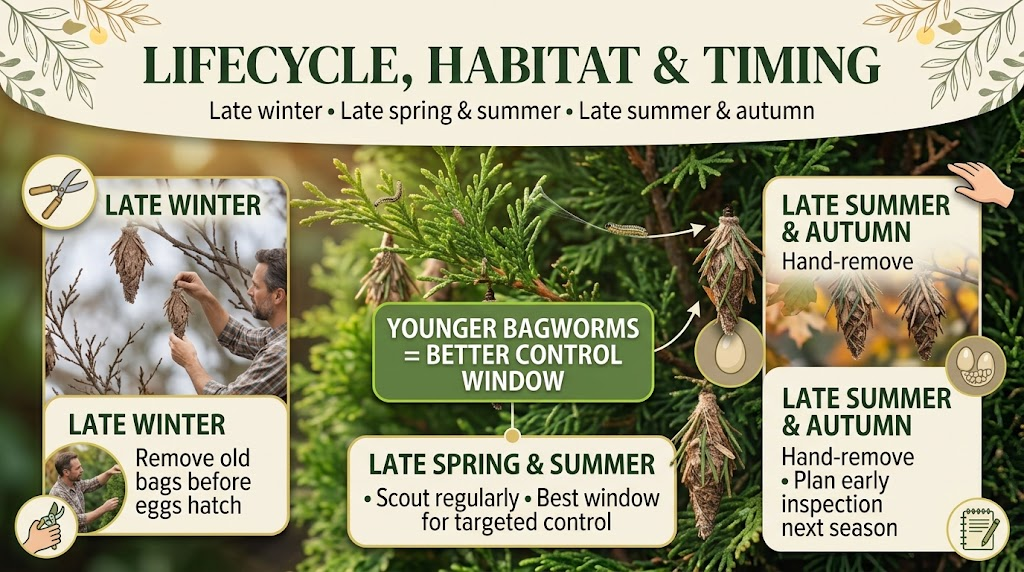
Bagworm timing varies by climate and species, but many populations hatch in late spring or early summer. Young caterpillars can disperse on silken threads, then begin building bags and feeding. As they grow, they become harder to control. Females of some species remain inside the bag as adults, where they lay eggs for the next generation.
| Late winter Search evergreen branches for old bags and hand-pick them before eggs hatch. Dispose of the bags in sealed household waste. | Late spring & summer Scout regularly for newly formed, small bags. This is usually the most useful window for targeted biological control options. | Late summer & autumn Larger bags are easier to see but less responsive to many treatments. Focus on hand removal and planning next season’s early inspection. |
Common lookalikes and false alarms
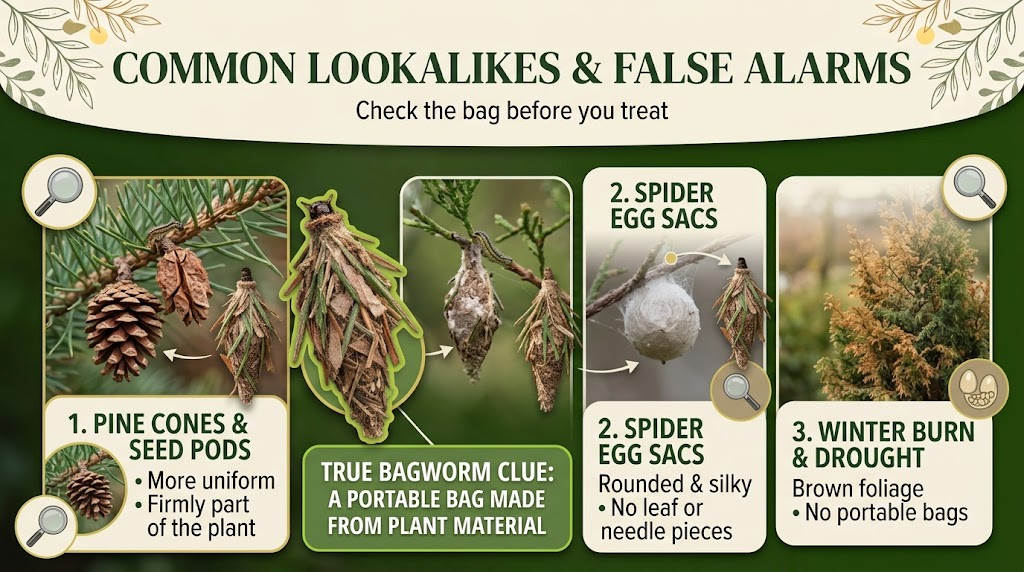
Bagworms are often confused with natural plant structures or other insects. Before treating, check whether the object is a true bag attached with silk and made from the same material as the surrounding plant.
- Pine cones and seed pods can resemble mature bags, but they are usually more uniform in shape and are firmly part of the plant.
- Spider egg sacs may hang from branches but are usually rounded, silky, and do not contain bits of leaves or needles.
- Winter burn and drought injury turn foliage brown without leaving portable bags or fresh feeding damage.
Least-disruptive control options
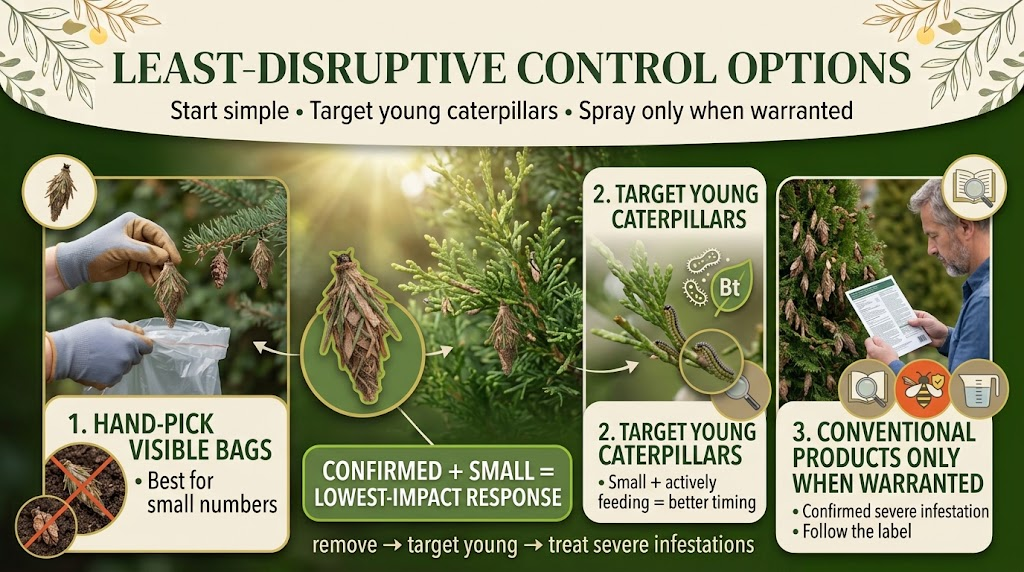
Start with the simplest method that fits the size and timing of the infestation. Control works best when bagworms are confirmed and still small. Avoid broad, routine spraying when only a few bags are present or the problem has not been identified.
1. Hand-pick visible bags
For a small number of bags, hand removal is often the most effective option. Wear gloves, clip or pull off each bag, and place it in sealed household waste. Do not drop bags onto the ground, compost pile, or mulch, where surviving eggs or larvae may remain nearby.
2. Target young caterpillars
When many small bagworms are actively feeding, products containing Bacillus thuringiensis var. kurstaki (Bt) may be an option if the label lists bagworms and your plant. Bt works when young caterpillars eat treated foliage, so complete coverage and proper timing matter.
3. Use conventional products only when warranted
For severe, confirmed infestations, choose only a product specifically labeled for bagworms and the plant being treated. Follow every label direction, avoid applying near open blooms or active pollinators, and never use more product than the label allows.
A note on treatment claims
There is no universal “best” bagworm treatment. Product availability, timing, plant size, weather, and local regulations differ by location. Consult your local cooperative extension service or a licensed arborist for location-specific guidance before treating a large tree.
Prevention and when to call for help
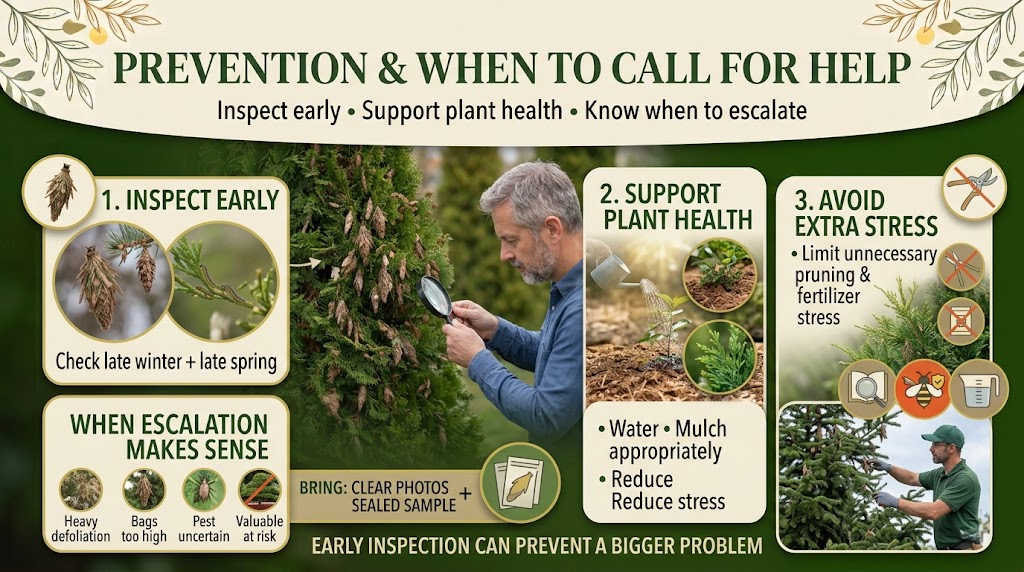
The most reliable prevention is early inspection. Check susceptible evergreens in late winter for old bags, then inspect again in late spring as new caterpillars begin feeding. Keep plants watered during dry spells, mulch appropriately, and avoid unnecessary pruning or fertilizer stress while a damaged plant is recovering.
When escalation makes sense
Contact a certified arborist, licensed pest professional, or local extension office if a large evergreen is heavily defoliated, the bags are too high to safely reach, you cannot identify the pest, or expensive specimen plants are at risk. Clear photos and a small sealed sample can help confirm the diagnosis.
Frequently asked questions
Are bagworms harmful to people or pets?
Bagworms are plant-feeding caterpillars and are not known for biting people or pets. Their risk is to susceptible trees and shrubs, especially evergreens that can lose foliage permanently after heavy feeding.
Can I just leave a few bagworms alone?
A few bags on a large, healthy plant may cause little visible harm, but removing them is simple and can reduce next season’s population. Be more proactive on arborvitae, juniper, cedar, and young evergreen plants.
Do bagworms come back every year?
They can return if egg-filled bags remain on plants or if young caterpillars disperse from nearby host plants. Winter bag removal and early-season scouting are the most practical ways to reduce recurring problems.