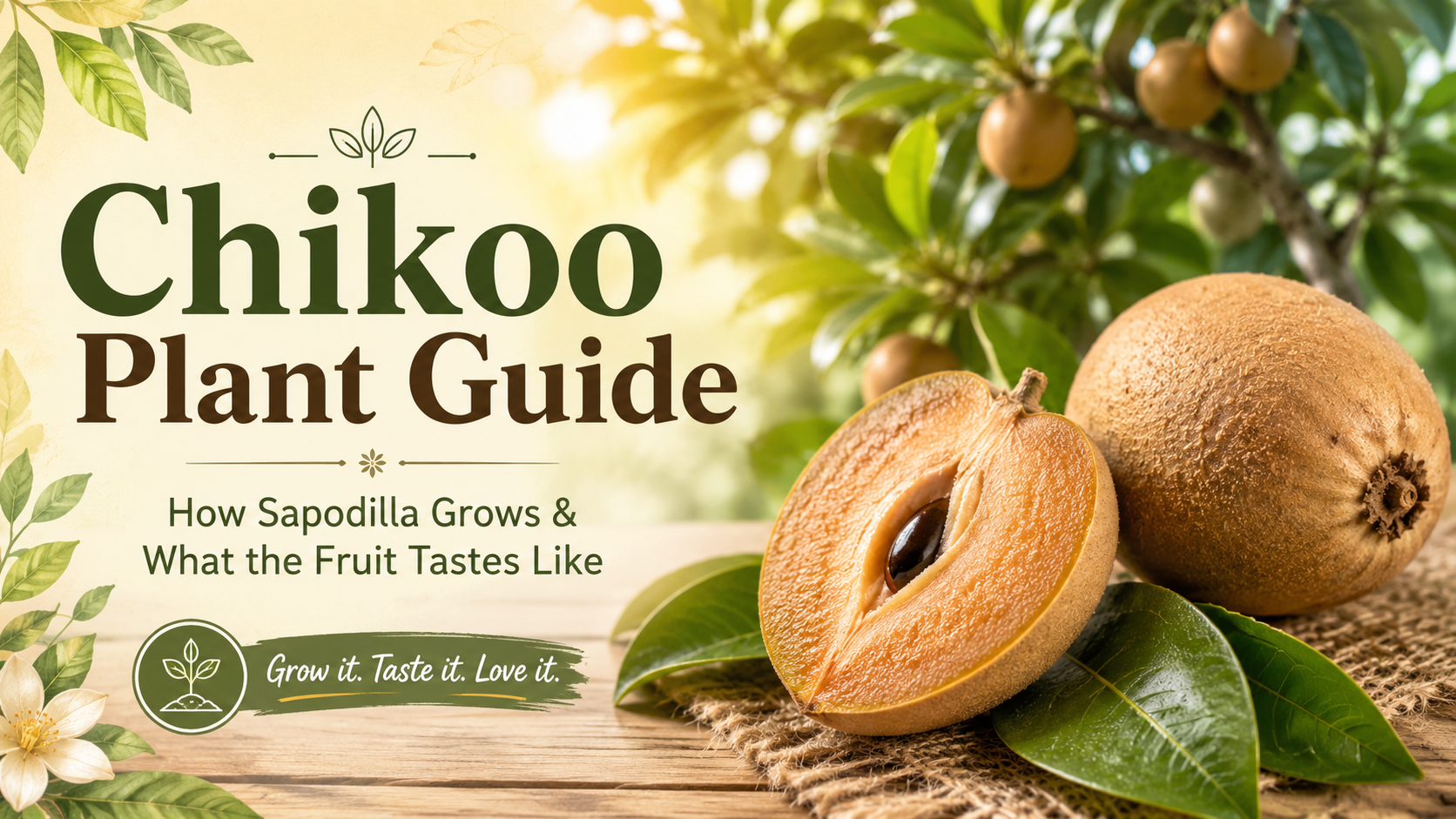

Chikoo is the sweet fruit of the sapodilla tree. Learn where this evergreen tropical tree grows best, how to care for it at home, and how to tell when its brown fruit is ready to eat.
Chikoo and sapodilla are the same plant.
Chikoo, chikku, sapota and sapodilla are common names for Manilkara zapota, a warm-climate evergreen fruit tree. It grows best in full sun, well-draining soil and frost-free conditions. When fully ripe, its brown-skinned fruit becomes soft, sweet and often tastes malty, caramel-like or pear-like.
Chikoo plant growing conditions
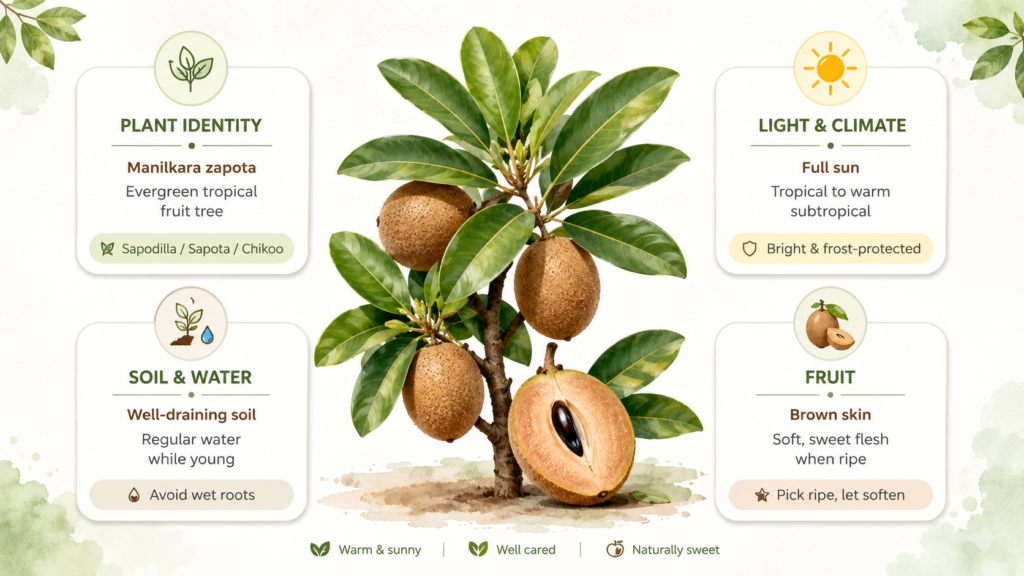
Use this quick guide as a starting point, then adjust care for your local heat, rainfall, soil drainage and the age of your tree.
| Growing factor | Chikoo plant | Practical home-garden note |
|---|---|---|
| Plant identity | Manilkara zapota; evergreen tropical fruit tree | Also sold as sapodilla, sapota, chikoo or chikku |
| Light and climate | Full sun; tropical to warm subtropical conditions | Choose the warmest, brightest, frost-protected site |
| Soil and water | Fertile, well-draining soil; regular watering while young | Avoid constantly wet roots; mulch to conserve moisture |
| Fruit and flavor | Brown-skinned fruit with soft, sweet flesh when ripe | Pick mature fruit and let it soften before eating |
What is a chikoo plant?
Chikoo is the widely used South Asian name for sapodilla, a fruit tree with the scientific name Manilkara zapota. Botanical references place it in the Sapotaceae family. The tree is native to parts of southern Mexico and Central America and is now grown widely in suitable tropical and warm subtropical regions.
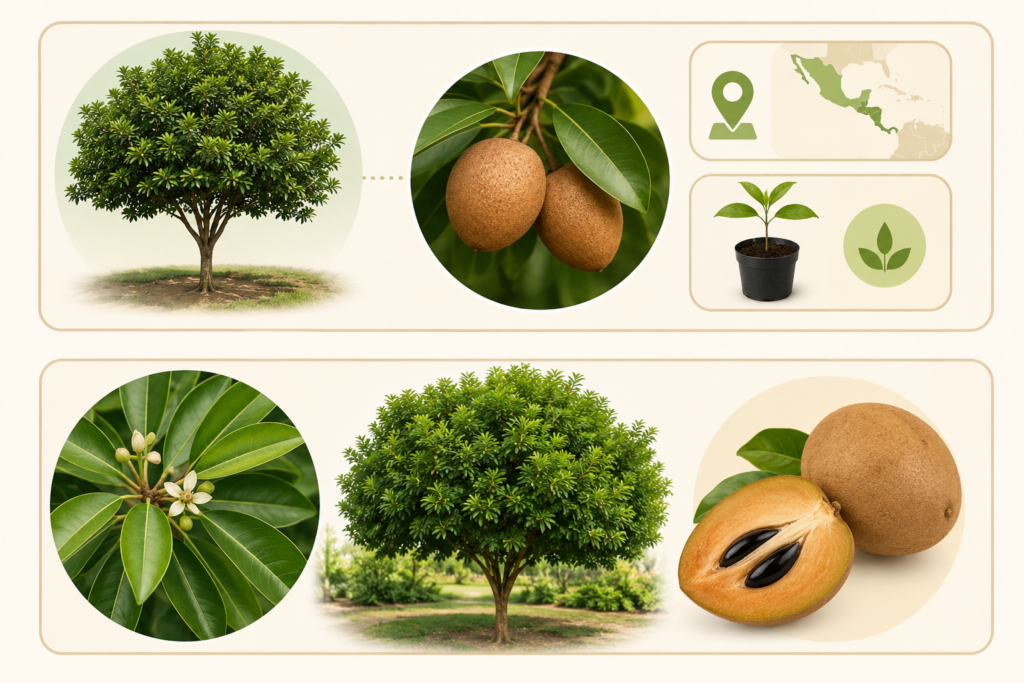
It is easy to confuse the fruit names, but chikoo, sapota and sapodilla usually refer to this same species. “Sapodilla plum” can refer to a different plant in some places, so checking the botanical name at a nursery is a useful habit.
What the chikoo tree looks like
A chikoo tree has dense, glossy green leaves and small pale flowers that can appear along young branches. In the ground, an unpruned tree can become a substantial landscape tree. Its final size depends on cultivar, soil, climate and pruning, so give it generous spacing and plan to manage height if harvesting from the ground matters to you.
Chikoo plant care: sun, soil and water
Healthy establishment is more important than forcing quick growth. A young tree needs consistent attention; once rooted in, sapodilla is generally more tolerant of short dry spells than many tropical fruit trees.
Give it full sun
Aim for at least six to eight hours of direct sun on most days. In very hot, dry climates, a newly planted tree may appreciate temporary protection from harsh afternoon wind while it establishes, but mature trees fruit best in an open, sunny position.
Prioritize drainage
Sapodilla can adapt to several soil types, but poor drainage is a recurring risk. Work compost or well-rotted organic matter into the wider planting area if your soil is low in organic matter, and use a raised mound or bed where water tends to stand after rain.
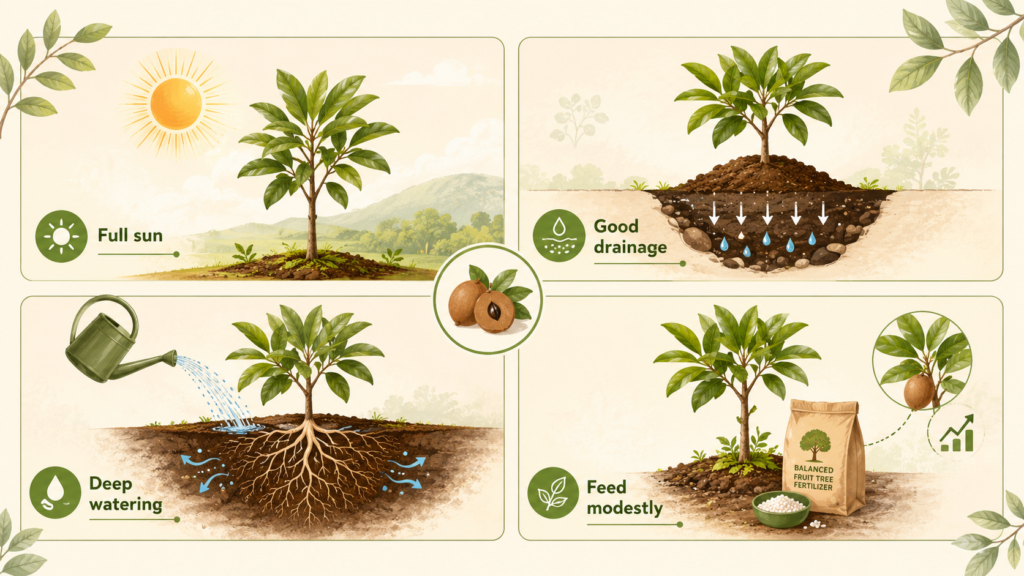
Water deeply, then let the root zone breathe
Water young chikoo plants regularly enough to keep the root zone evenly moist, not soggy. Check soil before watering rather than following one rigid schedule: heat, wind, rainfall and pot size all change how quickly it dries. Reduce irrigation during cool or wet periods.
Feed modestly and monitor growth
A balanced fruit-tree fertilizer, applied according to its label and local guidance, can support young plants in active growth. Avoid piling fertilizer against the trunk. Mature trees often need less nitrogen than beginners expect; excessive nitrogen can encourage leafy growth at the expense of balanced flowering and fruiting.
Cold weather is the major limitation
Chikoo is not a reliable outdoor fruit tree where hard frosts occur. Young trees are particularly vulnerable to cold damage. If winter temperatures approach freezing, use a protected microclimate, frost cover during cold events, or grow the tree in a movable container only while it is still manageable in size.
How to grow chikoo at home
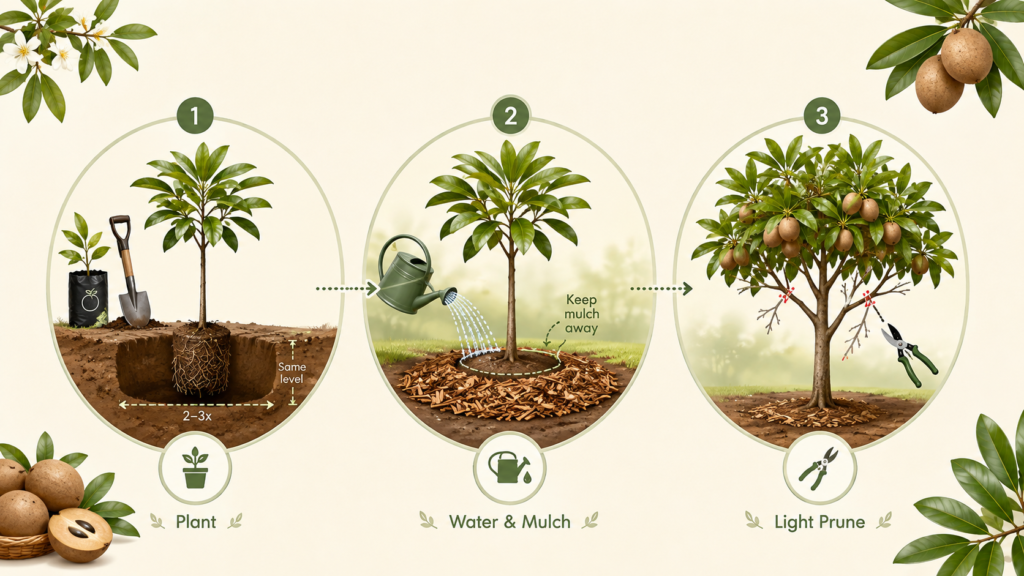
The easiest route for most home gardeners is a healthy grafted sapodilla from a reputable nursery. Plant when conditions are warm enough for steady root growth and keep the first year focused on establishment.
- Dig a hole no deeper than the root ball and about two to three times as wide, then set the tree at the same soil level it grew in its nursery container.
- Water in thoroughly after planting, then add a layer of mulch while keeping mulch several centimetres away from the trunk.
- Prune only damaged, crossing or overly low branches at first; later, light annual pruning can help keep the canopy productive and reachable.
Can chikoo be grown from seed?
Yes, fresh seed can germinate in warm, moist growing medium, but seed-grown trees vary from the parent plant and usually take longer to reach fruiting age than grafted trees. Grow from seed if you enjoy the process; choose a named grafted cultivar when earlier, more predictable fruiting is the priority.
Growing chikoo in a pot
A pot can work for a young tree or a carefully maintained dwarf or compact cultivar, but sapodilla is naturally a tree, not a small houseplant. Use a large container with drainage holes, a free-draining mix, regular watering and periodic root-space upgrades. Container trees need closer monitoring and may fruit less heavily than well-sited in-ground trees.
Flowers, fruiting and realistic expectations
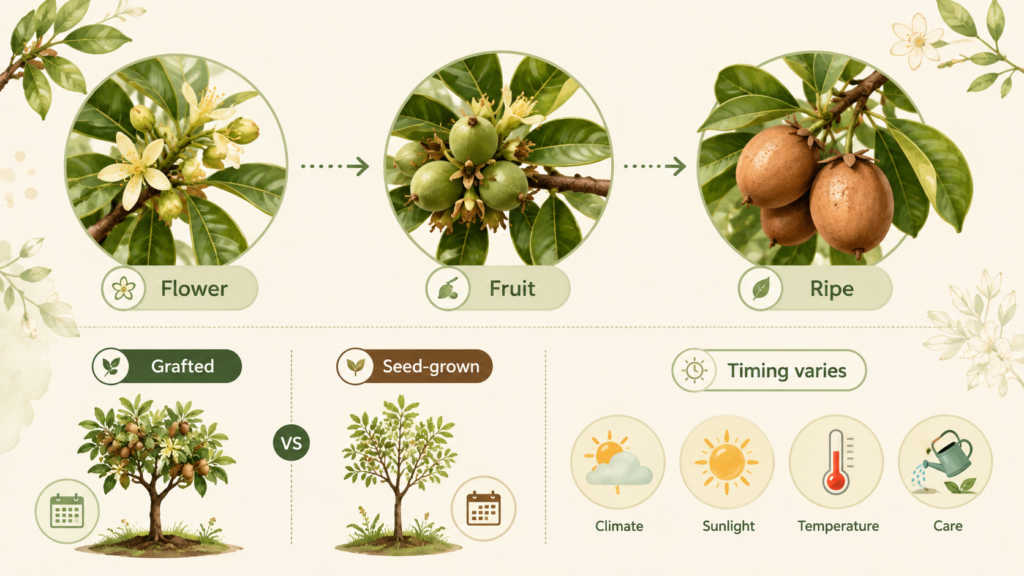
Sapodilla flowers are small and easy to overlook, but they can develop into round or oval fruit over a long season. Timing varies with cultivar and local climate, and a healthy tree may carry flowers and fruit at different stages at the same time.
Do not rely on one universal fruiting timeline. Grafted trees commonly begin producing sooner than seed-grown trees, but actual timing depends on cultivar, nursery age, sunlight, temperature, root health and care. A young tree that is still building roots and branches should not be judged against a mature orchard tree.
What does chikoo fruit taste like?
A fully ripe chikoo has soft, grainy-smooth flesh and a deep sweetness often compared with brown sugar, caramel, malt, pear or dates. The exact flavor varies by cultivar and ripeness, but it is generally rich rather than bright or citrusy.
Cut the fruit open and remove the glossy dark seeds before eating. The fruit is commonly enjoyed chilled and fresh, though it can also be blended into milkshakes, desserts and fruit salads.
How to tell when chikoo is ripe
Color alone is not a dependable ripeness test because skin tone differs by cultivar. Instead, look for mature fruit that gives slightly to gentle pressure and has lost its firm, astringent feel. If picked mature but still firm, leave it at room temperature until it softens. Avoid eating fruit that remains hard and sticky or tastes astringent.
Common chikoo plant problems
Most home-growing problems start with site stress rather than an unusual disease. Check sunlight, drainage, irrigation and cold exposure before reaching for a treatment.
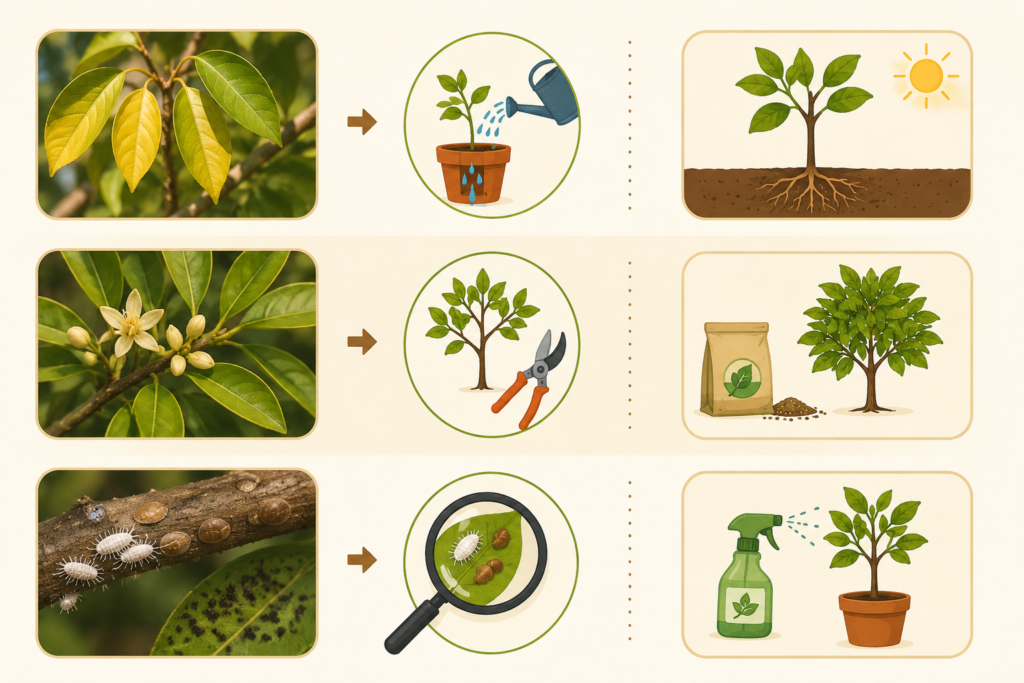
- Yellowing leaves or weak growth: inspect drainage and watering first. Persistently wet soil can reduce root health, while dry root balls can also cause leaf stress.
- Few flowers or fruit: review sunlight, tree age, pruning intensity and fertilizer balance. Young or heavily pruned trees may need time to mature.
- Scale insects, mealybugs or sooty mold: examine leaves and stems closely. Remove lightly infested material where practical and follow regionally appropriate integrated pest-management guidance for persistent infestations.
Chikoo plant FAQ
Is chikoo the same as sapodilla?
Yes. Chikoo, chikku, sapota and sapodilla are common regional names for Manilkara zapota. At a nursery, check the scientific name if the common name is unclear.
How big does a chikoo tree grow?
In a favorable in-ground site, sapodilla can become a medium to large evergreen tree. Its eventual height and spread vary with cultivar, climate and pruning. Ask the nursery about the expected size of the specific cultivar, and allow enough room for a broad canopy.
Can chikoo grow in colder climates?
It is best suited to frost-free tropical and warm subtropical climates. In colder places, a protected container plant may survive when moved indoors or under cover, but reliable outdoor fruit production is difficult without sustained warmth and strong sunlight.