
Everything you need to know about the citron tree — from botanical identification to home growing tips — explained in plain language for curious gardeners.
| Quick Facts: | ||
| Botanical Name Citrus medica L. | Family Rutaceae | Origin Northeast India & Myanmar |
| Mature Height 2.5–5 metres (8–16 ft) | Fruit Size 15–25 cm long | Hardiness USDA Zones 10–11 |
What Is Citron (Citrus medica)?
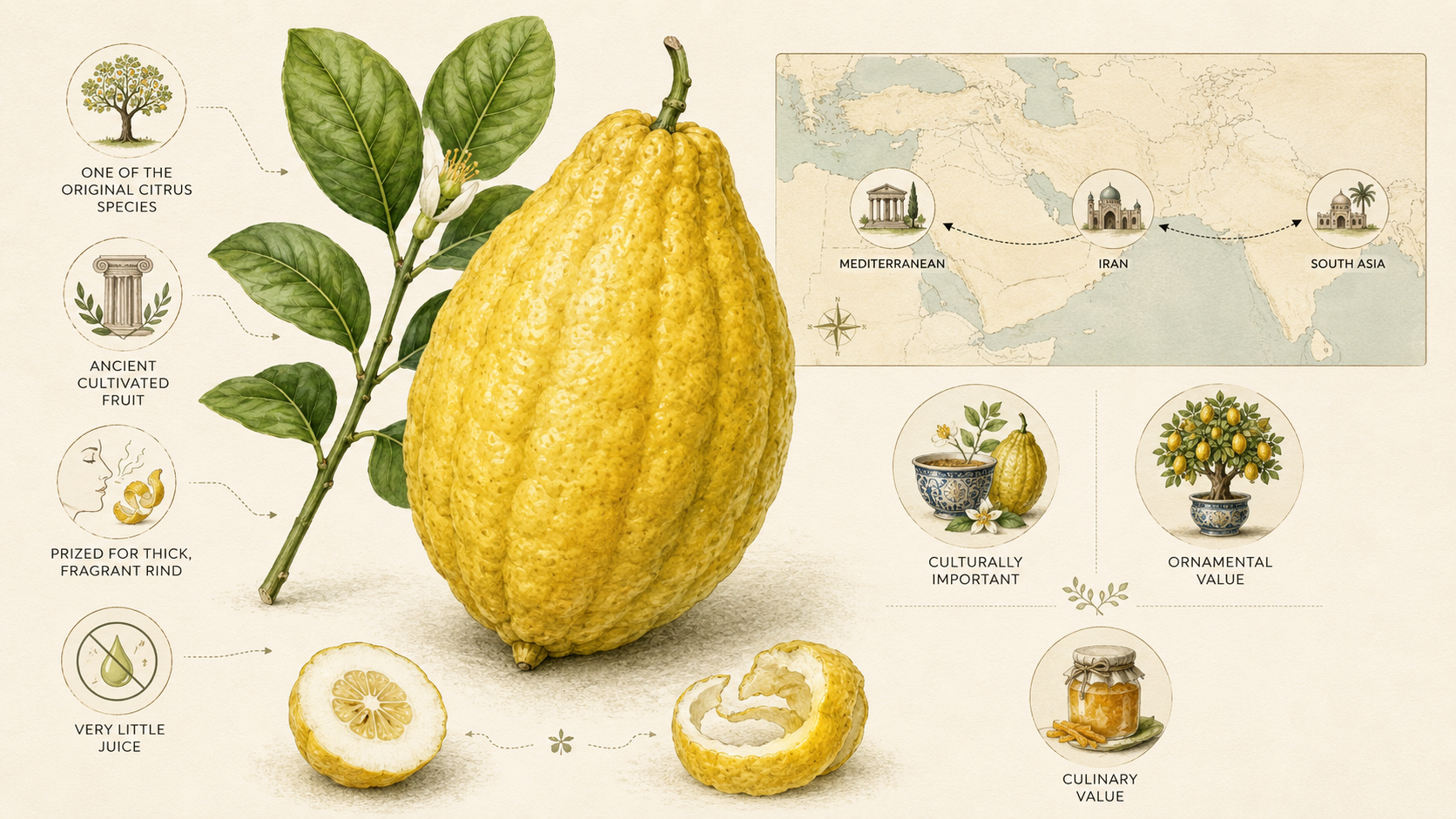
Citron Citrus medica is one of the three original citrus species from which all other citrus fruits — lemons, oranges, limes, and grapefruits — were hybridized over thousands of years. It is the oldest cultivated citrus fruit, with records dating back over 4,000 years to the Indus Valley.
Unlike the lemons you find at the supermarket, citron is prized not for its juice but for its extraordinarily thick, fragrant rind. The name “Citrus medica” comes from the Latin word medica, referring to the ancient kingdom of Media (modern-day Iran), through which the fruit traveled westward into the Mediterranean.
Today, citron remains culturally significant in Jewish tradition (as the etrog), in Italian confectionery, and in traditional medicine across Asia. For home gardeners, it is a rewarding — if frost-sensitive — ornamental and culinary tree.
What Does a Citron Tree Look Like?
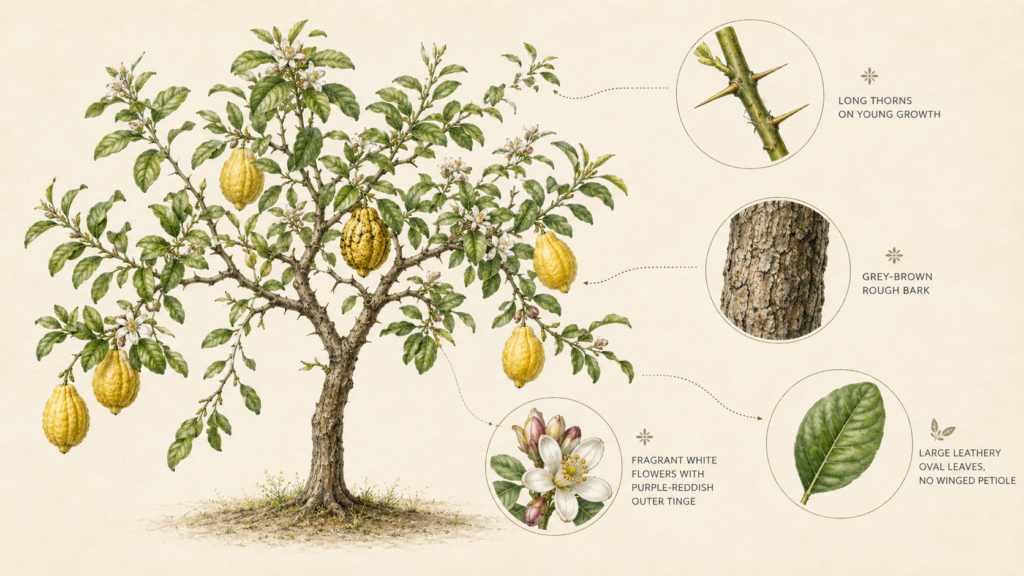
A mature citron tree is a small, spreading evergreen that typically reaches 2.5 to 5 metres (8–16 feet) in height. It has an open, irregular canopy with stiff, thorny branches — thorns can be 3–7 cm long on young growth. The bark is grey-brown and slightly rough.
Compared to a lemon tree, citron grows more slowly and has a less compact shape. Its branches tend to droop under the weight of the heavy fruit, giving it a distinctive, slightly wild appearance in the garden.
Citron Leaves
Citron leaves are large (10–18 cm), leathery, and oval-shaped with slightly serrated margins. They are dark green on top and paler underneath. Unlike many citrus species, citron leaves lack the winged petiole — the small leaf-like extension at the base of the leaf stalk — making them easy to distinguish from lemon or orange leaves. When crushed, they release a mild citrus fragrance.
Citron Flowers
Citron produces large, strongly fragrant flowers that are white on the inside with a purple or reddish tinge on the outer petals. Each flower has 4–5 thick petals and blooms in small clusters at the tips of new growth. Flowering occurs primarily in spring, though in warm climates citron can flower intermittently year-round. The flowers are bisexual (containing both male and female parts) and can self-pollinate, though bees improve fruit set.
How Does a Citron Tree Grow?
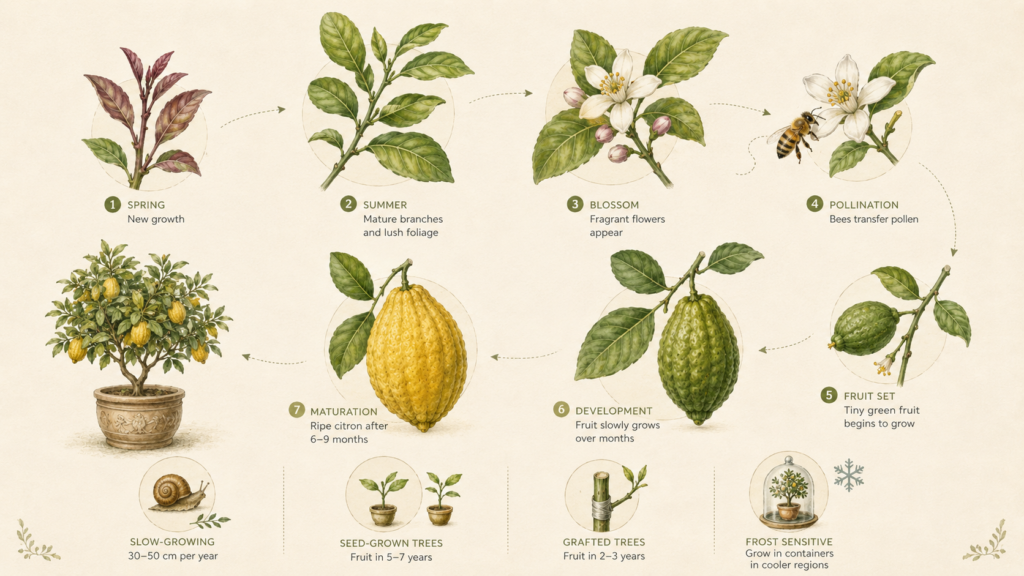
Citron is a slow-growing tree. From seed, it can take 5–7 years to produce its first fruit, though grafted saplings from nurseries may fruit in 2–3 years. The tree adds roughly 30–50 cm of height per year under ideal conditions.
The growth cycle follows a pattern: new flushes of reddish-purple young growth appear in spring, harden off into mature green branches over summer, and flower buds form at the tips. After pollination, fruit develops slowly over 6–9 months, ripening from green to bright yellow.
Citron is sensitive to frost and will suffer leaf drop below 2°C (35°F). In subtropical and Mediterranean climates, it can be grown outdoors year-round. In cooler regions, it thrives as a container plant brought indoors during winter — a method used since Renaissance-era Italian gardens.
Citron Fruit Characteristics & Identification
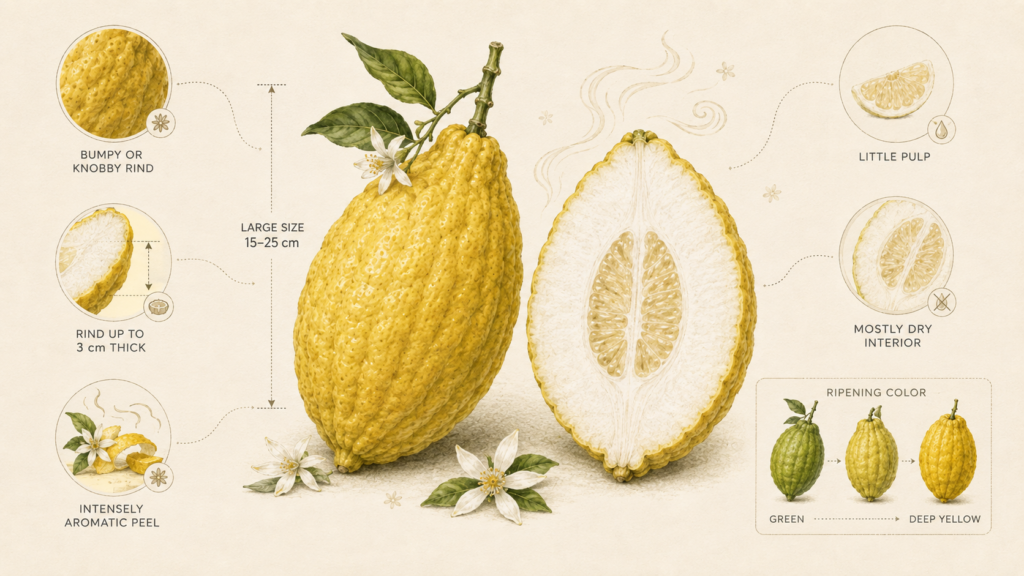
The citron fruit is unmistakable: it is large (15–25 cm), oval or oblong, and covered in a bumpy, textured rind that can be up to 3 cm thick. The colour ranges from green when immature to deep yellow when ripe. Unlike lemons, the surface is often irregular and knobby rather than smooth.
Cut a citron open and the difference from lemon becomes immediately obvious. The white pith (albedo) dominates the interior — there is very little juice or pulp. The thin segments of flesh are pale greenish-yellow, mildly acidic, and mostly dry.
The fragrance is where citron truly shines — the essential oils in the rind are intensely aromatic, described as floral-citrus with resinous undertones. This fragrance is the reason citron has been valued for perfumery and religious ceremonies for millennia. A single ripe citron can perfume an entire room.
How to Grow Citron: Conditions & Care
Citron can absolutely be grown at home, even in cooler climates — as long as you can protect it from frost. Here are the key requirements for a healthy citron tree:
Sunlight
Full sun — at least 6–8 hours of direct sunlight daily. In very hot climates, light afternoon shade prevents leaf scorch.
Water
Regular, deep watering. Keep soil consistently moist but never waterlogged. Reduce watering in winter. Container plants need more frequent watering than in-ground trees.
Soil
Well-draining, slightly acidic soil (pH 5.5–6.5). A mix of loam, sand, and compost works well. For containers, use a quality citrus potting mix.
Temperature
Thrives between 20–35°C (68–95°F). Cannot tolerate frost. Bring indoors or protect when temperatures drop below 4°C (39°F).
Citron vs. Lemon: What’s the Difference?
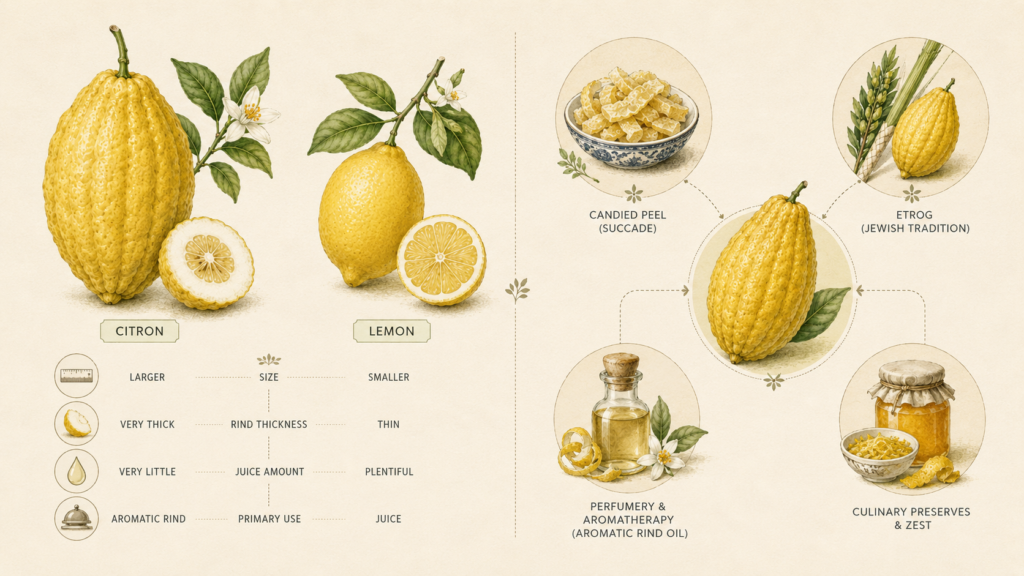
This is one of the most common questions about citron — and it’s easy to see why. The lemon (Citrus limon) is actually a hybrid that contains citron genetics, but the two fruits are very different in practice. Here’s a side-by-side comparison:
| Feature | Citron | Lemon |
|---|---|---|
| Size | 15–25 cm long | 7–12 cm long |
| Rind | Very thick (2–3 cm) | Thin (3–5 mm) |
| Juice | Very little | Abundant |
| Flesh | Dry, minimal pulp | Juicy segments |
| Primary Use | Candied peel, zest, ritual | Juice, cooking |
| Cold Tolerance | Frost-sensitive | Slightly hardier |
What Is Citron Used For?
Although citron produces little juice, it has been treasured for thousands of years for its aromatic rind. Here are the main uses of citron fruit today:
- Candied peel (succade) — The thick pith is candied and used in Italian panettone, fruitcakes, and confections. This is the most common commercial use.
- Religious ceremonies — In Judaism, a perfect citron (etrog) is used during the festival of Sukkot. Unblemished specimens command high prices.
- Perfumery and aromatherapy — The essential oil from citron rind is used in high-end fragrances and traditional medicine for its uplifting, clean scent.
- Culinary zest and preserves — The outer zest adds intense citrus flavor to dishes, and citron can be made into marmalades, liqueurs (like cedro), and flavored salts.
Frequently Asked Questions About Citron
Is citron the same as lemon?
No. Citron (Citrus medica) is a separate, more ancient species. The lemon is actually a hybrid between citron and bitter orange. Citron is much larger, has very thick rind, almost no juice, and is primarily used for its peel — not for squeezing.
Can I grow citron at home?
Yes! Citron grows well in containers and can be brought indoors during winter in cold climates. It needs full sun, well-draining soil, and protection from frost. Many gardeners in USDA zones 8–9 grow citron successfully in pots.
How long does citron take to produce fruit?
From seed, expect 5–7 years before first fruit. A grafted nursery tree can fruit in 2–3 years. Once established, a healthy citron tree produces fruit reliably each year, with the main harvest in late autumn to winter.
What does citron taste like?
The flesh is mildly acidic and not very juicy — it’s not eaten fresh like a lemon. The real flavour is in the rind: intensely aromatic, floral, and citrusy. Candied citron peel has a sweet, fragrant, slightly bitter character that’s prized in baking.
Where does citron originally come from?
Citron originated in northeast India and Myanmar (Burma), in the foothills of the eastern Himalayas. It spread westward via ancient trade routes through Persia and into the Mediterranean region, where it has been cultivated for over 2,500 years.