
Peppermint and spearmint are closely related but distinct mint plants. Learn how to tell them apart, choose the right flavor for your kitchen, and grow either one without letting it take over the garden.
Choose peppermint for a bold cooling flavor, or spearmint for a softer, sweeter mint note.
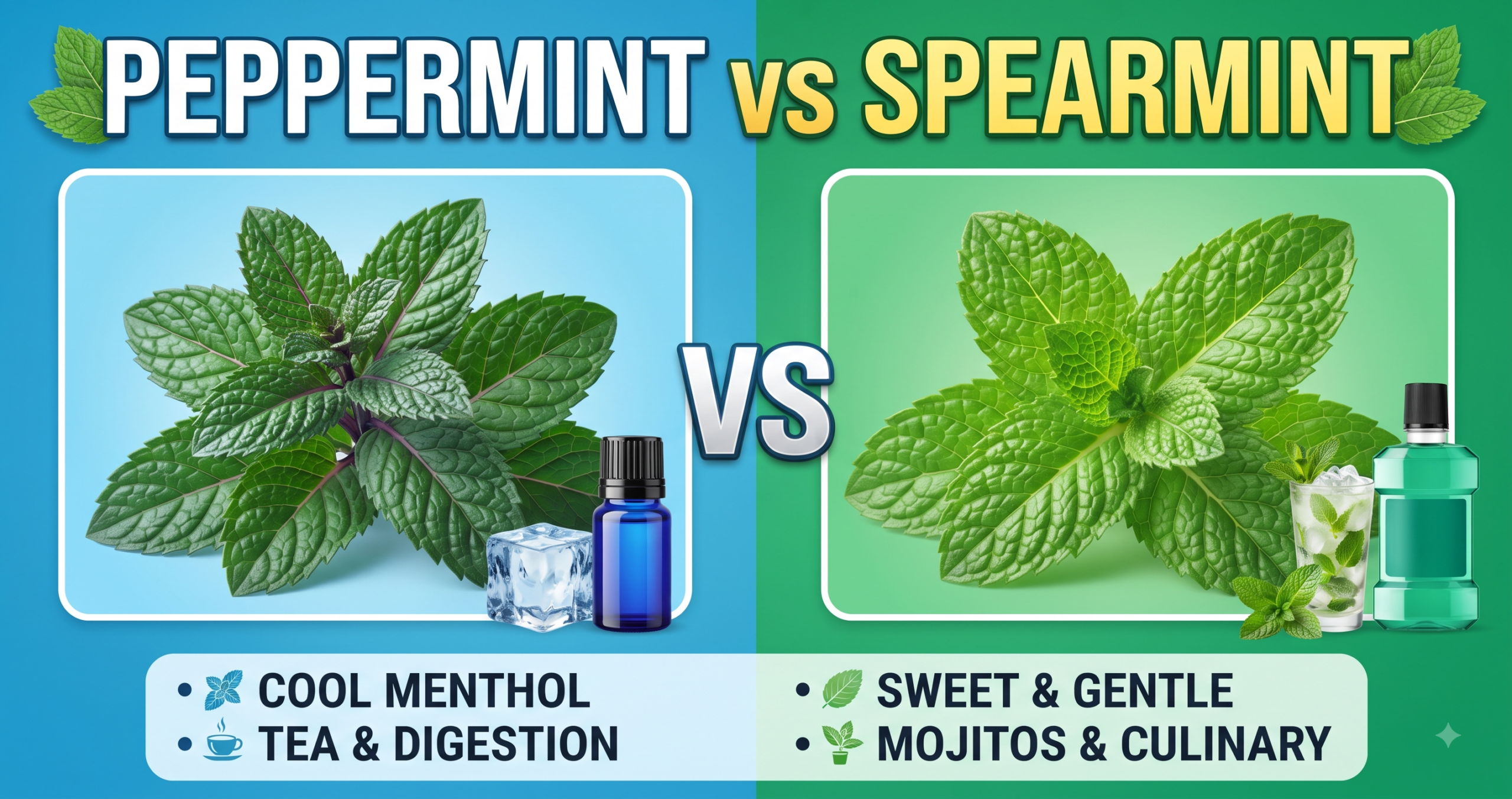
Peppermint (Mentha × piperita) is a hybrid with a more pronounced menthol character. Spearmint (Mentha spicata) is a distinct species with a gentler taste. Both are easy perennial herbs to grow, but both spread through underground stems, so containers are often the simplest choice.
Peppermint versus spearmint plant: what is the difference?
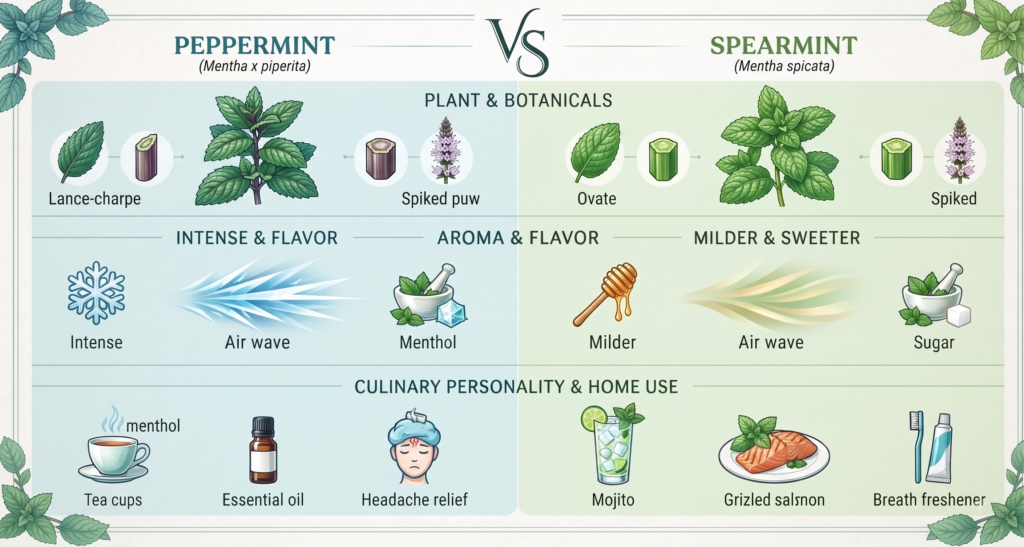
Peppermint and spearmint belong to the mint family, but they are not the same plant. Peppermint is generally recognized as a hybrid associated with water mint and spearmint ancestry, while spearmint is its own species. That botanical difference helps explain why their aromas and culinary personalities are not identical.
For a home gardener, the most useful takeaway is simple: peppermint usually tastes more intense and cooling, while spearmint is usually milder and sweeter. Their basic care is very similar, so flavor preference and containment are often the deciding factors.
Peppermint vs spearmint at a glance
Use this quick comparison as a starting point. Cultivar, leaf age, sunlight, and growing conditions can all affect a plant’s appearance and aroma.
| Trait | Peppermint | Spearmint |
|---|---|---|
| Botanical name | Mentha × piperita, a hybrid mint | Mentha spicata, a distinct mint species |
| Flavor | Stronger, sharper, more cooling | Sweeter, softer, more gently minty |
| Common uses | Tea, sweets, chocolate, strong flavoring | Cooking, sauces, salads, mojitos and other drinks |
| Growth habit | Spreading perennial; best contained | Spreading perennial; best contained |
How to tell peppermint and spearmint apart
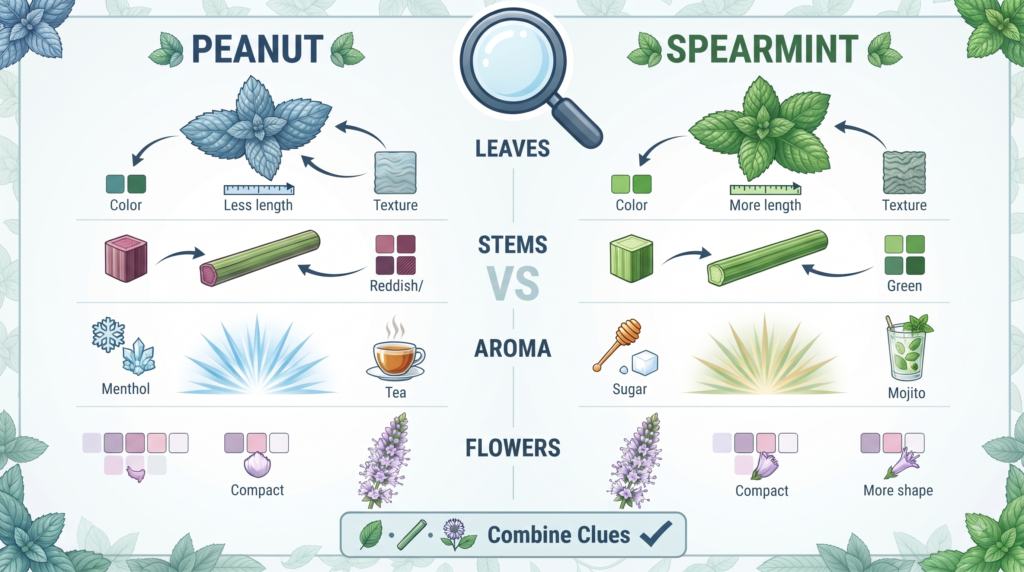
Mint plants can look surprisingly alike, especially when young. Avoid identifying a plant from one clue alone; compare several features and use a nursery label whenever possible.
Use these clues together
- Leaves: peppermint often appears darker and more sharply pointed; spearmint leaves are often longer, brighter, and more wrinkled.
- Stems: both mints usually have square stems, a family trait. Peppermint may show more reddish or purplish stem coloring.
- Aroma: peppermint generally has a stronger menthol-like cooling scent, while spearmint smells sweeter and rounder.
- Flowers: both can make small pale purple, pink, or white blooms. Flower shape and placement can help, but are not always enough for a confident ID on their own.
Peppermint vs spearmint flavor
Peppermint’s familiar cool sensation comes from its more pronounced menthol character. It can taste brisk and almost peppery, making a little leaf go a long way in tea, desserts, and concentrated flavoring.
Spearmint contains much less menthol and is widely valued for a sweeter, gentler mint flavor. That softer profile is why many cooks prefer it when mint needs to complement rather than dominate a savory dish or drink.
Peppermint and spearmint uses in the kitchen
The two herbs overlap in many recipes, and either can work when that is what you have. Still, choosing the closer flavor match can make a noticeable difference.
Tea
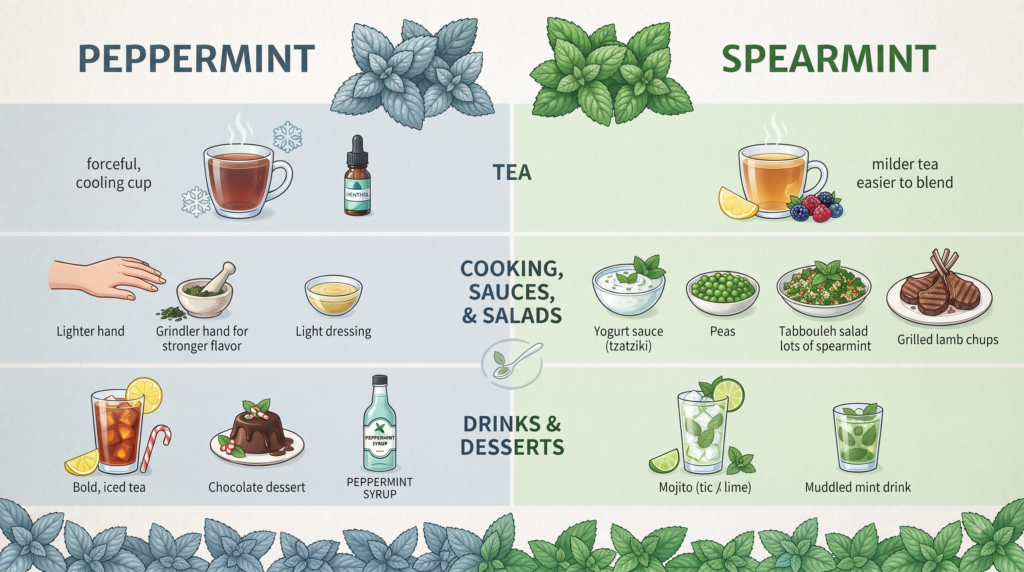
Peppermint makes a more forceful, cooling cup. Spearmint produces a milder tea that is easier to blend with lemon balm, fruit, green tea, or other herbs. Culinary tea is different from a concentrated supplement or essential oil.
Cooking, sauces, and salads
Spearmint is often the easier fit for yogurt sauces, peas, lamb dishes, tabbouleh, fruit salads, and fresh herb sauces. Peppermint can work too, but its stronger flavor is best used with a lighter hand.
Drinks and desserts
Spearmint is the classic choice for mojitos and many muddled drinks. Peppermint shines in chocolate desserts, peppermint syrups, candies, and bold iced tea. If substituting, taste as you go rather than swapping leaf-for-leaf.
Growing peppermint and spearmint
Both types are forgiving herbs for beginners. They usually grow best with regular moisture, reasonably rich soil, and a site that receives sun or partial shade. Adjust care for your weather, rainfall, pot size, and drainage instead of following a rigid watering calendar.
| Care factor | Practical mint guidance |
|---|---|
| Light | Full sun to partial shade. In very hot climates, some afternoon shade can help leaves stay fresh. |
| Soil | Moisture-retentive but well-draining soil with organic matter. Avoid a pot or bed that stays waterlogged. |
| Water | Water when the upper soil begins to feel dry. Pots, windy balconies, and hot spells usually need more frequent checks. |
| Pruning | Harvest and pinch growing tips regularly. Cutting stems just above leaf pairs encourages a fuller, bushier plant. |
Why mint in pots is often the smartest choice
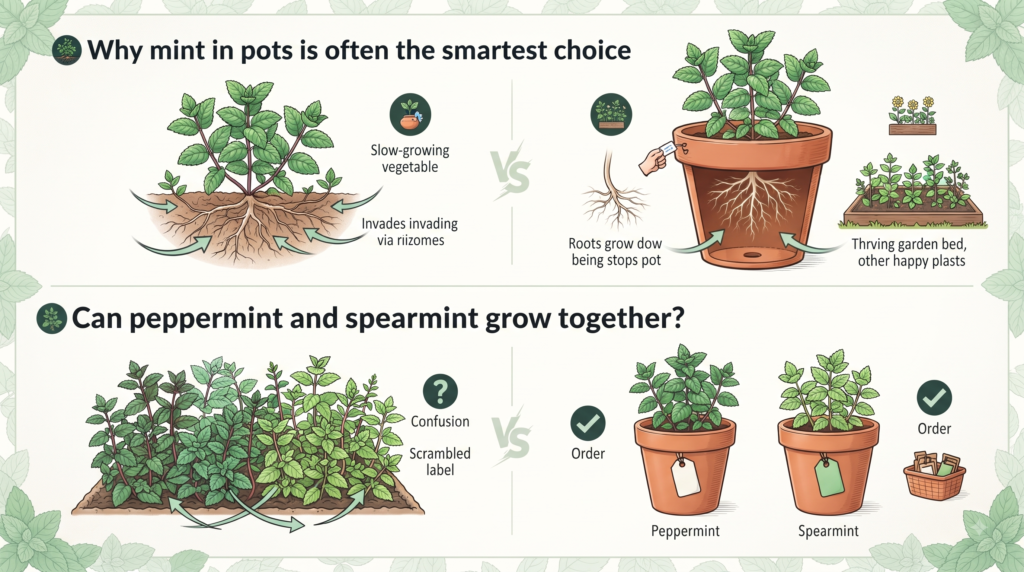
Peppermint and spearmint spread through rhizomes: underground stems that move outward and send up new shoots. A generous pot with drainage holes keeps roots contained, makes each variety easier to identify, and prevents mint from crowding slower-growing neighbors. If planting in a bed, consider a physical barrier and check the edges regularly.
Can peppermint and spearmint grow together?
They can grow near each other, but separate containers are usually more practical. In one bed, both plants can compete and spread into each other’s space, making labels and harvests confusing. Keeping one pot for peppermint and one for spearmint gives you cleaner flavor choices and much easier control.
How to harvest mint for a bushier plant
Pick leaves as needed once plants are actively growing. For the best flavor, harvest in the morning after dew dries and before the heat of the day. Regular light harvesting is useful pruning, but avoid stripping a small or newly planted mint all at once.
- Snip whole stems just above a pair of leaves instead of plucking only the largest leaves.
- Use clean scissors or pruners, especially when cutting more than a few stems.
- Remove flower spikes if you want the plant to keep directing energy into leafy growth, but leave some blooms for pollinators if flavor and quantity allow.
Common mint growing problems
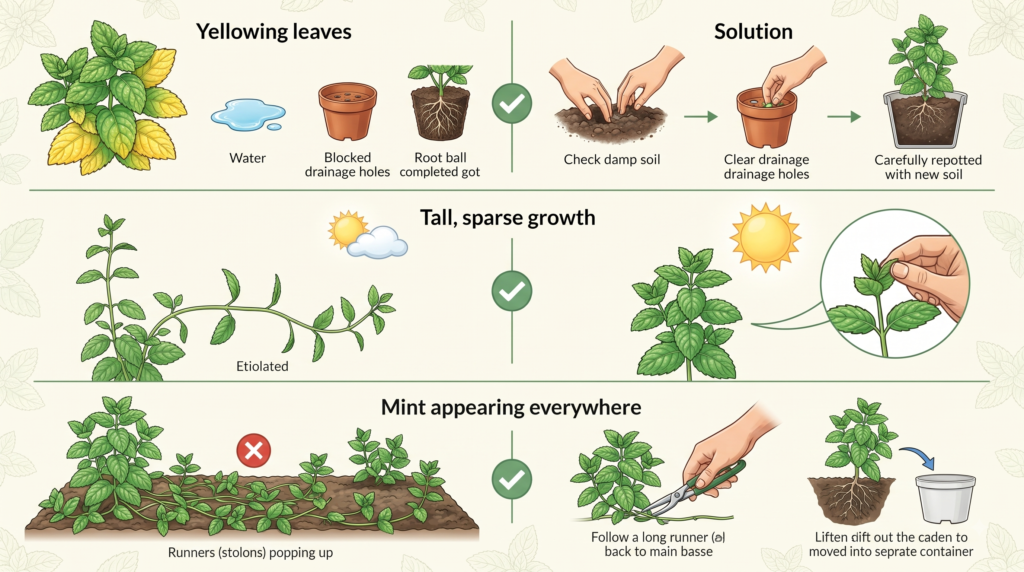
Mint is resilient, but a few simple growing-condition checks solve many common issues. Look at soil moisture, drainage, light, and root space before reaching for fertilizer or pest products.
| What you see | What to check first |
|---|---|
| Yellowing leaves | Check whether roots are sitting in soggy soil, whether the pot has drainage holes, and whether the plant has become root-bound. |
| Tall, sparse growth | Move the plant toward brighter light where appropriate and pinch or harvest growing tips to encourage branching. |
| Mint appearing everywhere | Follow runners back to the parent plant and remove unwanted shoots. Consider lifting the plant and moving it into a container. |
Peppermint vs spearmint FAQ
Is peppermint or spearmint easier to grow?
For most home gardeners, they are similarly easy to grow. Both respond well to moisture, regular harvesting, and containment. The easier choice is usually the one whose flavor you will use most often.
Can peppermint replace spearmint in a recipe?
Usually, yes—but peppermint can be noticeably stronger. Start with less than the recipe calls for, taste, then add more if needed. Spearmint is often the closer match for savory dishes and classic mojitos.
Does cutting mint make it grow bushier?
Yes. Snipping a stem above a leaf pair encourages side shoots below the cut, which can make the plant denser over time. Regular harvesting also helps prevent a plant from becoming overly tall and woody.