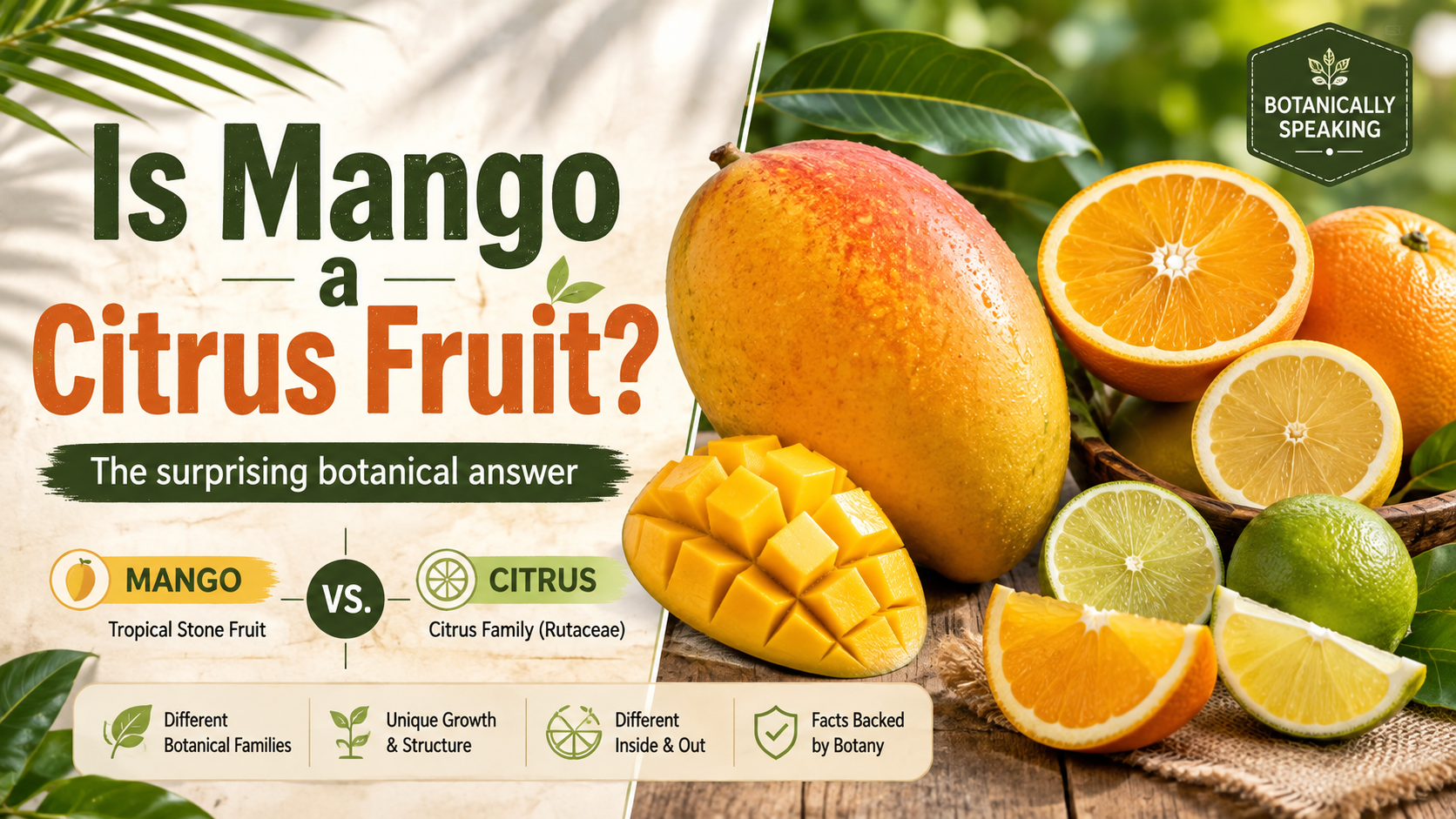

No, mango is not a citrus fruit. Its sunny flavor may seem citrus-like, but botanically it belongs to a completely different plant family.
No. Mango is not a citrus fruit.
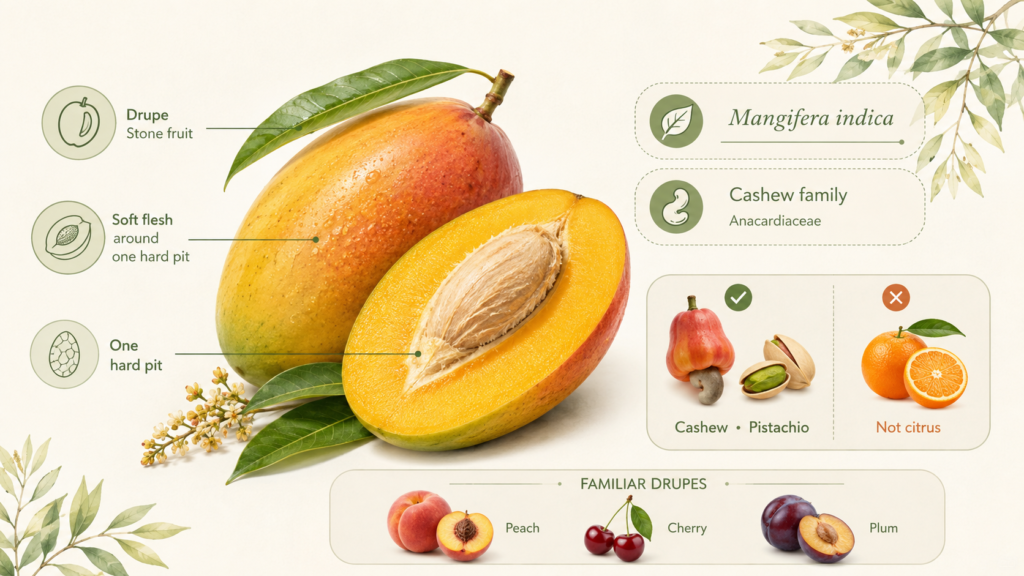
Mango (Mangifera indica) belongs to the Anacardiaceae, or cashew family. Oranges, lemons, limes and grapefruit belong to the Rutaceae family. Mango is a tropical stone fruit, not a true citrus fruit.
Mango vs. citrus: the key difference
The easiest way to separate mango from citrus is to look at plant family and fruit structure, not flavor, color, or vitamin content.
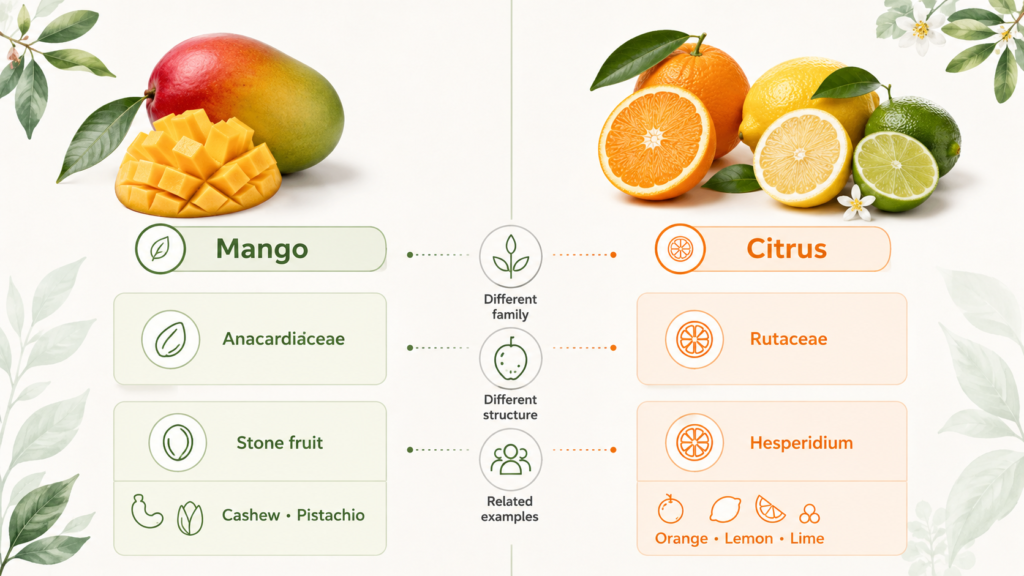
| Trait | Mango | Orange, lemon & lime |
|---|---|---|
| Plant family | Anacardiaceae (cashew family) | Rutaceae (rue or citrus family) |
| Fruit type | Drupe, or stone fruit | Hesperidium, a berry with a leathery rind |
| Related examples | Cashew, pistachio, sumac | Orange, lemon, lime, grapefruit |
What type of fruit is a mango?
A mango is a drupe, commonly called a stone fruit. A drupe has soft flesh around one large, hard inner seed, the flat pit you find in the center of a mango. Peaches, cherries and plums are familiar examples of the same broad fruit type.
Mango’s scientific name is Mangifera indica. Plants of this species are classified in Anacardiaceae, the cashew family. That family connection is why mangoes are botanically closer to cashews and pistachios than they are to oranges.
Why citrus is different
True citrus fruits come from plants in the genus Citrus, within the Rutaceae family. Their fruit type is called a hesperidium: a modified berry with a fragrant, oil-containing peel and juicy segments inside. That distinctive structure, not simply tartness, is part of what makes an orange or lemon citrus.
If mango can be tangy, why isn’t it citrus?
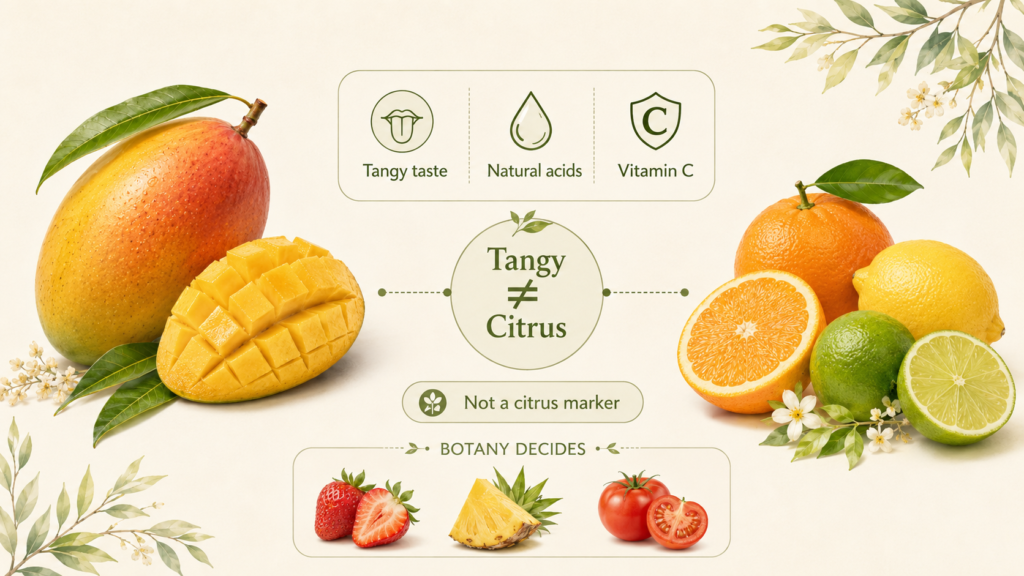
Sweet-tart flavor is not a botanical category. Mango can contain natural acids, and ripe mango also provides vitamin C, but neither fact turns it into citrus. Many non-citrus foods, including strawberries, pineapple and tomatoes, can taste bright or provide vitamin C.
Nutrition can vary by variety, ripeness and serving size. USDA FoodData Central is a useful reference for current nutrient data, including vitamin C, for raw mango and citrus fruits.
Can mango replace citrus in recipes?
Sometimes, but choose based on the job the citrus is doing. Mango adds body, sweetness and tropical aroma, while lemon or lime usually supplies sharper acidity.
- For salsa or salads: mango can replace orange segments for sweetness, but keep a little lime or vinegar if the recipe needs tang.
- For marinades: mango purée adds fruitiness, but it will not work exactly like lemon juice when acidity is central to the flavor.
- For baking: use mango for moisture and flavor, not as a one-for-one substitute for citrus zest or juice.
A careful note on citrus and mango allergies
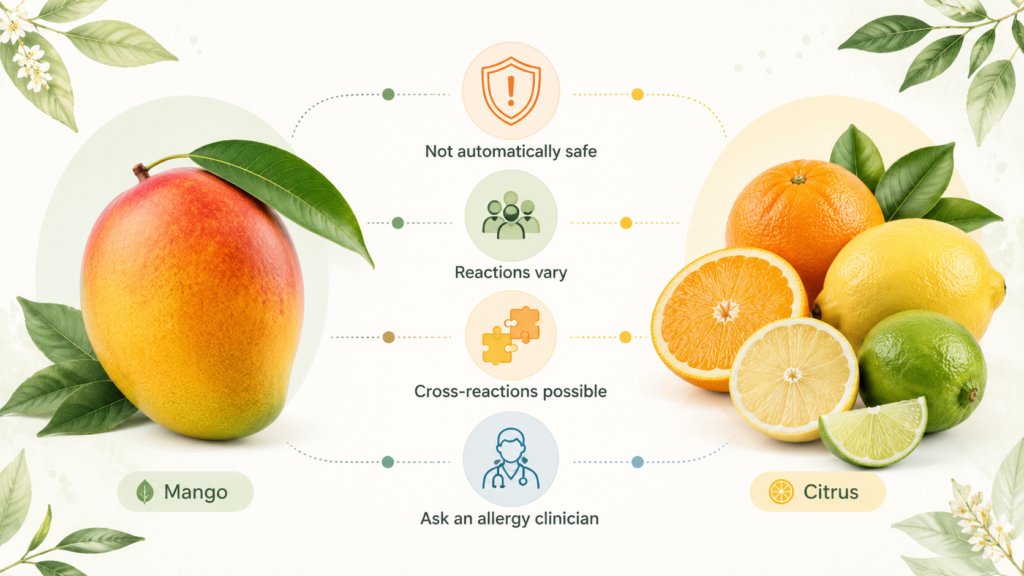
Because mango is not citrus, it is not automatically ruled out—or automatically safe—for a person with a citrus allergy. Food allergies and cross-reactions are individual. If you have had a reaction to mango, citrus, cashew, pistachio, or another food, seek personalized guidance from a qualified allergy clinician before trying it.
Mango and citrus FAQ
Are mangoes related to oranges?
No. Mangoes and oranges are both flowering plants, but they belong to different botanical families. Mango belongs to Anacardiaceae; oranges belong to Rutaceae.
Are mangoes related to cashews?
Yes. Mango and cashew are members of the Anacardiaceae family. This is a botanical relationship, not a guarantee about food-allergy tolerance.
Is mango an acidic fruit?
Mango contains natural organic acids, so it can taste mildly tangy. Its acidity varies with variety and ripeness, and it is generally not classified as citrus simply because it has a tart note.