
Everything you need to know about culantro — how to identify it, how it differs from cilantro, and how to grow it successfully in your garden or containers.
| Quick Facts: | ||
| Botanical Name Eryngium foetidum | Family Apiaceae | Origin Tropical Americas & Caribbean |
| Also Called Sawtooth coriander, Mexican coriander, ngò gai, recao | Plant Type Biennial (often grown as annual) | Hardiness USDA Zones 10–12 |
What Is Culantro?
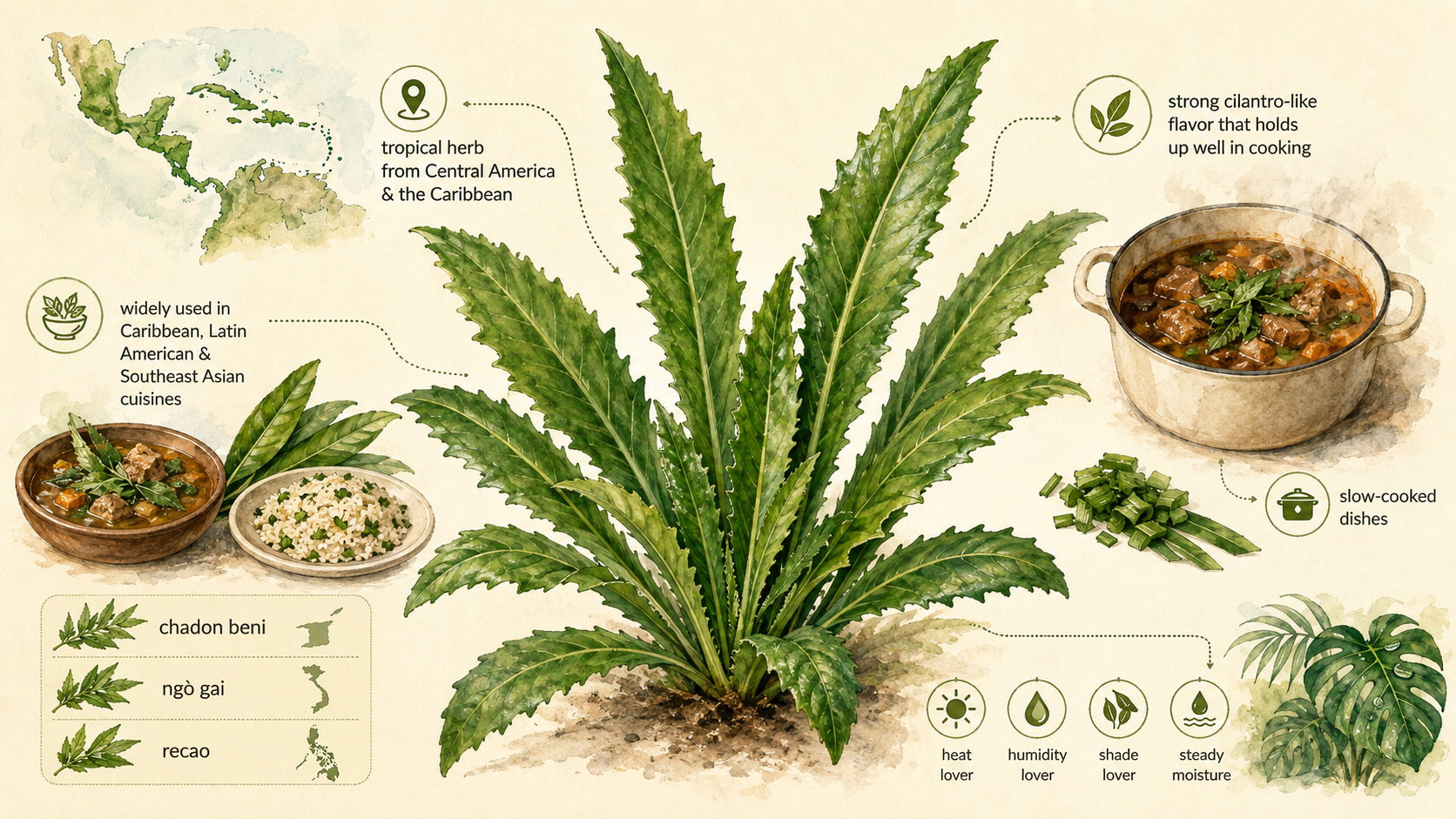
Culantro (Eryngium foetidum) is a tropical herb native to Central America and the Caribbean. Despite its similar name, culantro is not the same plant as cilantro — although the two share a related flavor profile and are often used interchangeably in cooking.
The herb is widely used in Caribbean, Latin American, and Southeast Asian cuisines. In Trinidad it’s called “chadon beni,” in Vietnam it’s “ngò gai,” and in Puerto Rico it’s “recao.” Its intense flavor holds up well during cooking, making it preferred over cilantro in slow-cooked dishes, soups, and marinades.
For home gardeners, culantro is an excellent choice if you love cilantro’s flavor but struggle with bolting in hot weather. Culantro thrives in heat and humidity, produces leaves for months, and is surprisingly easy to grow once you understand its preferences for shade and moisture.
Culantro vs. Cilantro: What’s the Difference?
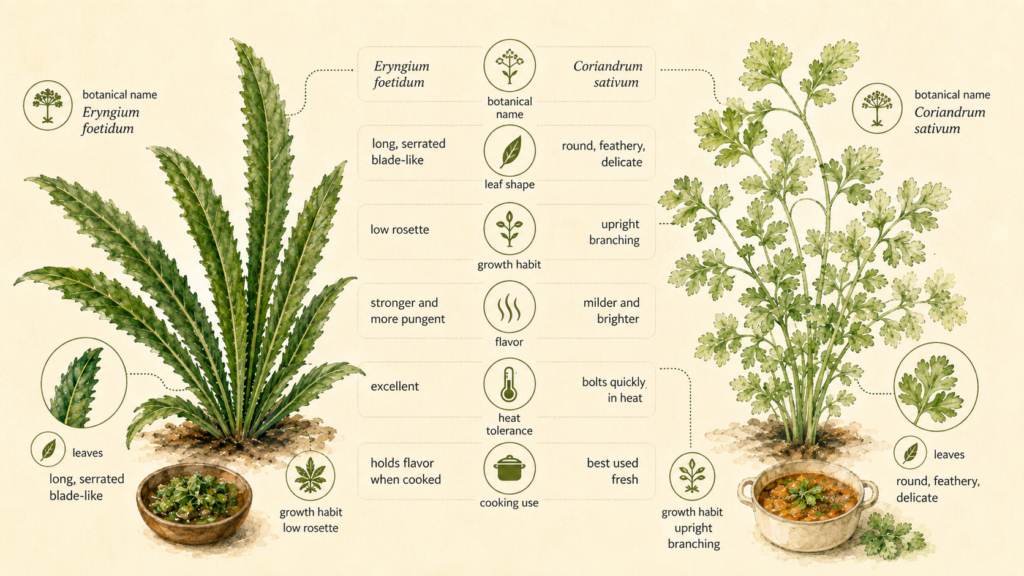
This is the number one question about culantro. The two herbs belong to the same botanical family (Apiaceae) and share a similar flavor, but they are completely different plants. Here’s a quick comparison:
| Feature | Culantro | Cilantro |
|---|---|---|
| Botanical Name | Eryngium foetidum | Coriandrum sativum |
| Leaf Shape | Long, serrated, blade-like | Round, feathery, delicate |
| Growth Habit | Low rosette | Upright, branching |
| Flavor | Stronger, more pungent | Milder, brighter |
| Heat Tolerance | Excellent | Bolts quickly in heat |
| Cooking Use | Holds flavor when cooked | Best used raw/fresh |
What Does a Culantro Plant Look Like?
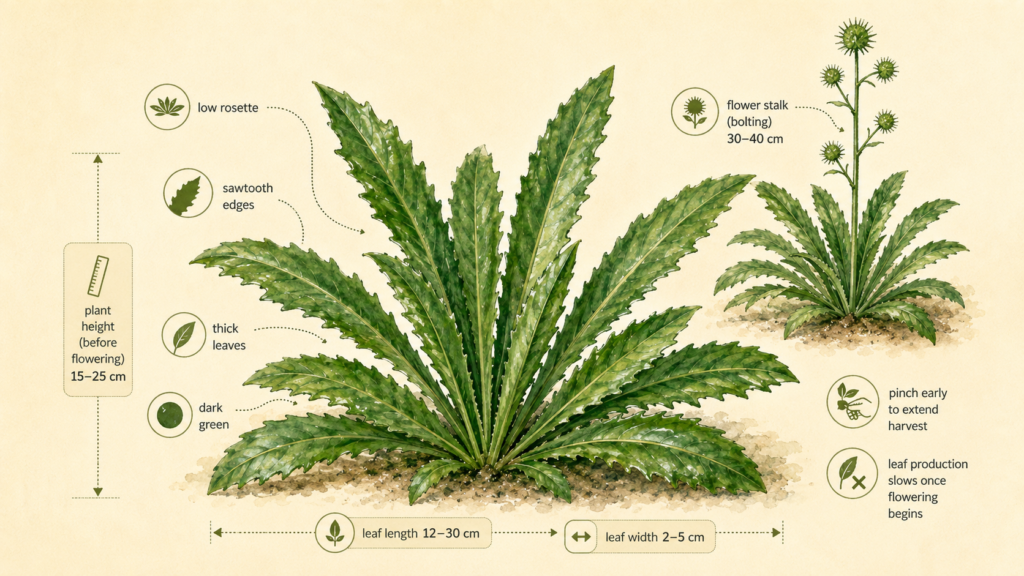
Culantro grows as a low rosette of long, lance-shaped leaves that radiate outward from a central point close to the ground. Each leaf is 12–30 cm (5–12 inches) long and 2–5 cm wide, with distinctive serrated (“sawtooth”) edges — this is why it’s called sawtooth coriander.
The leaves are thick, fleshy, and dark green. Unlike cilantro’s delicate, feathery foliage, culantro leaves are tough enough to withstand cooking without wilting immediately. The plant stays low (15–25 cm tall) until it sends up a flower stalk, which can reach 30–40 cm.
Culantro Flowers & Bolting
When culantro bolts, it sends up a stiff central stalk topped with small, spiky green flower heads that resemble tiny thistles. Once flowering begins, leaf production slows and flavor diminishes. To extend your harvest, pinch off flower stalks as soon as they appear. If you allow one plant to flower and set seed, it will self-sow readily in warm climates.
How to Grow Culantro From Seed?
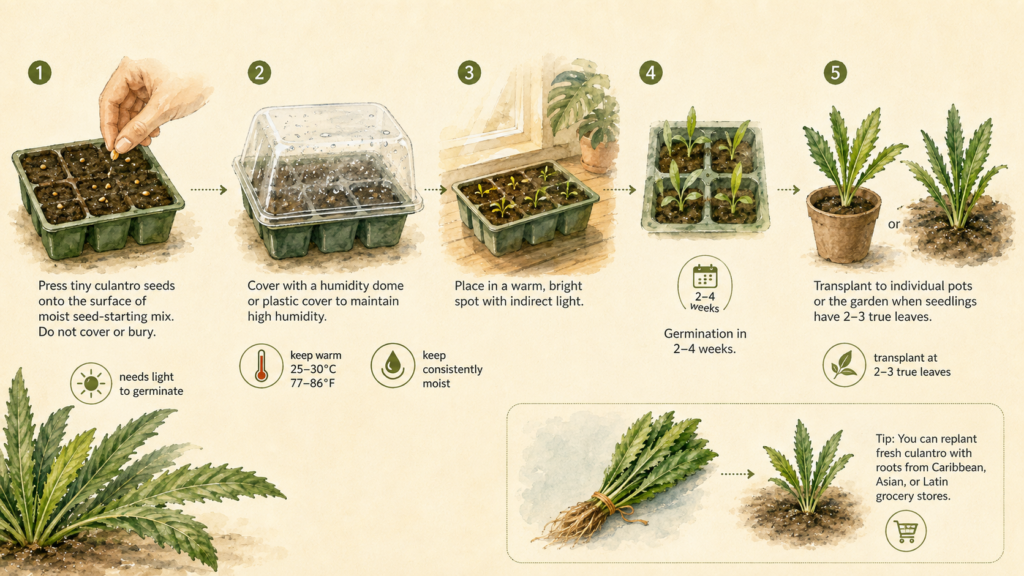
Culantro seeds are tiny and notoriously slow to germinate — expect 2–4 weeks for sprouts to appear. The seeds need light to germinate, so press them gently onto the surface of moist seed-starting mix without covering them. Keep the soil consistently moist and warm (25–30°C / 77–86°F).
Many growers find it helpful to cover seed trays with plastic wrap or a humidity dome to maintain moisture. Place in a warm, bright spot with indirect light. Once seedlings develop 2–3 true leaves, transplant them into individual pots or their final growing position.
Tip: If you can’t find culantro seeds at local garden centers, check Caribbean, Asian, or Latin American grocery stores — they sometimes sell fresh culantro with roots attached, which can be replanted directly. Online seed suppliers specializing in tropical herbs are another reliable source.
Growing Conditions & Care

Culantro is a tropical plant that thrives in conditions many common herbs dislike — heat, humidity, and shade. Here are the key requirements for healthy growth:
| Sunlight Partial shade to full shade. Unlike most herbs, culantro prefers 3–4 hours of morning sun or dappled light. Strong afternoon sun causes leaf burn and triggers early bolting. | Water Keep soil consistently moist. Water regularly — culantro loves humidity and will not tolerate dry soil. Mulching around the base helps retain moisture. |
| Soil Rich, well-draining soil with plenty of organic matter. A slightly acidic to neutral pH (6.0–7.0) is ideal. Amend with compost before planting. | Temperature Thrives between 22–35°C (72–95°F). Cannot tolerate frost. Growth slows below 15°C (59°F). Ideal for tropical and subtropical climates. |
Growing Culantro in Containers
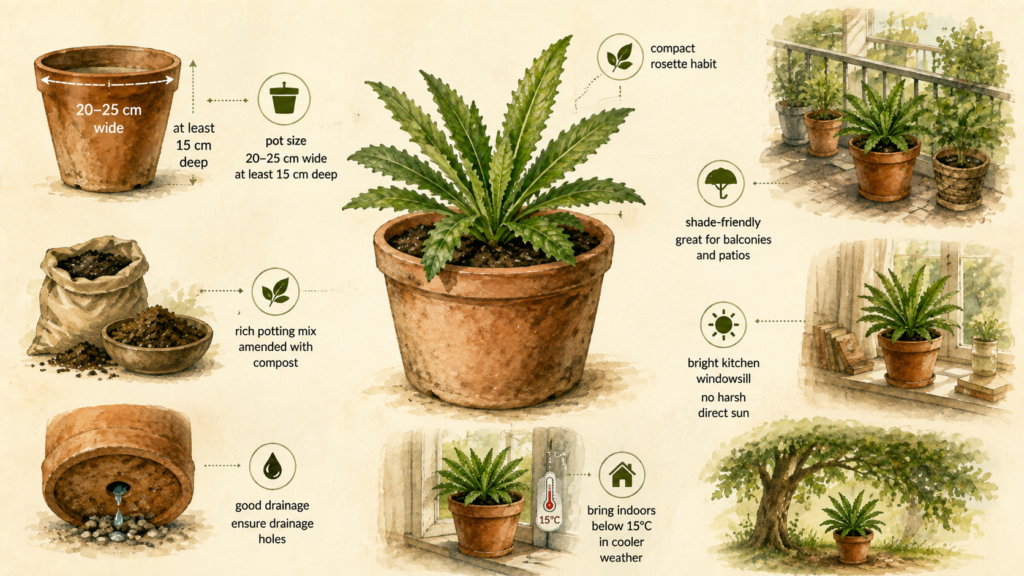
Culantro is an excellent container plant. Its compact rosette habit means it doesn’t need much horizontal space — a pot 20–25 cm (8–10 inches) wide and at least 15 cm deep is sufficient. Use a rich potting mix amended with compost and ensure good drainage holes.
Place containers in a shaded spot on a balcony, porch, or under a tree canopy. In cooler climates, growing in containers allows you to bring culantro indoors when temperatures drop below 15°C. A bright kitchen windowsill (without direct hot sun) works well for winter growing.
How to Harvest Culantro?
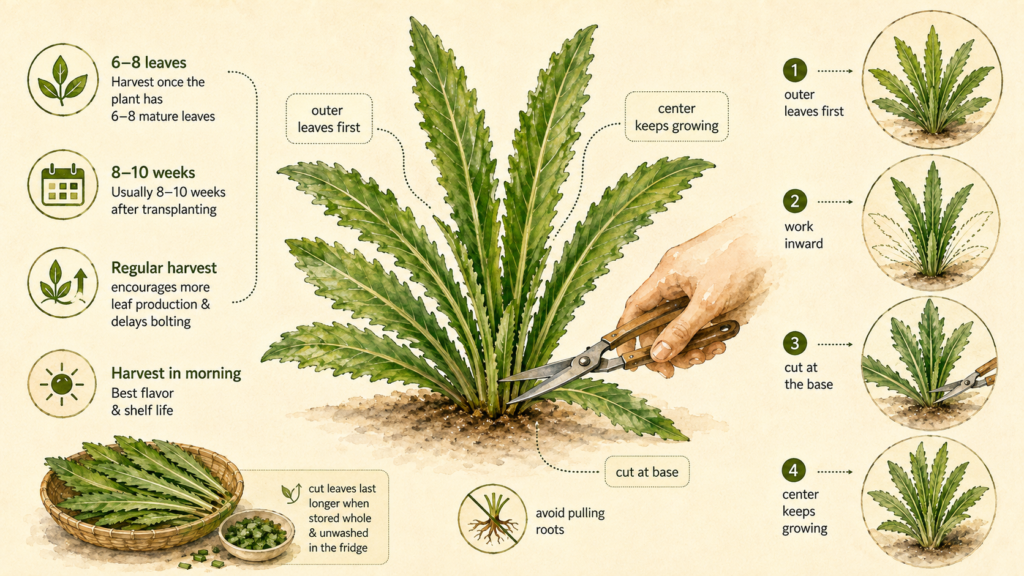
Harvest culantro by picking the outer leaves first, working inward. This “cut-and-come-again” method allows the center of the rosette to keep producing new growth. Use a sharp knife or scissors to cut leaves at the base rather than pulling, which can disturb the roots.
You can begin harvesting once the plant has 6–8 mature leaves, typically 8–10 weeks after transplanting. Regular harvesting actually encourages more leaf production and delays bolting. Harvest in the morning for the best flavor and longest shelf life.
Common Problems & Solutions
Culantro is relatively pest-free, but a few issues commonly frustrate growers:
- Slow germination — Seeds can take 2–4 weeks. Be patient, keep them warm and moist, and don’t cover with soil. Refrigerating seeds for 1 week before sowing can improve germination rates.
- Premature bolting — Usually caused by too much direct sun, high temperatures above 35°C, or drought stress. Move plants to shadier positions and keep soil consistently moist.
- Yellow leaves — Typically a sign of overwatering (soggy roots) or nutrient deficiency. Ensure drainage is adequate and feed every 2–3 weeks with a balanced liquid fertilizer.
- Leaf scorch or browning tips — Too much direct sunlight. Culantro prefers shade; relocate to a position with filtered or morning-only light.
Culinary Uses of Fresh Culantro
Culantro’s intense, pungent flavor — similar to cilantro but much stronger — makes it a staple in kitchens across the Caribbean, Central America, and Southeast Asia. Here are the most popular ways to use it:
- Sofrito & seasoning bases — Culantro is a key ingredient in Puerto Rican sofrito and Trinidadian green seasoning, blended with garlic, peppers, and other aromatics.
- Soups & stews — Unlike cilantro, culantro holds its flavor through long cooking times, making it perfect for pho, sancocho, callaloo, and curries.
- Chutneys & sauces — Blended into fresh chutneys, chimichurri-style sauces, and dipping sauces throughout the Caribbean and Asia.
- Fresh garnish — Chopped finely and added to rice, beans, ceviche, and noodle dishes just before serving for a bright, herbaceous punch.
Frequently Asked Questions About Culantro
Is culantro the same as cilantro?
No. Culantro (Eryngium foetidum) and cilantro (Coriandrum sativum) are different plants in the same family. They share a similar flavor, but culantro has long, serrated leaves and a much stronger taste. Cilantro has round, feathery leaves and a milder flavor.
Does culantro need full sun?
No — this is one of the biggest mistakes new growers make. Culantro actually prefers partial shade to full shade. It grows naturally on the forest floor in tropical regions. Too much direct sun causes leaf burn and premature bolting.
Can culantro survive winter?
Culantro cannot tolerate frost. In USDA zones below 10, grow it as a warm-season annual or bring container plants indoors before temperatures drop below 15°C (59°F). It can be grown year-round indoors on a bright windowsill.
Is culantro a perennial?
Culantro is technically a biennial — it grows leaves in its first year, then flowers and dies in its second. In tropical climates with no frost, it behaves as a short-lived perennial. Most gardeners grow it as an annual and let it self-seed for continuous harvests.
Why is my culantro bolting?
Culantro bolts when stressed — usually from too much direct sunlight, high heat above 35°C, or inconsistent watering. Move the plant to a shadier spot, water consistently, and pinch off flower stalks as soon as they appear to prolong leaf production.