
Everything you need to know about acerola cherry — from flavor and nutrition to planting your own tree at home.
What Is Acerola Fruit?
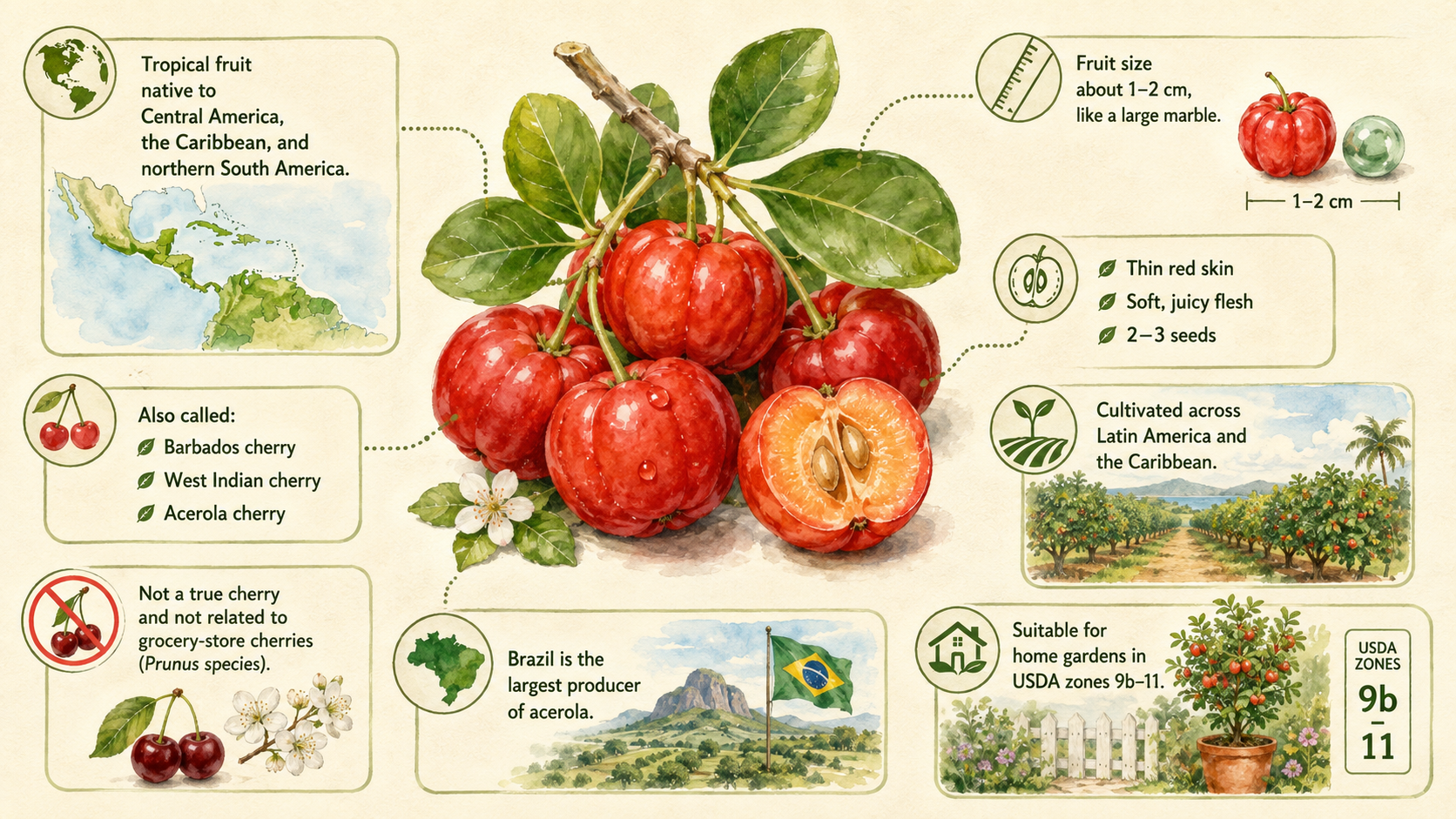
Acerola (Malpighia emarginata) is a small, cherry-like tropical fruit native to Central America, the Caribbean, and northern South America. You’ll also hear it called Barbados cherry, West Indian cherry, or simply acerola cherry — they’re all the same fruit.
The fruit is roughly the size of a large marble (1–2 cm diameter), with thin red skin, soft juicy flesh, and 2–3 small seeds inside. Unlike true cherries (genus Prunus), acerola belongs to the Malpighiaceae family and is not botanically related to the cherries you find at grocery stores.
Acerola has been cultivated for centuries across Latin America and the Caribbean. Today it’s grown commercially in Brazil (the world’s largest producer), as well as in home gardens throughout USDA zones 9b–11.
What Does Acerola Taste Like?
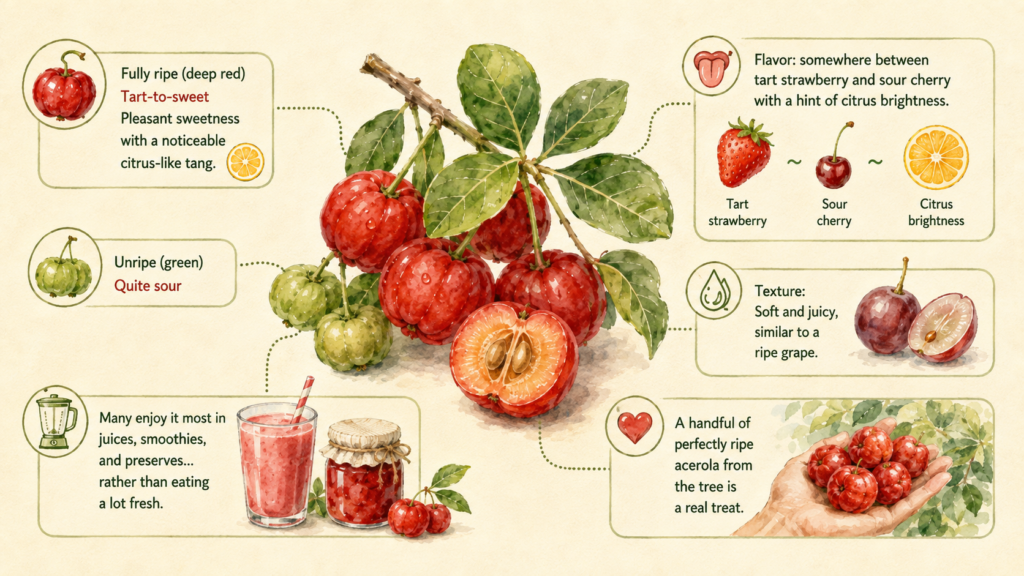
Acerola has a bright, tart-to-sweet flavor that surprises people expecting a conventional sweet cherry. When fully ripe (deep red), the fruit develops a pleasant sweetness balanced by a noticeable citrus-like tang. Unripe green fruit is quite sour.
💡 Quick tip: Think of acerola’s flavor as somewhere between a tart strawberry and a sour cherry, with a hint of citrus brightness. It’s refreshing rather than sugary.
The texture is soft and juicy — similar to a ripe grape. Because of its tartness, many people prefer acerola in juices, smoothies, and preserves rather than eating large quantities fresh. However, a handful of perfectly ripe fruit straight from the tree is a real treat.
Acerola Nutrition: Why the Vitamin C Hype?
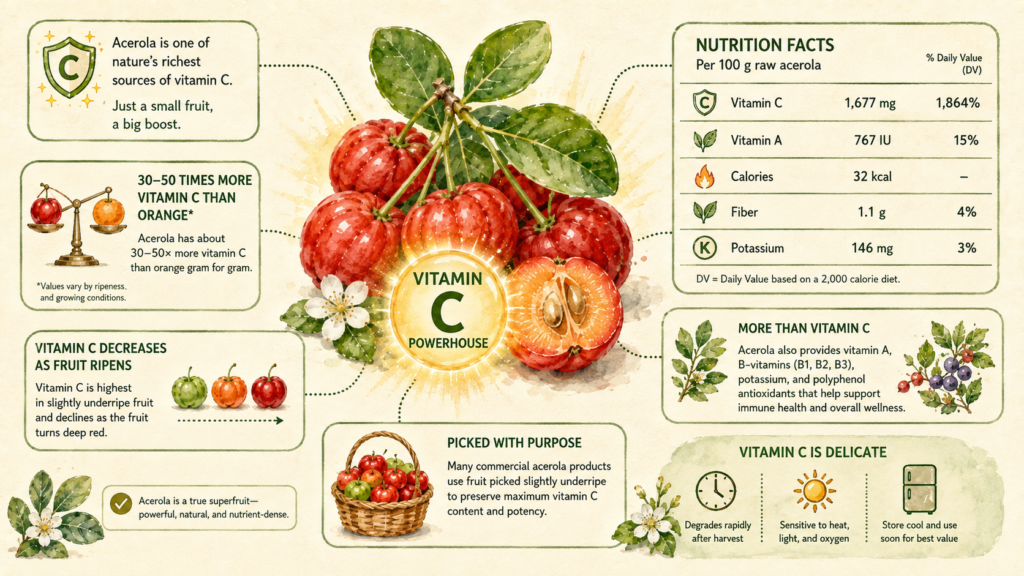
Acerola is one of the richest natural sources of vitamin C on the planet. A single 100g serving of raw acerola contains roughly 1,677 mg of vitamin C — that’s about 30–50 times more than an orange, gram for gram. This isn’t marketing hype; it’s well-documented in USDA food composition data.
| Nutrient | Per 100g (raw) | % Daily Value |
|---|---|---|
| Vitamin C | 1,677 mg | 1,864% |
| Vitamin A | 767 IU | 15% |
| Calories | 32 kcal | — |
| Fiber | 1.1 g | 4% |
| Potassium | 146 mg | 3% |
Beyond vitamin C, acerola provides vitamin A, B-vitamins, potassium, and various polyphenol antioxidants. Note: vitamin C content decreases as the fruit ripens and degrades rapidly after harvest, which is why most commercial acerola products use fruit picked slightly underripe. We avoid making specific disease-prevention claims here — enjoy acerola as a nutrient-dense whole food.
Identifying the Acerola Tree
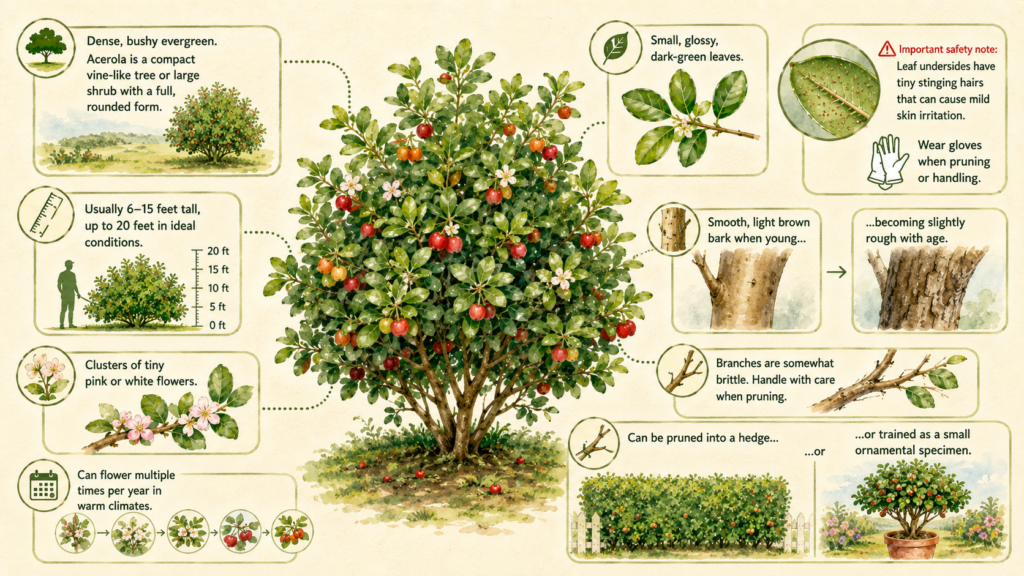
The acerola tree is a dense, bushy evergreen that grows 6–15 feet tall (up to 20 feet in ideal conditions). It has small, glossy dark-green leaves and produces clusters of tiny pink or white flowers multiple times per year in warm climates. The tree can be pruned into a hedge or trained as a small ornamental specimen.
The bark is smooth and light brown when young, becoming slightly rough with age. Branches are somewhat brittle. One distinguishing feature: the leaves have tiny stinging hairs on their undersides that can cause mild skin irritation — wear gloves when pruning.
How to Grow Acerola at Home?
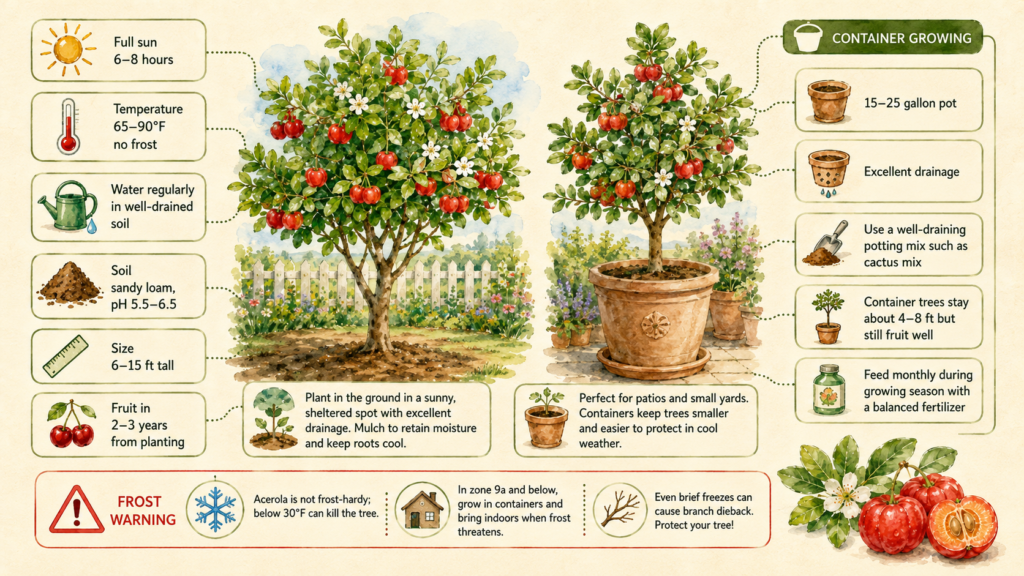
Acerola is surprisingly easy to grow if you live in a frost-free climate or can protect it during cold snaps. It thrives in USDA zones 9b–11 and does well in containers for gardeners in cooler areas who can move it indoors during winter.
🌱 Acerola Care at a Glance
| Sun: Full sun (6–8 hrs) | Temp: 65–90°F (no frost) |
| Water: Regular, well-drained | Soil: Sandy loam, pH 5.5–6.5 |
| Size: 6–15 ft tall | Fruit: 2–3 years from planting |
Container growing: Choose a 15–25 gallon pot with excellent drainage. Use a well-draining potting mix (cactus mix works well). Container trees stay smaller (4–8 ft) but still produce abundant fruit. Feed monthly during the growing season with a balanced fertilizer.
Frost tolerance: Acerola is NOT frost-hardy. Temperatures below 30°F can kill the tree. In zones 9a and below, grow exclusively in containers and bring indoors when frost threatens. Even brief freezes cause branch dieback.
When Is Acerola Ripe? Harvesting & Storage
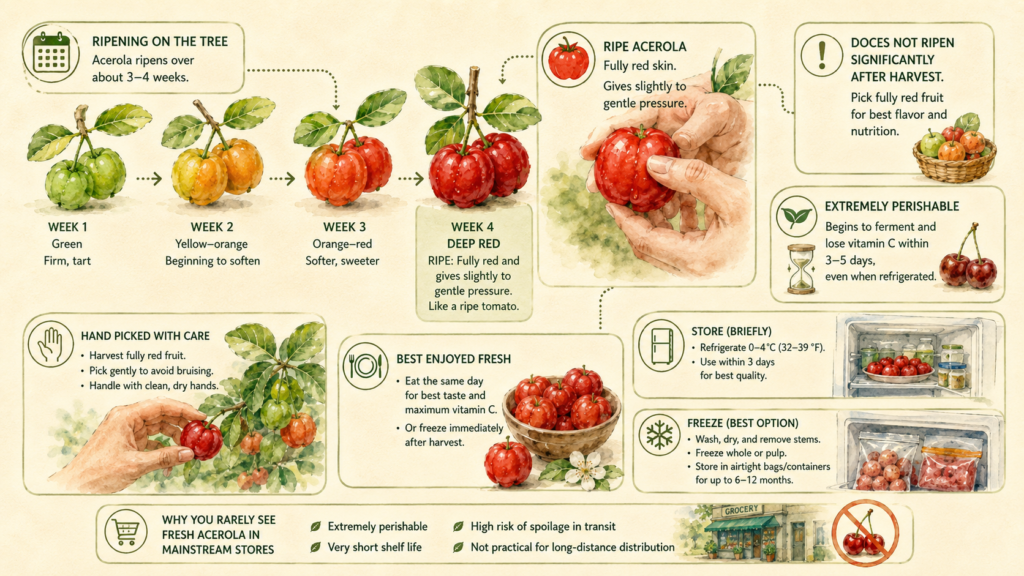
Acerola ripens from green to yellow-orange to deep red over about 3–4 weeks. Pick when the fruit is fully red and gives slightly to gentle pressure — similar to a ripe tomato. The fruit does not continue ripening significantly after harvest.
Important: Fresh acerola is extremely perishable. It begins to ferment and lose vitamin C within 3–5 days of harvest, even refrigerated. For best results, eat fresh fruit the same day or freeze immediately. This rapid spoilage is why you rarely find fresh acerola in mainstream grocery stores outside tropical regions.
How to Use Acerola in the Kitchen?
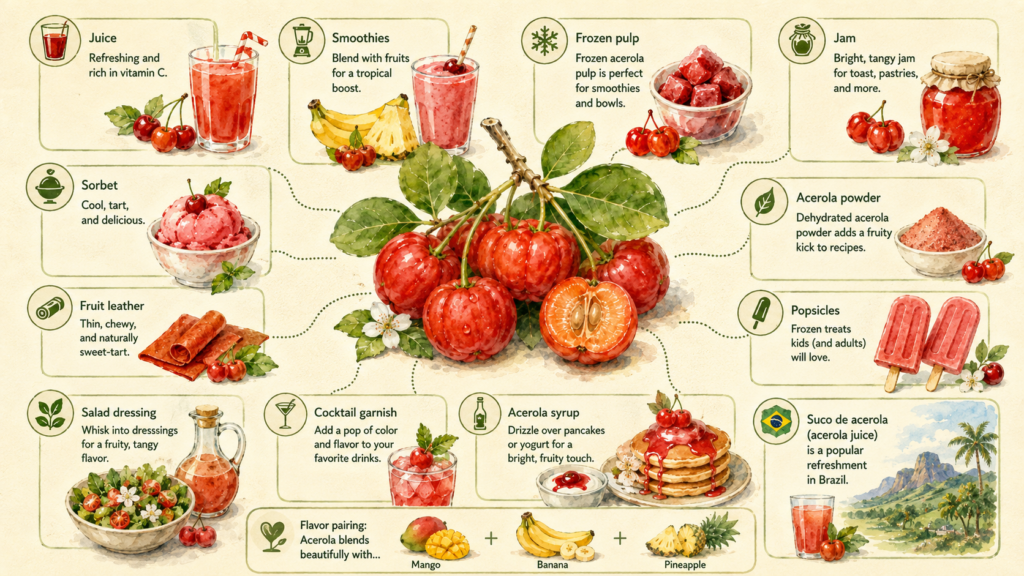
Because of its tartness and short shelf life, acerola is most commonly enjoyed as juice, smoothies, frozen pulp, jams, and sorbets. In Brazil, acerola juice (suco de acerola) is as common as orange juice. The fruit blends beautifully with sweeter tropical fruits like mango, banana, and pineapple.
Other popular uses: acerola powder (freeze-dried for supplements), fruit leather, popsicles, salad dressings, and cocktail garnishes. You can also make a simple acerola syrup by simmering the fruit with sugar and water — excellent drizzled over pancakes or yogurt.
Frequently Asked Questions About Acerola Fruit
1. What is acerola fruit?
Acerola is a small tropical fruit also known as Barbados cherry or West Indian cherry. It grows on a small evergreen shrub or tree and is known for its tart, juicy flavor and naturally high vitamin C content.
2. Is acerola the same as Barbados cherry?
Yes. Acerola and Barbados cherry are common names for the same fruit, scientifically known as Malpighia emarginata.
3. What does acerola taste like?
Acerola has a sweet-to-tart flavor that becomes sweeter as the fruit ripens. Ripe fruit is juicy and mildly acidic, while less-ripe acerola can be quite sour.
4. Is acerola high in vitamin C?
Yes. Acerola is widely recognized as a fruit naturally rich in vitamin C, although the exact amount varies depending on ripeness, growing conditions, and variety.
5. Can you eat acerola fruit fresh?
Yes. Fresh ripe acerola can be eaten directly after removing or avoiding the small seeds. It is also commonly used in juices, smoothies, purees, jams, and other preparations.