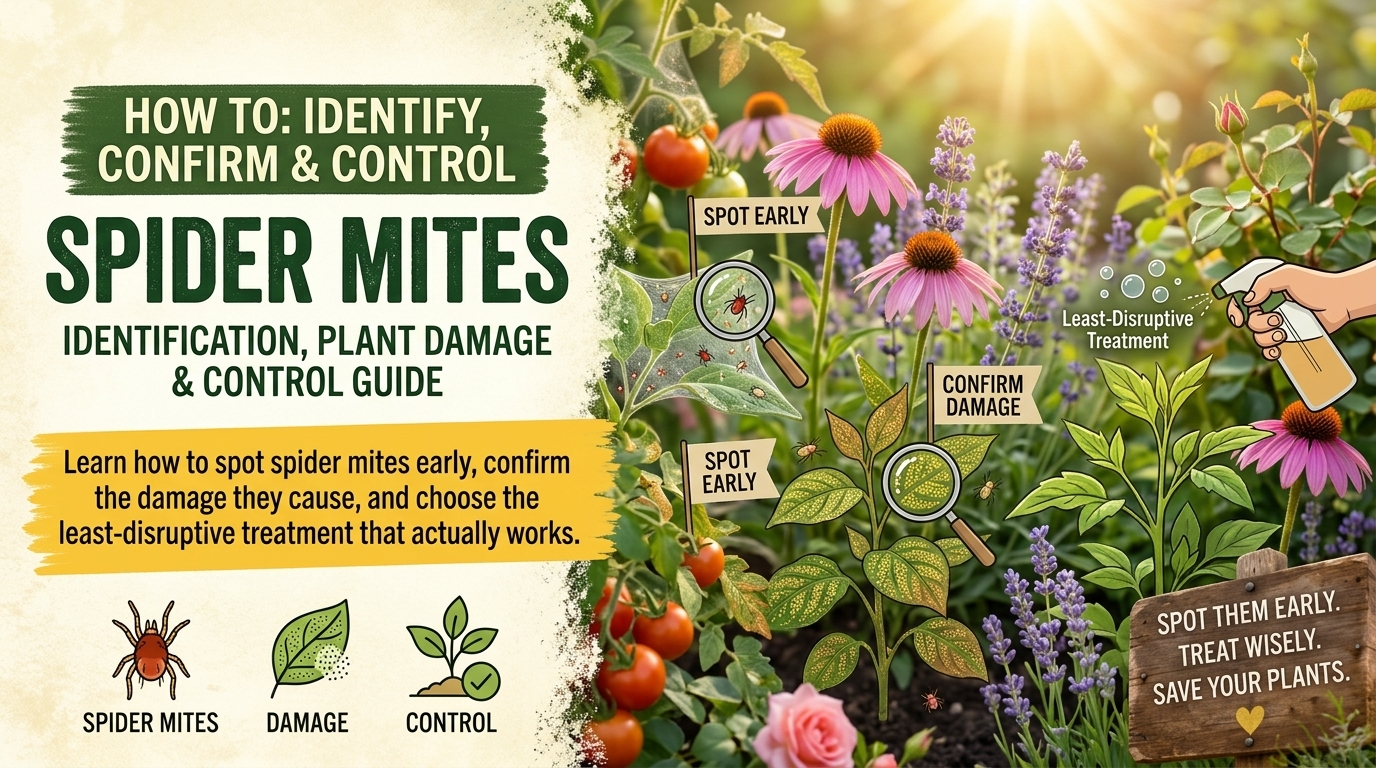

Learn how to spot spider mites early, confirm the damage they cause, and choose the least-disruptive treatment that actually works.
1. How to Identify Spider Mites
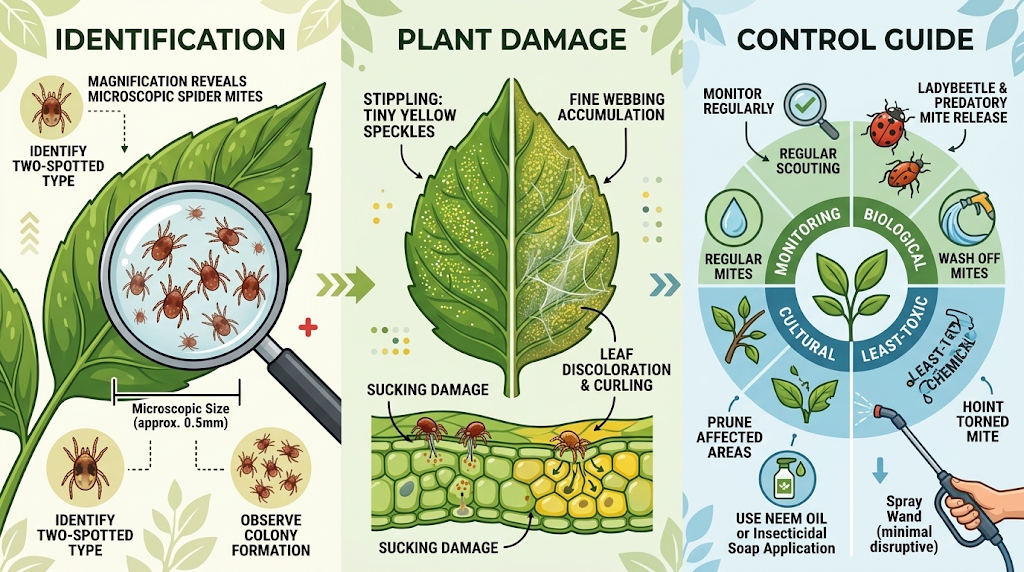
Spider mites are tiny arachnids — not insects — measuring less than 0.5 mm. To the naked eye they look like moving specks of dust, usually reddish-brown, yellow, or green depending on the species and time of year.
The easiest confirmation method: hold a sheet of white paper beneath a suspect leaf and tap sharply. If tiny dots fall onto the paper and begin to crawl, you have spider mites. A 10× hand lens reveals their eight legs and oval bodies clearly.
Heavy infestations produce fine, silky webbing on leaf undersides and between stems — a hallmark sign that distinguishes spider mites from other tiny pests.
2. What Spider Mite Damage Looks Like
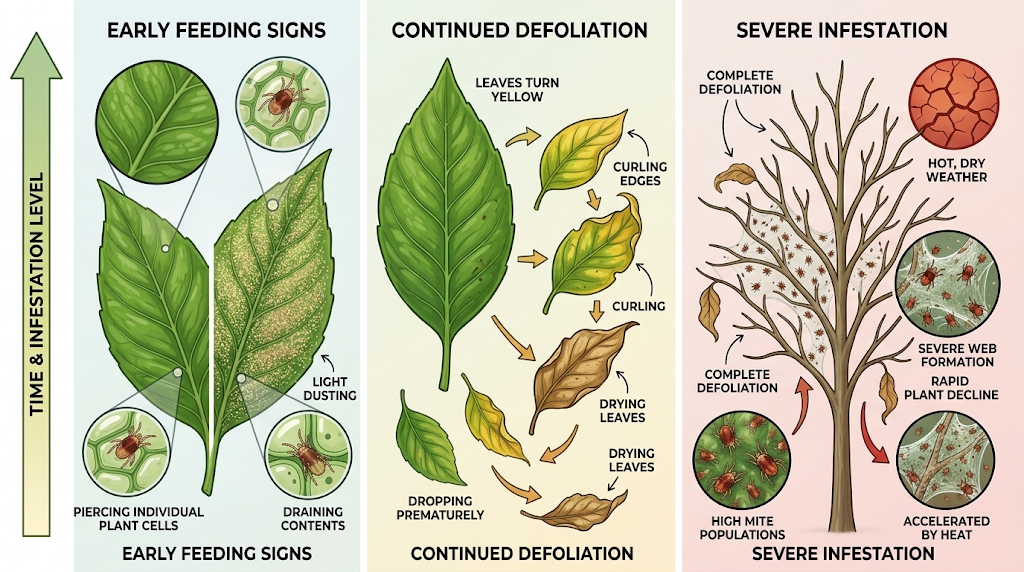
Spider mites feed by piercing individual plant cells and draining their contents. The earliest symptom is fine stippling — tiny pale dots on the upper leaf surface that resemble a light dusting of yellow or bronze.
As feeding continues, leaves turn yellow, curl at the edges, dry out, and drop prematurely. Severe infestations can defoliate entire plants in weeks during hot, dry weather.
💡 Quick test: If stippling is only on the leaf tops and the undersides show tiny specks or webbing, spider mites are almost certainly the cause — not nutrient deficiency or sunburn.
3. Lifecycle & Habitat
A single female can lay over 100 eggs. In warm conditions (27°C+), the egg-to-adult cycle completes in just 5–7 days, meaning populations explode rapidly. They thrive in hot, dry, dusty conditions and are most problematic from late spring through early autumn.
They overwinter as adults in soil debris, bark crevices, or on evergreen host plants. Indoor plants can harbour year-round infestations since heating systems create ideal low-humidity conditions.
4. Common Host Plants
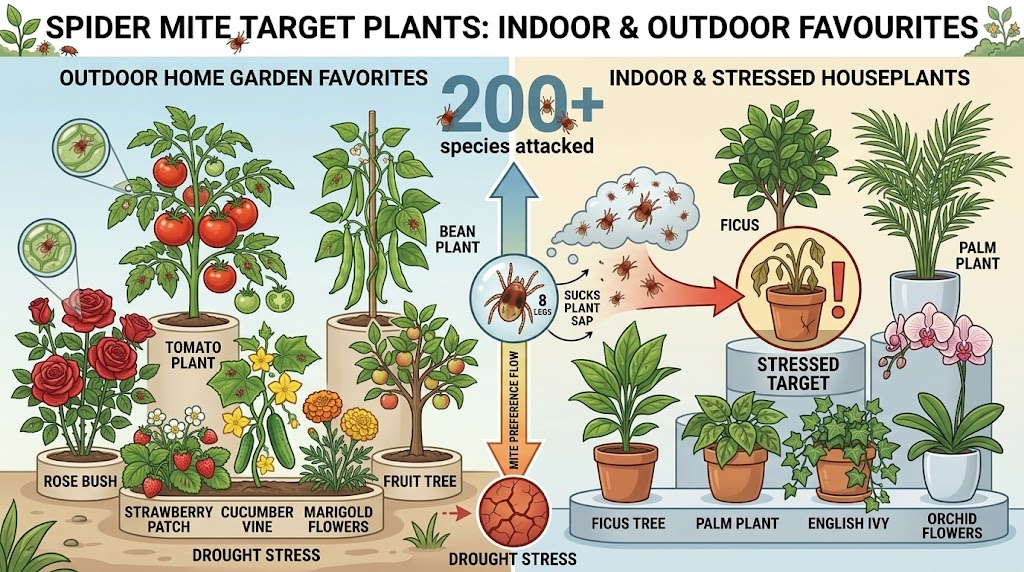
Spider mites attack over 200 plant species. In home gardens, the most frequently affected include roses, tomatoes, beans, strawberries, cucumbers, marigolds, and fruit trees. Indoors, they favour ficus, palms, ivies, and orchids. Stressed or drought-weakened plants are targeted first.
5. Pests That Look Similar
Clover mites are larger and bright red but don’t damage plants. Thrips cause similar stippling but are slender, winged insects visible at 1–2 mm. Broad mites are microscopic and cause distorted new growth rather than stippling. If you see webbing and stippling together, spider mites are the most likely culprit.
6. Control Methods (Least-Disruptive First)
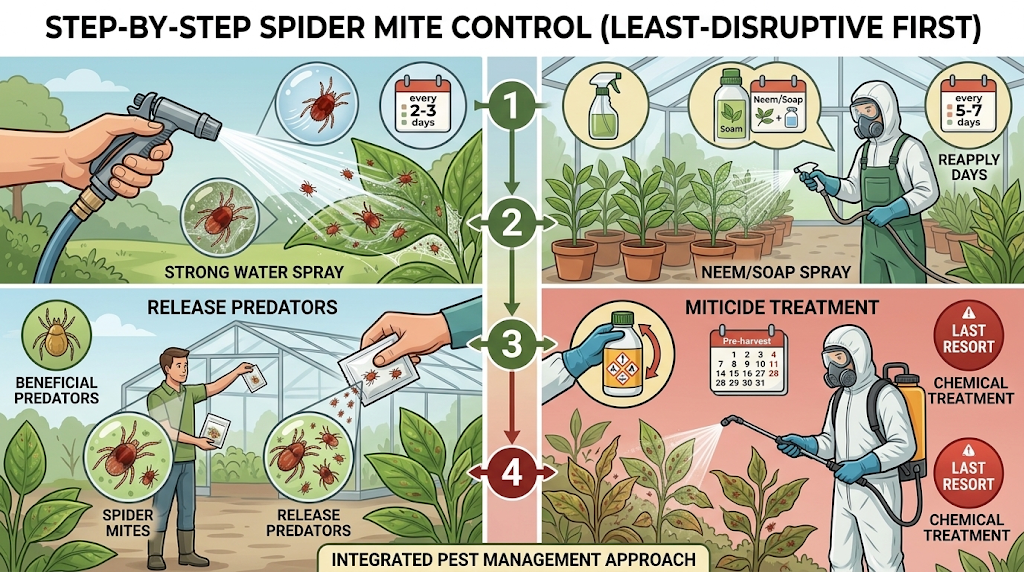
Start with the gentlest approach and escalate only if needed. This protects beneficial insects that naturally keep mite populations in check.
A. Strong Water Spray
A forceful spray from a garden hose dislodges mites and destroys webbing. Focus on leaf undersides. Repeat every 2–3 days for two weeks. This alone can resolve light infestations on outdoor plants.
B. Neem Oil or Insecticidal Soap
Spray diluted neem oil (2–3 ml per litre of water plus a drop of dish soap as an emulsifier) on all leaf surfaces in the early morning or evening. Insecticidal soap works on contact — thorough coverage is essential. Reapply every 5–7 days for three applications.
C. Biological Control (Predatory Mites)
Release Phytoseiulus persimilis or Neoseiulus californicus — predatory mites that feed exclusively on spider mites. They’re available online and work best in greenhouses or enclosed gardens. One release often provides lasting control.
D. Miticides (Last Resort)
Chemical miticides (like abamectin or spiromesifen) should only be used for severe infestations that haven’t responded to other treatments. Rotate active ingredients to prevent resistance. Always follow label directions and observe pre-harvest intervals on edible plants.
7. Preventing Spider Mites
Keep humidity up by misting indoor plants regularly and mulching outdoor beds. Avoid over-fertilising with nitrogen (lush growth attracts mites). Inspect new plants before introducing them to your garden. Remove dusty leaves periodically, and ensure adequate spacing for airflow between plants.
8. When to Call a Professional
Seek professional pest control if infestations recur after three rounds of treatment, if valuable landscape trees are heavily affected, or if you’re unsure whether the pest is actually spider mites. A local extension service can identify samples for free and recommend region-specific treatments.
Frequently Asked Questions
How can I tell if my plant has spider mites?
Look for fine yellow or bronze stippling on leaves, especially alongside tiny moving specks or delicate webbing on leaf undersides and between stems. The white-paper tap test can confirm an infestation.
Can spider mites spread to my other plants?
Yes. They can spread through plant contact, air currents, tools, clothing, or newly purchased plants. Isolate affected plants and inspect nearby plants carefully.
What is the safest first treatment?
Begin with a strong spray of water, concentrating on leaf undersides, and repeat every few days. This physically removes mites and webbing without harming most beneficial insects.
How long does spider mite control take?
Light infestations may improve within two weeks, but persistent problems require repeated treatments because eggs can survive the first round. Monitor plants regularly and follow the treatment schedule consistently.