
Learn how to recognize deer ticks, understand where they concentrate in your yard, and take practical steps to reduce tick-friendly habitat around your home.
1. How to Identify Deer Ticks
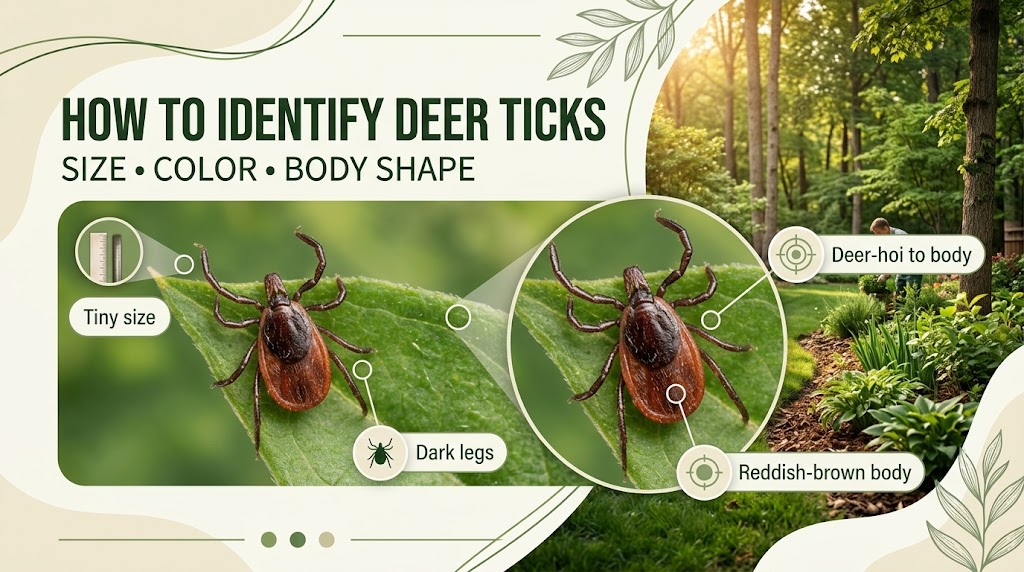
Deer ticks (Ixodes scapularis), also called blacklegged ticks, are small arachnids — not insects. Adults are roughly the size of a sesame seed (3–5 mm), with a flat, oval body. Females have an orange-red abdomen with a dark brown dorsal shield; males are entirely dark brown. Unfed nymphs are poppy-seed-sized and translucent tan, making them extremely difficult to spot on skin.
Unlike the larger American dog tick, deer ticks lack white markings or ornate patterns. Their legs are uniformly dark. When engorged after feeding, females swell to roughly 10 mm and turn grey-green. Finding a small, unmarked, dark-legged tick on your body — especially from spring through autumn — is a strong indicator you’re dealing with a deer tick.
Key field marks: very small size, no white markings, dark legs, orange-red abdomen on females, and a flat teardrop shape when unfed. Nymphs are the most dangerous life stage because their tiny size means bites often go unnoticed.
2. Habitat Hotspots in Your Yard
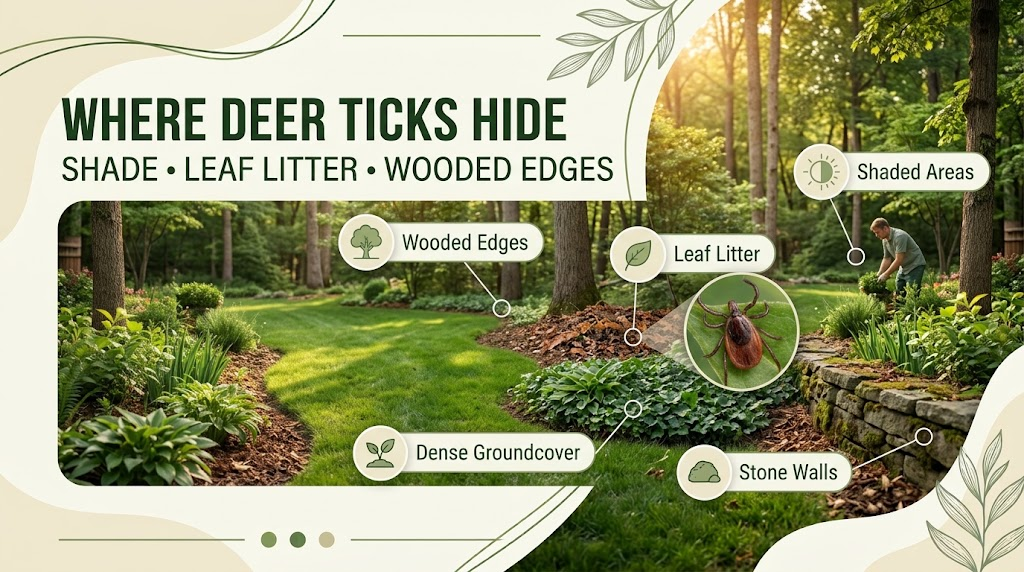
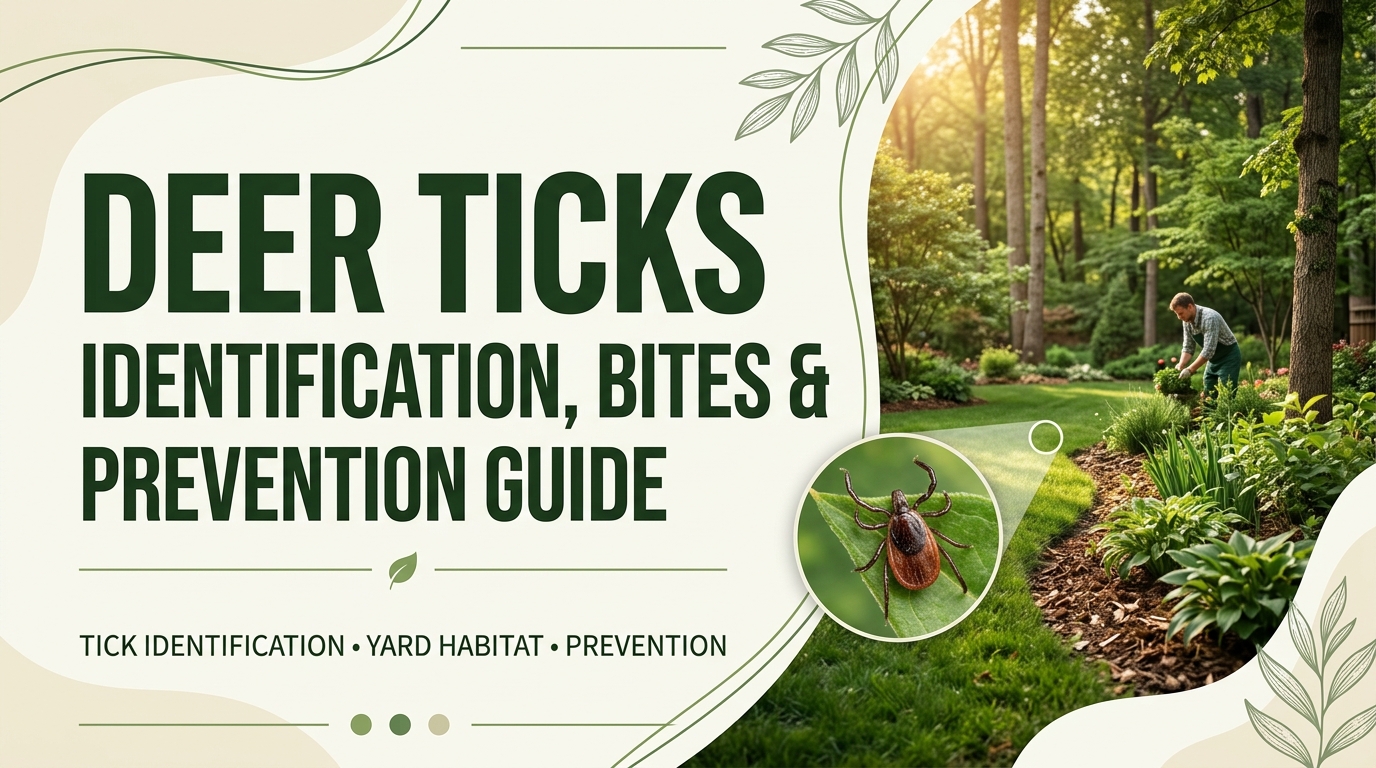
Deer ticks thrive in humid, shaded environments with leaf litter and dense ground cover. In residential landscapes, the highest-risk zones are the transitional edges where mowed lawn meets woods, stone walls bordered by leaf debris, overgrown shrub beds, and shaded groundcover plantings. They do not survive well on open, sunny, dry lawns.
Pay special attention to areas where children play near wooded borders, compost piles backed by trees, garden sheds surrounded by tall grass, and paths running through unmaintained vegetation. White-footed mice — the primary reservoir host for Lyme disease — frequent these same microhabitats, creating a direct pipeline from infected mice to questing ticks to human skin.
3. Lifecycle
Deer ticks have a two-year lifecycle with four stages: egg, larva (6 legs), nymph (8 legs), and adult. Each active stage requires one blood meal to advance. Larvae hatch in summer, feed on small mammals (often mice), then molt into nymphs. Nymphs are most active May–July and are responsible for most human Lyme disease cases because of their tiny size and peak activity during outdoor season.
Adults quest on tall grass and shrubs from October through early spring, seeking larger hosts like deer, dogs, and humans. After mating, females lay 2,000–3,000 eggs in leaf litter the following spring. Understanding this timeline helps you target prevention efforts: focus on nymph-stage control in late spring and adult-stage barriers in autumn.
4. Health Risks & Tick-Borne Illness
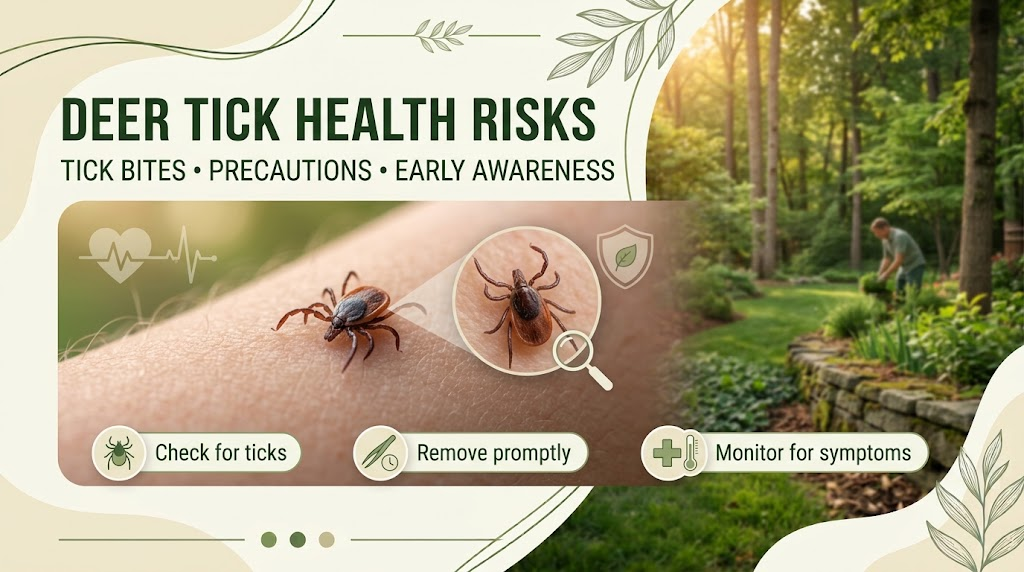
Deer ticks are the primary vector for Lyme disease (Borrelia burgdorferi), anaplasmosis, babesiosis, and Powassia virus in much of the eastern and upper-midwestern United States and parts of southeastern Canada. Transmission of Lyme typically requires 36–48 hours of attachment, which is why prompt tick checks after outdoor activity are critical.
💡 Key takeaway: Not every deer tick carries disease, and not every bite results in infection. But because consequences can be serious, treat every attached deer tick as a reason to monitor your health for 30 days — watch for expanding rash, fever, joint pain, or fatigue, and consult a physician promptly if symptoms appear.
The classic bull’s-eye rash (erythema migrans) appears in roughly 70–80% of Lyme cases, usually 3–30 days after the bite. Early antibiotic treatment is highly effective. If you find an engorged tick that may have been attached for over 24 hours, contact your doctor — prophylactic treatment may be appropriate depending on your region’s Lyme prevalence.
5. Yard-Maintenance Steps to Reduce Ticks

Mow your lawn frequently and keep grass short, especially near play areas and patios. Remove leaf litter, brush piles, and ground-level debris where ticks shelter. Create a 3-foot-wide barrier of wood chips or gravel between your lawn and wooded edges — studies show this dry, sunny strip significantly reduces tick migration into maintained areas.
Trim tree branches to increase sunlight on the ground, stack firewood neatly in dry areas away from the house, and keep playground equipment and outdoor furniture on open, sunny lawn — not under tree canopy. Discourage deer with fencing or deer-resistant plantings along your property border, since deer are the primary reproductive host for adult ticks.
6. Personal Prevention Measures
When working in tick-prone areas, wear light-colored clothing (makes ticks easier to spot), long pants tucked into socks, and closed-toe shoes. Apply EPA-registered repellent containing DEET (20–30%) to exposed skin, or permethrin to clothing and gear — permethrin-treated clothing remains effective through multiple washes.
Perform a full-body tick check within two hours of coming indoors. Pay attention to hidden areas: behind ears, along the hairline, under arms, behind knees, and around the waistband. Shower promptly and tumble-dry clothes on high heat for 10 minutes to kill any attached ticks. Check pets before they come inside — dogs are highly susceptible to tick attachment and can carry ticks into your home.
7. Treatment Options for Your Yard
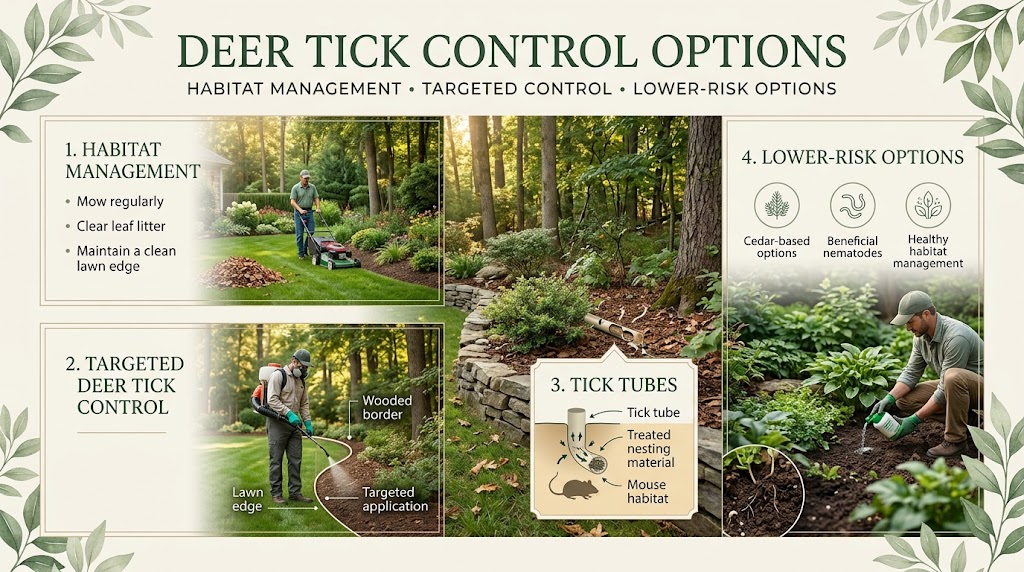
Landscape management alone reduces tick numbers substantially. Chemical or biological treatments add another layer of control and are most effective when combined with habitat modification rather than used in isolation.
A. Granular Tick Tubes
Tick tubes contain permethrin-treated cotton that mice collect for nesting material. This kills ticks on the mice — the primary nymph host — breaking the transmission cycle at its source. Place tubes along stone walls, woodpile edges, and garden borders in spring (April–May) and again in late summer (August). They’re non-toxic to humans and pets in normal use.
B. Perimeter Sprays
Bifenthrin or lambda-cyhalothrin sprays applied to the lawn–woods border, shrub beds, and stone walls in May and again in September target nymphs and adults respectively. Follow label directions carefully, apply when rain isn’t expected for 24 hours, and avoid spraying near water features or pollinator gardens. One or two targeted applications per season is standard.
C. Natural & Organic Options
Cedar oil sprays and nematode applications (Steinernema carpocapsae) offer reduced-risk alternatives. Nematodes are most effective in moist, shaded soil where ticks rest. Apply in late spring when soil temperatures reach 15°C (60°F). Results are more gradual than synthetic options but avoid harm to beneficial insects. Guinea fowl and opossums are effective natural tick predators if practical for your property.
8. When to Call a Professional
Consider hiring a licensed pest management professional if: you live adjacent to heavily wooded or deer-dense areas and DIY measures haven’t reduced tick encounters after one full season; a family member has been diagnosed with a tick-borne illness; or you need a comprehensive integrated pest management (IPM) plan for a large property. Professionals can conduct drag-cloth surveys to quantify tick density, recommend targeted treatments, and time applications to your region’s peak tick activity. Your local cooperative extension office can also provide free tick identification and region-specific guidance.
Frequently Asked Questions
How do I safely remove an attached tick?
Use fine-tipped tweezers to grasp the tick as close to the skin surface as possible. Pull upward with steady, even pressure — don’t twist or jerk. Clean the bite area with rubbing alcohol or soap and water. Never use heat, petroleum jelly, or nail polish to remove a tick; these methods can cause the tick to regurgitate into the wound.
Can deer ticks survive indoors?
Deer ticks require high humidity (above 80%) to survive. Most homes are too dry for them to live long. However, a tick brought indoors on clothing or a pet can survive long enough to find a host. Tumble-drying clothes on high heat for 10 minutes and checking pets promptly eliminates this risk.
Are deer ticks active in winter?
Yes — adult deer ticks are active whenever temperatures are above freezing (roughly 4°C / 40°F), including mild winter days. They quest on vegetation even in late autumn and early spring. Snow cover suppresses activity, but a warm January day can bring them out. Don’t let your guard down outside of summer.
Do all deer ticks carry Lyme disease?
No. Infection rates vary by region and life stage. In the northeastern US, roughly 20–30% of nymphs and up to 50% of adult females carry Borrelia burgdorferi. In other regions the rate can be much lower. Regardless, prompt removal within 24 hours dramatically reduces transmission risk.