
Learn how to identify boxelder bugs, understand whether they’re truly harmful, and choose the right control method — without overtreating your home or garden.
1. How to Identify Boxelder Bugs
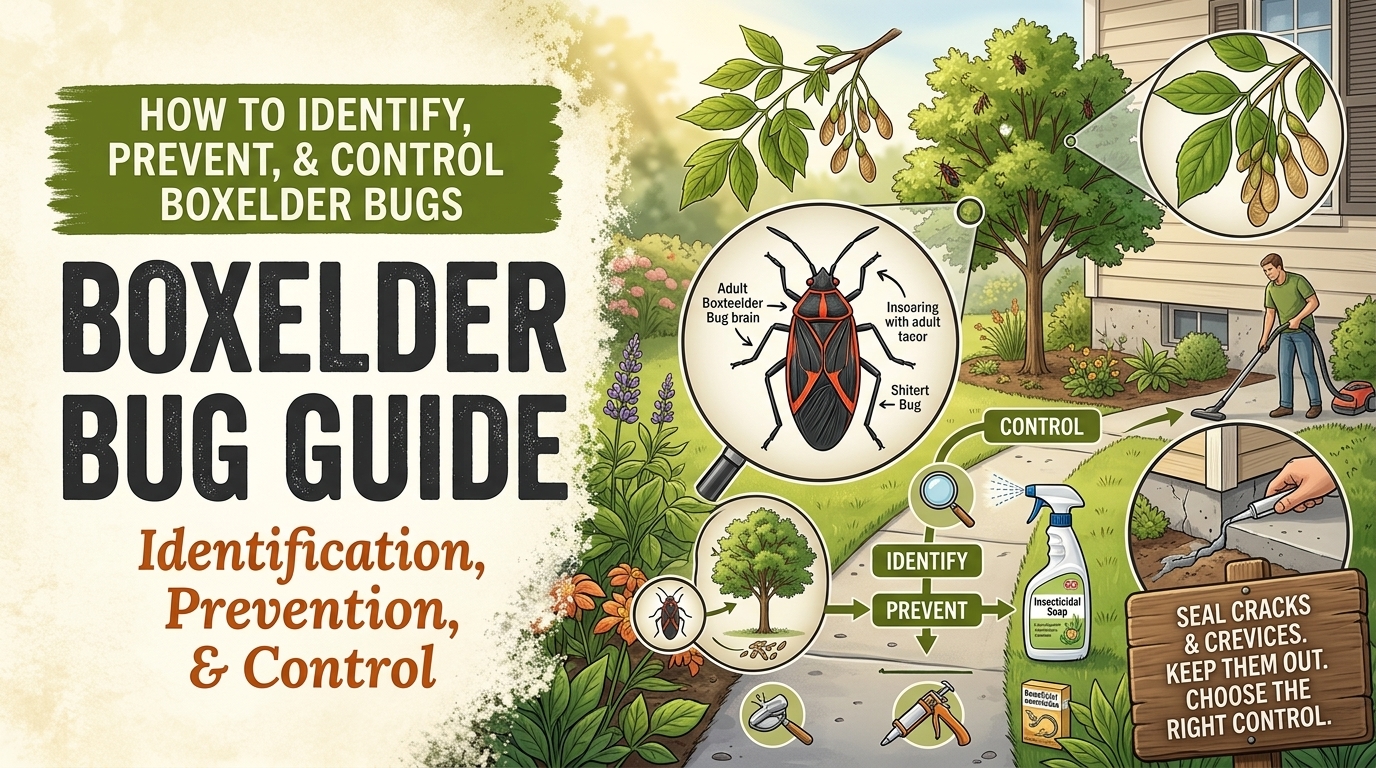
Boxelder bugs (Boisea trivittata) are flat, oval insects about 12 mm long as adults. They’re mostly black with distinctive red or orange lines along the edges of their wings and on their thorax. Nymphs are smaller, bright red, and wingless.
You’ll most often notice them in autumn when they congregate in large numbers on sun-warmed walls, fences, and tree trunks — especially on the south and west sides of buildings. In spring they emerge from overwintering spots and scatter.
Key field marks: flat body, three red stripes on the pronotum (area behind the head), and red wing veins forming a rough ‘X’ pattern when wings are folded.
2. Are Boxelder Bugs Actually Harmful?\
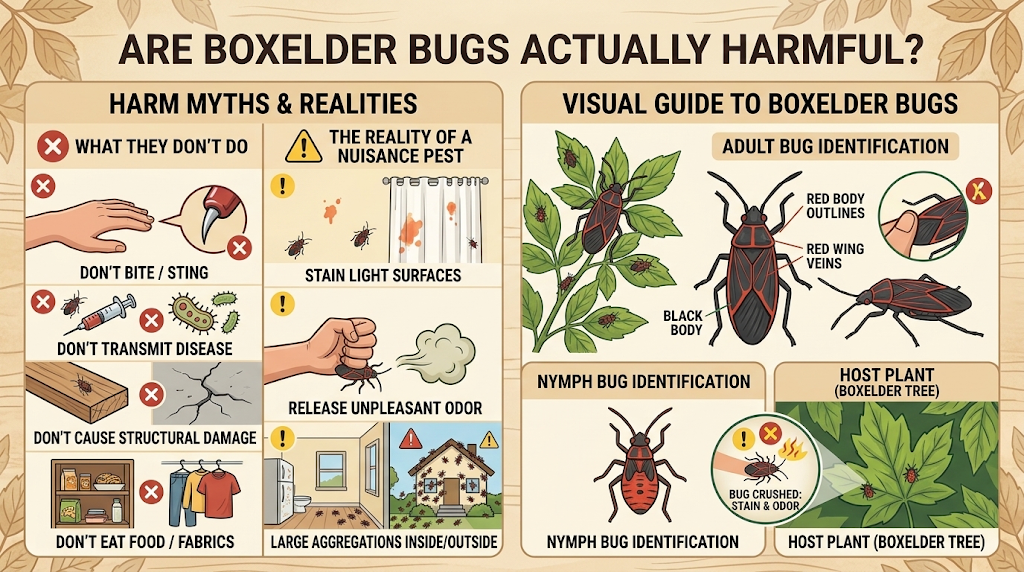
The short answer: they’re a nuisance pest, not a destructive one. Boxelder bugs don’t bite, sting, transmit diseases, or cause structural damage to your home. They don’t eat fabrics, wood, or stored food.
However, they can stain light-coloured surfaces with reddish-orange excrement, and crushing them releases a mildly unpleasant odour. Large aggregations on or inside your home are unsightly, and their sheer numbers can feel alarming.
💡 Key takeaway: Boxelder bugs are a cosmetic and comfort issue — not a health or structural threat. If you only see a handful, treatment is usually unnecessary.
3. Lifecycle & Habitat
Boxelder bugs produce one generation per year (two in warmer climates). Adults overwinter in sheltered spots — wall voids, attics, leaf litter, or bark crevices. They emerge in spring to feed and mate, laying clusters of reddish eggs on host trees and nearby surfaces.
Nymphs hatch in about two weeks and feed on seeds, leaves, and developing fruit through summer. By autumn, new adults seek warm surfaces to aggregate before finding winter shelter — which is when homeowners notice them most.
4. Host Plants
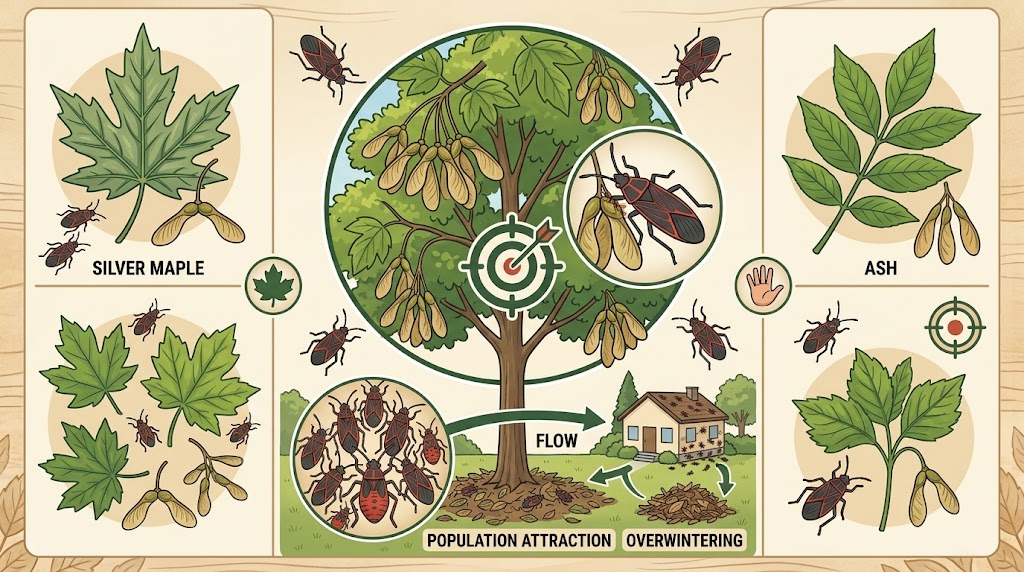
Their primary host is the female (seed-bearing) boxelder maple (Acer negundo). They also feed on silver maples, other maple species, and occasionally ash trees. The bugs are attracted to the seeds — properties with seed-producing boxelder trees nearby will see the largest populations.
5. Bugs That Look Similar
Milkweed bugs (Oncopeltus fasciatus) are similar in size and colour but have broader orange bands and are found on milkweed plants. Small milkweed bugs and red-shouldered bugs also share the red-and-black pattern. Stink bugs are broader and shield-shaped. If the bugs are congregating on a maple tree or your home’s sunny side in autumn, they’re almost certainly boxelder bugs.
6. Control Methods (Least-Disruptive First)
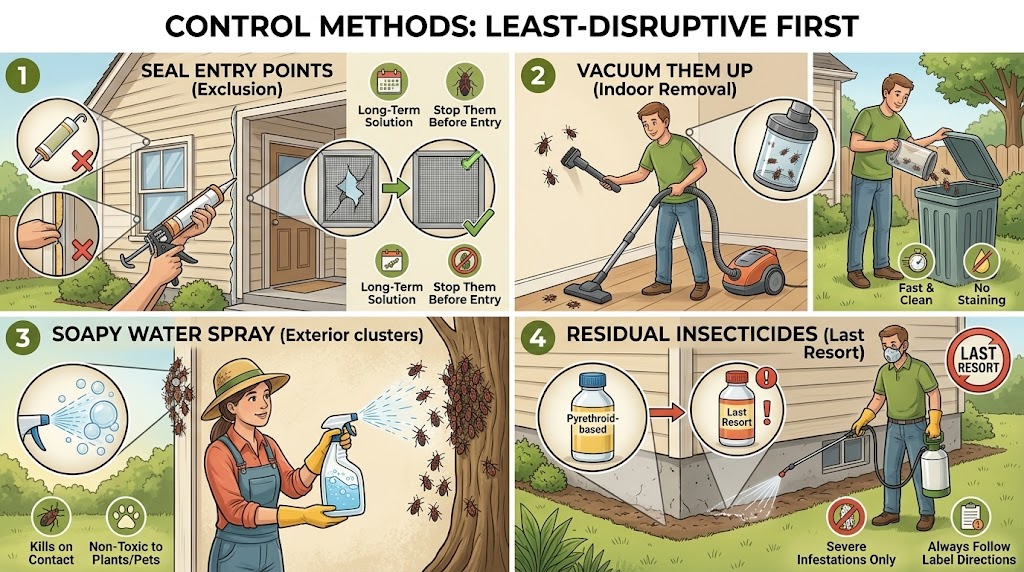
Because boxelder bugs aren’t harmful, the goal is exclusion and removal — not extermination. Start with the gentlest approach and only escalate if numbers are truly intolerable.
A. Seal Entry Points
Caulk gaps around windows, doors, utility pipes, and dryer vents. Replace damaged weatherstripping and repair torn screens. This is the single most effective long-term solution — it stops them entering your home in the first place.
B. Vacuum Them Up
For bugs already inside, a vacuum cleaner is the fastest and cleanest removal method. Empty the bag or canister outdoors immediately — they won’t survive long but can produce an odour. Avoid crushing them on walls to prevent staining.
C. Soapy Water Spray
A simple mix of water and a few drops of dish soap in a spray bottle kills boxelder bugs on contact by breaking down their protective coating. Spray directly on clusters gathered on exterior walls or tree trunks. It’s non-toxic to plants and pets.
D. Residual Insecticides (Last Resort)
Pyrethroid-based perimeter sprays applied around foundations and entry points can reduce numbers entering your home. Use these only for severe, recurring infestations, and always follow label directions. They are not necessary for most homeowners.
7. Preventing Boxelder Bug Problems
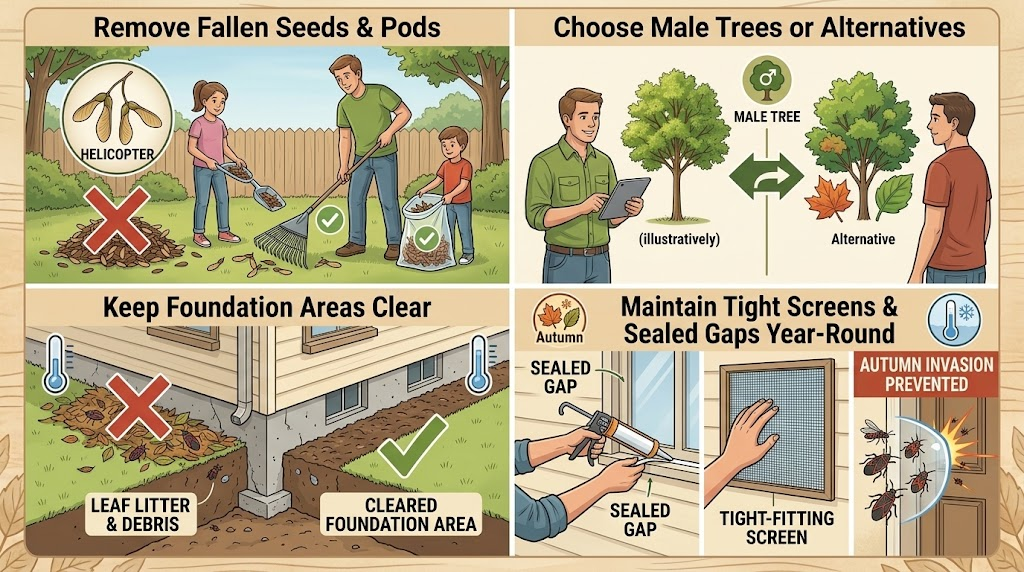
Remove fallen boxelder seeds and seed pods from your yard regularly. If you’re planting new trees, choose male (non-seed-bearing) boxelder varieties or alternative species. Keep foundation areas clear of leaf litter and debris where bugs overwinter. Maintaining tight-fitting screens and sealed gaps year-round prevents autumn invasions.
8. When to Call a Professional
Consider professional pest control if you find hundreds of bugs inside your home despite sealing efforts, if they return in large numbers year after year, or if you’re unsure whether the insect is actually a boxelder bug. A local extension service can identify samples for free and recommend region-appropriate strategies.
Frequently Asked Questions
Do boxelder bugs bite?
Rarely. They have piercing mouthparts designed for seeds, and in very unusual cases may probe skin, causing a mild irritation similar to a mosquito bite. They are not aggressive and do not seek out humans.
Will removing my boxelder tree solve the problem?
It can significantly reduce local populations, but boxelder bugs can fly several hundred metres from their host tree. If neighbours have boxelder or maple trees nearby, you may still see some. Sealing your home is more practical.
Are boxelder bugs dangerous to pets?
No. They’re non-toxic to cats and dogs. A pet that eats one may experience mild mouth irritation from the bug’s taste compounds, but no poisoning or lasting harm.
When is the best time to treat for boxelder bugs?
Late summer to early autumn — before they move toward buildings to overwinter. Sealing entry points in late summer is especially effective. Spraying in spring targets emerging adults but won’t prevent next autumn’s aggregation.