
Everything you need to know about growing Strelitzia indoors and outdoors — from watering to flowering.
Bird of Paradise Care at a Glance
| ☀️ Light: Bright direct to bright indirect | 💧 Water: When top 5 cm of soil is dry |
| 🌱 Soil: Well-draining, rich potting mix | 🌡️ Temperature: 18–30 °C (65–85 °F) |
| 💨 Humidity: Average to high (50%+) | 🧪 Feed: Monthly in spring/summer |
| 📏 Size: Up to 1.5 m indoors, 3+ m outdoors | ⚠️ Toxicity: Mildly toxic to pets |
What Is a Bird of Paradise Plant?
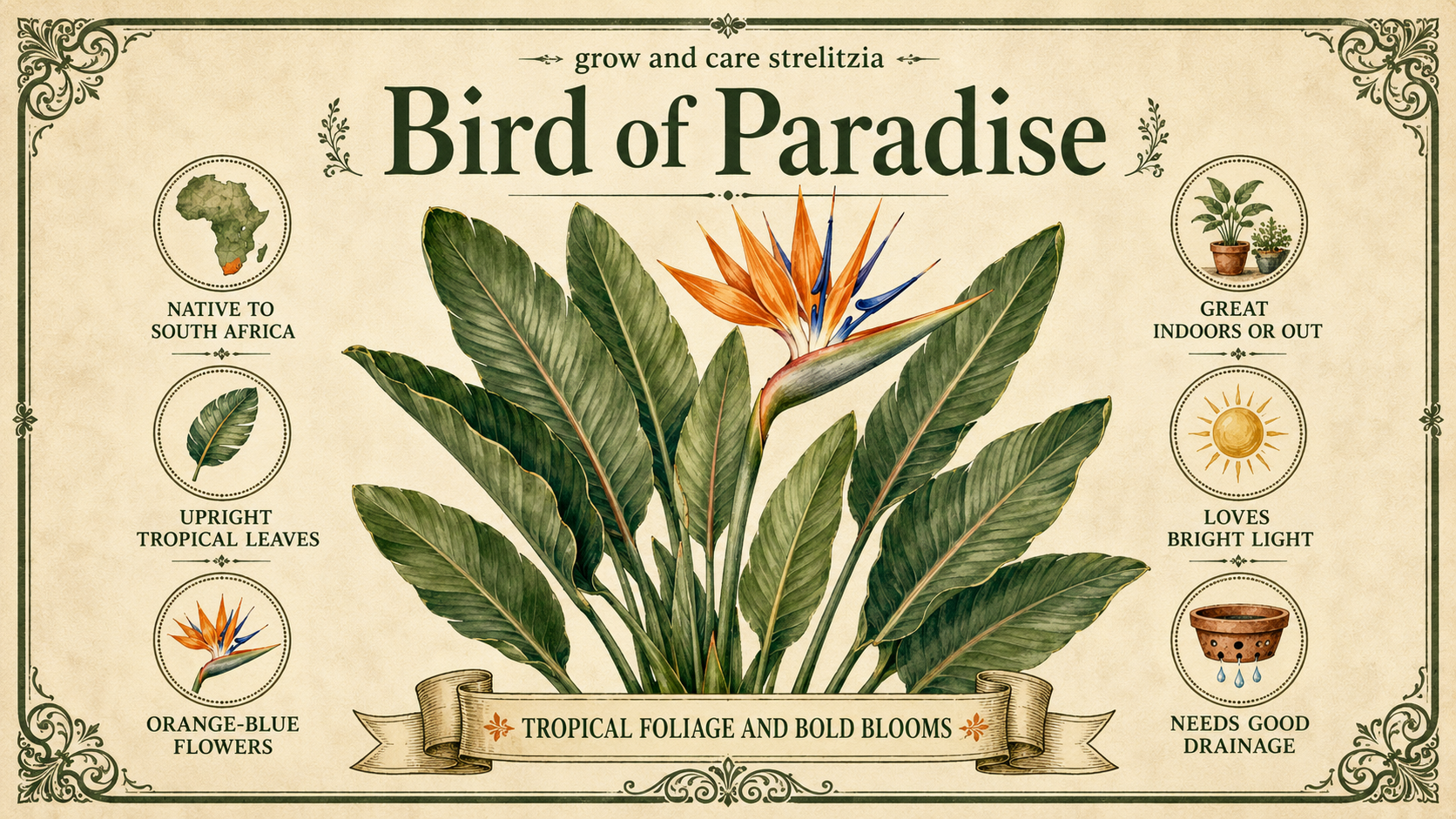
The bird of paradise plant (Strelitzia) is a striking tropical plant native to South Africa. Named for its spectacular flowers that resemble a brightly coloured bird in flight, it has become one of the most popular large houseplants and garden specimens in warm climates worldwide.
Even without flowers, the bird of paradise plant is prized for its bold, upright banana-like leaves that bring an instant tropical feel to any space. It is surprisingly low-maintenance once its basic needs — bright light, warmth, and good drainage — are met.
Strelitzia Reginae vs Strelitzia Nicolai
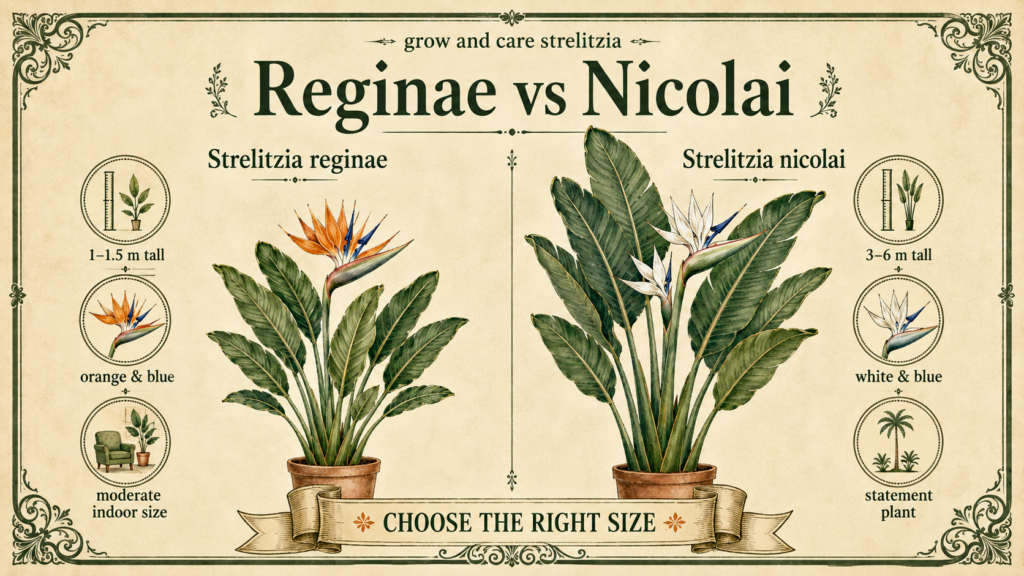
Two species dominate home growing. Strelitzia reginae (orange bird of paradise) stays smaller and produces the classic orange-and-blue flowers. Strelitzia nicolai (giant white bird of paradise) grows much larger with paddle-shaped leaves and white flowers — it’s the one you see in trendy indoor spaces reaching for the ceiling.
| Feature | S. reginae | S. nicolai |
|---|---|---|
| Common name | Orange Bird of Paradise | Giant White Bird of Paradise |
| Height | 1–1.5 m | 3–6 m |
| Flowers | Orange & blue | White & blue |
| Indoor use | Moderate size | Statement plant |
Light Requirements
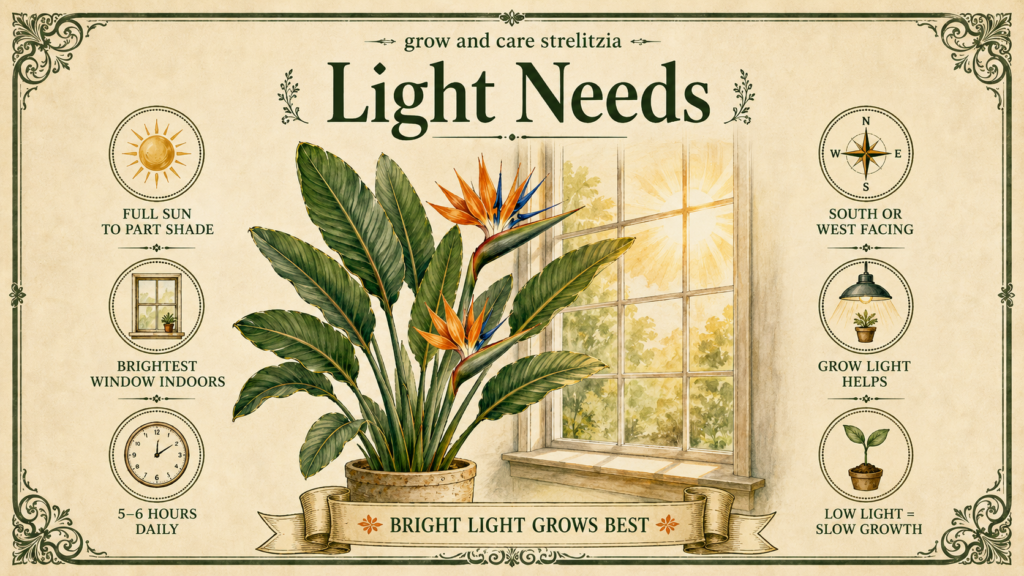
Bird of paradise plants thrive in bright light. Outdoors, they do best in full sun to part shade. Indoors, place them directly beside the brightest window you have — ideally south or west-facing. At least 5–6 hours of direct or bright indirect light daily is ideal.
Insufficient light is the most common reason for slow growth and lack of flowering indoors. If your plant is producing small, pale leaves or leaning strongly toward the window, it needs more light. A grow light can supplement in darker months.
Watering Your Bird of Paradise
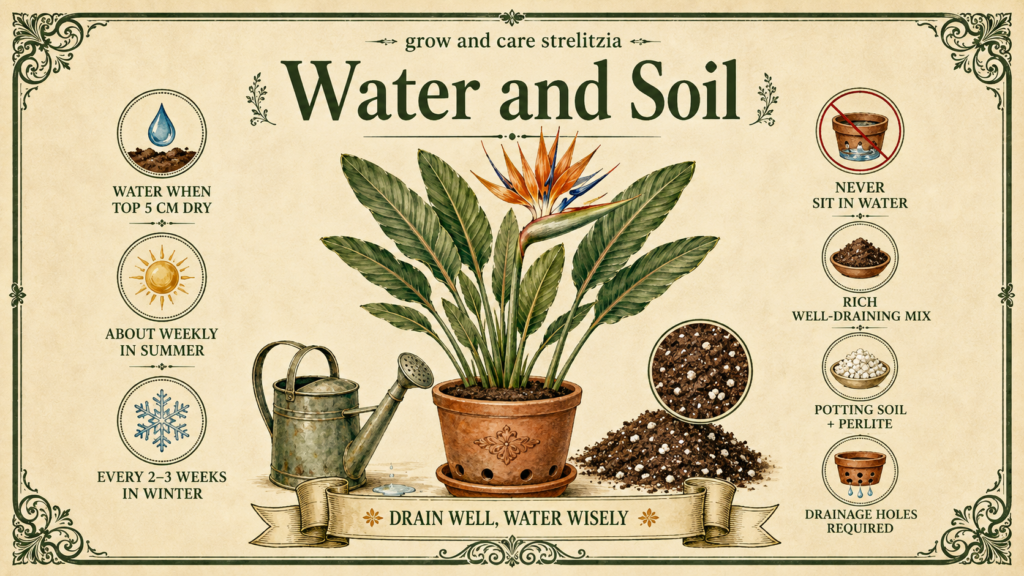
Water thoroughly when the top 5 cm (2 inches) of soil feels dry. In summer this might mean once a week; in winter, every 2–3 weeks. Always let excess water drain completely — never let the pot sit in standing water.
Overwatering is the biggest killer of bird of paradise plants, especially indoors. Yellowing lower leaves, mushy stems, and a musty smell from the soil are signs of root rot. When in doubt, wait another few days before watering.
Soil & Drainage
Use a rich but well-draining potting mix. A blend of standard potting soil with added perlite or coarse sand (about 70:30 ratio) works well. The roots are thick and fleshy — they need air pockets in the soil to stay healthy. Always use pots with drainage holes.
Fertilising
Feed monthly during the active growing season (spring and summer) with a balanced liquid fertiliser diluted to half strength. Reduce to every 6–8 weeks in autumn and stop entirely in winter. Over-fertilising causes salt build-up and brown leaf tips.
Growing Bird of Paradise Indoors
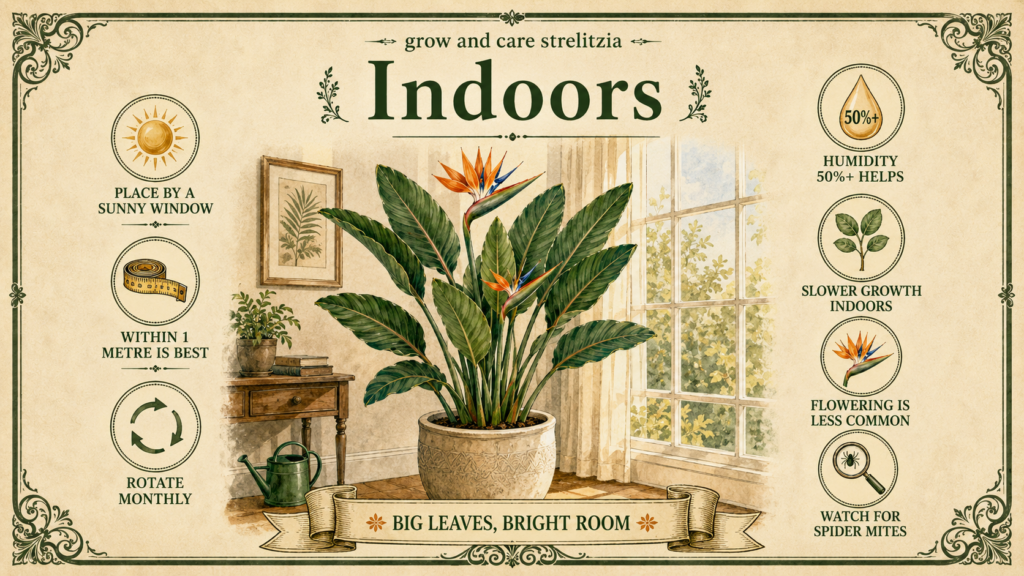
Bird of paradise makes an excellent indoor plant when given enough light. Place it in your brightest room, ideally right next to (or within 1 metre of) a large sunny window. Rotate the pot monthly for even growth.
Indoor plants grow slower and are less likely to flower, but they still produce stunning foliage. Keep humidity above 50% if possible — a pebble tray or occasional misting helps in dry climates. Watch for spider mites in heated indoor air during winter.
Repotting & Container Growing
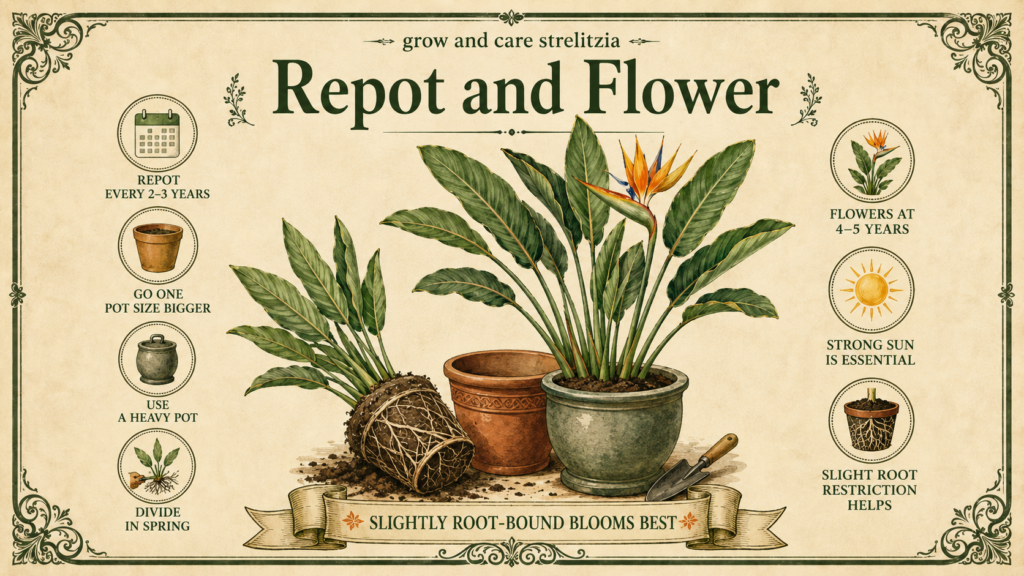
Repot every 2–3 years in spring, moving up one pot size (about 5 cm larger in diameter). Bird of paradise actually flowers better when slightly root-bound, so don’t rush to a huge pot. Use a heavy pot to prevent tipping — mature plants get top-heavy.
When repotting, gently loosen the outer roots and refresh the soil. This is also the ideal time to divide a clump if the plant has multiple stems growing from the base.
How to Get Your Bird of Paradise to Flower
Flowering requires maturity (usually 4–5 years from division, longer from seed), strong direct sunlight, consistent feeding, and slight root restriction. Outdoor plants in warm climates flower most reliably. Indoor plants can flower but it’s less common.
If your mature plant isn’t blooming, the most likely cause is insufficient light. Move it to a sunnier position or outdoors for the warm months. A winter rest with reduced watering can also trigger spring blooms.
Common Problems & Troubleshooting
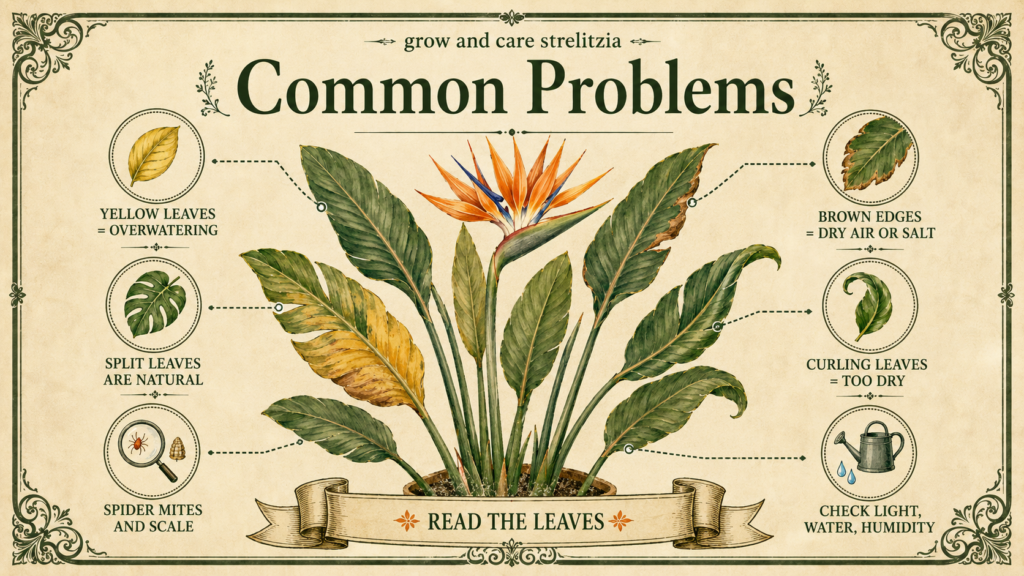
Most bird of paradise problems come down to light, water, or humidity. Here are the most frequent issues:
- Yellow leaves — Usually overwatering or poor drainage. Let soil dry more between waterings.
- Brown leaf edges — Low humidity, underwatering, or fertiliser burn. Increase humidity and check watering schedule.
- Splitting leaves — This is natural and not a sign of damage. Leaves split in wind or as they age.
- Curling leaves — Underwatering or very low humidity. Water thoroughly and mist leaves.
- Pests (spider mites, scale) — Wipe leaves with a damp cloth regularly. Treat infestations with neem oil or insecticidal soap.
Propagation by Division
The easiest way to propagate bird of paradise is by dividing a mature clump in spring. Remove the plant from its pot, identify natural separations in the root mass, and use a clean sharp knife to cut between sections — each division should have at least 3 leaves and healthy roots. Pot each division separately and keep warm and moist until established.
Winter Care
Bird of paradise is frost-tender. In cold climates, bring container plants indoors before temperatures drop below 10 °C (50 °F). Reduce watering in winter as growth slows. Avoid placing near cold draughts or heating vents. If grown outdoors in marginal climates, mulch the base heavily and cover during frost events.
Is Bird of Paradise Toxic to Pets?
Yes — bird of paradise is mildly toxic to cats and dogs if ingested. The seeds and flowers contain the most toxins. Symptoms include nausea, vomiting, and drowsiness. Place the plant out of reach of curious pets, or choose a pet-safe alternative if your animals are prone to chewing plants.
Frequently Asked Questions
How often should I water a bird of paradise?
Water when the top 5 cm (2 inches) of soil feels dry. Water deeply, then allow all excess water to drain before returning the plant to its saucer.
Why are my bird of paradise leaves splitting?
Leaf splitting is normal for this plant and helps mature leaves handle wind. It is usually not a sign of disease or poor care.
Can bird of paradise grow in low light?
It may survive in lower light, but growth will be slower and flowering is unlikely. Place it beside the brightest window available, or supplement with a grow light.
How can I encourage my bird of paradise to flower?
Give a mature plant strong light, regular feeding during spring and summer, consistent watering, and a slightly root-bound pot. Indoor flowering can take several years and is never guaranteed.