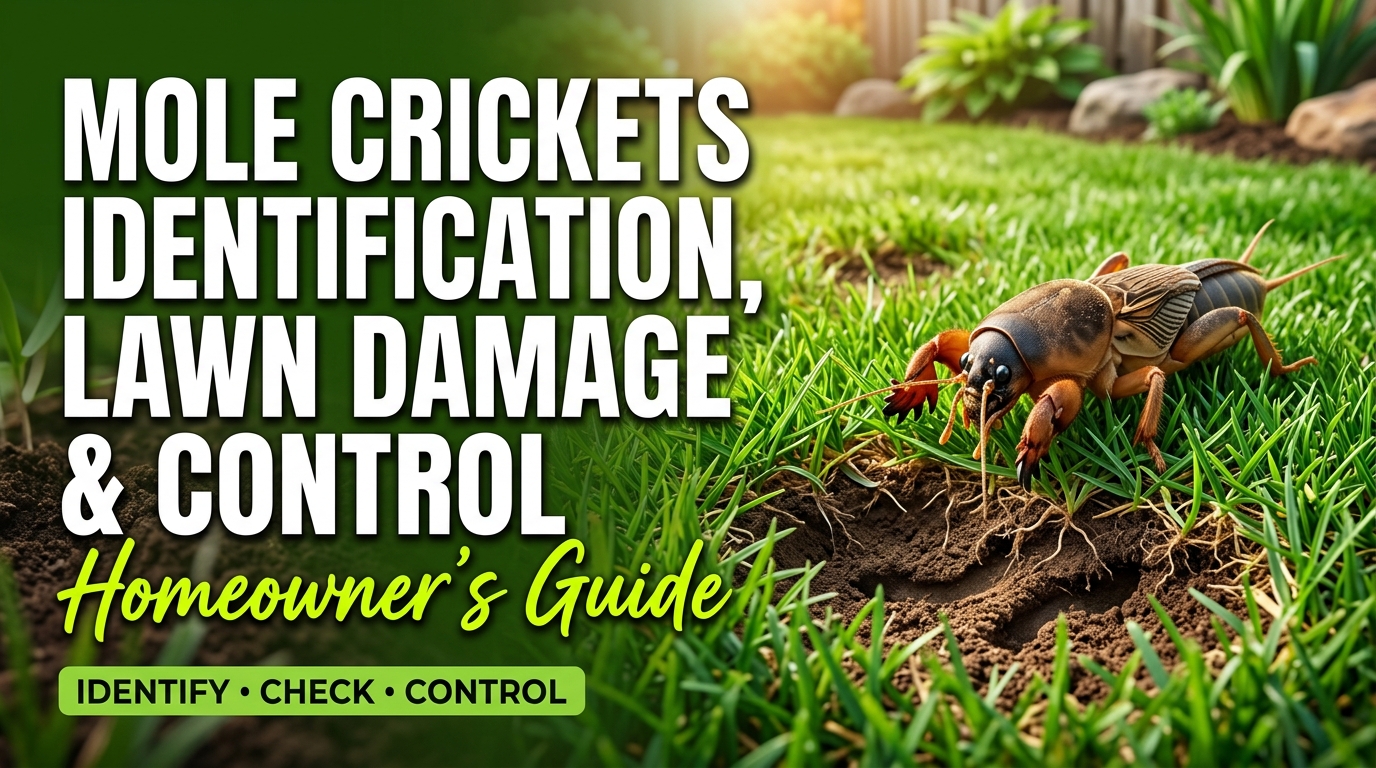

A homeowner’s field guide to recognizing mole cricket activity, checking whether it is causing real harm, and choosing a measured response.
At a glance
Mole crickets are burrowing insects with broad, shovel-like front legs. Their tunneling can loosen turf roots and create thinning or brown patches. Confirm activity first, then focus on young nymphs and targeted, label-directed treatments rather than treating every patch of stressed grass.
How to identify a mole cricket
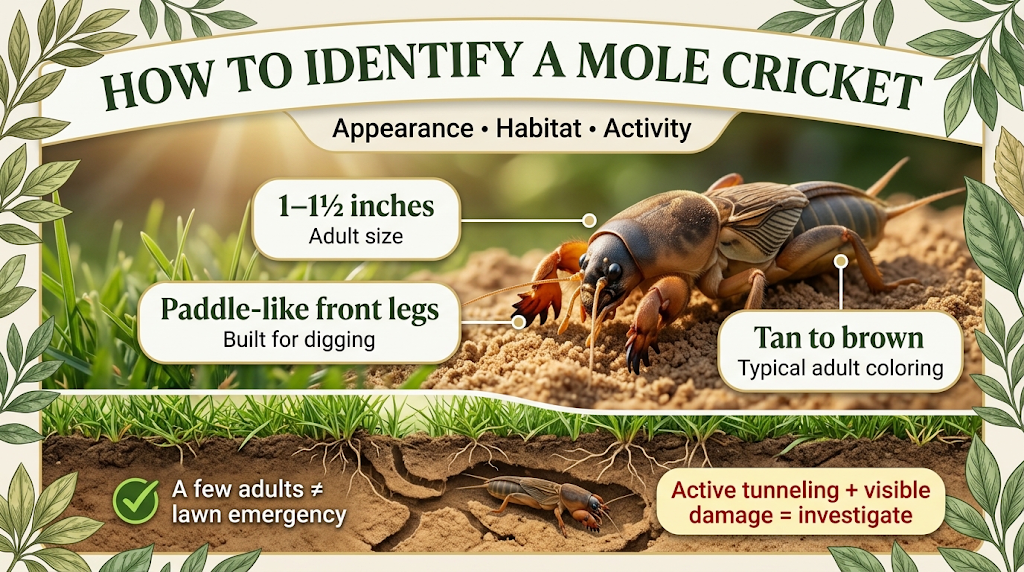
Mole crickets are unusual-looking insects built for digging. Adults are usually tan to brown, roughly 1 to 1½ inches long, and have powerful, widened front legs that resemble tiny paddles. They spend much of their time underground, especially in warm, sandy or well-drained soil.
What to look for in the yard
- Raised, winding surface tunnels that feel soft or spongy underfoot.
- Loose turf that lifts easily because roots have been disturbed below it.
- Nocturnal insects attracted to porch lights, especially after warm rain.
Not every mole cricket is a lawn emergency. A few adults can be present with little visible impact. Damage becomes more likely when active tunneling is widespread or when young insects are feeding and growing in the same area.
What mole cricket damage looks like
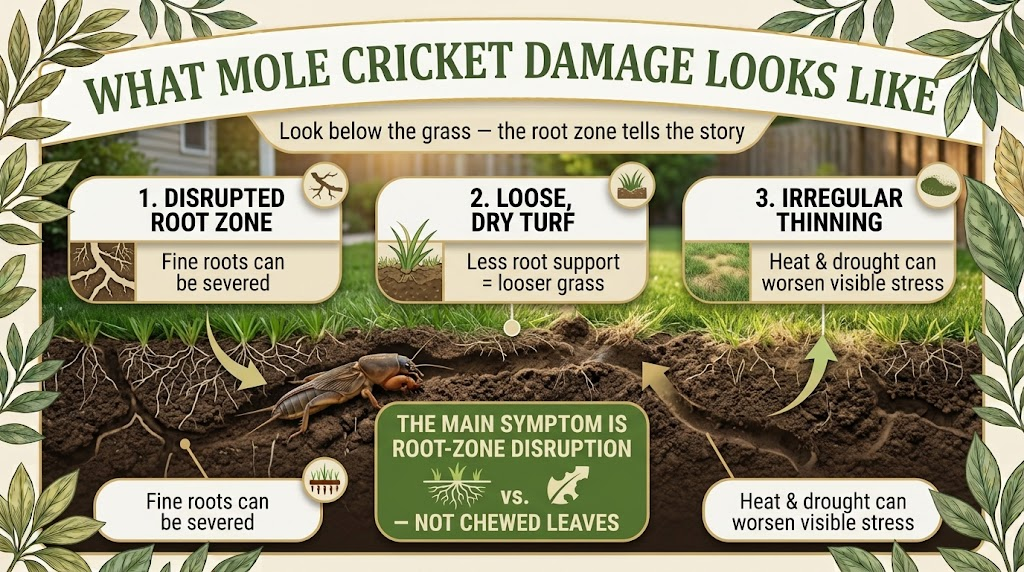
The most noticeable symptom is not a chewed leaf but a disrupted root zone. Tunnels can sever fine roots, dry out the soil near the surface, and make grass feel loose. In heavier infestations, irregular thinning patches may expand during heat or drought because the turf has less root support.
A simple confirmation check
Choose a spot with fresh tunnels and slowly pour a mild, soapy-water solution over a small area of turf. Wait several minutes and watch for insects surfacing. This is a scouting tool, not a lawn treatment. Avoid using strong detergents, and rinse the small test area with plain water afterward.
If no mole crickets appear, inspect for other common lawn stresses such as drought, compacted soil, fungal disease, grubs, dog urine, or mower scalping. Correct identification prevents unnecessary pesticide use.
Lifecycle, habitat, and timing
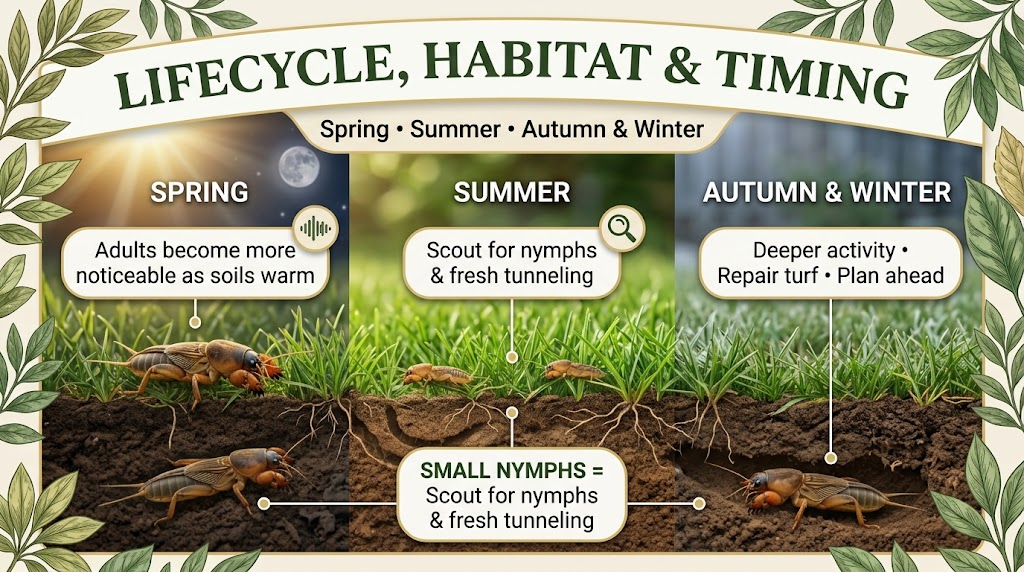
Timing varies by species and climate, but mole crickets are generally most active in warm conditions. Adults mate and lay eggs in soil, then young nymphs develop through the growing season. Smaller nymphs are usually easier to control than large adults because they are closer to the soil surface and have had less time to damage turf.
| Spring Adults become more noticeable as soils warm; listen for nighttime calling in regions where they are established. | Summer Scout for small nymphs and fresh tunneling. This is often the most useful window for control decisions. | Autumn & winter Larger insects move deeper or become less visible. Repairing turf and reviewing the season’s damage can guide next year’s plan. |
Common lookalikes and false alarms
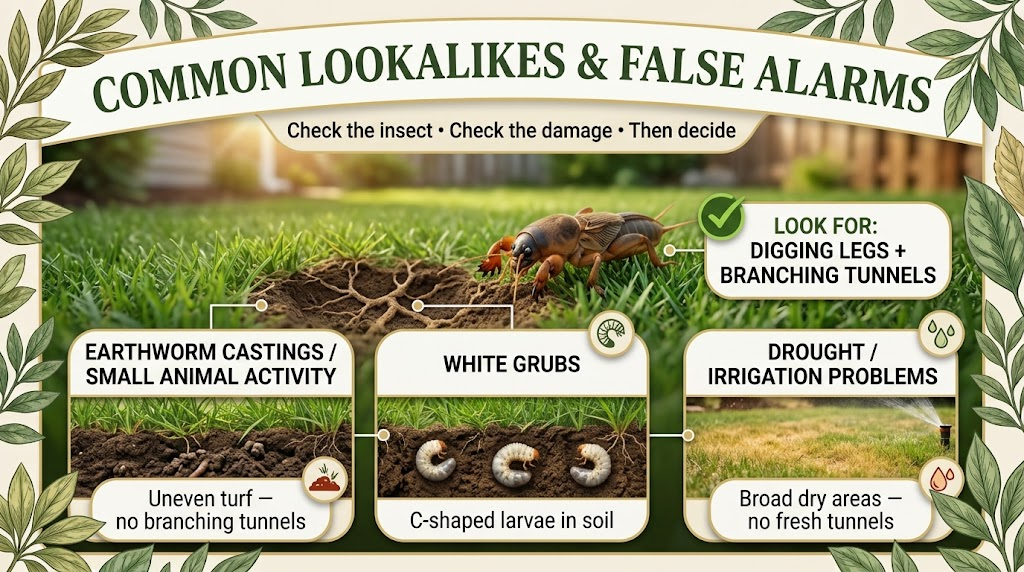
Several lawn problems can resemble mole cricket damage. Check the insect’s distinctive digging legs and consider the pattern of injury before choosing a treatment.
- Earthworm castings and small animal activity can create uneven turf, but they do not produce the same branching surface tunnels.
- White grubs may loosen turf, but you will typically find curved, C-shaped larvae in the soil rather than a burrowing adult insect.
- Drought and irrigation problems often create broad, dry areas without fresh tunnels or nighttime insect activity.
Least-disruptive control options
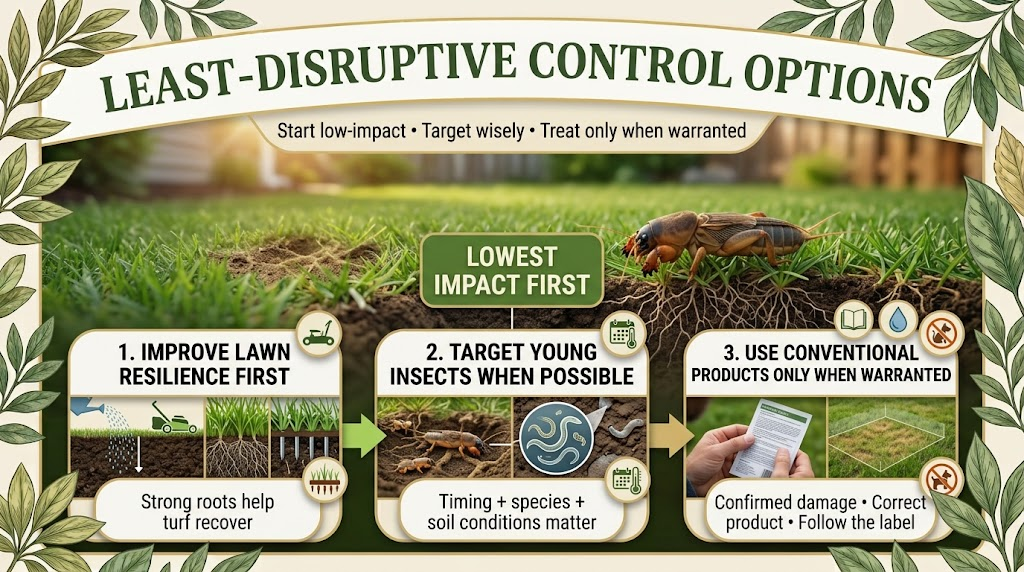
Start with the lowest-impact step that matches the level of confirmed activity. A healthy lawn can tolerate some insect presence, while broad preventative treatment may affect beneficial organisms without solving the real problem.
1. Improve lawn resilience first
Water deeply but not constantly, mow at the recommended height for your grass type, and relieve compaction where appropriate. Stronger roots help turf recover from minor tunneling and reduce the appearance of damage.
2. Target young insects when possible
In some regions, beneficial nematodes or other biological products may be appropriate for young mole crickets. Success depends on correct species, moist soil, suitable soil temperature, and careful timing. Follow the product directions precisely and obtain local extension guidance for your area.
3. Use conventional products only when warranted
Where permitted and justified by confirmed, damaging activity, choose a product labeled specifically for mole crickets and your turf setting. Apply only as directed on the label, observe watering instructions, protect waterways, and keep children and pets away until the label says the area is safe.
A note on treatment claims
There is no one-size-fits-all “best” treatment. Product availability, approved uses, species, weather, and timing differ by location. Your local cooperative extension service or a licensed lawn professional can help confirm the pest and recommend legal, location-specific options.
Prevention and when to call for help
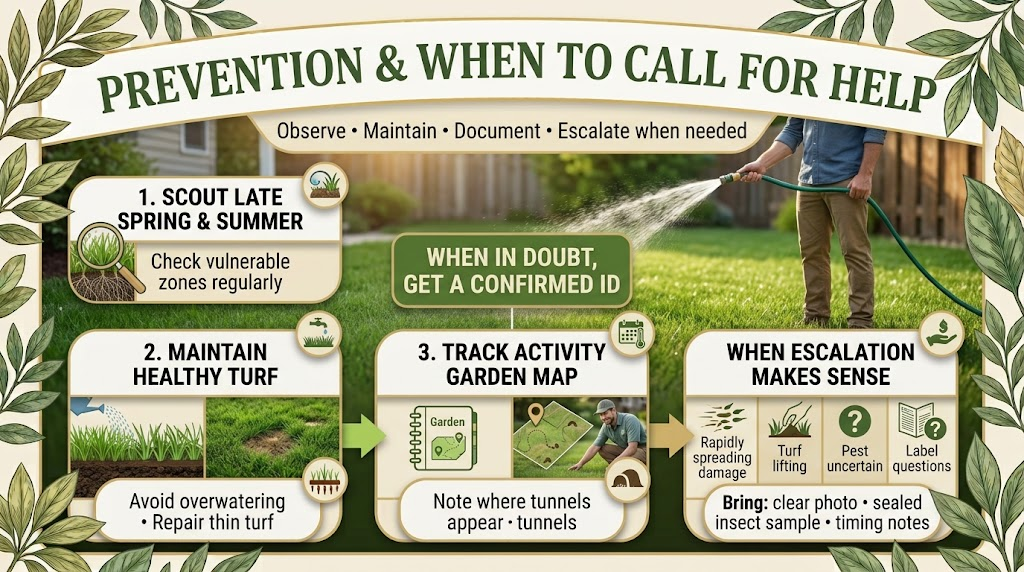
Prevention is mostly about observation and turf health. Check vulnerable areas in late spring and summer, avoid overwatering, and repair thin turf before weeds and heat stress compound the issue. Keep notes on where tunnels appear so you can inspect the same zones next season.
When escalation makes sense
Contact a certified lawn care professional or local extension office if damage is spreading quickly, large areas of turf lift away from the soil, you cannot confirm the pest, or you need help interpreting treatment labels. Bringing a clear photo, a sample insect in a sealed container, and notes on timing can make identification faster.
Frequently asked questions
Are mole crickets always harmful to a lawn?
No. A small number may be present without causing meaningful damage. Look for widespread fresh tunneling, loose turf, or thinning that matches confirmed insect activity before considering treatment.
How can I tell if mole crickets are causing brown patches?
Check for raised, winding tunnels and turf that lifts easily. A mild soapy-water flush over a small area can bring insects to the surface for identification; drought, disease, grubs, and mower damage can look similar.
When is the best time to take action?
Timing depends on species and climate, but scouting for young nymphs during the warm growing season is usually more useful than treating large adults. Follow local extension guidance and every product label.