
How to Plant Lily of the Valley Pips
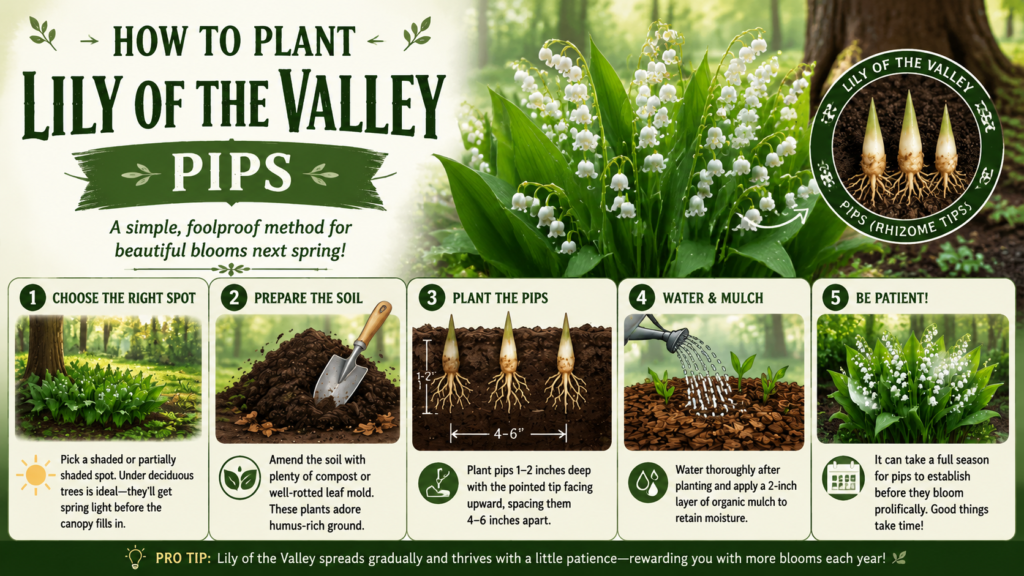
Lily of the Valley is most commonly planted from ‘pips’ — the pointed rhizome tips that produce new growth. Here’s my foolproof method after years of trial and error:
- Choose a shaded or partially shaded spot. Under deciduous trees is ideal — they’ll get spring light before the canopy fills in.
- Amend the soil with plenty of compost or well-rotted leaf mold. These plants adore humus-rich ground.
- Plant pips 1–2 inches deep with the pointed tip facing upward, spacing them 4–6 inches apart.
- Water thoroughly after planting and apply a 2-inch layer of organic mulch to retain moisture.
- Be patient! It can take a full season for pips to establish before they bloom prolifically.
Also read this content Rare Houseplants You Need for Your Home
Ongoing Care & Maintenance
Watering
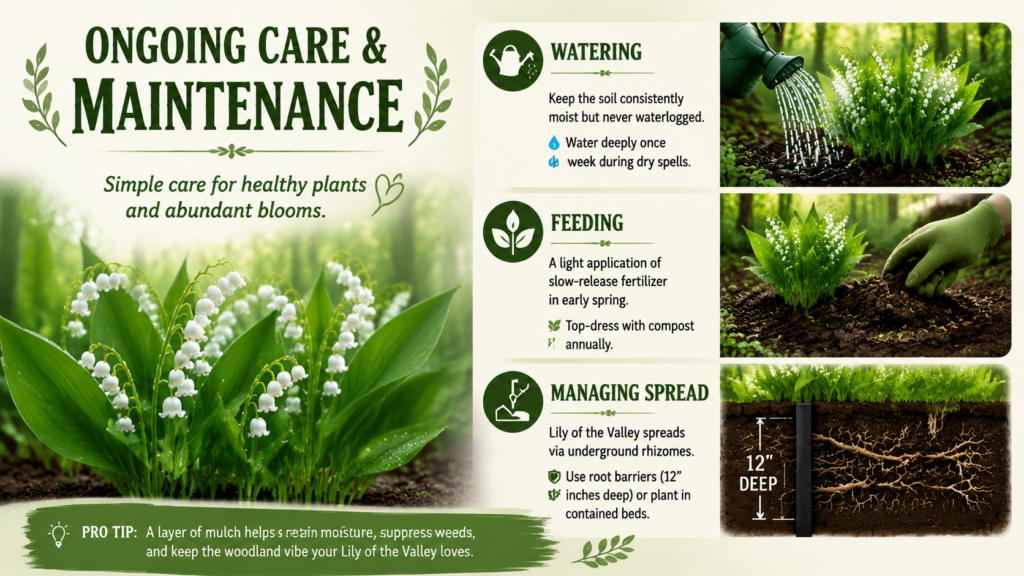
Keep the soil consistently moist but never waterlogged. During dry spells, water deeply once a week. These are woodland plants — think damp forest floor, not soggy swamp.
Feeding
A light application of balanced, slow-release fertilizer in early spring is all they need. Alternatively, top-dress with compost annually — that’s my preferred method because it feeds the soil biology too.
Managing Spread
Let’s be honest: Lily of the Valley is vigorous. It spreads via underground rhizomes and will colonize any space you give it. Install root barriers (at least 12 inches deep) or plant in contained beds. I use buried edging strips — works like a charm.
Troubleshooting Common Problems
No Blooms?
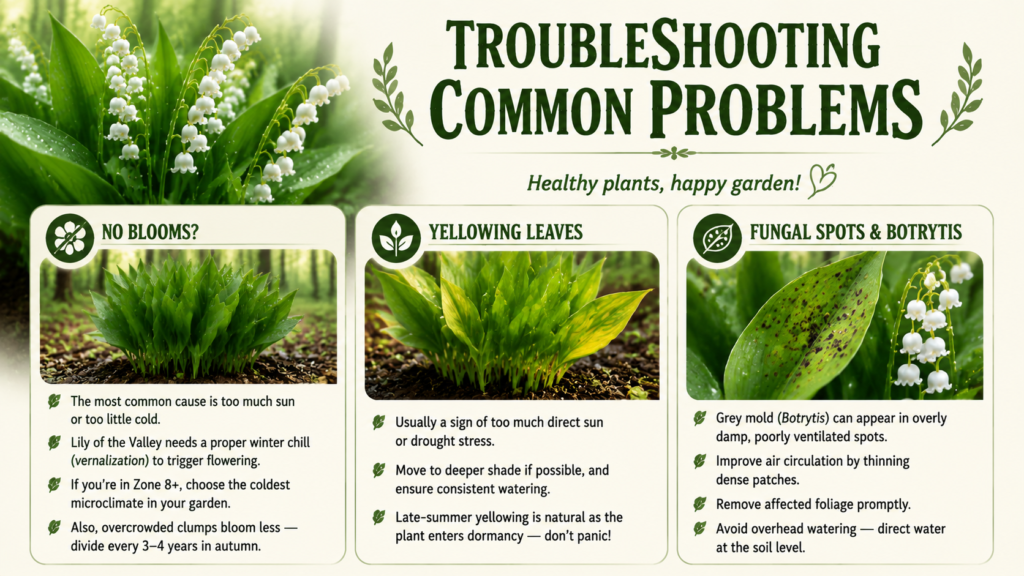
The most common cause is too much sun or too little cold. Lily of the Valley needs a proper winter chill (vernalization) to trigger flowering. If you’re in Zone 8+, choose the coldest microclimate in your garden. Also, overcrowded clumps bloom less — divide every 3–4 years in autumn.
Yellowing Leaves
Usually a sign of too much direct sun or drought stress. Move to deeper shade if possible, and ensure consistent watering. Late-summer yellowing is natural as the plant enters dormancy — don’t panic!
Fungal Spots & Botrytis
Grey mold (Botrytis) can appear in overly damp, poorly ventilated spots. Improve air circulation by thinning dense patches. Remove affected foliage promptly. Avoid overhead watering — direct water at the soil level.