
Everything you need to know about choosing, eating, and growing the world’s most popular non-astringent persimmon.
Key Takeaway
Fuyu persimmons are non-astringent — you can eat them firm and crisp like an apple. Hachiya persimmons are astringent and must be completely soft before eating, or they’ll taste unbearably bitter.
What Is a Fuyu Persimmon?
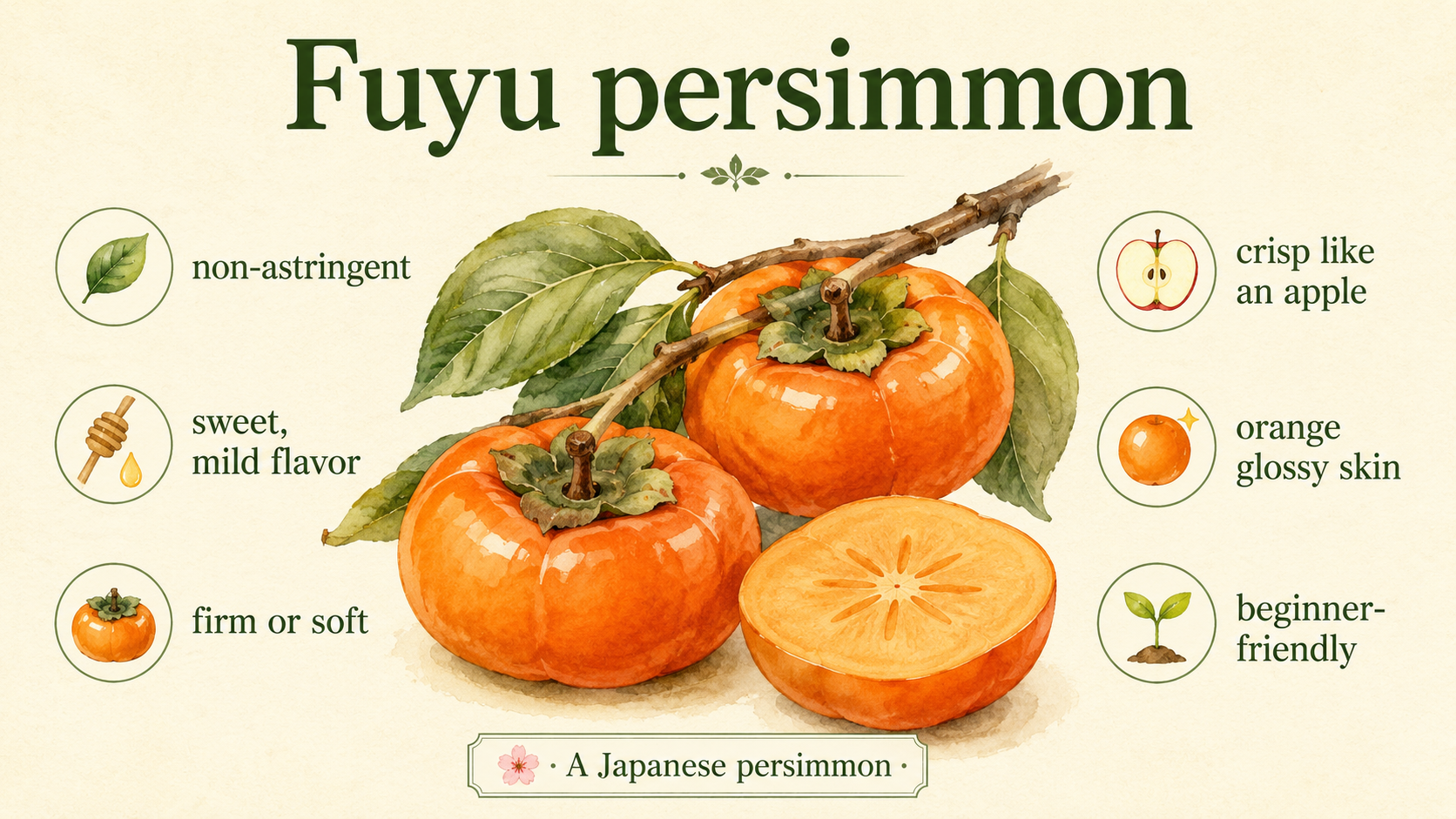
The Fuyu persimmon (Diospyros kaki ‘Fuyu’) is a non-astringent Japanese persimmon prized for its sweet, mild flavor and firm, crisp texture. Unlike astringent varieties, Fuyu can be enjoyed while still firm — no need to wait for it to become soft and jelly-like.
Visually, Fuyu persimmons are squat and tomato-shaped with smooth, glossy orange skin. They’re the most widely sold persimmon variety in grocery stores across North America, Australia, and Europe — and the most beginner-friendly for home orchards.
Flavor-wise, a ripe Fuyu tastes like a blend of mango, cinnamon, and brown sugar with a hint of pear. The texture is similar to a crisp apple when firm, becoming softer and more custard-like as it ripens further.
Fuyu vs Hachiya: The Most Important Difference
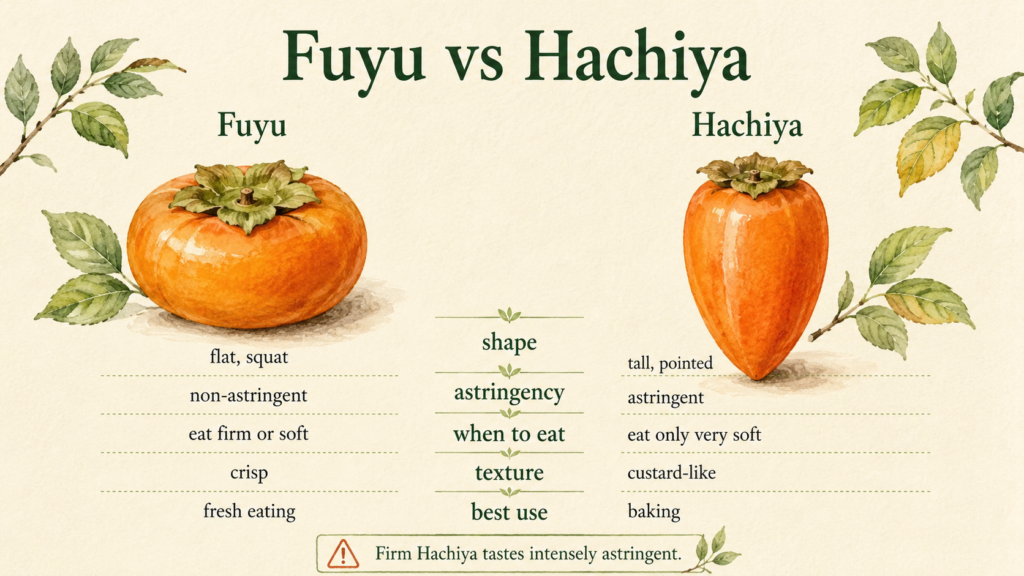
This is the single most important thing to understand about persimmons: Fuyu and Hachiya look similar but behave completely differently. Eating the wrong one at the wrong time will ruin your experience.
| Feature | Fuyu | Hachiya |
|---|---|---|
| Shape | Flat, squat (tomato-like) | Tall, pointed (acorn-like) |
| Astringency | Non-astringent | Strongly astringent |
| When to eat | Firm or slightly soft | Only when extremely soft |
| Texture | Crisp like an apple | Soft, custard-like when ripe |
| Best use | Fresh eating, salads, slicing | Baking, puddings, preserves |
| Harvest | October–December | October–November |
Hachiya persimmons on the tree — their elongated, acorn shape distinguishes them from the squat Fuyu.
The classic mistake: buying a Hachiya at the store, biting into it while it’s still firm, and experiencing an intense, mouth-drying astringency that puts you off persimmons forever. With Fuyu, this simply can’t happen — they’re sweet and pleasant at every stage of ripeness.
Other Popular Persimmon Varieties Worth Knowing
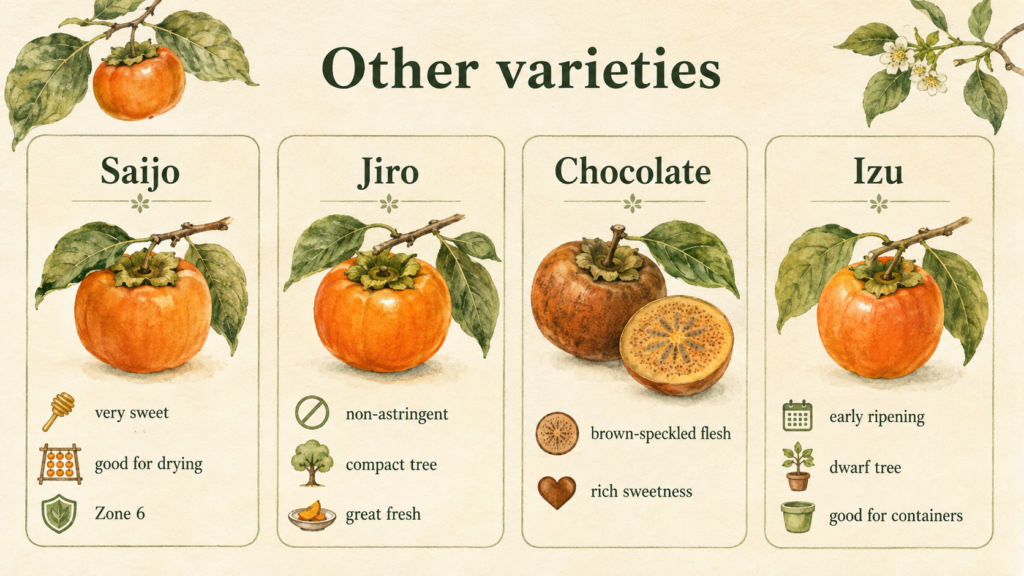
Beyond Fuyu and Hachiya, several other cultivars offer unique flavors and growing characteristics. Here are four worth considering for your garden or kitchen.
Saijo
Astringent. Considered the sweetest persimmon variety when fully ripe. Elongated shape, honey-like flavor. Excellent for drying (hoshigaki). Cold-hardy to Zone 6.
Jiro
Non-astringent. Very similar to Fuyu but slightly flatter with a more pronounced sweetness. Firm texture, great for fresh eating. Compact tree suits smaller gardens.
Chocolate (Tsurunoko)
Non-astringent when seeded. Named for its brown-speckled flesh. Rich, complex sweetness reminiscent of brown sugar. Oblong shape, medium-sized tree.
Izu
Non-astringent. Earlier ripening than Fuyu (September–October). Smaller, very sweet fruit. Dwarf tree ideal for containers and patios. Good for warmer climates.
How to Eat Fuyu Persimmons
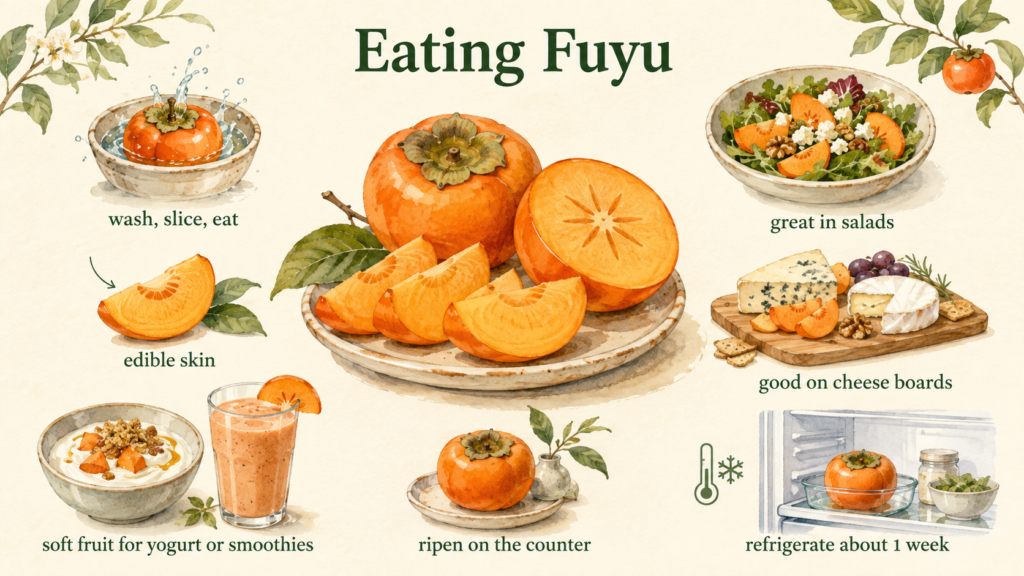
The beauty of Fuyu persimmons is simplicity: wash, slice, and eat. The skin is edible and thin — no peeling required. Slice them into rounds or wedges just as you would a tomato or apple.
Firm Fuyu persimmons are perfect in salads (especially with arugula, goat cheese, and walnuts), on cheese boards, or simply sliced as a snack. As they soften, the sweetness intensifies — softer Fuyus work well in smoothies, oatmeal, or sliced over yogurt.
Storage tip: Keep unripe Fuyus on the counter at room temperature to ripen. Once they reach your preferred softness, refrigerate to slow further ripening. They’ll keep in the fridge for about a week.
Growing a Fuyu Persimmon Tree at Home
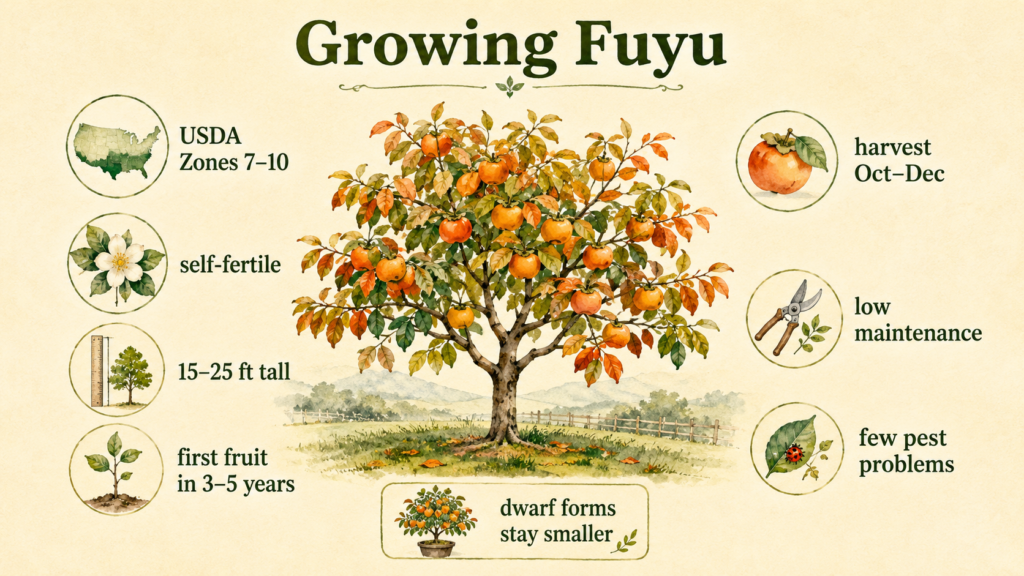
Fuyu persimmon trees are one of the most low-maintenance fruit trees you can grow. They thrive in USDA Zones 7–10, tolerate a range of soil types, and have very few pest or disease problems compared to apples or peaches.
A standard Fuyu tree reaches 15–25 feet tall and wide at maturity, though dwarf rootstocks can keep it under 12 feet. Trees are self-fertile — you do not need a second tree for pollination, though cross-pollination can increase fruit set.
Expect your first fruit 3–5 years after planting. Harvest in October through December when fruit is fully orange. Trees are deciduous and quite ornamental in autumn, with leaves turning vibrant red and orange before dropping to reveal fruit-laden branches.
Beginner’s Pick
If you’re new to persimmons — whether eating or growing — start with Fuyu. It’s forgiving (no astringency surprises), delicious at every ripeness stage, easy to grow, and widely available at nurseries and grocery stores alike.
Frequently Asked Questions
Can you eat Fuyu persimmons while they are firm?
Yes. Fuyu persimmons are non-astringent and can be eaten firm and crisp, like an apple.
What is the difference between Fuyu and Hachiya persimmons?
Fuyu persimmons are squat, non-astringent, and pleasant when firm. Hachiya persimmons are elongated, astringent, and should be eaten only when completely soft.
How do you eat a Fuyu persimmon?
Wash it, remove the leafy calyx, and slice it into rounds or wedges. The thin skin is edible, so peeling is optional.
How do you grow a Fuyu persimmon tree?
Plant it in full sun with well-drained soil in USDA Zones 7–10. Fuyu trees are self-fertile and typically fruit three to five years after planting.