
The complete timing, depth, and care guide for planting tulips in any climate.
Key Takeaway
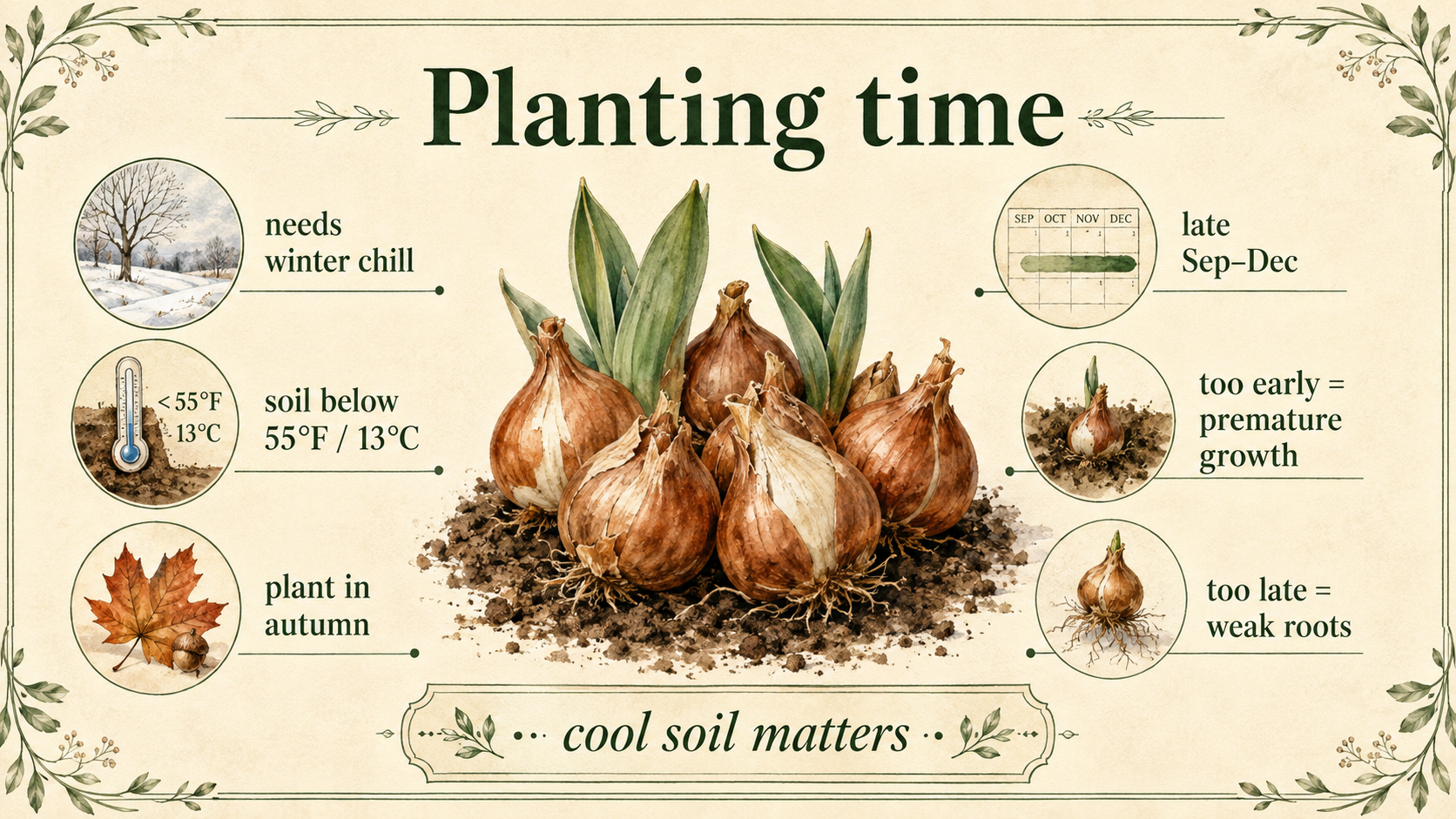
Plant tulip bulbs in autumn once soil temperature drops below 55°F (13°C) but before the ground freezes — typically 6 to 8 weeks before your first hard frost. This gives roots time to establish while winter cold triggers the flower development tulips need.
When Is the Best Time to Plant Tulips?
Tulips need a period of winter cold (vernalisation) to produce flowers. Planting in autumn — after summer heat fades but well before the ground freezes solid — gives bulbs the ideal conditions to root deeply and prepare for spring.
The critical signal is soil temperature, not the calendar date. Once soil at 15 cm depth stays consistently below 55°F (13°C), conditions are right. In most temperate regions this happens between late September and December, depending on your latitude.
Planting too early — while soil is still warm — encourages premature leaf growth that weakens the bulb. Planting too late risks the ground freezing before roots can establish, which leads to shallow rooting and poor spring performance.
Tulip Planting Time by Region
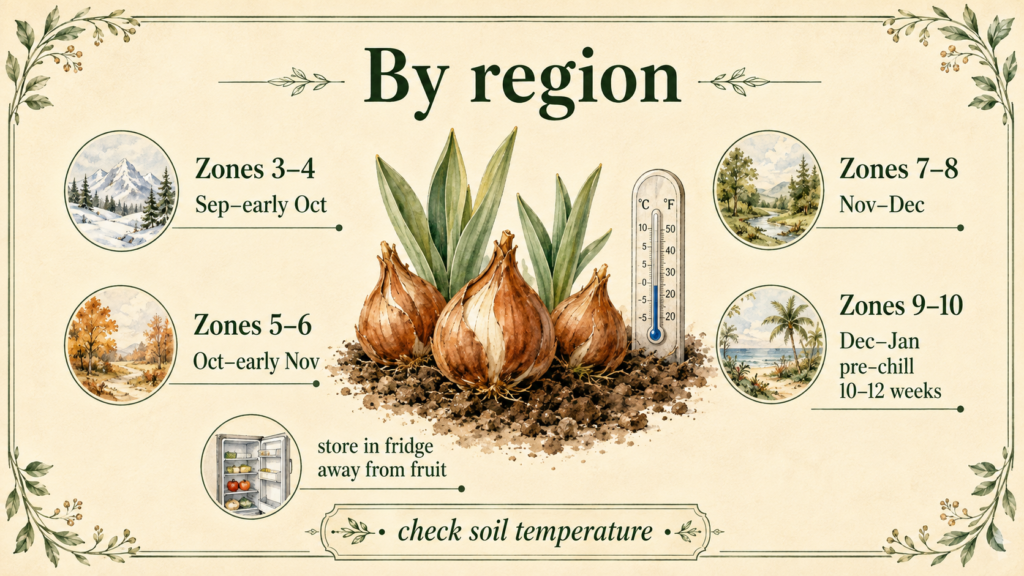
Use your USDA hardiness zone (or equivalent) as a starting guide, then check actual soil temperature with a simple soil thermometer for the best results.
| Region / Zone | Best Planting Window | Soil Temp Target |
|---|---|---|
| Zones 3–4 (Northern US/Canada) | September – early October | Below 55°F / 13°C |
| Zones 5–6 (Mid-Atlantic, Midwest) | October – early November | Below 55°F / 13°C |
| Zones 7–8 (Southern US, UK) | November – December | Below 55°F / 13°C |
| Zones 9–10 (Warm climates) | December – January (pre-chill bulbs) | Below 55°F / 13°C |
In zones 9–10, tulip bulbs must be refrigerated for 10–12 weeks before planting to simulate winter chill. Store in the fridge (not freezer) away from ripening fruit.
How to Plant Tulip Bulbs: Step by Step
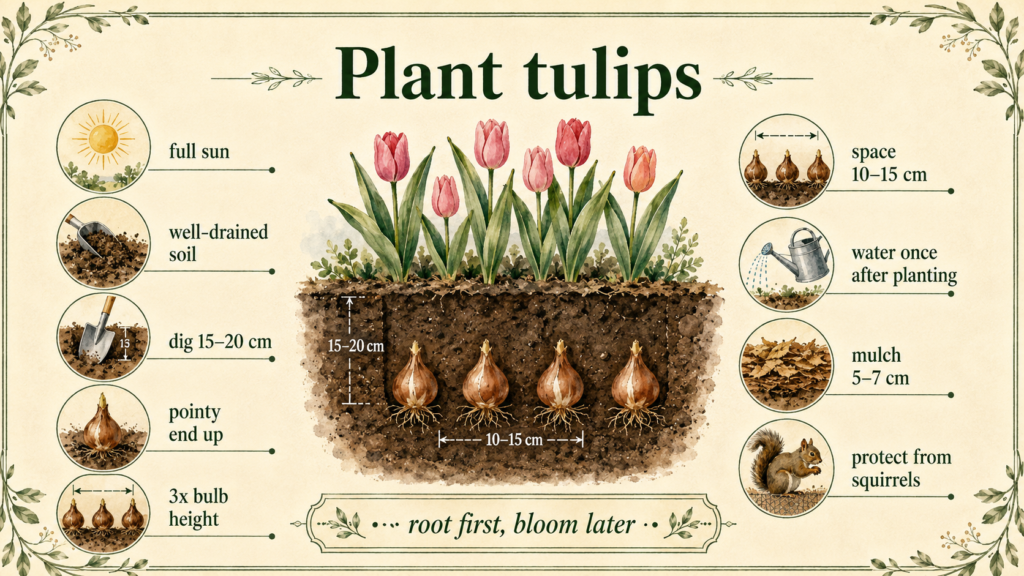
Follow these steps for healthy tulips that bloom reliably each spring.
- Choose a spot with full sun (6+ hours daily) and well-drained soil. Tulips rot in waterlogged ground — raised beds or slopes work well in heavy clay areas.
- Dig a hole 15–20 cm (6–8 inches) deep. The general rule is to plant tulip bulbs three times as deep as the bulb is tall.
- Place each bulb pointy end up, flat base down. Space bulbs 10–15 cm (4–6 inches) apart for a natural look.
- Backfill with soil and gently firm it down. Mix in a handful of bone meal or bulb fertiliser if your soil is poor.
- Water thoroughly after planting — this triggers root growth. After that initial soaking, you generally won’t need to water again until spring unless autumn is very dry.
- Apply a 5–7 cm layer of mulch (straw, bark chips, or leaf mould) to insulate bulbs and deter squirrels. Wire mesh over the planting area also helps protect against digging animals.
Growing Tulips in Containers
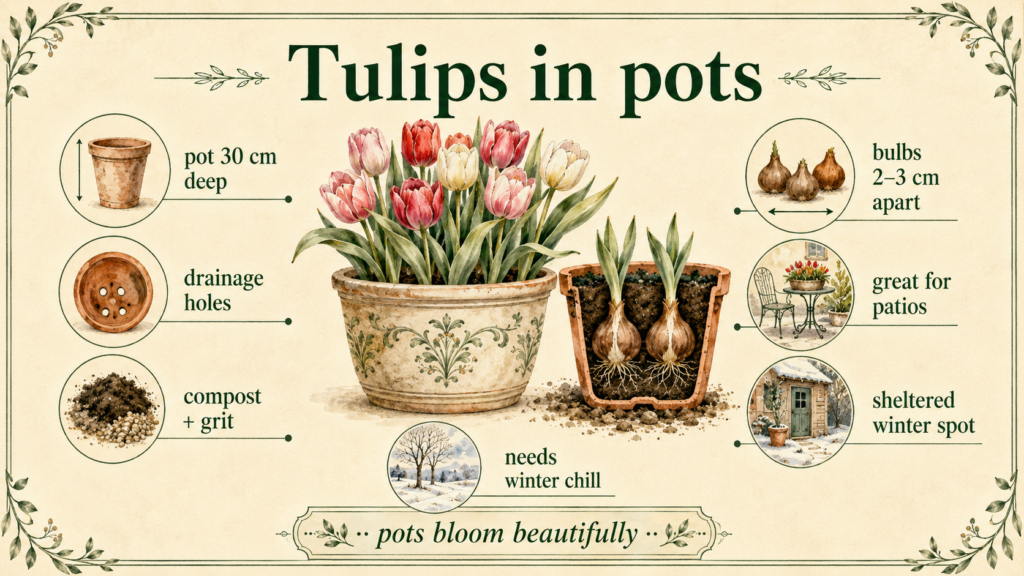
Tulips grow beautifully in pots, making them ideal for balconies, patios, and small gardens. Use a container at least 30 cm deep with drainage holes, and fill with multipurpose compost mixed with grit for drainage.
Plant bulbs closer together in pots — 2–3 cm apart — for a full display. Place containers in an unheated garage or sheltered spot over winter in very cold climates to prevent the pot from cracking while still providing the cold period tulips need.
What to Do After Tulips Finish Flowering
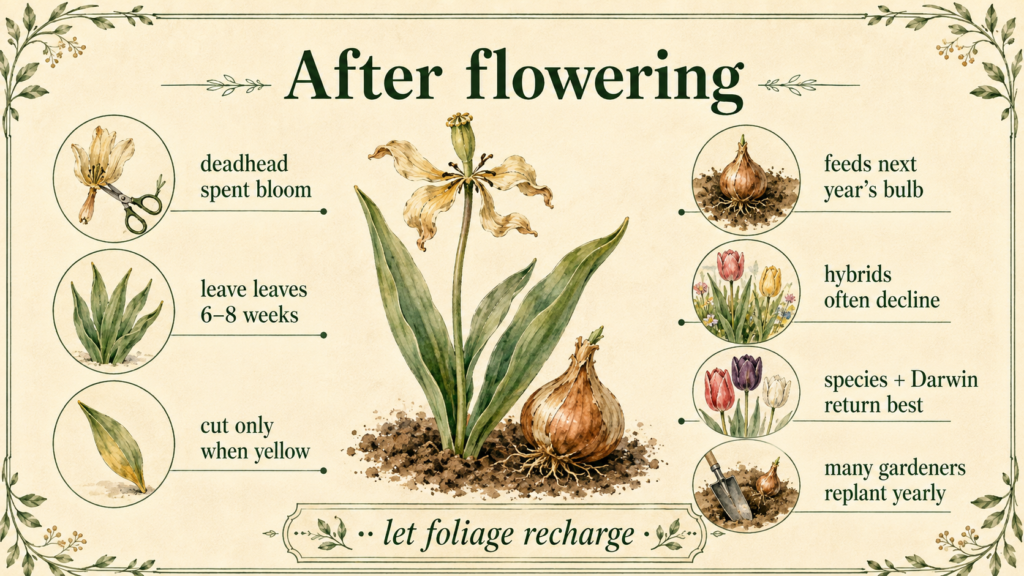
Once flowers fade, deadhead the spent bloom but leave the foliage intact. The leaves photosynthesise for 6–8 weeks, sending energy back into the bulb for next year’s flower. Only cut foliage once it has yellowed completely.
Will tulips come back every year? Many modern hybrid tulips perform best as annuals — flowering strongly the first spring then declining. Species tulips and Darwin hybrids are the most reliable perennials. For guaranteed colour each year, many gardeners plant fresh bulbs each autumn.
Frequently Asked Questions
Can I plant tulip bulbs in spring?
Spring-planted tulips rarely flower the same year because they miss the essential cold period. If you have un-planted bulbs in spring, refrigerate them for 10–12 weeks then plant in autumn, or plant immediately and accept they may only produce foliage the first year.
How deep should tulip bulbs be planted?
Plant tulip bulbs 15–20 cm (6–8 inches) deep, measured from the base of the bulb. A good rule of thumb: plant three times as deep as the bulb is tall. Deeper planting helps protect bulbs from temperature swings and hungry squirrels.
Do tulip bulbs need watering during winter?
Usually not. Natural rainfall is sufficient in most climates. Only water if you experience an unusually dry winter and the soil is bone-dry several inches down. Overwatering in winter is the main cause of bulb rot.
How do I stop squirrels digging up my tulip bulbs?
Cover newly planted areas with wire mesh (chicken wire) laid flat and secured with landscape staples. A thick mulch layer also helps. Some gardeners interplant with daffodils, which squirrels avoid due to their toxicity.
What happens if I plant tulips too late in winter?
Late-planted tulips often still flower, just later and sometimes shorter than normal. If the ground hasn’t frozen solid, it’s still worth planting. Bulbs left unplanted deteriorate quickly — getting them in the ground late is better than not planting at all.