
A practical guide to growing, harvesting, and brewing your own herbal teas at home — from garden to cup.
Making herbal tea from fresh herbs you’ve grown yourself is one of the simplest pleasures of gardening. The flavour is brighter, more aromatic, and far more satisfying than anything from a dusty tea bag. I’ve been growing herbs specifically for tea for years, and in this guide I’ll walk you through which herbs work best, how to grow and harvest them, the right brewing ratios, and a few safety basics so you can enjoy homemade herbal tea with confidence.
1. Best Herbs for Tea
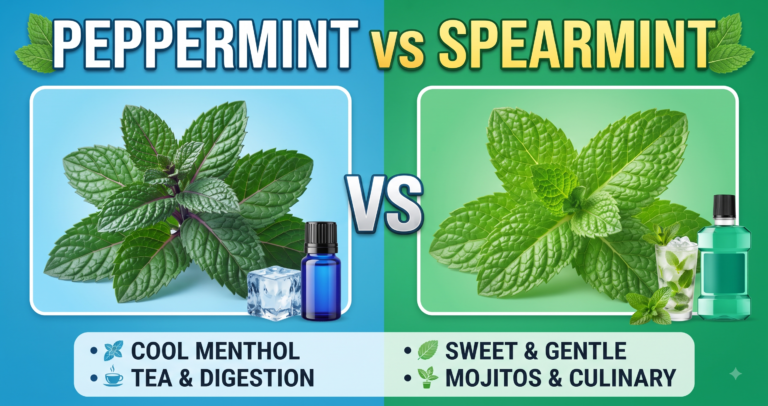
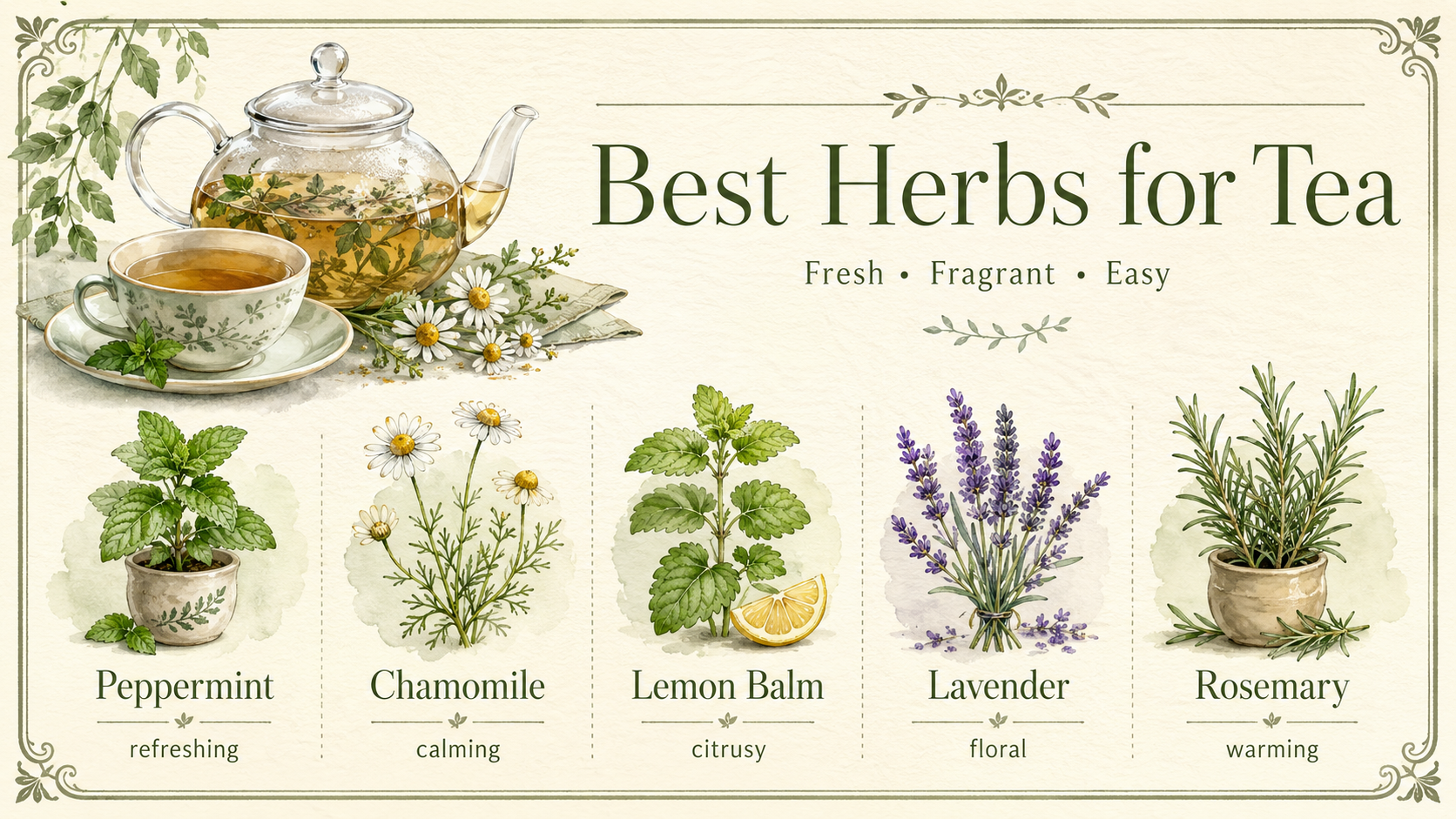
Start with these reliable, easy-to-grow herbs: Peppermint and spearmint (refreshing, nearly impossible to kill), chamomile (calming, apple-like flavour from the flowers), lemon balm (bright citrus notes, grows vigorously), lavender (floral and relaxing — use sparingly), and rosemary (warming, pine-like, pairs well with honey).
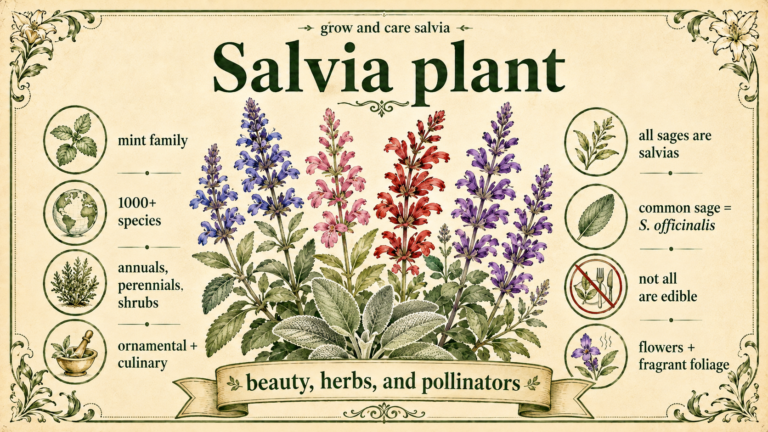
Other excellent options include lemon verbena (intensely citrusy), holy basil/tulsi (peppery and adaptogenic), sage (earthy, good for sore throats), and thyme (subtle and herbaceous). Most of these grow well in pots on a sunny windowsill if you don’t have garden space.
2. Growing & Harvesting Tips
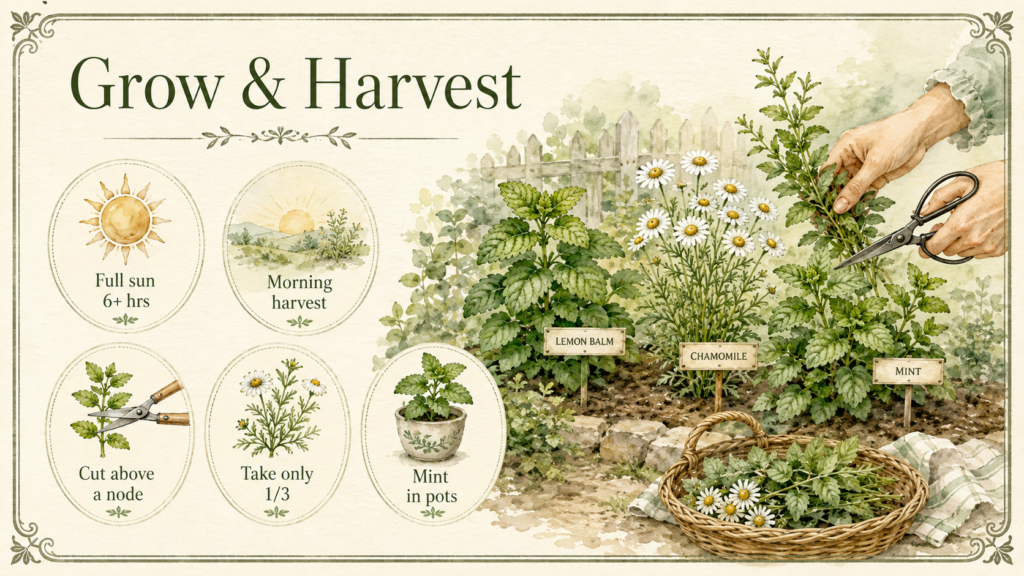
Harvest herbs in the morning after the dew has dried but before the midday heat — this is when essential oil concentration is highest. For leafy herbs like mint and lemon balm, pinch stems just above a leaf node to encourage bushier growth. For chamomile, pick flowers when petals are fully open and the centre dome is plump.
Regular harvesting actually promotes more growth, so don’t be shy. Never take more than one-third of the plant at once. Most tea herbs prefer full sun (6+ hours) and well-drained soil. Mint is the exception — it tolerates partial shade and spreads aggressively, so grow it in a pot to contain it.
3. Brewing Ratios & Steeping Times
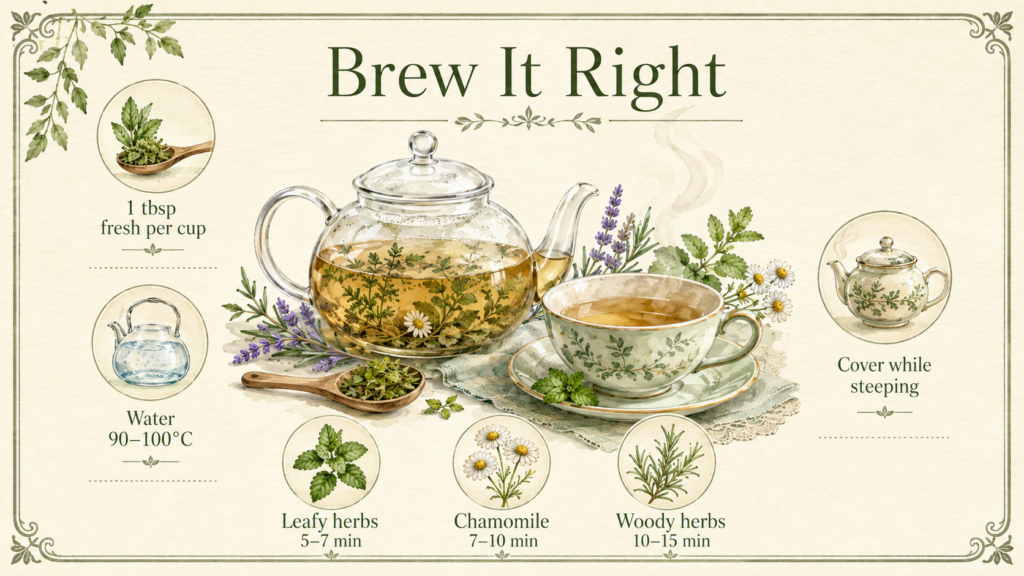
For fresh herbs, use roughly 1 tablespoon of chopped leaves per cup (240 ml) of water — about double what you’d use for dried herbs since fresh leaves contain water. Bruise or tear leaves gently before steeping to release more essential oils. Pour water that’s just off the boil (90–100°C) over the herbs.
Steep leafy herbs (mint, lemon balm, basil) for 5–7 minutes. Chamomile flowers need 7–10 minutes. Woody herbs like rosemary and thyme can steep 10–15 minutes without becoming bitter. Taste as you go — steeping longer intensifies flavour. Cover your cup while steeping to trap the aromatic volatile oils.
4. Flavor Pairings
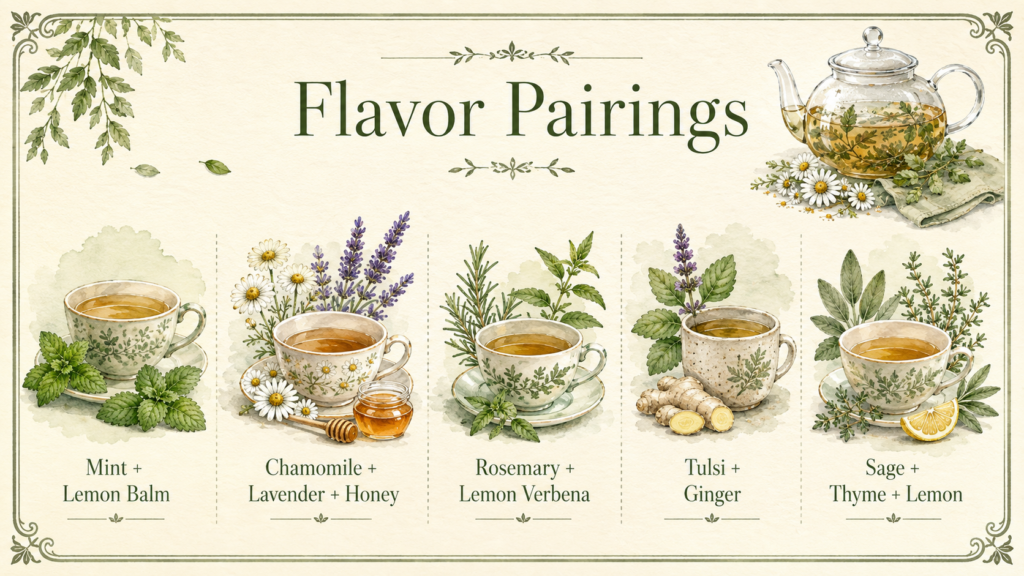
Some of my favourite blends: Mint + lemon balm (refreshing and uplifting), chamomile + lavender + honey (calming evening tea), rosemary + lemon verbena (warming and bright), holy basil + ginger root (spicy and grounding), and sage + thyme + a squeeze of lemon (savoury and soothing for colds).
Add a thin slice of fresh ginger, a cinnamon stick, or a strip of citrus peel to complement herbal flavours. Sweeten with raw honey (add after steeping so heat doesn’t destroy its beneficial enzymes) or a touch of maple syrup. Start with single-herb teas to learn each flavour before blending.
5. Safety Notes
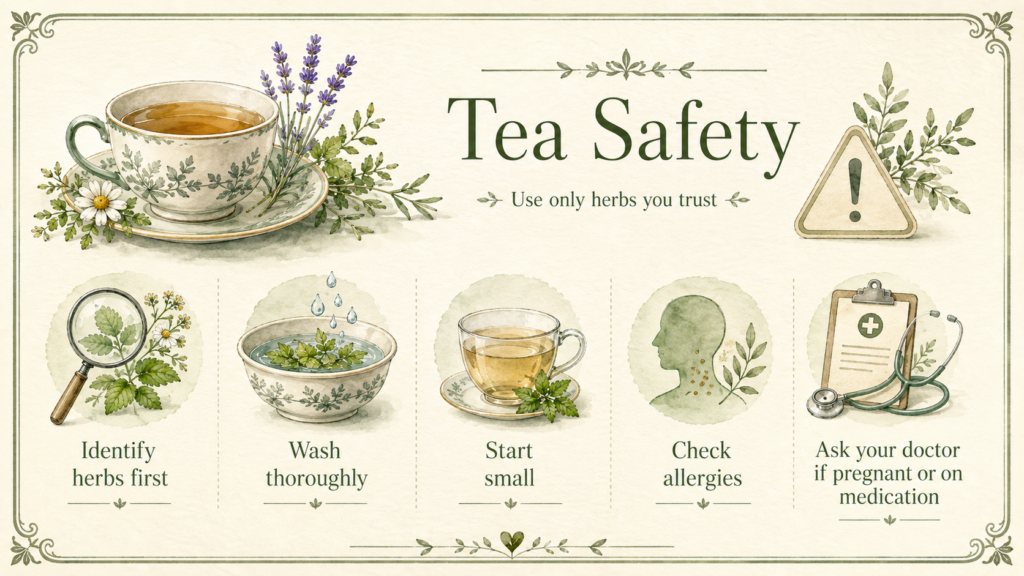
Only use herbs you can positively identify. If you’re foraging rather than growing, be absolutely certain of the plant’s identity — some toxic plants resemble edible herbs. Stick to well-known culinary herbs when starting out. Wash all herbs thoroughly before use, especially if grown outdoors.
Some herbs interact with medications: chamomile can thin blood, St. John’s wort affects many drugs, and large amounts of sage are not recommended during pregnancy. If you’re pregnant, nursing, or on medication, check with your healthcare provider before drinking herbal teas regularly. Start with small amounts of any new herb to check for allergies.
Frequently Asked Questions
How to make herbal tea with fresh herbs?
To make herbal tea with fresh herbs, rinse the herbs, add them to hot water, steep for 5–10 minutes, then strain and serve.
Can I use dried herbs instead of fresh?
Absolutely. Use about half the amount — 1 to 1.5 teaspoons of dried herb per cup. Dried herbs have concentrated flavour since the water has evaporated. Fresh herbs give a brighter, more nuanced taste, but dried work perfectly well, especially in winter.
How long does fresh herbal tea keep?
Brewed herbal tea keeps in the fridge for up to 48 hours — after that, flavour fades and bacteria can develop. For iced tea, brew double-strength and pour over ice. Fresh-picked herbs are best used immediately, but will keep in a damp paper towel in the fridge for 3–5 days.
Is herbal tea actually caffeine-free?
True herbal teas (tisanes) made from herbs, flowers, and roots contain no caffeine. However, blends that include yerba maté, guayusa, or cacao nibs do contain caffeine. If you’re avoiding caffeine entirely, stick to pure herbs like mint, chamomile, rooibos, and lemon balm.