
Everything a beginner needs to grow sweet, juicy peaches at home — from choosing your tree to picking your first ripe fruit.
Peach trees are one of the most satisfying fruit trees you can grow in a home garden. There’s nothing quite like biting into a sun-warmed peach you grew yourself — the flavour is incomparably better than anything from the supermarket. I’ve been growing peach trees in my backyard for years, and in this guide I’ll share what I’ve learned about planting, care, common problems, and knowing exactly when to pick.
1. When & How to Plant a Peach Tree
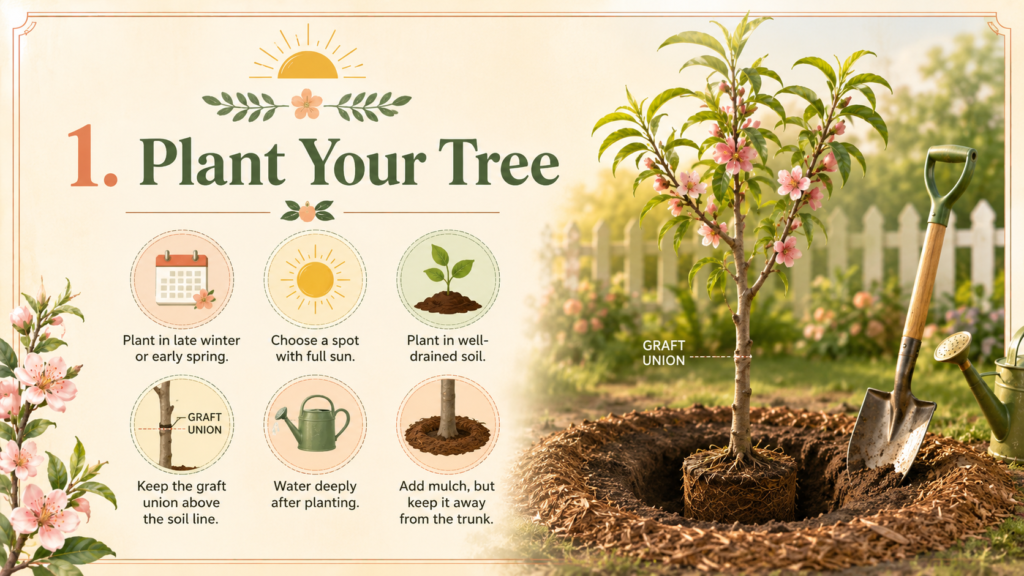
Plant bare-root peach trees in late winter or early spring while the tree is still dormant — typically 4–6 weeks before your last frost date. Container-grown trees can be planted in autumn in mild climates. Choose a spot with full sun (6–8 hours minimum) and well-drained soil. Dig a hole twice the width of the root ball and just as deep.
Space standard trees 4.5–6 m (15–20 ft) apart; dwarf varieties need 3–3.6 m (10–12 ft). Set the graft union 5 cm (2 in) above the soil line. Backfill with native soil — avoid adding compost directly into the planting hole as it can create a ‘bathtub effect’ that traps water around the roots. Water deeply and mulch out to the drip line, keeping mulch 15 cm away from the trunk.
2. Sun, Soil & Watering
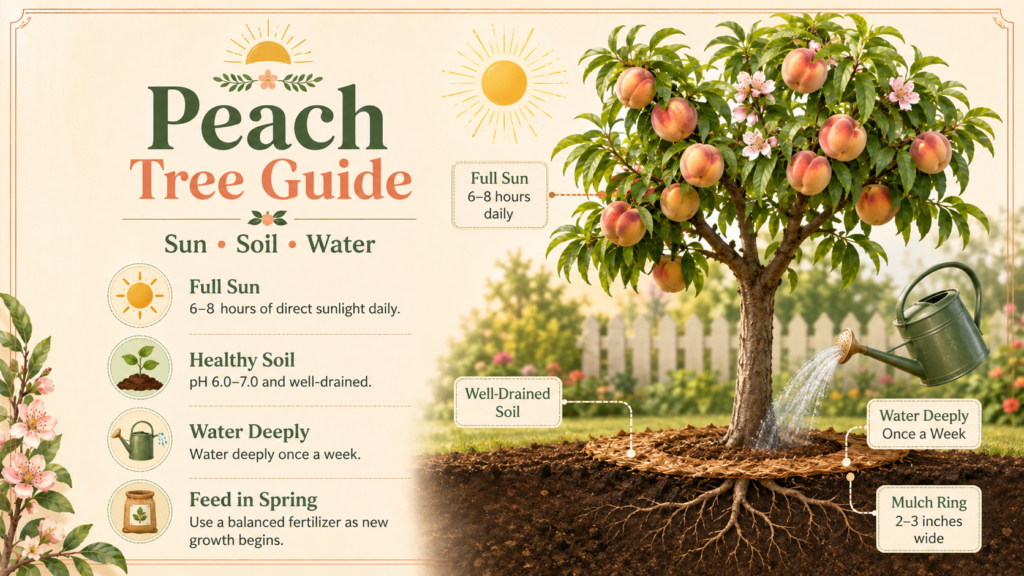
Peach trees thrive in full sun and moderately fertile, well-drained soil with a pH of 6.0–7.0. They’re surprisingly drought-tolerant once established, but consistent moisture during fruit development (late spring through summer) is critical for juicy, full-sized peaches. Deep-water weekly rather than frequent shallow watering.
Feed in early spring with a balanced fertiliser (10-10-10) before bud break, and again after fruit set if growth seems slow. Too much nitrogen pushes leafy growth at the expense of fruit. I spread a 7–10 cm layer of wood chip mulch each spring to retain moisture and suppress weeds — it breaks down slowly and feeds the soil over time.
3. Common Pests & Problems
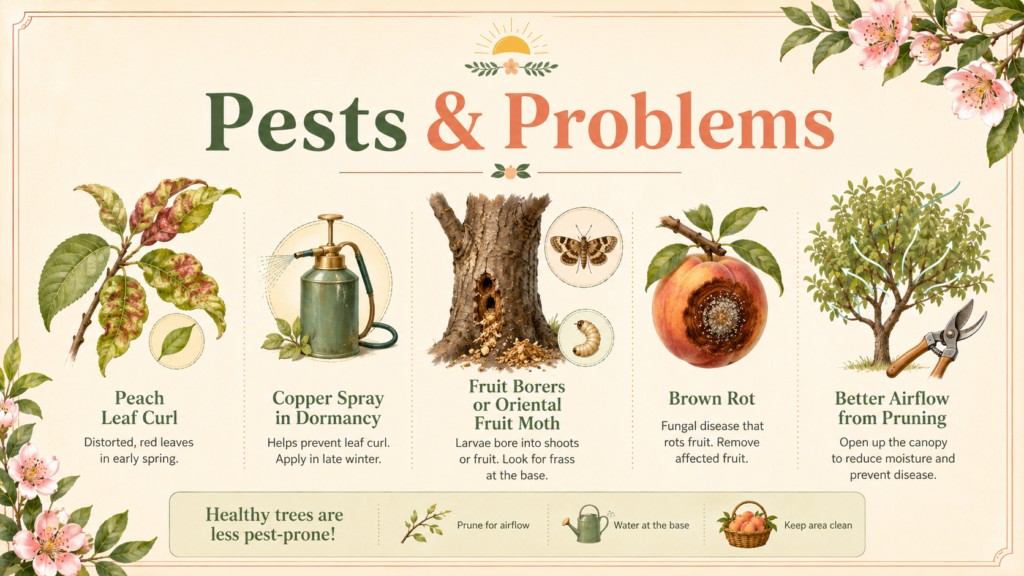
Peach leaf curl is the #1 problem for home growers. Prevent it with a copper fungicide spray applied in late autumn after leaves drop and again in late winter before buds swell. Once you see the puckered, reddish leaves it’s too late for that season — just remove affected leaves and feed the tree to help it recover.
Oriental fruit moth and peach tree borers are common insect pests. Watch for frass (sawdust-like material) at the base of the trunk — a sign of borers. Pheromone traps help monitor moth populations. Brown rot fungus attacks ripening fruit; improve air circulation with proper pruning and remove any mummified fruit from the tree or ground.
4. When to Harvest Peaches
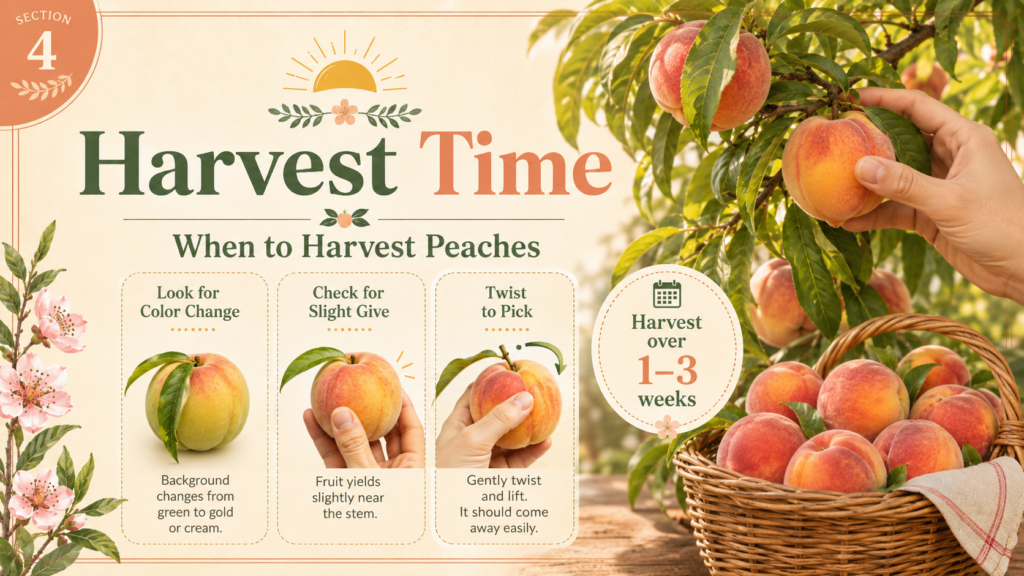
Peaches are ready when the background colour changes from green to gold or cream (ignore the red blush — it develops from sun exposure, not ripeness). The fruit should give slightly when gently pressed near the stem end and come away from the branch with a gentle upward twist.
Most peach trees fruit from mid-summer to early autumn depending on the variety and your climate zone. Harvest over 1–3 weeks as fruit ripens unevenly across the tree. Pick slightly firm for storage (they ripen well on the counter), or tree-ripe for immediate eating. In my experience, patience at this stage pays off hugely in flavour.
5. Beginner Mistakes to Avoid
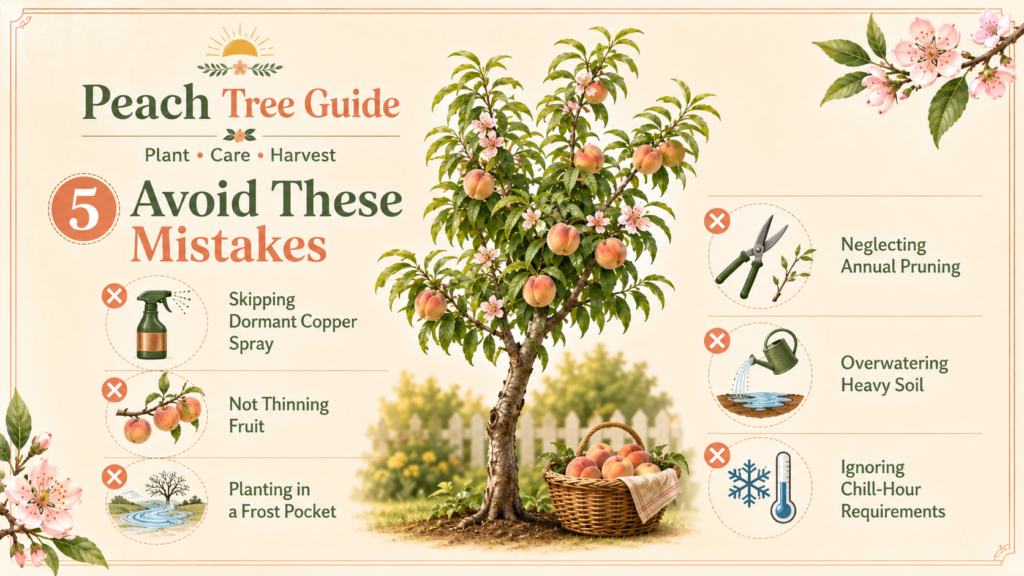
• Skipping the dormant copper spray — peach leaf curl will find you. • Failing to thin fruit in late spring (remove so remaining peaches are 15–20 cm apart on the branch; otherwise you get small, flavourless fruit and risk branch breakage). • Planting in a low-lying frost pocket where late frosts kill blossoms.
• Neglecting annual pruning — peach trees fruit on one-year-old wood, so an open-vase prune each winter keeps production high. • Overwatering in heavy soil, which causes root rot. • Choosing a variety that needs more chill hours than your climate provides. Check your local chill-hour average before buying.
Frequently Asked Questions
How long until a peach tree produces fruit?
Most peach trees begin bearing fruit 2–4 years after planting. Dwarf varieties may produce a small crop in their second year. Be patient and focus on building a strong root system and branch structure in the early years.
Do I need two peach trees for pollination?
No — most peach varieties are self-fertile, meaning a single tree can produce fruit on its own. However, planting a second variety can sometimes increase yield through cross-pollination.
Can I grow a peach tree in a container?
Yes — choose a genetic dwarf variety like ‘Bonanza’ or ‘Pix Zee’ and use a large pot (at least 60 cm / 24 in diameter). Use well-draining potting mix, water regularly, and move the pot to a sheltered spot in winter if temperatures drop below –10°C.