
A practical guide to growing fresh garlic at home, from choosing healthy cloves and planting at the right time to watering, harvesting, curing, and storing your crop.
When should you plant garlic?
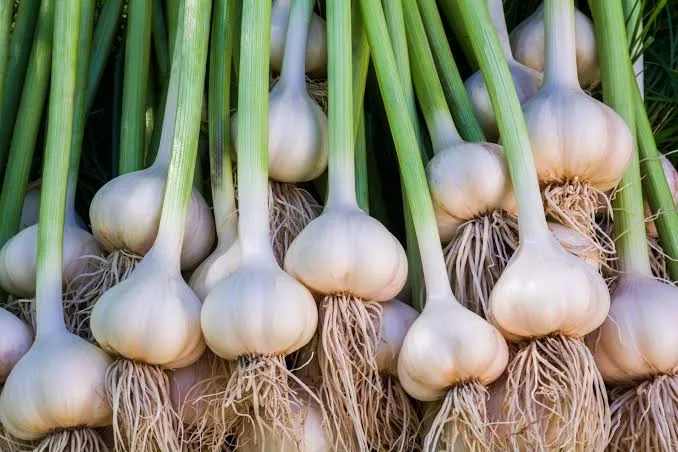
Garlic is usually planted in autumn so cloves can establish roots before winter and grow strongly when spring returns. In regions with cold winters, aim to plant about 4–6 weeks before the ground freezes hard. In mild-winter regions, planting in late autumn to early winter is often suitable.
The exact calendar varies with local weather, garlic type, and soil temperature. Hardneck garlic generally benefits from a cold period, while softneck garlic is often a better choice for warmer climates. If autumn planting is not possible, spring planting can still produce a crop, though bulbs may be smaller.
Give garlic full sun and loose, fertile soil
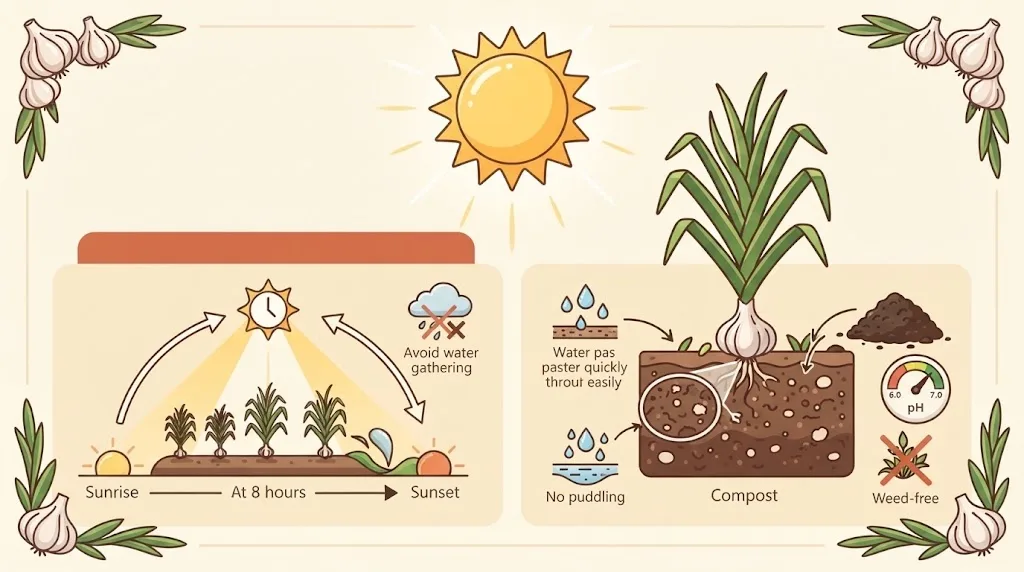
A garlic plant is forgiving in many home gardens, but bulb size improves with plenty of direct light and soil that drains freely. Avoid low spots where water gathers after rain, especially through winter.
Sun requirement
Choose a bed that receives at least 6 hours of direct sun each day. Eight or more hours is ideal where possible, particularly during the strong spring growth period.
Soil requirement
Use weed-free, well-drained soil enriched with compost. Garlic grows best in soil that is loose enough for bulbs to expand, with a slightly acidic to neutral pH around 6.0–7.0.
How to plant garlic cloves for strong bulbs
Growing garlic from cloves is straightforward. Buy seed garlic from a reputable grower or garden supplier when possible, rather than planting treated supermarket bulbs. Separate the bulb into individual cloves just before planting and keep each clove’s papery skin intact.
- Prepare the bed by removing weeds and mixing in mature compost. Rake the surface level so water does not pool around new cloves.
- Place each clove upright with the pointed tip facing up and the flat root end down. A sideways clove can still grow, but upright planting gives more consistent results.
- Plant cloves about 5–8 cm (2–3 in) deep and space them roughly 10–15 cm (4–6 in) apart. Leave 25–30 cm (10–12 in) between rows for easy weeding.
- Water after planting, then cover the bed with a light organic mulch in colder climates. Mulch helps moderate soil temperature, conserve moisture, and reduce winter weed growth.
Water steadily, weed early, and feed the soil
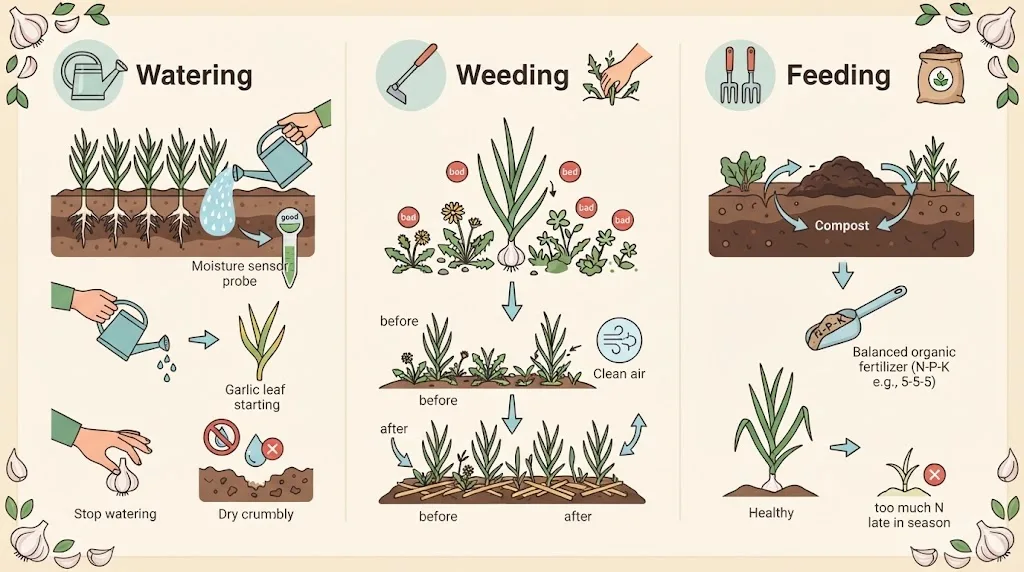
Garlic does most of its bulking up in spring. Keep the bed consistently moist during active growth, but never water so heavily that the soil remains soggy. Regular weeding matters because garlic leaves are narrow and do not shade out competing plants well.
Watering
Water deeply when the top few centimetres of soil feel dry, adjusting for rain and heat. Reduce watering as lower leaves begin to yellow close to harvest, then stop completely before lifting bulbs.
Feeding
Compost mixed into the planting bed is a strong foundation. If growth is pale or weak in spring, a light, balanced organic fertiliser can help; avoid pushing too much nitrogen late in the season.
Hardneck garlic produces curly flower stems called scapes. Snip scapes when they curl once or twice if your goal is larger bulbs, then use the tender stems in stir-fries, pesto, or soups.
Common garlic problems and practical first steps
Check the planting bed closely before treating any problem. Wet soil, compacted ground, nutrient imbalance, pests, and ordinary seasonal leaf dieback can look similar at first. Improving drainage, spacing, and hygiene often prevents the most serious issues.
| What you see | Likely cause | What to do |
|---|---|---|
| Yellowing tips or slow growth | Cold weather, dry soil, nutrient shortage, or root stress from poor drainage. | Check moisture below the surface, improve drainage if needed, and add a light spring feed only if plants appear pale or weak. |
| Leaves twisted, silvery, or damaged | Thrips, allium leaf pests, or other sap-feeding insects. | Inspect leaves closely, remove badly damaged foliage, and use locally appropriate pest controls only when the problem is confirmed. |
| Soft bulbs or rotting cloves | Overwatering, compact wet soil, diseased planting stock, or harvesting too late. | Improve drainage, plant only firm cloves, rotate beds, and cure harvested bulbs thoroughly before storage. |
Know when garlic is ready to lift
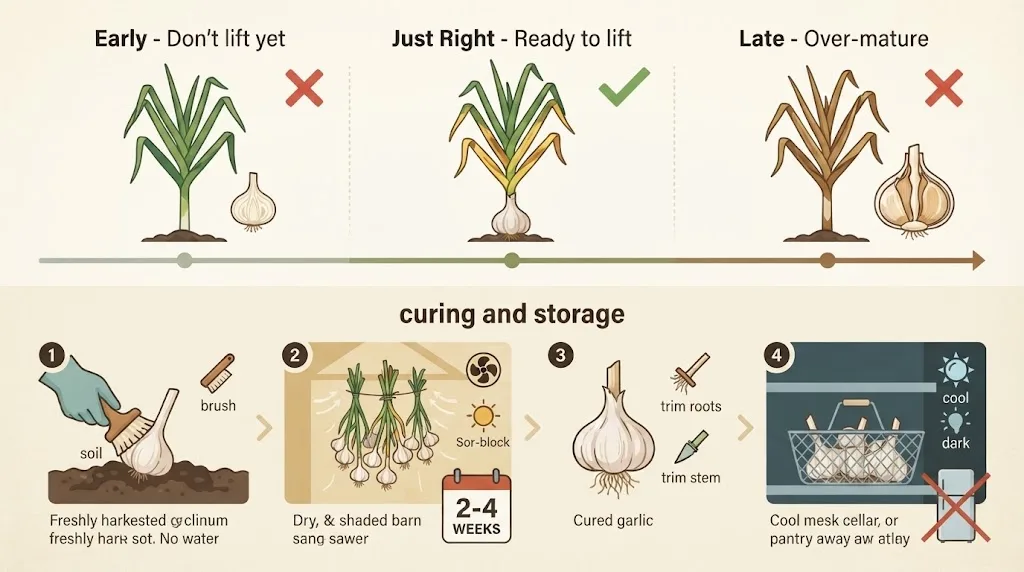
Garlic is generally ready when the lower third to half of the leaves have turned yellow or brown while several upper leaves remain green. This is usually late spring to summer, depending on planting time and climate. Harvesting too early can mean small bulbs; waiting too long can cause bulb wrappers to split.
Brush off loose soil but do not wash bulbs. Cure garlic in a dry, shaded place with good airflow for two to four weeks, until the roots and necks are fully dry. Then trim roots and stems, keeping bulbs in a cool, dry, dark, well-ventilated place rather than the refrigerator.
Four beginner mistakes worth avoiding
- Planting cloves upside down, which wastes the plant’s energy as the shoot turns upward.
- Using soft, mouldy, or treated grocery-store bulbs instead of healthy planting garlic.
- Letting weeds grow around young garlic plants, especially in spring when bulbs are beginning to size up.
- Skipping the curing step or storing fresh garlic in a damp, sealed container.
Garlic growing FAQs
Can I grow garlic from a clove bought at the shop?
You can, but seed garlic from a reputable supplier is usually more reliable. Some supermarket garlic is treated to prevent sprouting or may carry diseases not suited to your garden. Choose firm, untreated bulbs if you decide to try it.
How often should I water garlic?
Water when the soil a few centimetres below the surface feels dry. The goal is steady moisture during active growth, not a daily routine. Reduce watering as leaves yellow near harvest and stop shortly before lifting bulbs.
Can garlic grow in containers?
Yes. Use a deep container with drainage holes, quality potting mix, and enough space to keep cloves 10–15 cm apart. Containers dry out faster than garden beds, so check their moisture more often.