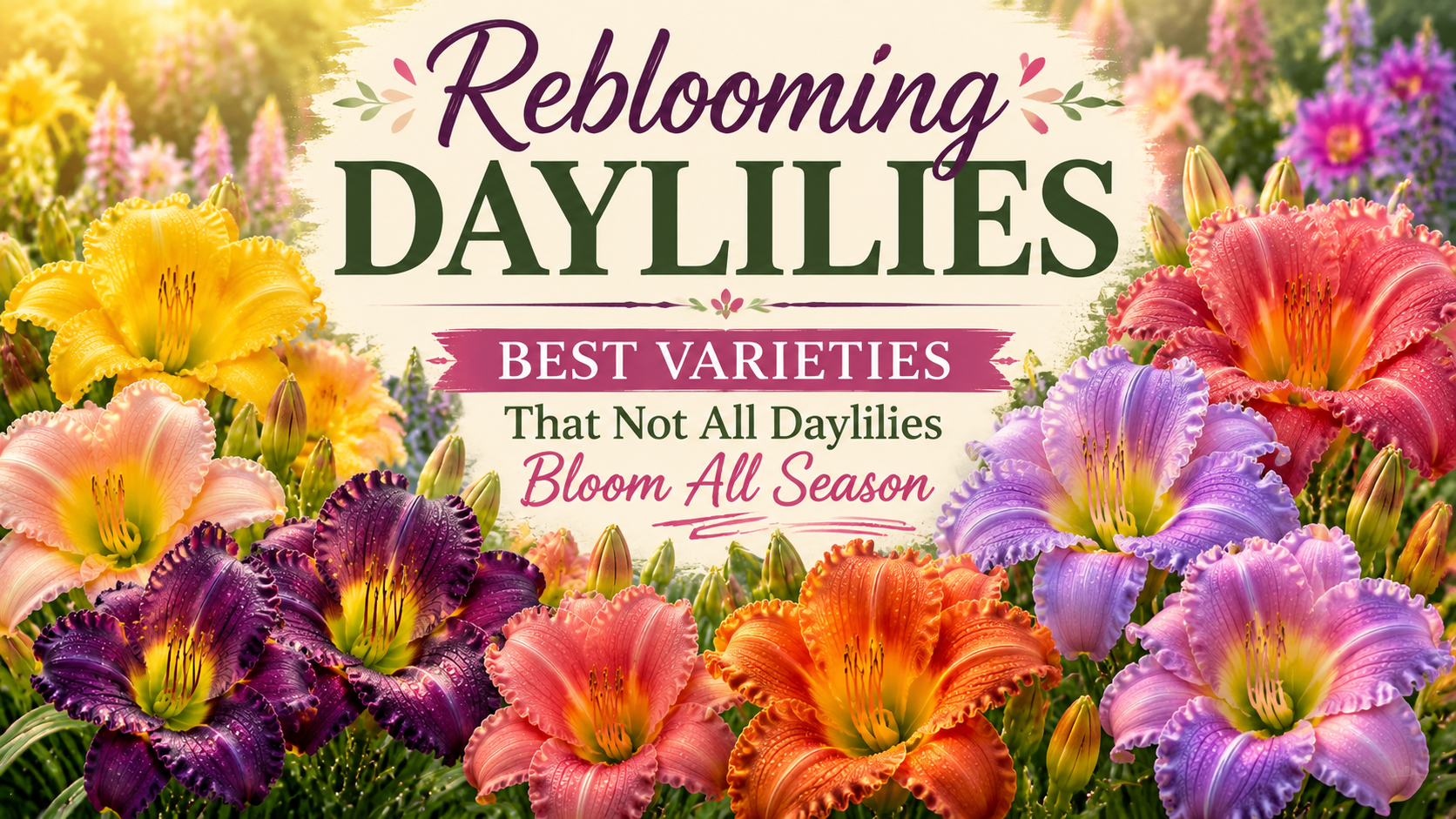

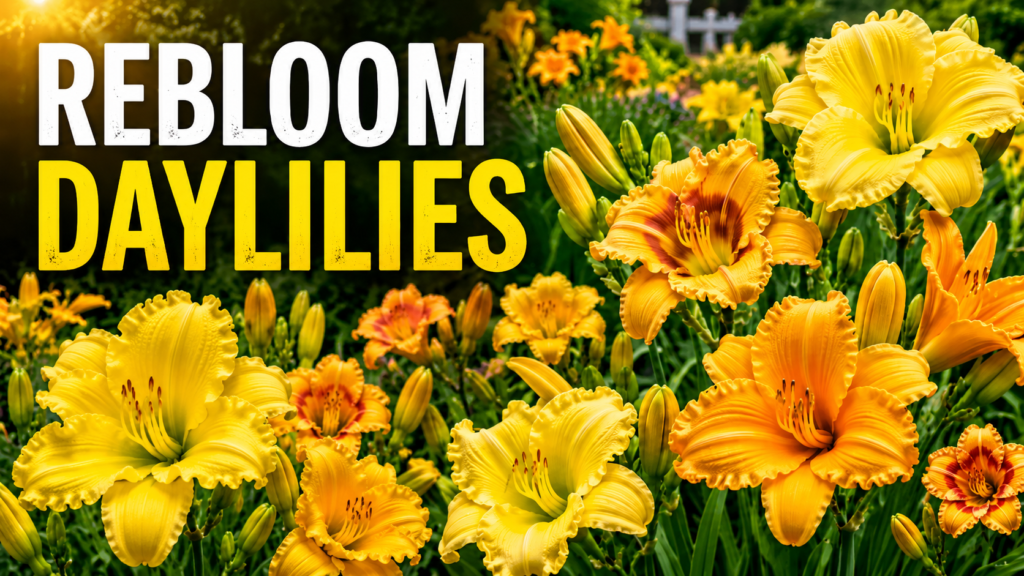
A vibrant garden border filled with multiple varieties of blooming daylilies in full summer sun.
Rebloom — Here’s What to Look For
Most traditional daylilies (Hemerocallis) bloom once in early summer and then go dormant for the rest of the season. If you’ve been disappointed by a two-week show followed by months of plain green foliage, you’re not alone. The secret is selecting varieties bred with the remontant gene — a genetic trait that triggers multiple flush cycles of blooms throughout the growing season.
Remontant daylilies push out a primary bloom in June, rest briefly, then send up fresh scapes for a second (and sometimes third) wave of flowers through September. Below, I’ve curated the most reliable rebloomers from my own trial beds, organized by color so you can match your existing landscape palette.
Also Read this Content: Lily Bulbs: How to Plant & Care for Asiatic & Oriental Lilies
Best Yellow & Gold Rebloomers
‘Stella de Oro’
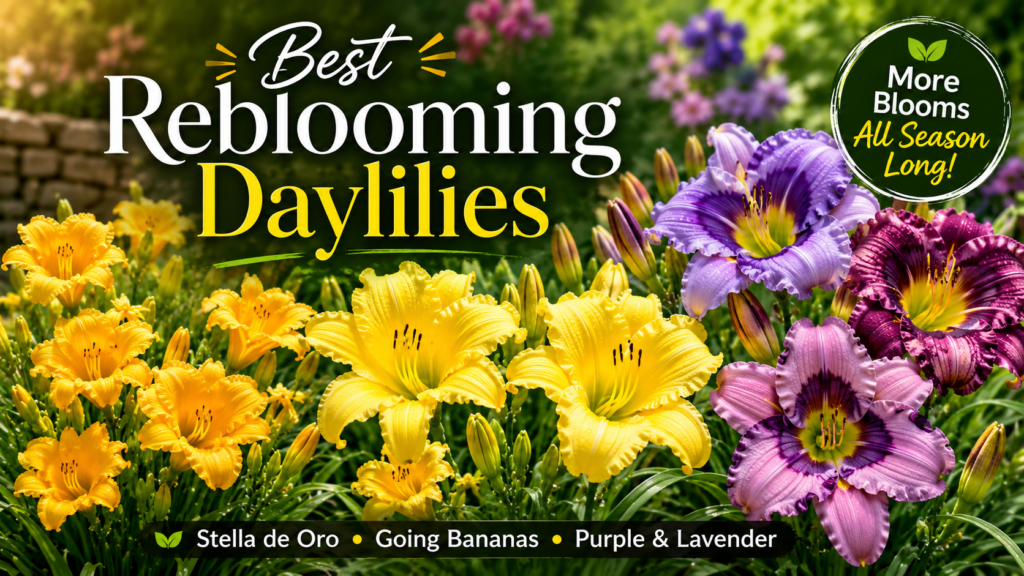
The gold standard of reblooming daylilies. Compact, incredibly tough, and produces golden-yellow trumpet blooms relentlessly with almost zero maintenance. Ideal for borders and mass plantings.
‘Going Bananas’
Larger flowers than Stella with a brighter lemon-yellow hue. Taller scapes give better visual impact in mixed borders. Vigorous multiplier — expect a full clump by year two.
Best Purple & Lavender Rebloomers
‘Purple de Oro’
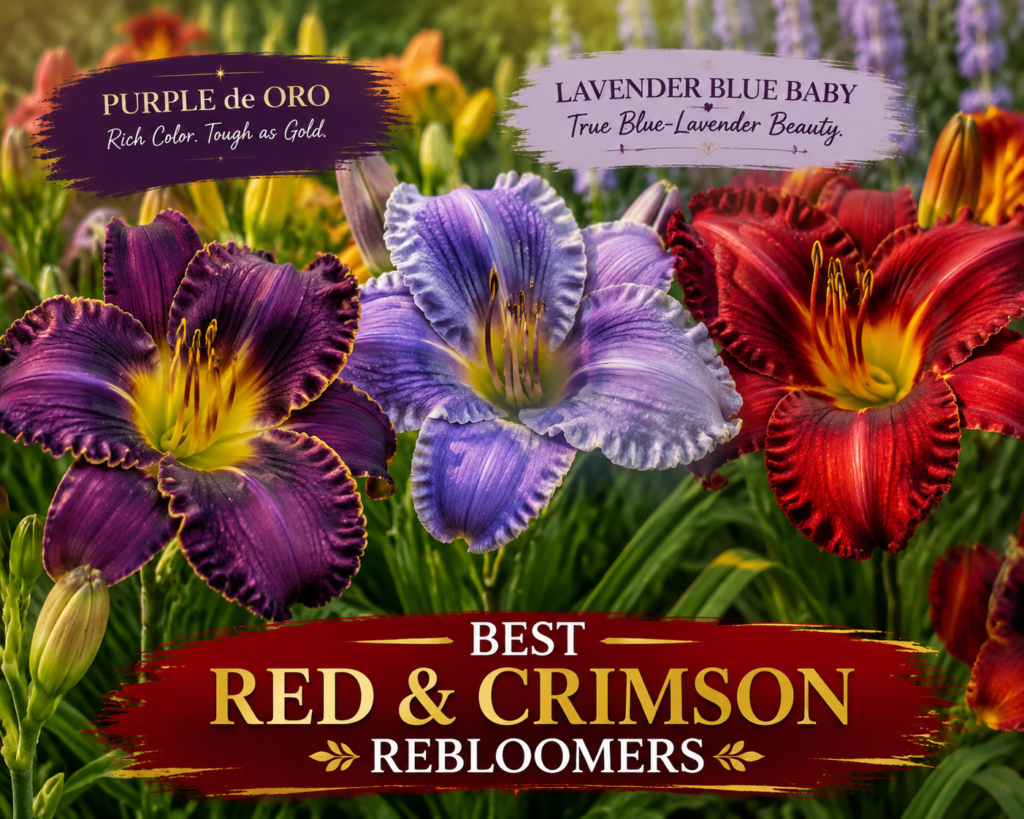
A compact rebloomer in rich grape-purple with a bright yellow throat. Pairs beautifully with gold varieties for a striking two-tone border. Extremely heat tolerant.
‘Lavender Blue Baby’
One of the truest blue-lavender tones available. Taller stature makes it excellent for the middle of a perennial bed. Ruffled petals add a cottage-garden charm.
Best Red & Crimson Rebloomers
‘Pardon Me’
Deep cranberry-red blooms with a bright green throat. Fragrant, compact, and one of the most aggressive rebloomers in the red category. A must-have for bold, warm-toned gardens.
‘Rosy Returns’
Rose-red petals with a distinctive darker eye zone. Extremely compact and floriferous — perfect for container gardening or front-of-border duty. Bred from Stella genetics for maximum rebloom.
Best Pink & Coral Rebloomers
‘Happy Returns’
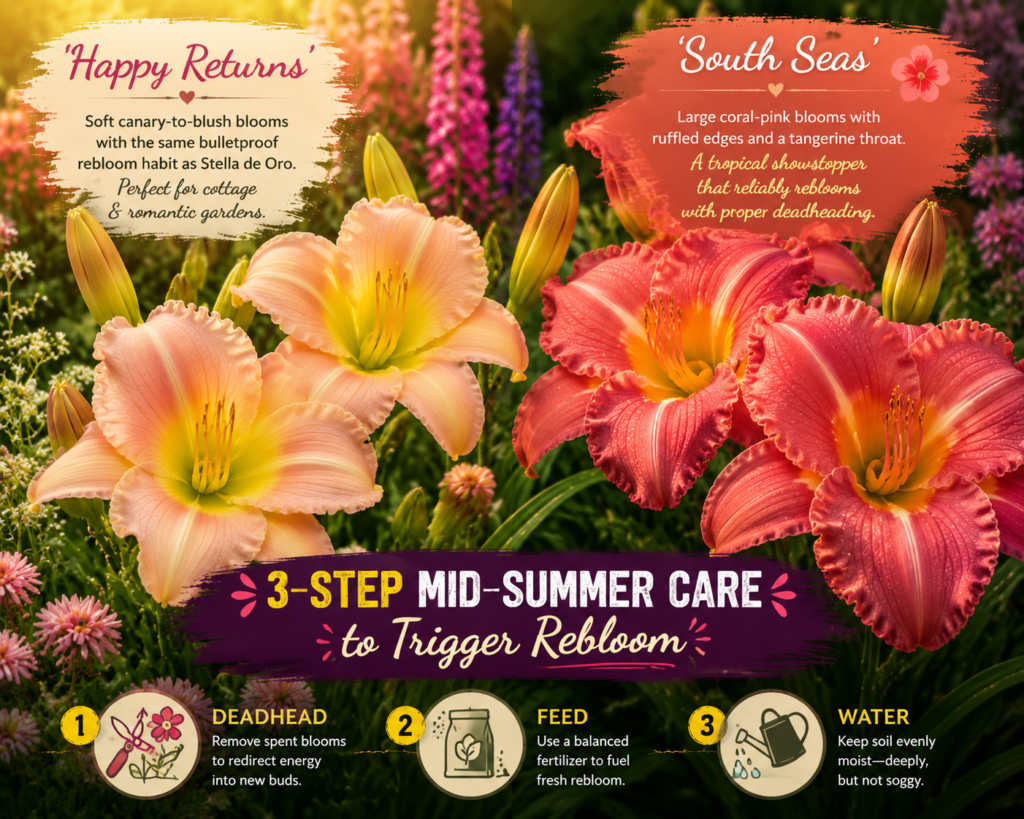
Soft canary-to-blush blooms that soften any planting. A sibling of Stella de Oro with the same bulletproof rebloom habit in a more delicate, pastel tone. Excellent for cottage and romantic garden styles.
‘South Seas’
Large coral-pink blooms with ruffled edges and a tangerine throat. A showstopper variety that brings tropical energy to temperate gardens. Reliable rebloomer with proper deadheading.
3-Step Mid-Summer Care to Trigger Rebloom
Step 1: Snap Off Spent Scapes
Once a flower scape has finished blooming, cut it down to the base of the foliage. This prevents seed formation and redirects the plant’s energy toward producing new buds. Don’t pull — use clean snips or snap firmly at the base.
Step 2: Feed with Balanced Fertilizer
After the first bloom flush ends (typically early July), apply a balanced 10-10-10 granular fertilizer around the drip line. Water it in well. This gives the plant the nutrients it needs to push out that critical second round of scapes.
Step 3: Deep Water Once Weekly
Daylilies are drought-tolerant, but rebloom requires consistent moisture. Provide one deep soak (1 inch of water) per week during dry spells. Mulch with 2–3 inches of shredded bark to retain soil moisture and keep roots cool.
Frequently Asked Questions
Are all daylilies rebloomers?
No. The majority of daylily cultivars bloom once per season. Only varieties specifically bred with the remontant (reblooming) trait will produce multiple flush cycles. Always check the plant label or catalog description for terms like “reblooming,” “remontant,” or “everblooming.”
How many times will a reblooming daylily flower in one season?
Most reliable rebloomers produce 2–3 distinct bloom cycles between June and September. In warmer climates (Zones 7–9) with proper care, some varieties like ‘Stella de Oro’ can bloom nearly continuously until first frost.
Do reblooming daylilies need full sun?
For maximum rebloom, plant in a location receiving at least 6 hours of direct sunlight. They will survive in partial shade but produce fewer scapes and may not trigger that second or third flush of flowers.