A Bird of Paradise is not a “fussy” houseplant. It is simply a high-light, high-energy plant that needs a stable root environment to look its best.
For an indoor gardener ready to move beyond Pothos and Snake Plants, Bird of Paradise offers the statement-piece look: large tropical leaves, architectural stems, and the potential for iconic blooms. The key is not watering it constantly or feeding it aggressively. The key is giving it bright light, airy soil, and a fertilizer routine that supports roots instead of stressing them.
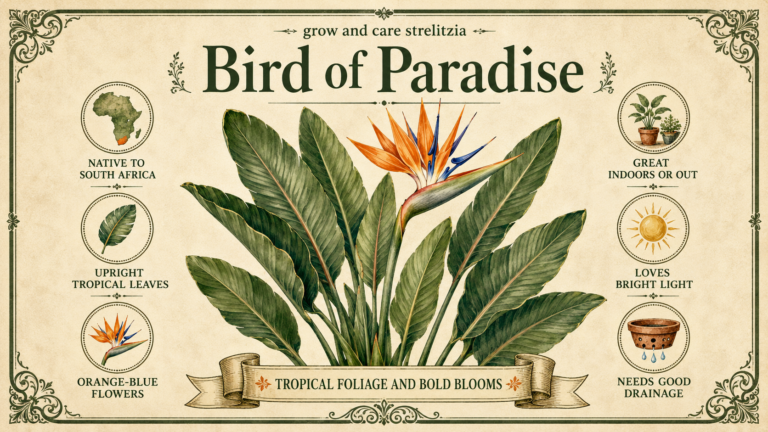
Bird of Paradise plants are native to southern Africa. The two most common indoor varieties are Strelitzia reginae and the much larger white Bird of Paradise, Strelitzia nicolai.
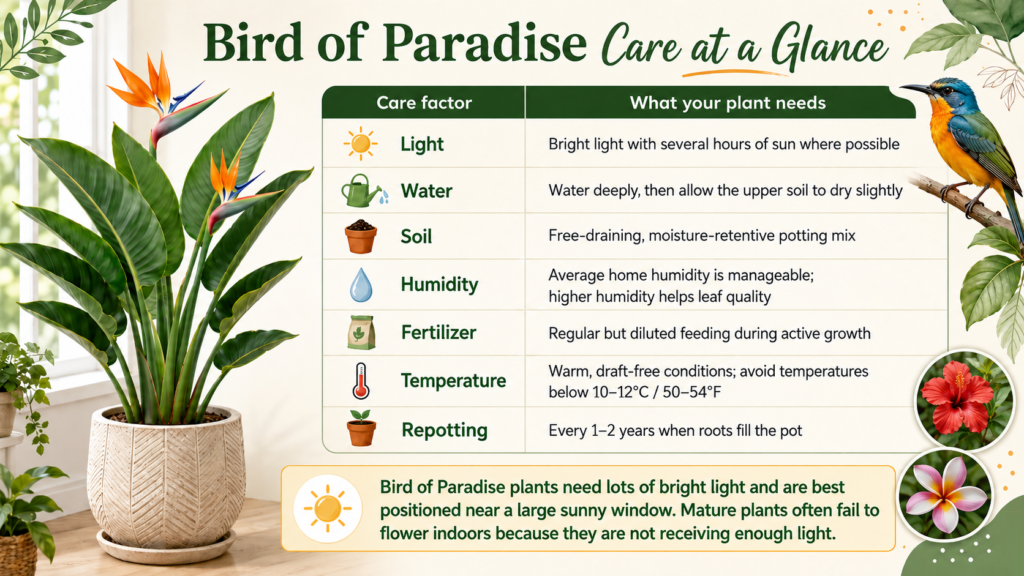
Bird of Paradise care at a glance
| Care factor | What your plant needs |
| Light | Bright light with several hours of sun where possible |
| Water | Water deeply, then allow the upper soil to dry slightly |
| Soil | Free-draining, moisture-retentive potting mix |
| Humidity | Average home humidity is manageable; higher humidity helps leaf quality |
| Fertilizer | Regular but diluted feeding during active growth |
| Temperature | Warm, draft-free conditions; avoid temperatures below 10–12°C / 50–54°F |
| Repotting | Every 1–2 years when roots fill the pot |
Bird of Paradise plants need lots of bright light and are best positioned near a large sunny window. Mature plants often fail to flower indoors because they are not receiving enough light.
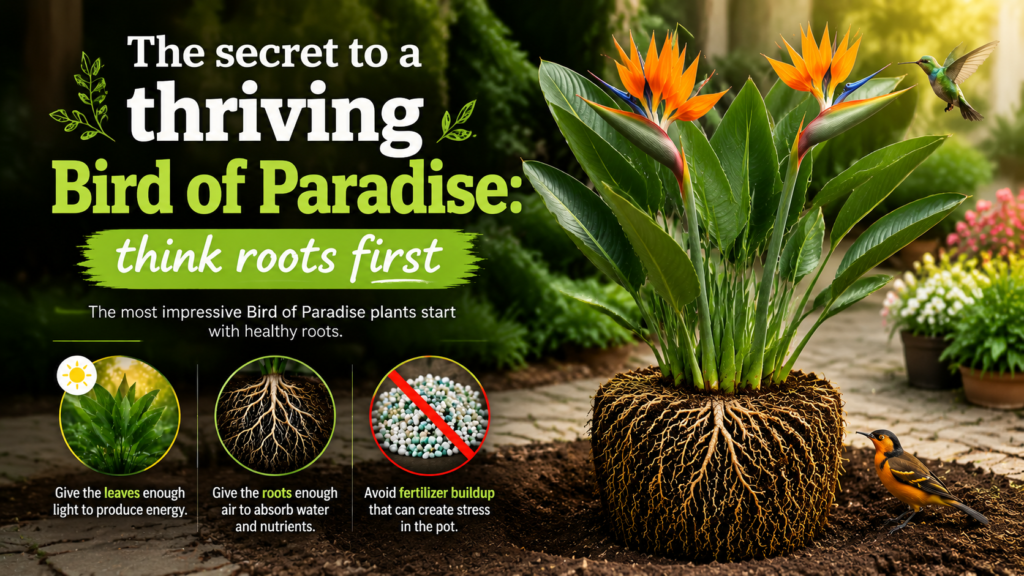
The secret to a thriving Bird of Paradise: think roots first
The most impressive Bird of Paradise plants are not necessarily watered the most or fertilized the most. They are grown in a root zone that stays oxygenated, drains properly, and receives nutrients consistently.
When roots are healthy, the plant can support larger leaves, stronger stems, and more vigorous growth. When roots are stressed, you may see brown edges, yellowing leaves, slow growth, drooping stems, or leaf damage that seems to worsen no matter what you do.
Your goal is simple:
- Give the leaves enough light to produce energy.
- Give the roots enough air to absorb water and nutrients.
- Avoid fertilizer buildup that can create stress in the pot.
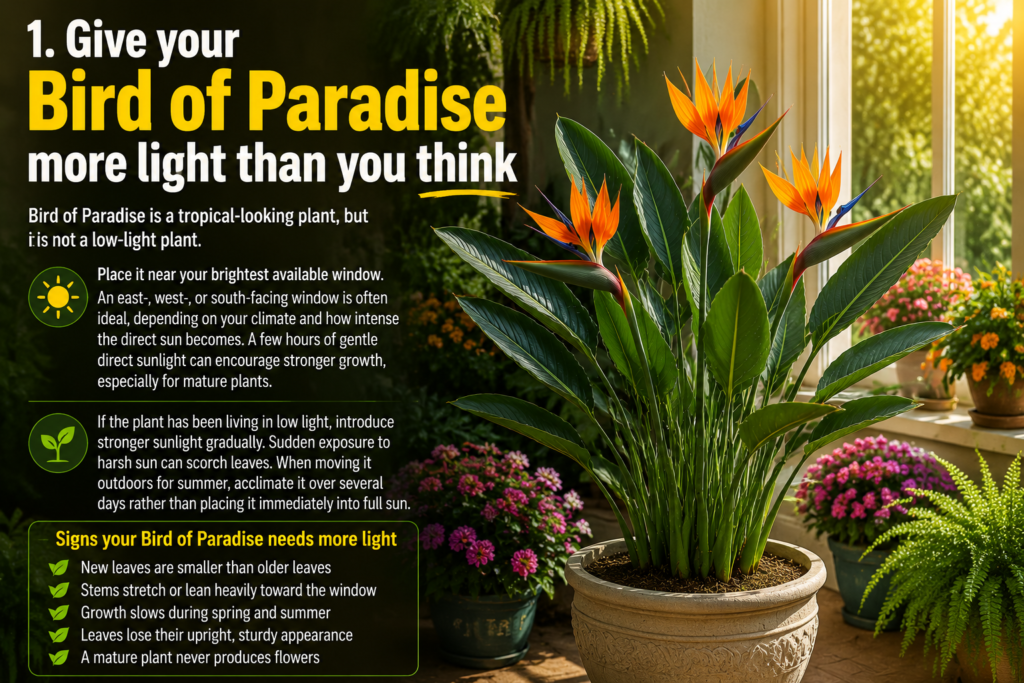
1. Give your Bird of Paradise more light than you think
Bird of Paradise is a tropical-looking plant, but it is not a low-light plant.
Place it near your brightest available window. An east-, west-, or south-facing window is often ideal, depending on your climate and how intense the direct sun becomes. A few hours of gentle direct sunlight can encourage stronger growth, especially for mature plants.
If the plant has been living in low light, introduce stronger sunlight gradually. Sudden exposure to harsh sun can scorch leaves. When moving it outdoors for summer, acclimate it over several days rather than placing it immediately into full sun.
Signs your Bird of Paradise needs more light
- New leaves are smaller than older leaves
- Stems stretch or lean heavily toward the window
- Growth slows during spring and summer
- Leaves lose their upright, sturdy appearance
- A mature plant never produces flowers
Wipe the leaves occasionally with a soft, damp cloth. Dust blocks light, and clean leaves can photosynthesize more efficiently.
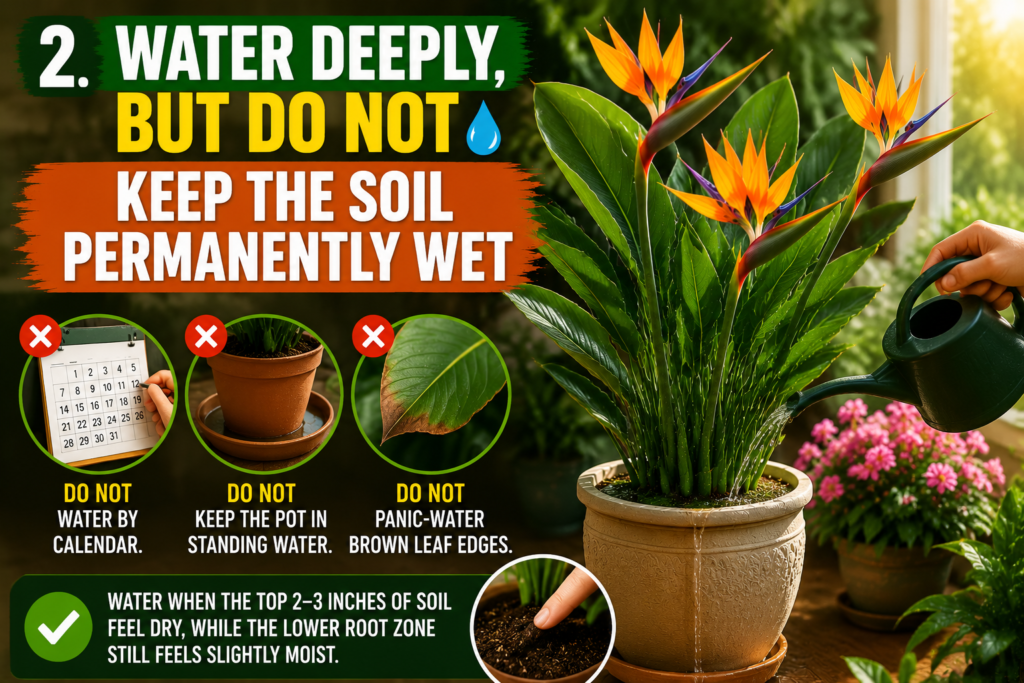
2. Water deeply, but do not keep the soil permanently wet
Bird of Paradise likes regular moisture during active growth, especially in spring and summer. However, it does not want soggy soil around its roots.
Water slowly until water drains from the bottom of the pot. Then empty the saucer so the roots are not sitting in water. Before watering again, check the upper layer of soil with your finger.
A practical indoor rule: water when the top 2–3 inches of soil feel dry, while the lower root zone still feels slightly moist.
During brighter and warmer months, your plant may need watering more often. During winter or low-light periods, reduce watering and let the potting mix dry more between waterings. RHS guidance recommends keeping compost moist but not saturated in spring and summer, then reducing watering through autumn and winter.
Avoid these watering mistakes
Do not water by calendar.
A plant near a sunny window may dry much faster than one in a darker corner.
Do not keep the pot in standing water.
This reduces oxygen around the roots and increases the risk of root stress.
Do not panic-water brown leaf edges.
Brown edges can be caused by dry air, inconsistent watering, salts in the soil, or root stress. More water is not always the answer.
3. Use a soil mix that balances moisture and airflow
Bird of Paradise needs a potting mix that holds enough moisture to support its large leaves but drains well enough to keep roots healthy.
A good mix can include:
- High-quality indoor plant potting mix
- Coco coir or peat for moisture retention
- Pine bark for structure
- Perlite or pumice for airflow
- A pot with drainage holes
For a DIY mix, try:
- 2 parts quality houseplant potting mix
- 1 part orchid bark
- 1 part perlite or pumice
The goal is not to create extremely dry cactus soil. Instead, create a chunky, breathable mix that drains excess water while still holding consistent moisture.
RHS recommends a loam-based compost with added grit for drainage and notes that compost blends can include bark, coir, sand, and other materials.

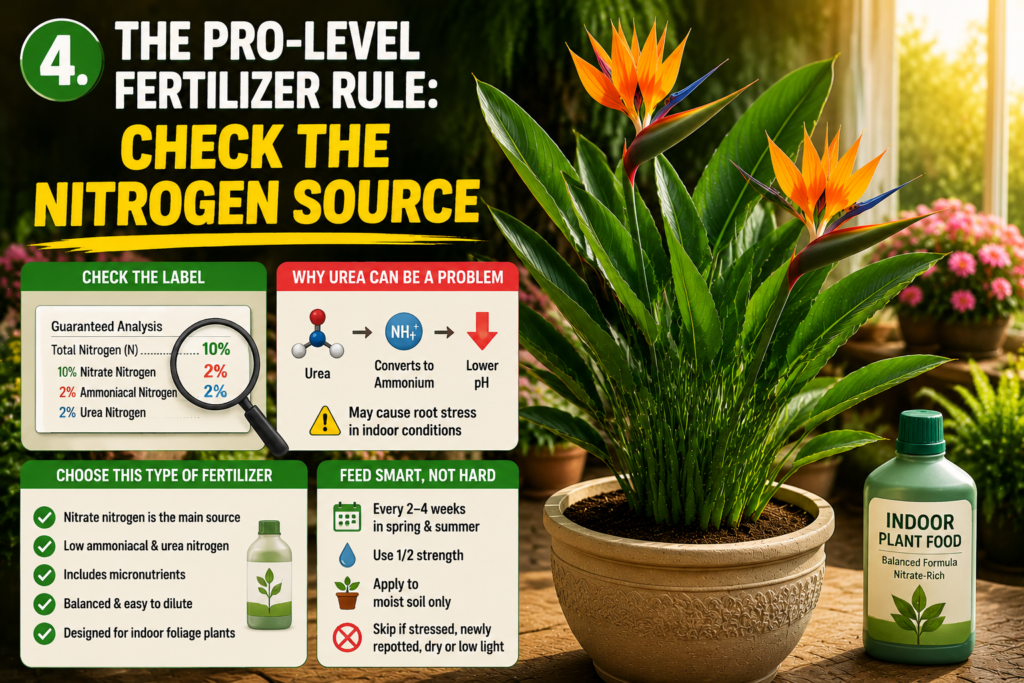
4. The pro-level fertilizer rule: check the nitrogen source
This is where many Bird of Paradise owners accidentally create long-term root stress.
Most people look only at the NPK numbers on fertilizer labels, such as 10-10-10 or 20-20-20. But the form of nitrogen matters too.
Look at the guaranteed analysis section of the label. It may list nitrogen as:
- Nitrate nitrogen
- Ammoniacal nitrogen
- Urea nitrogen
Also read this content 7 Powerful Tips: Indoor Lavender Plant Care Guide 2025
Why urea can become a problem indoors
Urea is not automatically bad. However, in potting media, it often converts into ammonium before the plant can use it. High levels of ammonium can lower soil pH and may contribute to root stress when the mix stays cool, wet, poorly aerated, or overloaded with fertilizer.
Bark-heavy and peat-based mixes can be less buffered against pH changes, meaning repeated use of heavily urea- or ammonium-based fertilizer can shift the root-zone chemistry faster than many indoor gardeners expect.
A safer fertilizer approach for Bird of Paradise
For long-term indoor care, choose a balanced liquid houseplant fertilizer where nitrate nitrogen is the largest nitrogen source, rather than relying on a urea-heavy fertilizer.
You do not need a fertilizer with zero urea. The goal is balance and predictability.
Choose a fertilizer that:
- Lists nitrate nitrogen prominently
- Has modest ammoniacal and urea nitrogen
- Includes micronutrients such as iron, magnesium, manganese, and zinc
- Can be diluted easily
- Is designed for indoor foliage plants
How to fertilize without burning roots
During spring and summer:
- Feed every 2–4 weeks.
- Use half the label strength for a cautious starting point.
- Apply fertilizer only to already-moist soil.
- Skip feeding if the plant is stressed, newly repotted, severely dry, or receiving low light.
5. Humidity: helpful, but not the only answer
Bird of Paradise prefers humidity, especially because of its large leaves. However, you do not need to turn your home into a greenhouse.
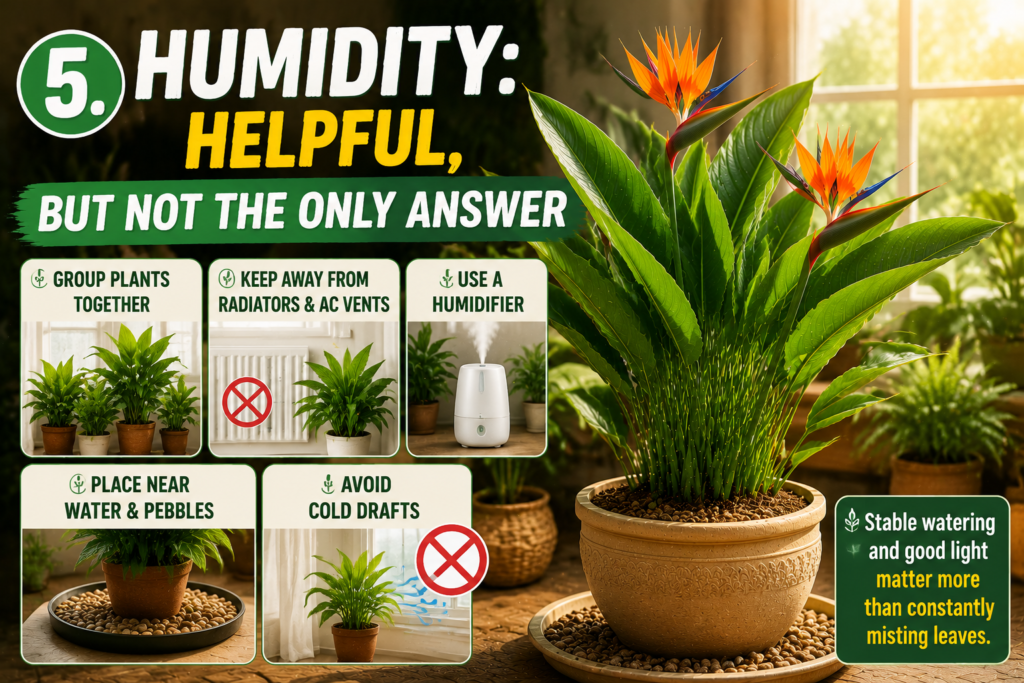
Improve humidity by:
- Grouping plants together
- Keeping the plant away from radiators and AC vents
- Using a humidifier during dry seasons
- Placing the pot near, not inside, a tray with water and pebbles
- Avoiding cold drafts
RHS notes that Strelitzias prefer a humid atmosphere and suggests regular misting or placing the pot on a tray of damp gravel.
For most homes, stable watering and good light matter more than constantly misting leaves.
6. When should you repot a Bird of Paradise?
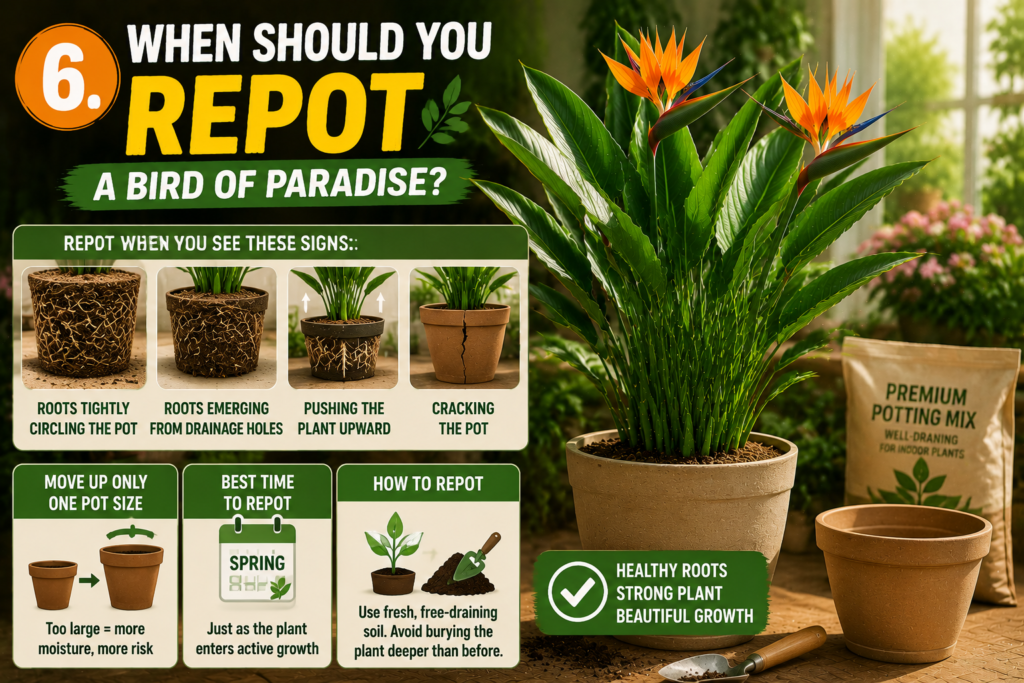
Bird of Paradise often performs well when slightly root-bound, especially mature plants. Repot only when roots are tightly circling the pot, emerging from drainage holes, pushing the plant upward, or causing the pot to crack.
Move up only one pot size at a time.
The best time to repot is spring, just as the plant enters its active growing season. Use fresh, free-draining soil and avoid burying the plant deeper than it was previously planted.
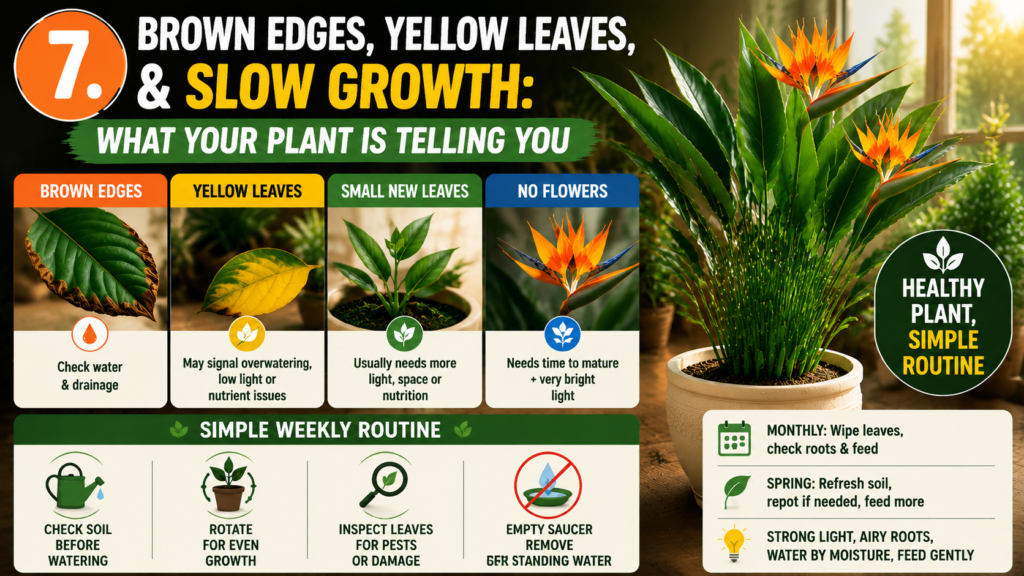
7. Brown edges, yellow leaves, and slow growth: what your plant is telling you
Brown leaf edges
Possible causes:
- Dry indoor air
- Inconsistent watering
- Fertilizer salt buildup
- Roots staying too wet
- Poor light levels
First, check the soil. If it stays wet for many days, improve drainage or reduce watering. If the soil is compacted or smells sour, inspect the roots during the next repot.
Yellow lower leaves
An occasional older leaf turning yellow is normal. Multiple yellowing leaves can indicate overwatering, lack of light, nutrient imbalance, or root stress.
Small new leaves
Small leaves usually point to insufficient light, limited root space, weak nutrition, or inconsistent watering.
No flowers
Indoor Bird of Paradise plants may take years to mature. Even mature plants need very bright light to flower. Strelitzia nicolai is often grown primarily for foliage, while Strelitzia reginae is more associated with the classic orange-and-blue bloom.
A simple weekly Bird of Paradise routine
Every week
- Check soil moisture before watering
- Rotate the pot slightly for even growth
- Inspect leaves for pests or damage
- Remove standing water from the saucer
Every month
- Wipe leaves gently
- Check for roots emerging from the pot
- Feed during active growth, if the plant is healthy
- Look for white crust on the soil surface, which may indicate fertilizer salts
Every spring
- Refresh the upper layer of soil
- Repot only if roots are crowded
- Increase feeding gradually as new growth begins
Final thoughts
A Bird of Paradise thrives when you stop treating it like a decorative object and start treating it like a living tropical system.
Give it strong light. Keep the roots airy. Water based on soil moisture, not habit. Feed it consistently but gently. Most importantly, do not chase every brown edge with more fertilizer.
The healthiest Bird of Paradise plants are built slowly: one strong root system, one large leaf, and one stable routine at a time.