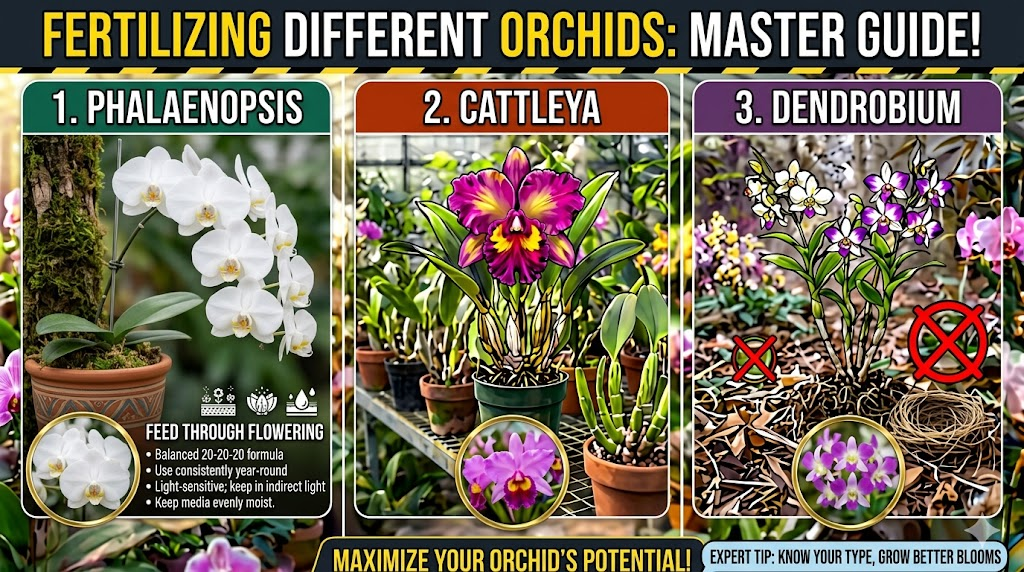

Why Can’t You Use Regular Fertilizer on Orchids?
Standard houseplant fertilizers are formulated for plants growing in soil — a medium that buffers pH, retains moisture, and hosts microorganisms that break down complex nitrogen sources like urea. Orchids, however, are predominantly epiphytes. Their roots are exposed, velamen-coated, and extraordinarily sensitive to salt accumulation.
Orchid-specific formulations use nitrate-based nitrogen (immediately available, no microbial conversion needed), lower total salt indices, and balanced micronutrients like calcium and magnesium that epiphytes typically absorb from rainwater in the wild
.
The Chemistry: Urea vs. Nitrate Nitrogen
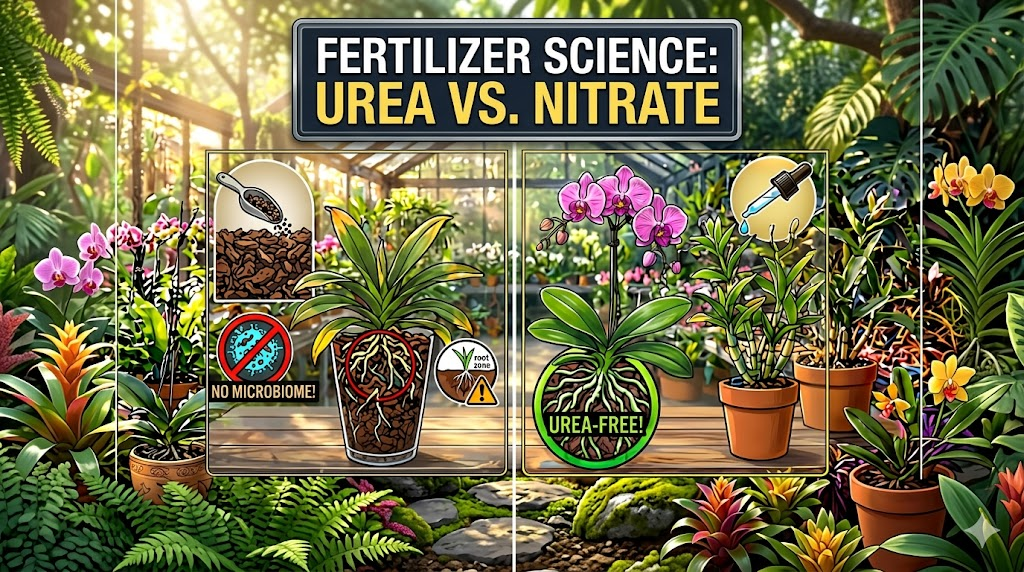
Most generic fertilizers list urea as their primary nitrogen source. In soil, bacteria convert urea into ammonium and then nitrate — forms the plant can actually absorb. In a bark mix with no soil microbiome, urea simply accumulates, raising toxicity levels around the root zone.
Professional-grade orchid fertilizers use ammoniacal and nitrate nitrogen exclusively. Look for labels stating ‘urea-free’ — this single indicator separates root-safe products from those that risk chemical burn over time.
The Orchid Feeding Cheat Sheet: NPK Ratios Decoded
Bookmark this table. Different growth phases demand different nutrient emphasis — here’s your quick-reference guide to orchid-specific fertilizer ratios.
| Goal | NPK Ratio | When to Use |
| Vegetative Growth (new leaves & roots) | 20-10-10 or 3-1-1 | Spring through early summer |
| Bloom Initiation (spike development) | 10-30-20 or 1-3-2 | Late summer to autumn |
| Maintenance (balanced health) | 20-20-20 or 1-1-1 | Year-round (weakly, weekly) |
Your Seasonal Feeding Calendar
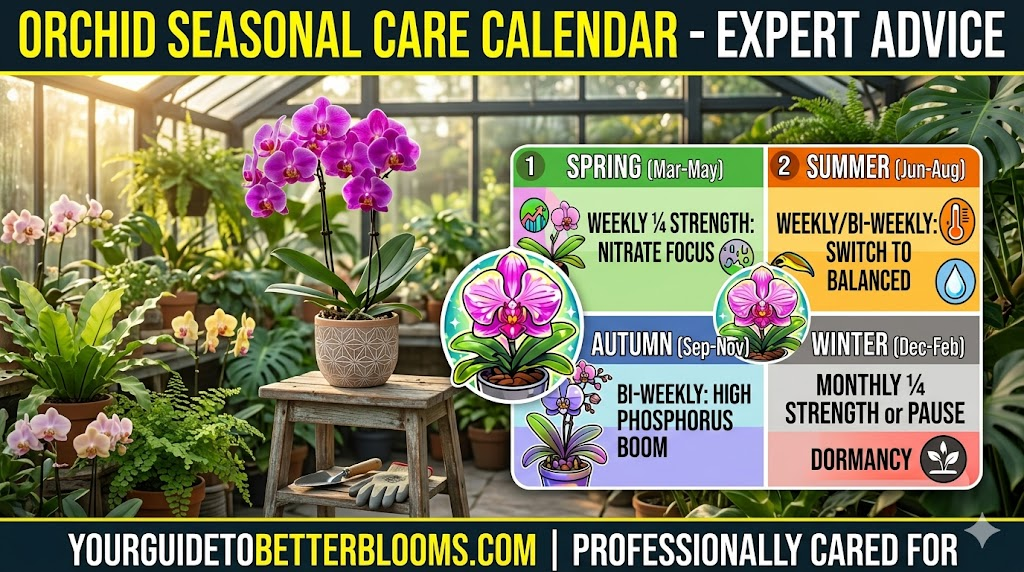
Orchids respond to seasons even indoors. Here’s how often to apply orchid-specific fertilizer for better blooms — broken down by quarter so you never have to guess.
Spring (Mar–May)
Feed weekly at ¼ strength. Growth is accelerating — this is when higher-nitrogen formulas shine. Flush with plain water every 4th watering to prevent salt buildup.
Summer (Jun–Aug)
Continue weekly feeding. Switch to a balanced formula mid-summer. If temperatures exceed 32°C, reduce to bi-weekly — stressed roots absorb less efficiently.
Autumn (Sep–Nov)
Transition to bloom-boosting formula (high phosphorus). Feed bi-weekly. This signals spike initiation for most species. Reduce nitrogen to avoid excessive leaf growth at the expense of flowers.
Winter (Dec–Feb)
Feed monthly at ¼ strength or pause entirely for deciduous types (Dendrobiums). Most orchids are in metabolic slowdown. Over-feeding now is the #1 cause of root rot in winter.
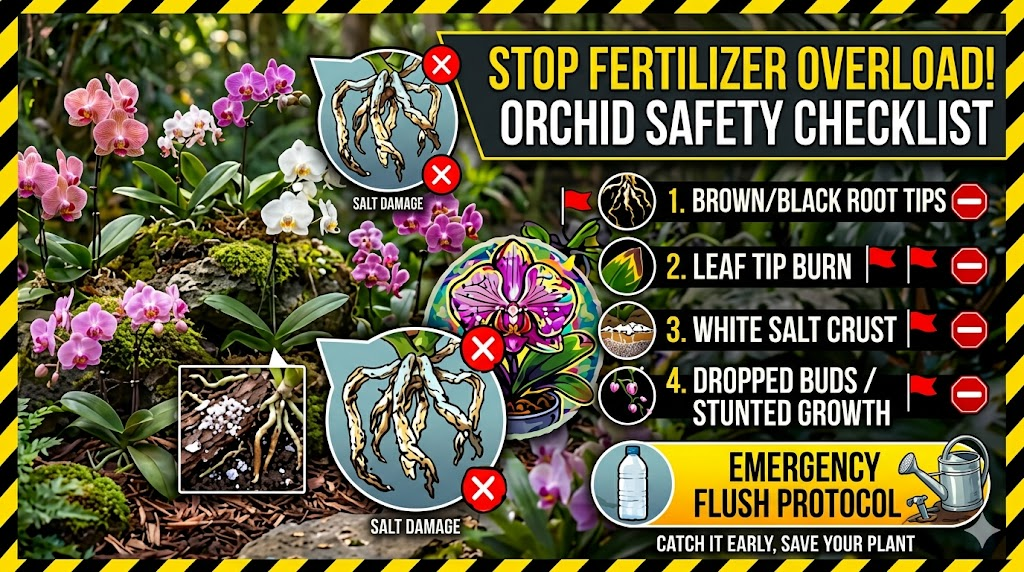
Signs of Fertilizer Overload: Your Safety Checklist
Catching these signs early means you can flush the medium and save the plant. If you see any of these, stop fertilizing immediately and water with plain distilled water for 2–3 cycles.
- Brown or blackened root tips — the earliest and most reliable indicator of salt damage.
- White crystalline crust on the bark surface or pot rim — visible mineral deposits.
- Leaf tip burn — yellow or brown edges progressing inward, starting on oldest leaves.
- Stunted new growth or buds dropping (bud blast) — the plant is redirecting energy to cope with toxicity.
Pro Tips by Species: One Size Does NOT Fit All
Phalaenopsis: The most forgiving. Balanced 20-20-20 year-round at ¼ tsp per litre works beautifully. They bloom on old spikes — keep feeding lightly even during flowering.
Cattleya: Heavy feeders during active growth. Increase to ½ strength in spring. They store nutrients in pseudobulbs, so a strong growing season directly determines bloom quality months later.
Dendrobium: Many species require a dry, fertilizer-free winter rest to trigger blooming. If your Dendrobium won’t flower, try eliminating ALL feeding from November to February.